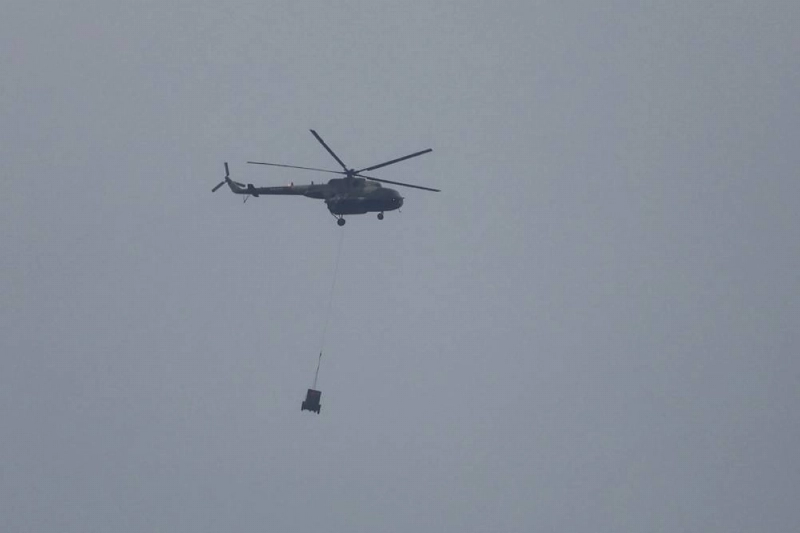
Nepal has called for greater restraint in the use of helicopter rescue services to air-rescue as authorities continue responding to the Bhote Koshi flood and its impact across several districts. The National Disaster Risk Reduction and Management Authority (NDRRMA) has urged the public and concerned agencies not to request helicopter evacuation for non-essential purposes, stressing that available aircraft must remain focused on emergency search and rescue missions and the transportation of relief materials. The appeal comes as the scale of the ongoing operation continues to grow, with 3,596 people, including 252 foreign nationals and 3,344 Nepalis, already air-rescued from Rasuwa, Nuwakot, Dhading, Gorkha and Tanahun.
Rescue Helicopters Reserved For Those In Genuine Danger
NDRRMA Spokesperson and Information Officer Shanti Mahat said requests for air rescue are still being received from individuals who are minimally affected, unaffected, or already safe in high-altitude locations. The authority has therefore appealed to the public and relevant agencies to avoid unnecessary demands for helicopter evacuation, emphasizing that aircraft need to remain available for people facing genuine emergencies. During a major disaster response, helicopters can provide critical access to areas where conventional transportation is difficult, making the careful allocation of air resources essential for timely search-and-rescue operations and the delivery of relief supplies.

The number of people already evacuated by air demonstrates the scale of the response following the flooding. Of the 3,596 people rescued so far, 252 are foreign nationals, while 3,344 are Nepali citizens. The evacuees were rescued from Rasuwa, Nuwakot, Dhading, Gorkha and Tanahun, all of which have been affected by the consequences of the Bhote Koshi flood. While the provided information does not identify the individual circumstances or travel purposes of the foreign nationals, their inclusion in the rescue figures highlights the broad reach of the ongoing emergency response and the importance of maintaining sufficient rescue capacity in affected areas.
Land Routes Reopen As Authorities Prioritize Emergency Air Rescue
Alongside the helicopter operation, NDRRMA has appealed to the public to use available alternative routes wherever travel by road is possible and safe.
An alternative route connecting with the Prithvi Highway is currently operational through Dhading Besi, Parewatar, Nepaltar, Gajuritar, Pipaltar, Adamtar, Belintar and Keurinitar, via Mastar, where Hamlet Restaurant is located. The route provides an alternative means of ground transportation for people able to travel safely and supports the authority’s effort to keep helicopters focused on genuine emergency requirements.
Another alternative route has come into operation between Rasuwa and Dhunche, passing through Bidur, Dhikure, Chaughada, Anpra, Narja, Lachyang, Sarmarthale and Patikharka, via Bogatitar on the Pasang Lhamu Highway in Rasuwa and Kalikasthan. According to NDRRMA, this route is currently operational for small four-wheeled vehicles. The opening of alternative road access is particularly important in the aftermath of flood-related disruptions, providing an option for movement where conditions permit while reducing unnecessary reliance on emergency air services.

Travel Access And Safety Remain Important Amid Flood Recovery
The continuing rescue operation and reopening of alternative routes highlight the importance of safe transportation access during Nepal’s flood recovery efforts. Flooding can disrupt established road connections and make movement between districts more difficult, increasing the need for authorities to identify usable alternatives while maintaining emergency services for those who cannot safely evacuate by land. The current response combines helicopter evacuation for urgent cases with operational road routes for people who are able to travel under existing conditions.
For people in or moving through the affected districts, the latest guidance emphasizes the importance of relying on official information and available transportation options rather than requesting emergency air rescue when it is not necessary. NDRRMA’s appeal is intended to ensure that helicopters remain available for urgent search and rescue operations and relief transportation, while alternative road routes can be used by those who are not facing an immediate emergency. As authorities continue managing the effects of the Bhote Koshi flood, maintaining safe access and efficiently directing limited emergency resources remain central to the ongoing response.