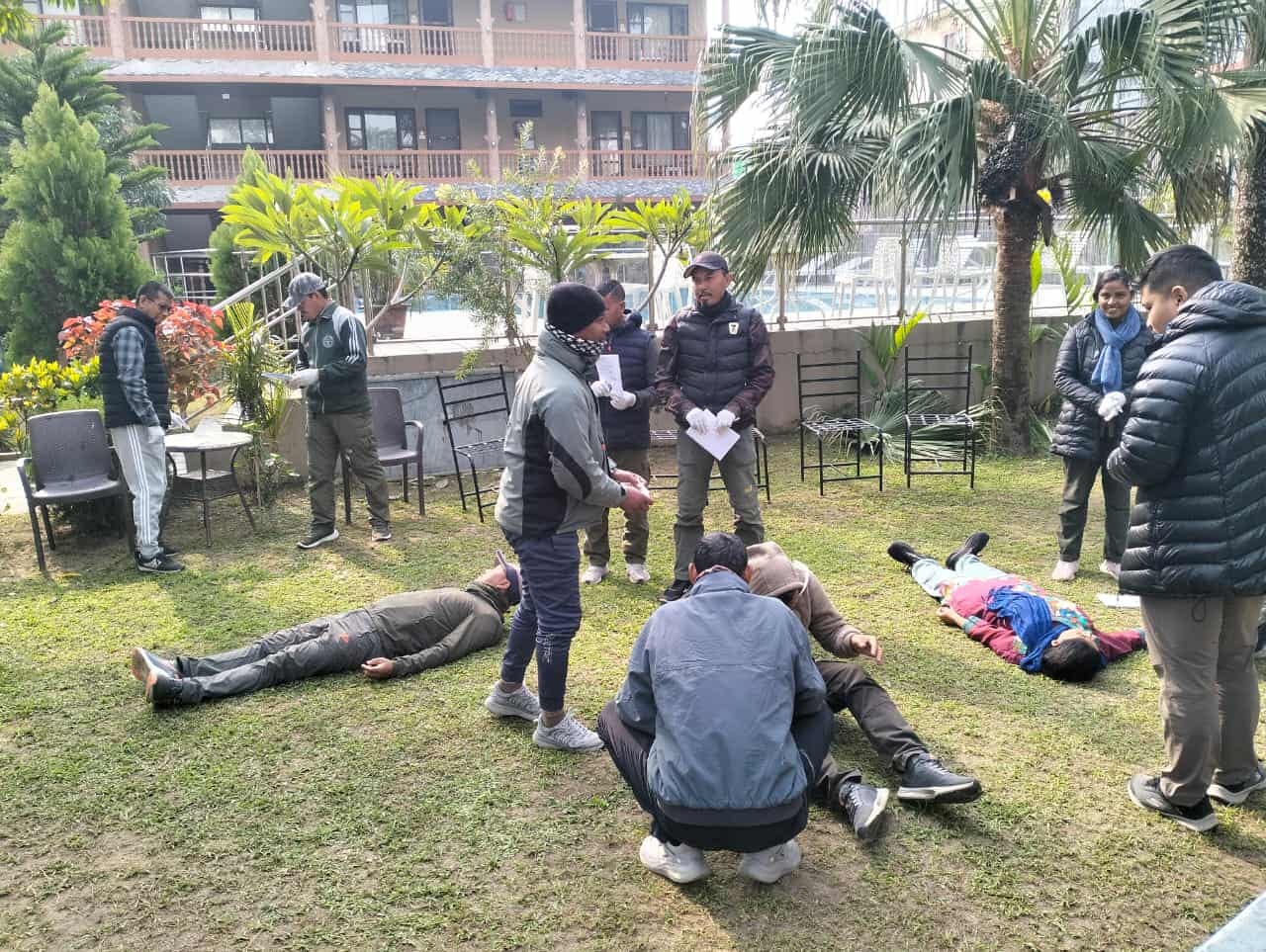
A Wilderness First Aid Training has been conducted for nature and jungle safari guides working in and around Chitwan National Park, to strengthen their safety preparedness and emergency response capacity. The training was organized under the Sustainable Tourism Project (STP) jointly implemented by the Nepal Tourism Board (NTB) and the United Nations Development Programme (UNDP), in collaboration with Himalayan Medics and coordinated with the Nature Guide Association, Chitwan National Park.
The two-day training, held on Poush 7-8, brought together 24 jungle safari and nature guides from areas surrounding Chitwan National Park. The program focused on equipping guides with practical skills to respond effectively to health and safety emergencies that may arise in wilderness and protected-area settings.

Practical, Hands-On Emergency Response Training
Participants received hands-on, practice-oriented training on a wide range of emergency scenarios commonly encountered in jungle and riverine environments. Key areas covered included first aid for accidental injuries, wildlife attacks, snakebites, heatstroke and hypothermia, trauma management, cardiopulmonary resuscitation (CPR), and the safe evacuation and transfer of injured persons from remote locations.
The training emphasized real-life simulations to ensure guides could confidently apply the skills in high-pressure situations. Given the challenging terrain and limited access to immediate medical facilities in forested and protected areas, the ability to provide a timely first response was highlighted as a critical component of tourist safety.
Guides as the First Line of Tourist Safety
Lead trainer Ajaya Narsingh Rana stressed the importance of rapid response skills for guides operating in jungles, rivers, and remote landscapes. He noted that guides are often the first and most decisive responders during emergencies involving tourists.
“Guides play a frontline role in tourist safety. In wilderness settings, immediate and informed action can make the difference between life and death. Trainings like this are essential to saving lives and ensuring safer tourism experiences,” Rana said.
Strengthening Responsible and Professional Tourism
Chitwan National Park is one of Nepal’s most prominent nature and wildlife tourism destinations, attracting millions of domestic and international visitors each year. With growing tourist inflow, ensuring safety, professionalism, and responsible tourism practices has become increasingly important.
STP Manager Dharma Raj Dawadi highlighted that enhancing the capacity of local guides is a vital investment in sustainable tourism. He explained that trained guides not only improve tourist safety but also boost the credibility and service quality of Nepal’s tourism sector.
“This training is expected to significantly improve tourist safety while enhancing the professionalism, confidence, and international service standards of local guides,” Dawadi stated. He further added that such initiatives contribute to responsible tourism development by creating a safer and more reliable visitor experience in protected areas.

Expansion Planned for Other Protected Areas
Organizers also indicated plans to expand similar wilderness safety trainings to other protected areas across Nepal in the coming days. By building local capacity and preparedness, the Sustainable Tourism Project aims to promote safe, inclusive, and high-quality tourism while supporting the livelihoods of local communities dependent on nature-based tourism.
The Wilderness First Aid Training marks another important step toward strengthening Nepal’s adventure and wildlife tourism sector by ensuring that frontline tourism professionals are well-equipped to manage risks and safeguard visitors in some of the country’s most iconic natural landscapes.