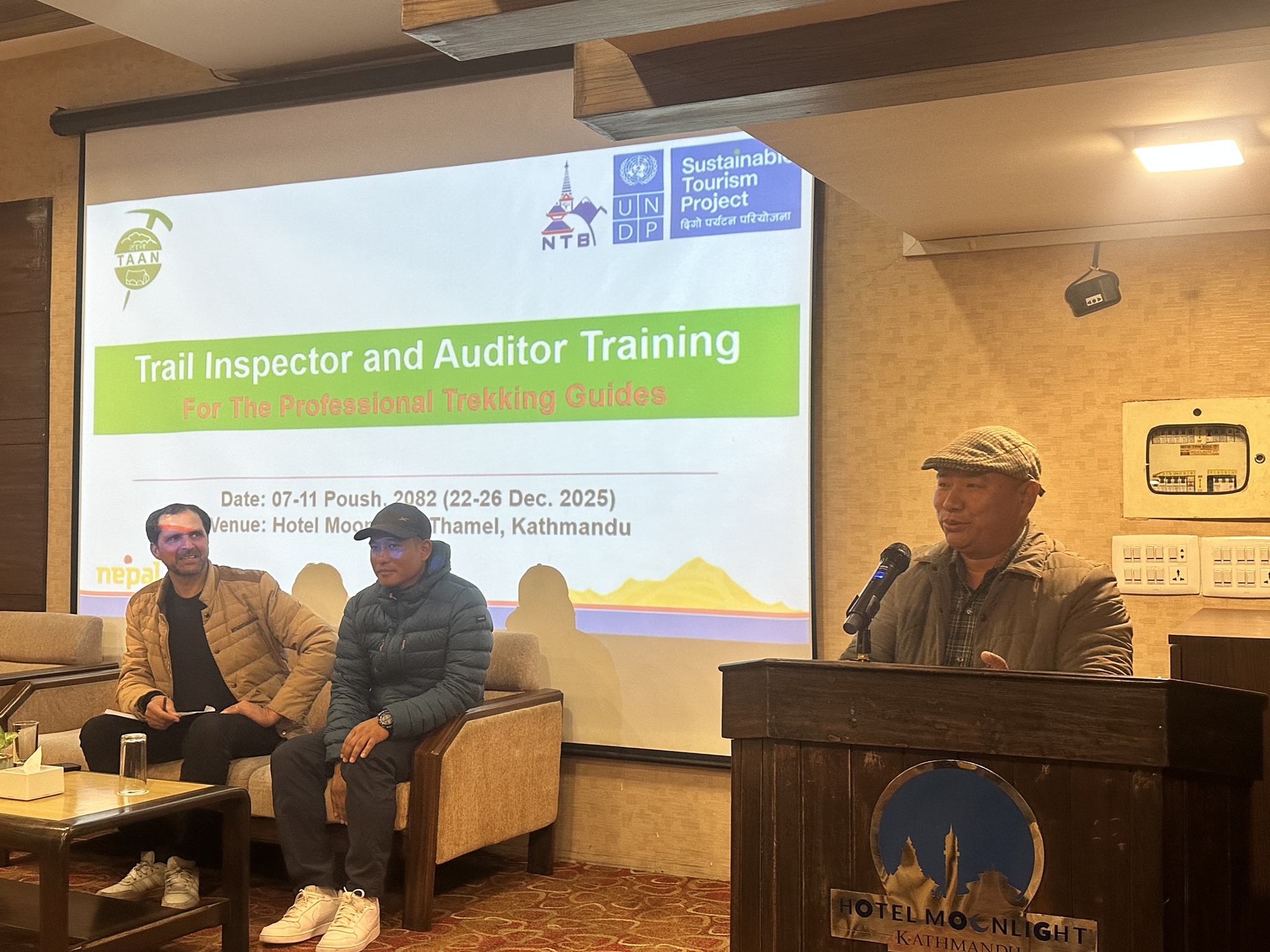
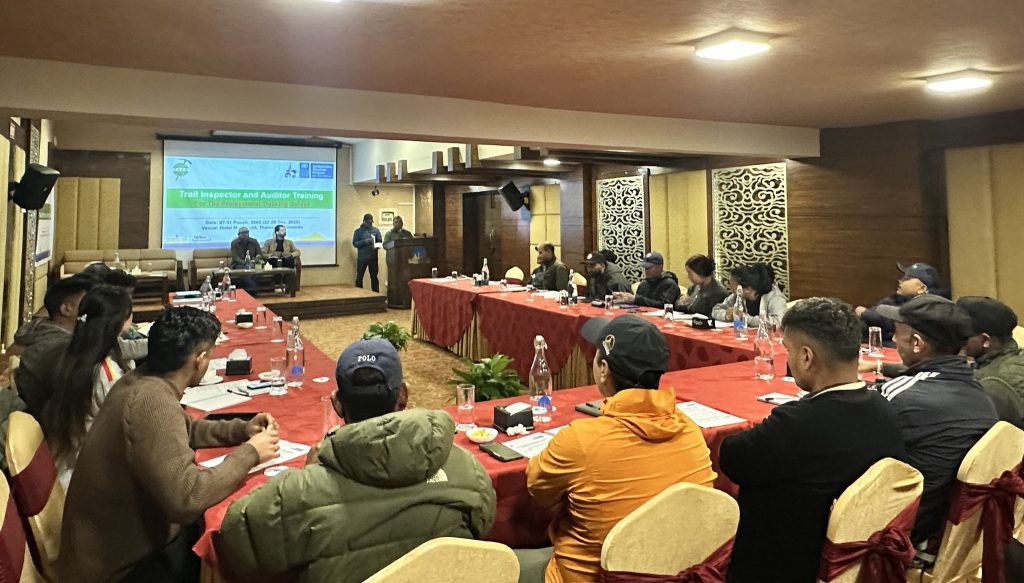
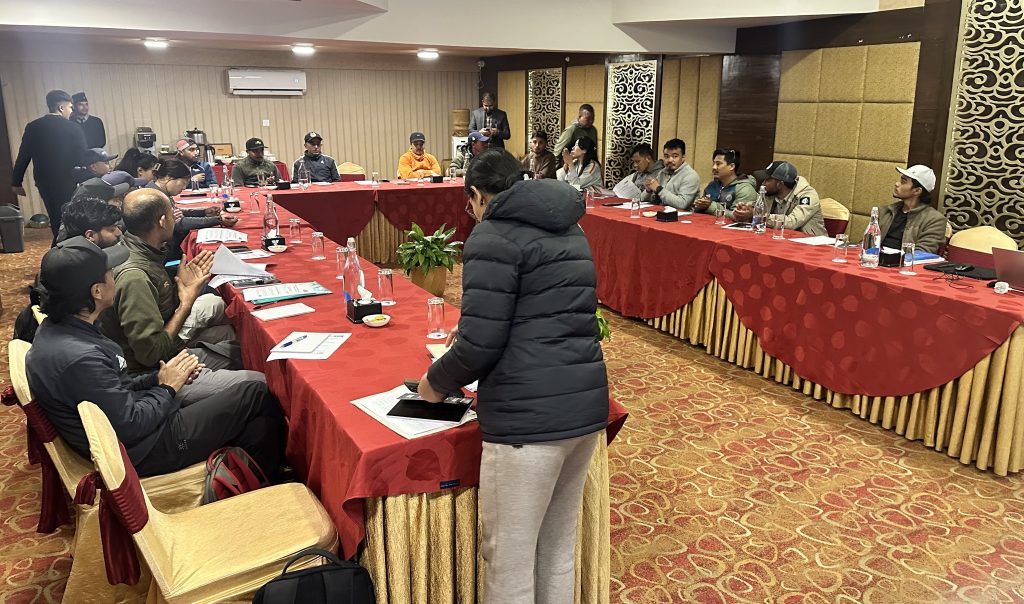
A five-day “Trail Inspector and Auditor Training” officially commenced on December 22, 2025, at Moonlight Hotel, Thamel, Kathmandu, with the aim of enhancing safety, sustainability, and quality standards across Nepal’s trekking trails. The training has brought together 22 experienced licensed trekking guides, including three women, from major trekking destinations such as Ilam, Makalu, Everest, Rolwaling, Manaslu, Annapurna, Dolpo, Rara–Jumla, and the Dhaulagiri–Sisne regions.
The training is jointly organized by the Trekking Agencies’ Association of Nepal (TAAN) and the Sustainable Tourism Project (STP), a collaborative initiative of the Nepal Tourism Board (NTB) and the United Nations Development Programme (UNDP). The program reflects a growing commitment by tourism stakeholders to ensure safer and more sustainable trekking experiences while also supporting trail communities and protecting fragile mountain ecosystems.

Enhancing Professional Capacity of Trekking Guides
The primary objective of the training is to strengthen the capacity of professional trekking guides by equipping them with advanced knowledge and practical skills related to trekking routes inspection, auditing, and standardization. Participants are being trained to assess trail conditions, identify safety risks, and recommend timely interventions for trail maintenance, upgrading, and development in line with nationally and internationally recognized standards.
By developing a pool of qualified trail inspectors and auditors, the program aims to establish a structured mechanism for monitoring trekking routes, reducing potential hazards for trekkers, and ensuring consistent quality across Nepal’s diverse trail network. The initiative also emphasizes the importance of responsible tourism practices that balance visitor safety, environmental protection, and community benefits.
Promoting Sustainable and Community-Friendly Tourism
Nepal’s trekking industry plays a crucial role in employment generation, rural livelihoods, and foreign exchange earnings. However, increased footfall, climate impacts, and infrastructure gaps have posed challenges to trail sustainability and safety. The training addresses these concerns by introducing participants to trail management principles, ecosystem conservation practices, and community-inclusive development approaches.
Through this program, trekking guides are being encouraged to act as frontline custodians of the trails, contributing not only to visitor safety but also to environmental stewardship and community engagement. The trained guides are expected to work closely with local authorities, trail committees, and tourism stakeholders to implement prompt and effective trail improvement measures.
Inauguration Highlights Collaborative Commitment
The short inauguration ceremony was chaired by TAAN General Secretary Mr. Sonam G. Sherpa, who highlighted the importance of structured trail inspection systems in enhancing Nepal’s reputation as a safe and sustainable trekking destination. He emphasized that the training would create long-term value for both trekkers and local communities while strengthening professional standards within the trekking industry.
The program was facilitated by TAAN Executive Committee Member and Training Department Coordinator Mr. Raju Gurung, while TAAN EC Member and Training Department Joint-Coordinator Mr. Ambir Bdr. Gurung formally welcomed the participants. They underscored TAAN’s commitment to building the technical and professional capacity of trekking guides to meet evolving global tourism standards.
Expert-Led Sessions for Practical Learning
The training is being delivered by expert resource persons from a range of national institutions, including TAAN, the National Trust for Nature Conservation (NTNC), Nepal Tourism Board (NTB), Department of Hydrology and Meteorology (DoHM), Department of National Parks and Wildlife Conservation (DNPWC), and the Department of Forests and Soil Conservation (DoFSC). These experts are providing participants with practical insights into trail safety standards, environmental protection guidelines, disaster risk management, and regulatory frameworks. Interactive sessions, case studies, and field-based learning components are designed to ensure that participants gain hands-on experience applicable to real-world trekking environments.

Toward Safer and Higher-Quality Trekking Experiences
With trekkers increasingly seeking safe, responsible, and high-quality travel experiences, the Trail Inspector and Auditor Training is a timely initiative that reinforces Nepal’s commitment to sustainable tourism development. By empowering trekking guides with technical expertise and a broader understanding of trail governance, the program aims to strengthen Nepal’s trekking infrastructure, improve visitor confidence, and promote long-term sustainability of mountain tourism.
The organizers expressed confidence that the trained professionals will play a vital role in safeguarding trekking routes, uplifting service quality, and contributing to inclusive and environmentally responsible tourism growth across Nepal’s iconic trekking destinations.