The United States and Nepal have reached a major milestone in cultural cooperation with the signing of the United States–Nepal Cultural Property Agreement (CPA), marking more than four years of close bilateral collaboration aimed at protecting Nepal’s rich cultural heritage.

The agreement was formally signed by U.S. Ambassador to Nepal, Dean R. Thompson, and Dr. Suresh Suras Shrestha, Joint Secretary of Nepal’s Ministry of Culture, Tourism and Civil Aviation. The signing ceremony was witnessed by Mukunda Prasad Niroula, Secretary of the Ministry, along with senior officials from Nepal’s Department of Archaeology.
Safeguarding Nepal’s Cultural Legacy
The CPA establishes a comprehensive framework to prevent the illicit trafficking of cultural objects, restrict illegal imports into the United States, and support the recovery and return of artifacts removed in violation of national and international laws. Each repatriation under the agreement represents not just the return of physical objects but the restoration of history, identity, and traditions to their rightful communities. The agreement also encourages ethical cultural exchange while ensuring that Nepal’s invaluable antiquities are protected from illegal trade.
Ambassador Thompson Highlights Shared Responsibility
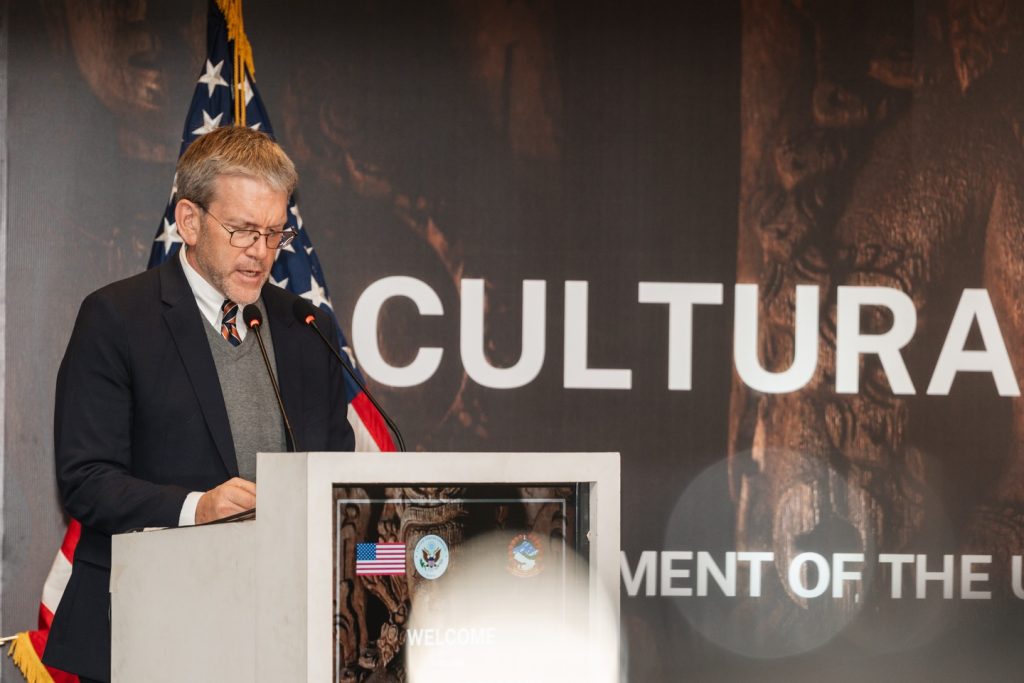
Speaking at the signing ceremony, Ambassador Thompson emphasized that the CPA reflects the deep respect the United States holds for Nepal’s cultural heritage. He stated that the agreement strengthens bilateral cooperation to prevent illegal trafficking, promotes lawful cultural exchange, and reinforces the shared responsibility to preserve Nepal’s heritage for future generations.
He noted that cultural heritage plays a vital role in connecting communities with their history and that protecting it is essential for maintaining Nepal’s identity and traditions.

Supporting Museums and Ethical Collecting Practices
For the United States, the CPA promotes responsible stewardship by encouraging museums, universities, and cultural institutions to adhere to ethical collecting practices and lawful exchanges. The agreement helps prevent illicit antiquities from entering the U.S. art market, strengthening transparency and accountability within the global cultural trade. This ensures that educational and cultural institutions continue to benefit from legitimate exchanges while discouraging illegal trafficking networks.
A Vital Tool for Nepal
For Nepal, the agreement provides a powerful mechanism to protect, recover, and celebrate its cultural legacy. The CPA strengthens the country’s capacity to reclaim stolen or illegally exported artifacts and safeguards historic sites, religious objects, and traditional artworks that are central to Nepal’s national identity. The agreement also contributes to promoting heritage-based tourism and increasing global awareness of Nepal’s ancient civilizations, art, and religious traditions.

Strengthening Cultural Ties Between Two Nations
The United States–Nepal Cultural Property Agreement represents a new chapter in bilateral cultural relations. By turning shared commitments into concrete action, both countries have reaffirmed their dedication to protecting cultural heritage, strengthening cultural ties, and ensuring that Nepal’s heritage continues to educate and inspire future generations in both nations. This landmark agreement stands as a symbol of cooperation, mutual respect, and shared responsibility in preserving humanity’s collective cultural heritage.