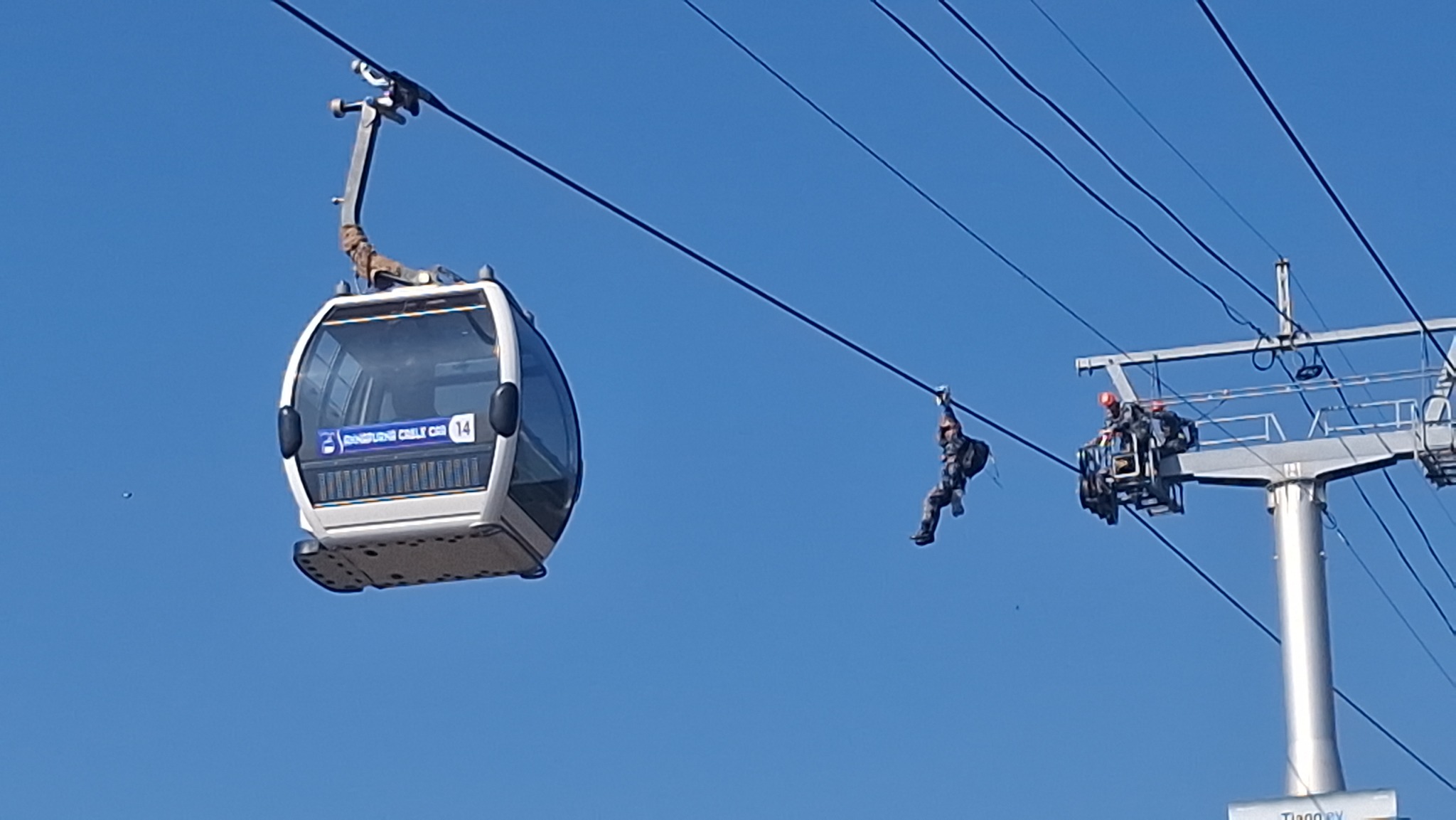
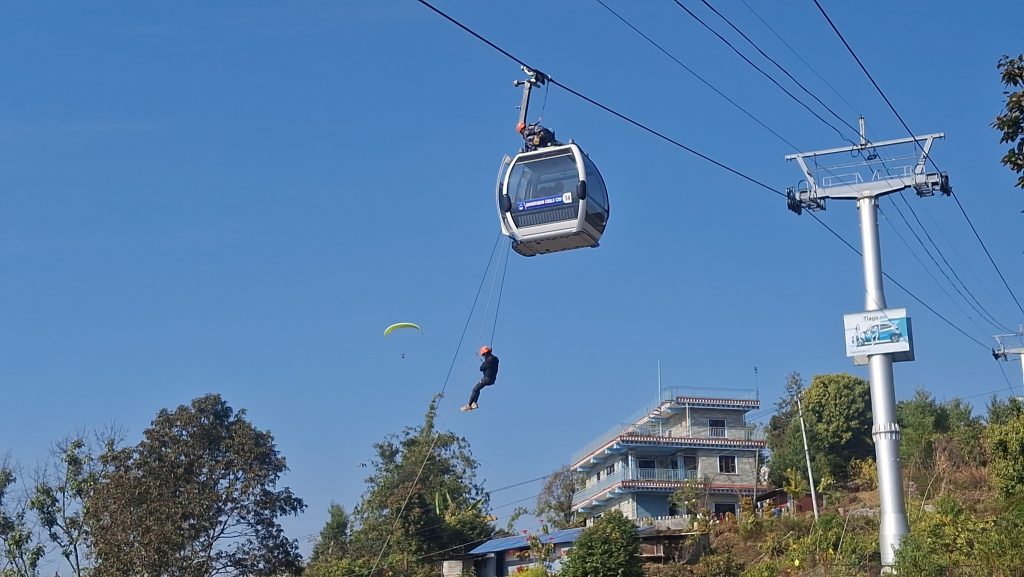
The Armed Police Force (APF) of Nepal conducted a rescue drill at the Sarangkot cable car station in Pokhara Metropolitan City–18, demonstrating preparedness for emergencies involving stranded passengers. The exercise was organized by the 24th Kalika Battalion, Kurintar unit, on Friday afternoon to practice the safe evacuation of passengers in the event of a sudden cable car stoppage.

During the drill, two passengers were “trapped” in a cable car cabin at Simtal while descending from Sarangkot to Sedi, and the Armed Police Force (APF) team successfully carried out their evacuation using specialized rescue techniques.
First-of-Its-Kind Cable Car Rescue in Nepal
This marks the first time the Armed Police Force has conducted a cable car-specific rescue drill in Nepal, highlighting their expanding role in disaster response for earthquakes, landslides, fires, and floods. The Armed Police Force (APF) stated that as the number of cable car installations continues to grow across the country, including Pokhara, regular emergency preparedness exercises have become essential to ensure passenger safety.
Officials Stress Importance of Pre-Disaster Preparation
Addressing the drill, Pokhara Metropolitan Mayor Dhanraj Acharya emphasized that structures such as cable cars, which form a critical part of the tourism sector, require proactive risk management and preparedness. “We often talk about pre-disaster planning, but in reality, preparation is often inadequate,” he said. “Given the geography, accidents can happen. Regular drills and coordination are therefore essential.”
Mayor Acharya also highlighted the APF’s close engagement with local communities and praised their readiness in disaster situations. While coordination and collaboration are key to effective rescue, he noted that manpower remains limited. The APF confirmed that no human casualties have occurred at cable car towers to date.
Call for Resources and Provincial Support
DIG Dipendra Shah, Provincial Head of the APF Muktinath Battalion No. 4, underlined the need for additional resources, equipment, and personnel to strengthen disaster response, urging support from the provincial government to enhance operational capacity.
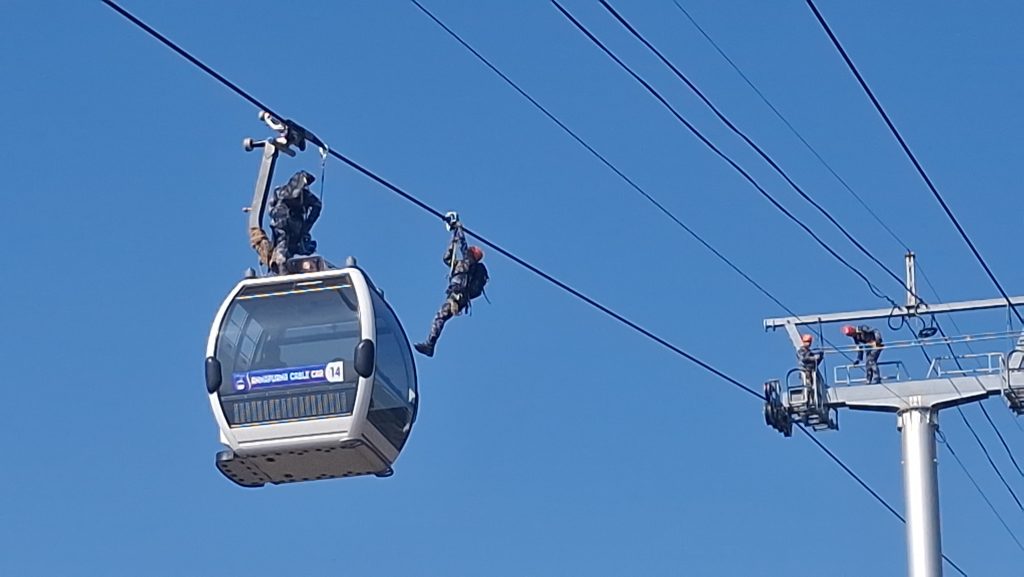
Meanwhile, Surya Prasad Timilsina, Commanding Officer of the 24th Battalion, explained the growing necessity for such exercises, given the rapid expansion of cable car networks in Nepal. “This is a courageous and high-risk rescue operation,” he said. “Human safety is paramount, and modern equipment, coordination, and communication are essential to conduct such operations effectively.”
Technical Details and Safety Measures
The Annapurna Cable Car, where the drill took place, consists of 38 cabins, each with a capacity of eight passengers, supported by 11 towers along the route. The drill highlighted the importance of skill, specialized equipment, and meticulous preparation in minimizing human risk during cable car emergencies. Chief District Officer Rudradevi Sharma emphasized that regular drills, combined with proper training and advanced tools, are critical to reducing human casualties during emergencies.

Preparing for Nepal’s Growing Tourism Infrastructure
With cable cars increasingly becoming a core part of Nepal’s tourism infrastructure, these drills demonstrate the APF’s commitment to ensuring visitor safety. By combining advanced technology, expert personnel, and coordinated planning, authorities aim to make adventure tourism both exciting and secure for local and international travelers alike.