A Sacred Landscape Like No Other
Rising to an elevation of 6,638 metres above sea level in the remote Ngari Prefecture of the Tibet Autonomous Region of China, Mount Kailash stands apart from every other peak on Earth, not because it is the tallest, but because no human being has ever stood on its summit, and by the conviction of millions of believers, none ever should.
Regarded as the axis of the universe, the physical embodiment of the cosmic mountain Meru, and the divine abode of Lord Shiva in Hindu tradition, Mount Kailash is perhaps the most spiritually significant geographical feature on the planet. Together with the adjacent Lake Mansarovar, it forms one of the most sacred pilgrimage destinations in the world, drawing hundreds of thousands of devotees from four of the world’s great religions: Hinduism, Buddhism, Jainism, and the ancient Tibetan Bon tradition.
Mythological and Religious Significance
The spiritual importance of Mount Kailash transcends any single religious tradition, making it uniquely universal in its sacred appeal. For Hindus, Kailash is the eternal home of Lord Shiva and Goddess Parvati. It is believed that Lord Shiva resides here in a state of perpetual meditation, and that the mountain radiates a divine energy that purifies all who approach it with devotion. The Ganges, Indus, Sutlej, and Brahmaputra, four of Asia’s greatest rivers, are said to originate from the vicinity of Mount Kailash, reinforcing its mythological identity as the source of life itself.

For Tibetan Buddhists, Kailash is known as Kangri Rinpoche, or “Precious Snow Mountain,” and is believed to be the home of the Buddha Demchok, a figure representing supreme bliss. In the Jain tradition, Mount Kailash, known as Astapada, is revered as the site where Rishabhadeva, the first of the twenty-four Tirthankaras, attained spiritual liberation. For followers of Bon, Tibet’s pre-Buddhist spiritual tradition, the mountain is the seat of all spiritual power and the centre of the universe.
Lake Mansarovar: The Sacred Waters of Purification
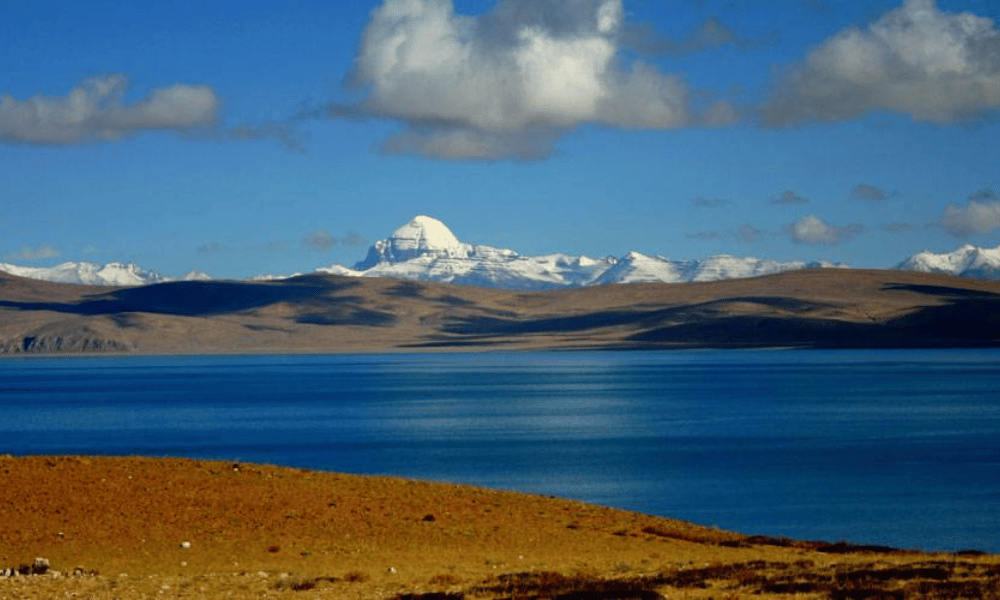
At the foot of Mount Kailash lies Lake Mansarovar, one of the highest freshwater lakes in the world, sitting at an altitude of approximately 4,590 metres. The name Mansarovar is derived from the Sanskrit words “Manas” (mind or consciousness) and “Sarovar” (lake), together meaning “Lake of Consciousness.” According to Hindu belief, the lake was first created in the mind of Lord Brahma, the creator, before it manifested on Earth, making it a place of divine origin and supreme purity.
A dip in the sacred waters of Lake Mansarovar is believed by Hindu pilgrims to cleanse the soul of all sins accumulated over a lifetime, and even over multiple lifetimes. The lake’s crystal-clear turquoise waters, framed by snow-capped peaks and vast open skies, create an atmosphere of profound stillness and transcendence that pilgrims describe as unlike anything else on Earth. The nearby Lake Rakshastal, by contrast, is associated in Hindu mythology with the demon king Ravana, giving the two lakes a symbolic duality of good and evil, the divine and the profane.
The Parikrama: Circumambulating the Sacred Mountain
The centrepiece of any pilgrimage to Kailash Mansarovar is the Parikrama, the ritual circumambulation of Mount Kailash on foot. Spanning approximately 52 kilometres, the Parikrama typically takes three days to complete and reaches its highest point at the Dolma La Pass, standing at a formidable 5,636 metres above sea level. The journey is physically demanding, requiring pilgrims to navigate steep mountain terrain, high-altitude cold, unpredictable weather, and thin oxygen levels that test even seasoned trekkers.
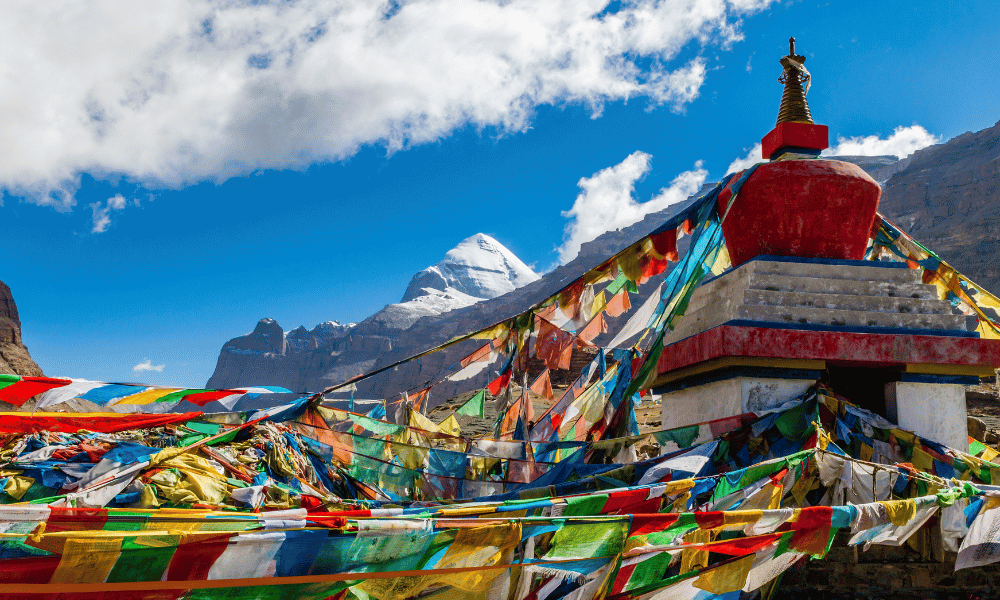
For devout pilgrims, however, the physical hardship is inseparable from the spiritual purpose. Many Tibetan Buddhist devotees perform the Parikrama as a full-body prostration, measuring the entire 52-kilometre circuit with their bodies pressed to the ground at each step, a practice that can take several weeks to complete and is considered an act of supreme devotion. It is widely believed across traditions that completing one full Parikrama of Mount Kailash washes away the sins of an entire lifetime, while 108 circumambulations are said to guarantee liberation from the cycle of birth and death.
The Pilgrimage Route and Access for Nepali Pilgrims
For pilgrims from Nepal and India, the journey to Kailash Mansarovar has historically been undertaken through several routes, the most traditional of which passes through the Humla district of northwestern Nepal via Simikot, crossing into Tibet through the Hilsa border point. Another popular route passes through the Rasuwa district via Kerung. In recent decades, a road-based route through China’s developed Tibetan highway network has also made the journey more accessible, though no less spiritually significant.
The Government of Nepal and the Government of India have both facilitated annual organised pilgrimage groups through diplomatic channels with China, given that the entire Kailash Mansarovar region lies within Chinese-administered Tibet. Pilgrims are required to obtain special permits and travel under organised group arrangements, making planning and coordination essential for those wishing to undertake this sacred journey.
Conservation and the Challenge of Modern Tourism
As awareness of Kailash Mansarovar has grown globally, so too has the challenge of managing the increasing flow of pilgrims and tourists to this remote and ecologically sensitive region. The high-altitude ecosystem surrounding Mount Kailash and Lake Mansarovar is fragile, and the impact of growing visitor numbers on local flora, fauna, water quality, and waste management has become a matter of serious concern for environmentalists, local communities, and religious authorities alike.

There is a growing consensus among stakeholders that sustainable and responsible pilgrimage practices must be promoted and enforced to protect the sanctity and ecological integrity of this irreplaceable landscape. For believers, the preservation of Kailash Mansarovar is not merely an environmental obligation but a spiritual one; the sacred must be protected, not exploited.
An Experience That Transforms All Who Undertake It
Whether approached as an act of religious devotion, a personal quest for meaning, or an extraordinary adventure in one of the world’s most remote landscapes, the journey to Kailash Mansarovar is universally described by those who have made it as a profoundly life-changing experience.
The combination of breathtaking natural grandeur, ancient spiritual energy, and the shared fellowship of fellow pilgrims from across the world creates an atmosphere that is difficult to describe in ordinary language. Pilgrims return from Kailash Mansarovar not only with memories of stunning mountain vistas and sacred waters, but with a deepened sense of humility, gratitude, and inner peace, the true gifts of this timeless Himalayan pilgrimage.