A total of 124 avalanche events were recorded in fiscal year 2082/83 through visual observations contributed by citizen scientists in the Annapurna Conservation Area.
The records were compiled by the NTNC–Annapurna Conservation Area Project (ACAP) as part of its ongoing efforts to monitor avalanche activity and improve understanding of mountain hazards in the region.

Small Avalanches Most Frequently Recorded
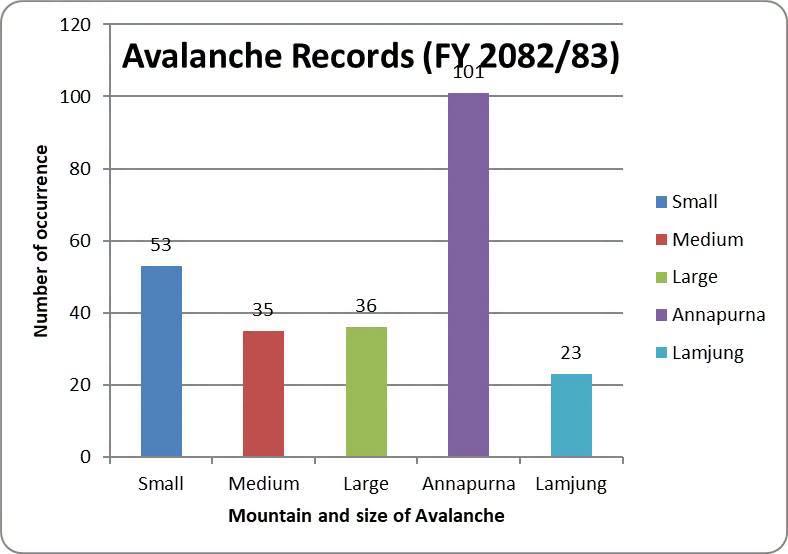
Among the 124 recorded events, small avalanches were the most common, with 53 incidents documented. Similarly, 36 large avalanches and 35 medium-sized avalanches were recorded during the period. The data provide valuable insight into the frequency and scale of avalanche activity across the region.
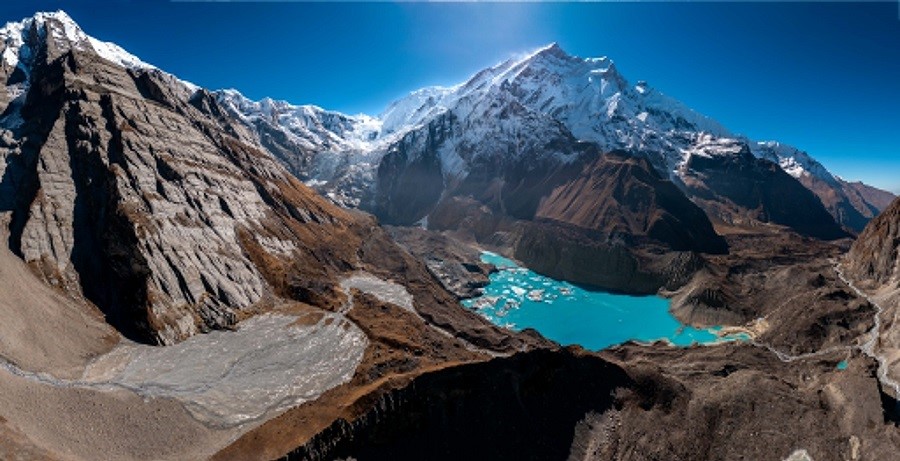
Annapurna Himal Accounts for 81.5 Percent of Recorded Avalanches
In terms of geographical distribution, the Annapurna Himal recorded the highest number of avalanche events. A total of 101 avalanches, representing 81.5 percent of all recorded incidents, occurred in the Annapurna Himal. Meanwhile, 23 avalanche events, or 18.5 percent of the total, were recorded in the Lamjung Himal.

Local Communities and Mountain Stakeholders Contribute to Monitoring
The NTNC–ACAP has been documenting avalanche occurrences over the past few years through a citizen science approach to better understand the frequency and spatial distribution of such events. Local residents, trekkers, mountain guides and field staff have contributed valuable information through a visual reporting system. Their observations have helped generate important baseline data on avalanche activity in the Annapurna Conservation Area.

Data to Support Hazard Assessment and Risk Reduction
The avalanche records are expected to support avalanche hazard assessment, risk reduction planning and the long-term monitoring of mountain hazards in the conservation area.
The continued collection of observations from local communities and people working in the mountains is also expected to strengthen the understanding of avalanche patterns and contribute to improved preparedness and safety in the region.