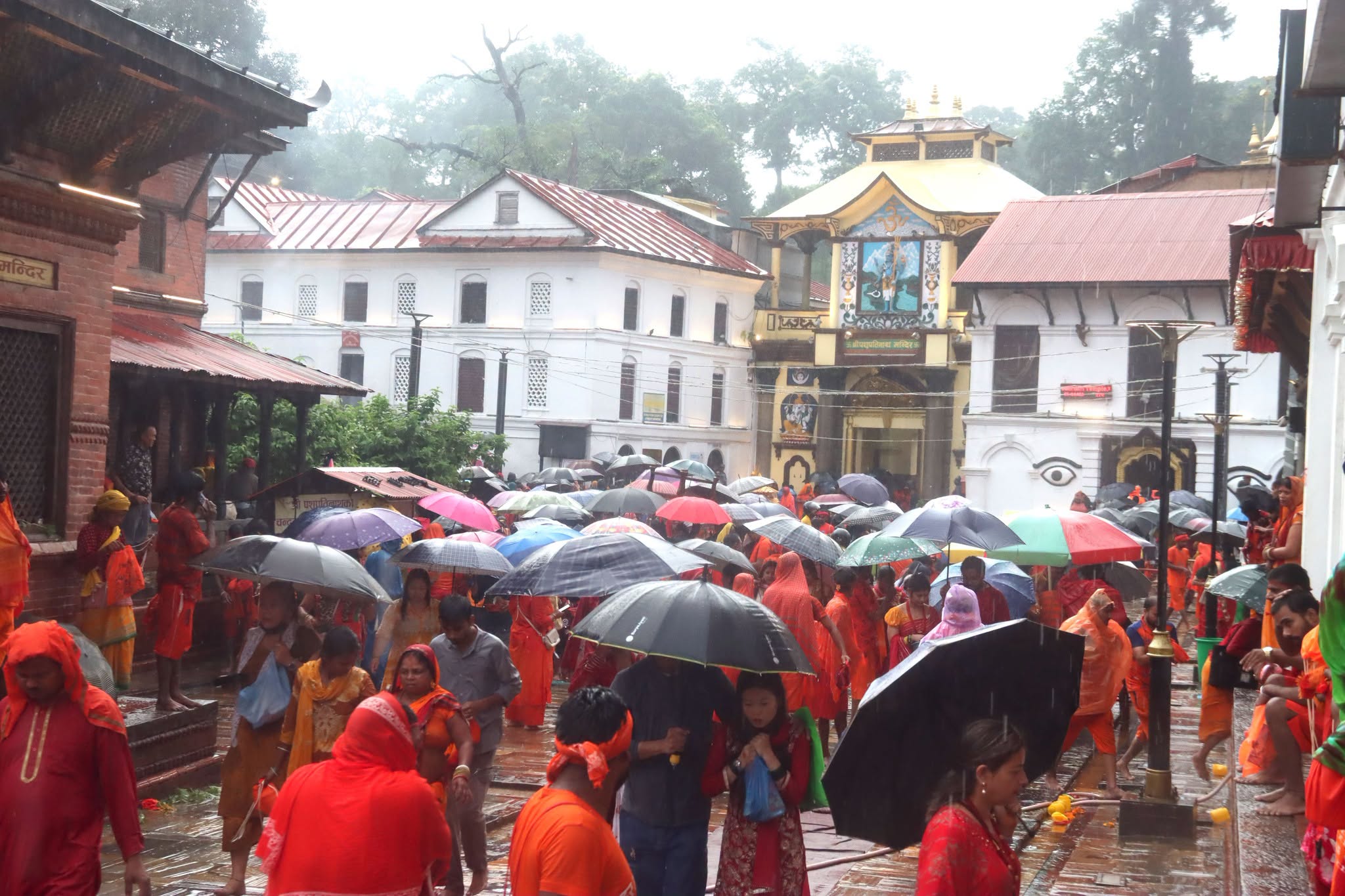
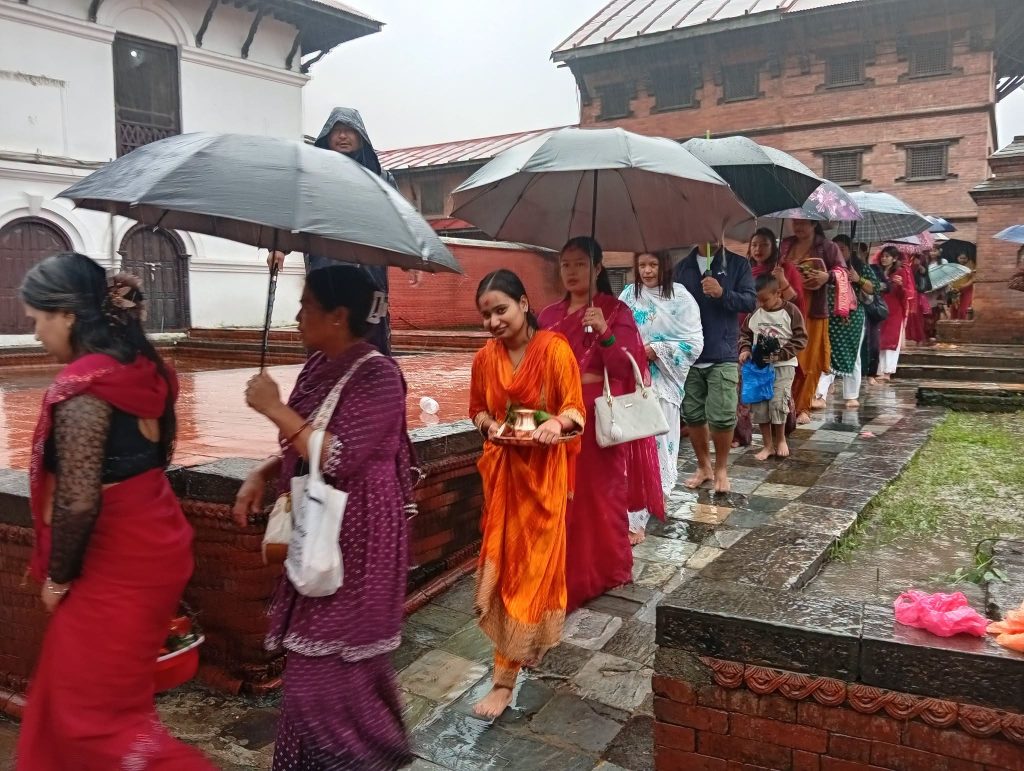
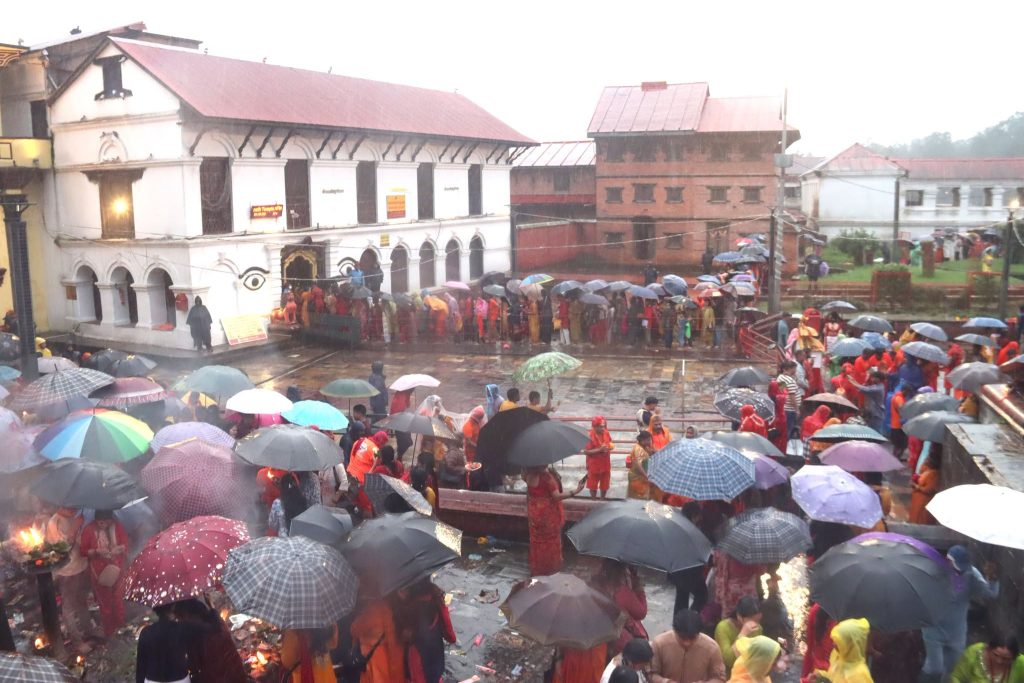
Thousands of Hindu devotees had gathered at the Pashupatinath Temple and major Shiva temples across Nepal from the early hours of Monday to mark the final Monday of Shrawan. Despite heavy rainfall in Kathmandu, devotees continued arriving at Pashupatinath, forming long queues and patiently waiting to enter the temple for worship and prayers.
Temple Opened from 3 AM as Devotees Arrived in Large Numbers
According to Kedar Man Bhandari, a member of the executive council of the Pashupati Area Development Trust, all four main doors of Pashupatinath Temple were opened at 3:00 AM to facilitate the large number of devotees. Devotees approached the temple from several routes, including Gaushala, Jayabageshwori, Mitra Park, Chabahil, Maijubahal, Chuchepati, Kumarigal, Bagmati Corridor, Guheshwari, Mrigasthali, Gaurinagar and Pingalasthan. Long queues extended toward Gaurinagar as devotees continued to arrive throughout the morning.

Special Arrangements Made for Safe and Organized Darshan
The Pashupati Area Development Trust had made arrangements to ensure that devotees could worship safely and conveniently during the religious occasion. Special arrangements were introduced for crowd management and the organization of worship rituals. Devotees carrying holy water from Sundarijal were also seen queuing to offer it to Lord Pashupatinath. Authorities mobilized staff and security personnel to manage the crowds and maintain order throughout the temple area.
Security and Traffic Management Intensified
The Pashupati Area Development Trust coordinated with the temple security unit, Nepal Police, Armed Police Force, Nepal Army, traffic police, Kathmandu Metropolitan City Police and various religious and social organizations to manage the large gathering. Traffic police maintained a strong presence at key locations including Gaushala, Jayabageshwori, Sifal, Mitra Park, Chabahil and Gaurinagar to regulate vehicle movement and reduce congestion around the temple. The extensive security and crowd-management arrangements were aimed at ensuring a smooth pilgrimage experience while maintaining public safety.
Health and Emergency Services Set Up for Devotees
Considering the large gathering, emergency and basic health services were also arranged in the Pashupati area. First-aid facilities were made available, while several organizations had established free health camps to provide medical assistance to devotees if needed. The arrangements were particularly important given the rainy weather and the large number of people gathering in the temple premises and surrounding areas.

Shiva Temples Across Kathmandu Also Saw Heavy Footfall
The religious fervor was not limited to Pashupatinath. According to reports from correspondents, devotees had gathered in large numbers at several prominent Shiva temples across Kathmandu and surrounding areas since early morning. Major temples including Gokarneshwar, Nageshwar and Doleshwar witnessed significant crowds.
The Makkhan Mahadev Temple, popularly known as the “Small Pashupatinath” in the Basantapur Durbar Square area, also attracted large numbers of worshippers. The heavy turnout at temples across the country on the final Monday of Shravan highlighted the continuing importance of religious pilgrimage in Nepal and the growing movement of domestic visitors to major Hindu heritage and pilgrimage sites.