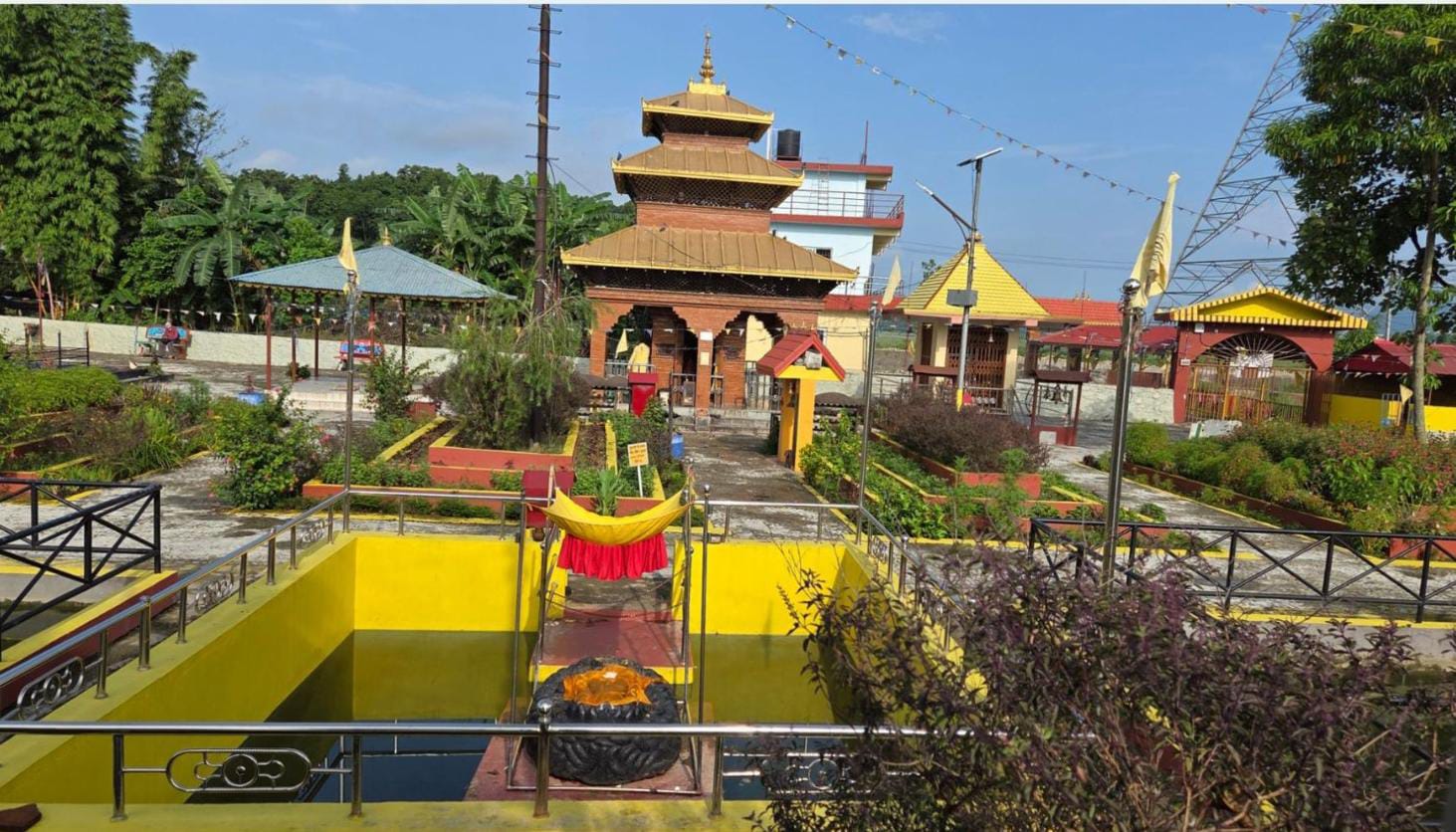
Kushmanda Sarovar Trivenidham in Hetauda is gradually emerging as a prominent religious and cultural tourism destination, following more than a decade of continuous infrastructure development and conservation efforts. Located at the confluence of the Ratnawati (Rapti), Karnawati (Karra) and Kaushabahini (Kukhreni) rivers, the site was once primarily associated with cremation rituals. Over the past 15 years, however, coordinated efforts by local communities, government agencies, religious figures and donors have transformed the area into a pilgrimage and recreational destination.
Growing Religious Tourism Attraction in Kushmanda Trivenidham
The Kushmanda Trivenidham attracts devotees from Hetauda and neighboring districts as well as from Kathmandu, Pokhara, Chitwan, Bara, Parsa, Rautahat and other parts of Nepal. According to Krishna Prasad Baral, priest of the Kushmanda Bhagwati Temple, visitor numbers increase significantly during major religious festivals and special occasions. Kushmanda Navami, observed on the ninth day of the bright fortnight of Kartik, is one of the most important occasions at the site, drawing thousands of devotees. On the occasion, devotees traditionally donate pumpkins, locally known as kumbhinda. The practice is based on the belief that bathing at the holy water sources and making the offering brings religious merit.

108 Gomukhi Dhara at the Center of Pilgrimage
The 108 Gomukhi Dhara, or cow-mouth-shaped water spouts, is among the principal religious attractions of Trivenidham. According to Ishwari Prasad Neupane, chairperson of the Kushmanda Sarovar Trivenidham Management Committee, the foundation stone for the 108 spouts was laid on Jestha 5, 2067 BS, by then Panchanga Nirnayak Committee Chairperson Professor Dr. Madhav Prasad Bhattarai.
Water was brought to the spouts later that year on Kartik 29, coinciding with Kushmanda Navami. The facilities initially operated using plastic pipelines before permanent and more attractive Gomukhi structures were installed. Devotees traditionally bathe under the 108 spouts before proceeding with other religious activities at the complex.
Deep-Rooted Religious and Mythological Significance
The Trivenidham carries considerable religious significance, with references to the site found in the Skanda Purana, Mahabharata, Varaha Purana and Vayu Purana, according to local religious traditions. It is believed that Goddess Kushmanda performed penance at the location during the Satya Yuga and attained spiritual powers through Lord Vishnu’s blessings.
Local religious traditions also connect the site with the Pandavas. According to accounts associated with the Skanda Purana, the Pandavas are believed to have visited the Triveni during their period of exile and performed bathing, prayers, tarpan, and donations. The site is also associated with stories of King Amburishi, who is believed to have attained blessings after bathing at the 108 water spouts following Lord Vishnu’s instructions. These traditions have contributed to the annual organization of Makar Mela at the site.
Development Transforms the Former Cremation Area
The present-day Trivenidham is the result of sustained efforts led by local stakeholders, particularly Ishwari Prasad Neupane, who became involved in developing the area after serving as a ward member and later ward chair of Hetauda-9. The site’s religious importance was highlighted during a Kotihom conducted by Yogi Naraharinath at Campa Danda in Hetauda in 2045 BS. Following discussions with religious and social figures, the present location was selected for development.
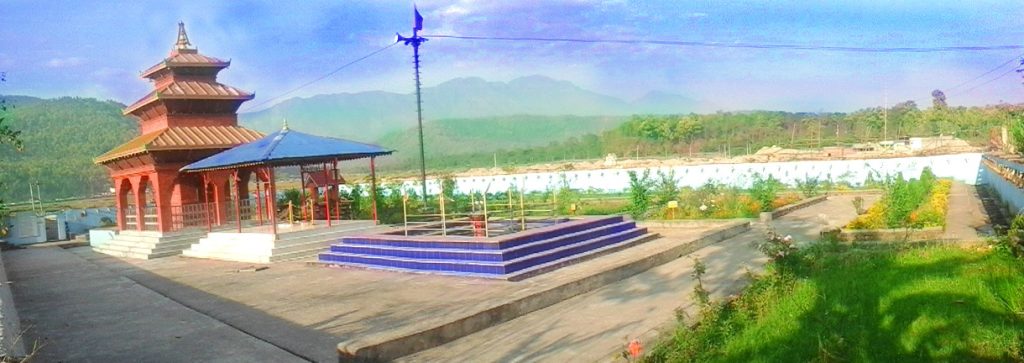
The installation of Kushmanda Bhagwati began during Ghatasthapana on Ashwin 22, 2067 BS, when Navaratri worship and jamara planting were initiated. Construction of the Bhagwati Temple was completed in 2070 BS. Development of the site has also contributed to riverbank protection, with more than one kilometer of riverbank around the area reportedly strengthened through embankment works.
Religious, Cultural and Recreational Attractions
The Trivenidham complex now offers a combination of religious, cultural and recreational attractions. The Kushmanda Sarovar, which has boating facilities, and Sis Mahal Park are among the major attractions. A structure depicting Hedamba Nagari, associated with the history and origin of Hetauda, has also been constructed. The park includes artistic representations of the five Pandavas and a scene depicting Bhimsen attacking Hidimba, connecting the destination with local mythology and the historical narrative of Hetauda. Sis Mahal is another popular attraction, featuring artistic representations of the Pandavas worshipping and circumambulating Goddess Bhagwati.
Representations of Religious Sites Across Nepal
The complex contains structures and artistic representations inspired by several important religious sites from across Nepal. These include Ghatotkach Temple of Dadeldhura, Banshi Gopal Temple of Makwanpur, Churiyamai, Bhutandevi, Barah Kshetra of Sunsari, Bhimsen of Dolakha, Palanchok Bhagwati of Kavre, Dakshinkali, Swayambhunath, Budhanilkantha and Pashupatinath of Kathmandu, Maya Devi of Lumbini, Muktinath of Mustang, Devghat of Tanahun, Badimalika of Bajura, Swargadwari of Pyuthan, Pathibhara of Taplejung and Gadhimai of Bara. A statue of Nepal Dhartimata holding the map of Nepal is also located inside the complex. Visitors can additionally watch a documentary covering Hetauda’s origin and history, its significance and its connection with the Pandavas. An automated Buddha statue has also been installed within the premises.
New Facilities Add Recreational Value
The destination is increasingly incorporating recreational facilities alongside its religious attractions. An electric children’s monorail has been completed with support from Hetauda Sub-Metropolitan City, providing an additional attraction for families visiting the complex. The combination of religious structures, gardens, cultural displays, boating facilities and recreational infrastructure is helping broaden the destination’s appeal beyond pilgrims to general domestic visitors.
Around NPR 60 Million Invested in Infrastructure
Approximately NPR 60 million has been spent on various infrastructure projects at the Trivenidham so far, according to the management committee. Aiming to ensure the site’s long-term operation, an endowment fund was established in Magh 2070 BS with an initial contribution of NPR 1,100 from child saint Mohan Sharan. The fund has since grown to approximately NPR 5 million.
Around 10 employees are currently involved in the regular management of the temple and its surrounding facilities. The monthly expenditure on staff services and office management is estimated at around NPR 200,000. Visitors are charged NPR 60 to access attractions including Sis Mahal, the automated Buddha statue, Nepal Dhartimata and other structures. The children’s electric monorail requires an additional NPR 60 ticket.

Bridge Planned to Improve Accessibility
Improving access to the destination has also become part of the local government’s tourism development efforts. Hetauda Sub-Metropolitan City-9 Ward Chair Sukaram KC said preparations are underway to construct a bridge over the nearby Karra Khola, where the lack of a bridge has created difficulties for visitors and pilgrims. He said cooperation among the federal, provincial and local governments, along with community members and other stakeholders, has accelerated development activities at the site.
Plans to Strengthen Religious Tourism
The management committee has envisioned developing Kushmanda Sarovar Trivenidham as one of Nepal’s important religious tourism destinations. Plans include further strengthening tourism infrastructure, promoting the area’s religious and cultural heritage, and establishing a Gurukul within the complex. With its sacred river confluence, 108 Gomukhi Dhara, Kushmanda Bhagwati Temple, Sarovar, boating facilities, cultural structures, religious replicas, parks and recreational attractions, Kushmanda Sarovar Trivenidham is increasingly positioning itself as a destination that combines religious faith, cultural heritage and tourism experiences in Hetauda.