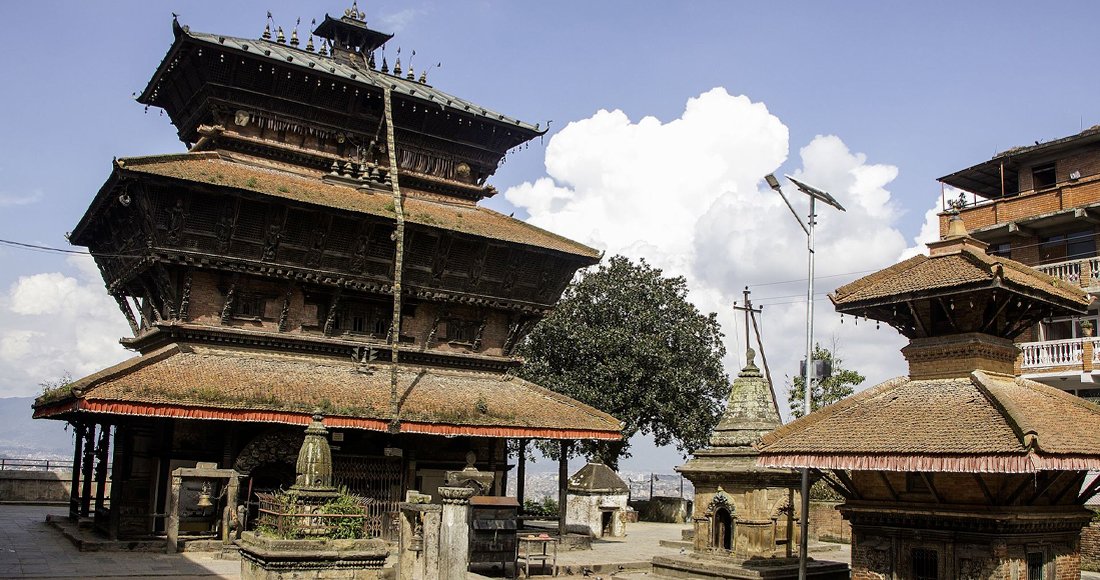
The historic city of Kirtipur came alive on Monday with the annual Bagh Bhairav Jatra, a traditional religious celebration held every year on Bhadra 1 at the Bagh Bhairav Temple. The festival is observed to commemorate the establishment of the Bagh Bhairav idol and is deeply connected with the history, religious traditions, and community life of Kirtipur. The celebration features the ceremonial carrying of the deity’s image on a traditional khat, accompanied by musical instruments and a procession through several historic neighborhoods of the city, providing a vivid expression of Kirtipur’s enduring cultural heritage.
Where Kirtipur’s history meets the Bagh Bhairav tradition
The origins of Bagh Bhairav are traditionally associated with the foundation of Kirtipur itself. According to the Gopal Raj Vamshavali, Kirtipur was established by King Shivadeva III sometime between Nepal Sambat 219 and 246. Local tradition maintains that the Bagh Bhairav deity was also established during the early period of Kirtipur’s foundation. This long-standing connection has made the Bagh Bhairav Temple an important religious site for the people of Kirtipur and an enduring part of the city’s historical identity.

The annual festival therefore represents more than a single day of religious observance. It connects the present-day community with the traditions associated with the early development of Kirtipur, where religious institutions, traditional settlements and community practices have historically developed alongside one another. The continuation of the Bagh Bhairav Jatra demonstrates how the city’s religious heritage remains closely connected with its social and cultural life, rather than being preserved only as a historical memory.
The mysterious story behind the tongue-less tiger
One of the most distinctive features of Bagh Bhairav is the tongue-less tiger image, whose unusual appearance is explained through a popular local legend. According to the story, the area where the Bagh Bhairav Temple now stands was once a forest where shepherds regularly took their sheep and goats to graze. During this period, a shepherd reportedly discovered a tiger-shaped image made from clay in the forest. The image was notable because it had no tongue.
The legend continues that the tiger later assumed the form of Bhairav, a powerful manifestation associated with Lord Shiva, and began attacking livestock. Sheep, goats, buffaloes, and other animals were reportedly killed by the tiger, causing anger among the shepherds. According to the traditional account, the shepherds responded by deliberately leaving the clay tiger without a tongue. This story has been passed down through generations and is traditionally regarded as the explanation for the distinctive tongue-less Bagh Bhairav idol worshipped at the temple today.
A festival shaped by changing traditions
The way the festival is conducted has developed over time while retaining its religious foundation. Cultural expert Dr. Brajamuni Bajracharya said that Bagh Bhairav Jatra was traditionally celebrated through religious worship accompanied by homa rituals. The khat procession, which has now become one of the most recognizable features of the festival, was introduced later, beginning in B.S. 2013. The change added a public ceremonial dimension to the festival while preserving its central religious significance.
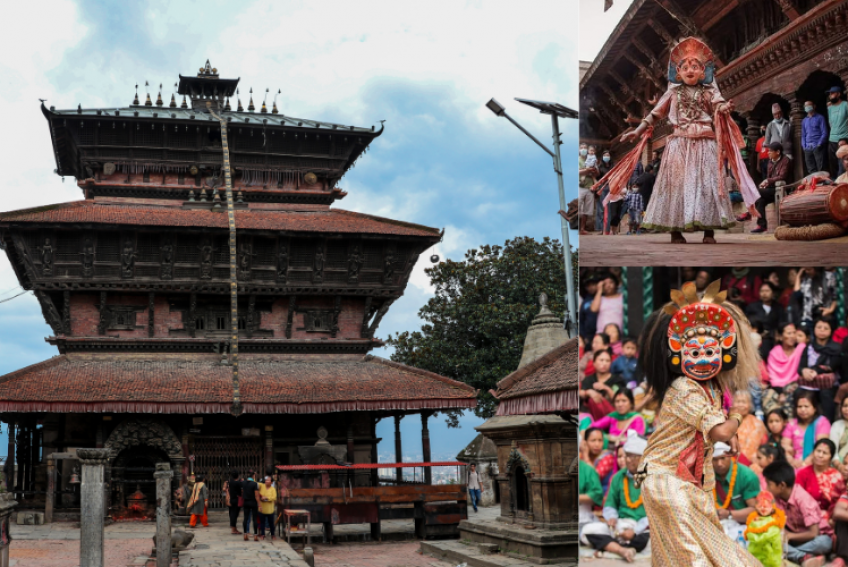
The Bagh Bhairav Temple contains three idols, each forming part of the temple’s religious tradition. Among them, a smaller idol measuring approximately 12 inches is taken to Lakshmi Buigal and ceremonially installed there. The sacred image is subsequently placed on the traditional khat, where it becomes the focus of the procession. The practice reflects the distinctive way religious observances in Kirtipur combine sacred rituals with collective participation by the wider community.
The khat procession moves through the old city
The ceremonial procession is carried through Kirtipur with the Bagh Bhairav image placed on the khat and carried by four people, while traditional musical instruments accompany the procession. Beginning at the Bagh Bhairav Temple, the route passes through several historic parts of the city, including Chithu Tole, Tannani, Singha Dabu, De Pukhu, Galchhen and Layaku, before returning to the Bagh Bhairav Temple.
The procession is an important part of the festival because it takes the religious celebration beyond the temple itself and into the historic neighborhoods of Kirtipur. Residents along the traditional route are able to participate in and witness the ceremony, creating a strong connection between the deity, the temple and the wider community. The movement of the khat through the old settlement, together with traditional music and ritual practices, gives the festival a distinctly communal character and helps maintain customs that have been passed from one generation to another.
Kirtipur’s living culture on display
The Bagh Bhairav Jatra also demonstrates the importance of living cultural heritage in Kirtipur. The city’s heritage is not limited to its historic buildings and religious monuments; it is also expressed through festivals, legends, rituals, music and community participation. The annual Bagh Bhairav celebration brings these elements together, allowing traditional practices to continue within the same historic environment where they have been observed for generations.

For cultural and heritage tourism, such celebrations provide visitors with an opportunity to experience Kirtipur beyond its architecture and historic sites. The festival reveals the relationship between religious belief and community life while offering an insight into the traditional customs of the Newar settlement. The distinctive Bagh Bhairav image, the centuries-old legend surrounding it, and the ceremonial khat procession together give the festival a character that is closely tied to Kirtipur itself.
Preserving a tradition rooted in Kirtipur’s identity
The annual continuation of the Bagh Bhairav Jatra demonstrates the community’s commitment to preserving a tradition deeply embedded in Kirtipur’s history. From the legend of the tongue-less tiger to the rituals surrounding the temple and the procession through the city’s historic neighborhoods, every element contributes to the festival’s cultural significance. While the form of the celebration has developed over time, its connection with Kirtipur’s history, religious beliefs, and community traditions remains strong.
As Kirtipur continues to attract visitors interested in the Kathmandu Valley’s historic and cultural destinations, festivals such as Bagh Bhairav Jatra add another dimension to its tourism appeal. They allow visitors to see heritage as something actively practised by the community rather than preserved in monuments. In this sense, the annual jatra remains both a religious tradition and a living expression of Kirtipur’s cultural identity.