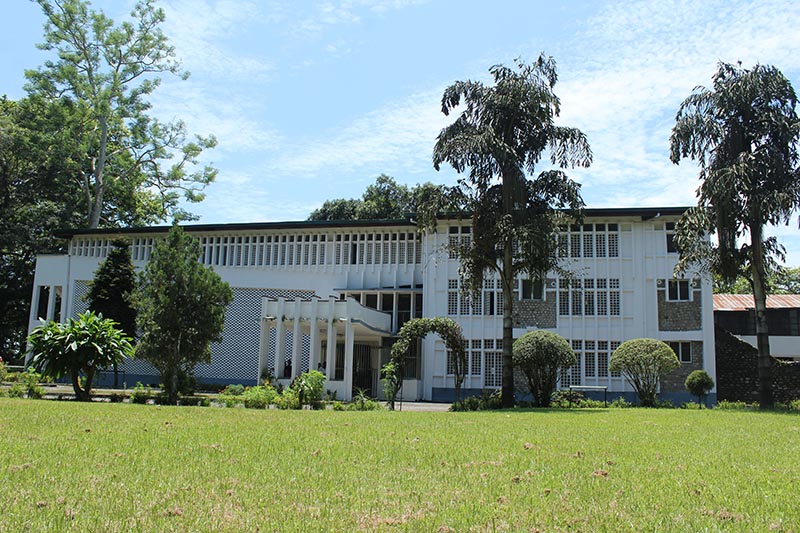
Diyalo Bangla, a historic former royal residence in Bharatpur, is steadily emerging as a notable heritage tourism attraction in Chitwan, with 25,425 people visiting the site during the last fiscal year. The historic property, which was opened to the general public in June 2024, collected Rs 24.58 lakh in entrance revenue during the same period. The visitors included tourists from India and China as well as Nepali visitors, students and senior citizens, indicating growing public interest in a site that offers a rare opportunity to experience preserved structures and belongings associated with Nepal’s former royal family.
A historic property opens its doors to visitors
Located in Bharatpur Metropolitan City 1, Diyalo Bangla was opened to the public on July 07, 2024, after Bharatpur Metropolitan City requested the Nepal Trust to make the property accessible to visitors. The Diyalo Bangla palace remains under the management of Nepal Trust, but the decision to open it has allowed the public to enter a property that was previously associated with the private activities of the former royal family. According to the metropolitan city’s information officer Menuka Pandey, the 25,425 visitors recorded in the last fiscal year included 169 senior citizens and 1,533 students, in addition to other domestic visitors and tourists from abroad at Diyalo Bangla.

The number is significant because Diyalo Bangla is still a relatively new addition to Bharatpur’s publicly accessible tourism attractions. Rather than relying only on natural scenery, the site offers visitors an opportunity to explore a preserved historical complex and learn about a period of Nepal’s modern history. The presence of visitors from India and China also indicates that the attraction has begun to receive international visitors, although the available figures do not provide a separate breakdown of foreign tourist numbers. Its combination of history, preserved buildings, and royal-era objects gives the property a distinct identity within Chitwan’s tourism landscape.
Visitor fees generate millions in revenue
The growing number of visitors has also translated into a direct source of revenue. Diyalo Bangla collected Rs 2,458,400 in entrance fees during the last fiscal year. Under the arrangement through which the property was opened to the public, 60 percent of the revenue is allocated to Nepal Trust, while the remaining 40 percent goes to Bharatpur Metropolitan City. The arrangement allows the two institutions involved in managing and operating the attraction to receive income from public visitation while keeping the historic property accessible to visitors.
The entrance fee has been structured according to different visitor categories. Senior citizens, students, and persons with disabilities are charged Rs 50, while other Nepali visitors pay Rs 100. The entrance fee for foreign visitors is Rs 200. Such differentiated fees allow the site to remain accessible to local visitors and students while also generating additional revenue from international tourism. The visitor and revenue figures therefore provide an early indication that opening the historic property has created both public access and an income-generating opportunity linked to heritage tourism.

Inside a palace associated with the former royal family
Diyalo Bangla’s appeal is closely connected to the historical remains preserved within the complex. The Diyalo Bangla palace was used by the former royal family, particularly during the winter months, and served as a place where members of the royal family stayed when they came to the area for hunting activities. Today, visitors can enter parts of the historic residence and observe rooms, photographs, objects, and other structures that have remained connected with its former use.
The first floor of the palace contains a large meeting hall, where photographs of former kings Mahendra and Birendra can still be seen on the walls. One of the most distinctive objects displayed inside the building is a preserved gharial crocodile placed on the staircase. According to the information provided about the site, the crocodile was hunted by then King Mahendra in 2026 B.S. A tiger’s head has also been preserved on the wall, giving visitors a direct visual connection to the hunting activities historically associated with the palace. These objects add to the site’s character as a place where visitors can observe physical remnants of Nepal’s royal-era history rather than simply reading about it.
Five rooms preserve the palace’s royal-era character
The Diyalo Bangla palace contains five rooms, or khopis, which were used by members of the former royal family. The first room was associated with Ratna Rajya, while the second and third rooms were used by the then King and Queen, respectively. The fourth and fifth rooms were used by other members of the royal family. Each of the five rooms has an attached toilet, and materials used by the former royal family have been preserved within the palace.
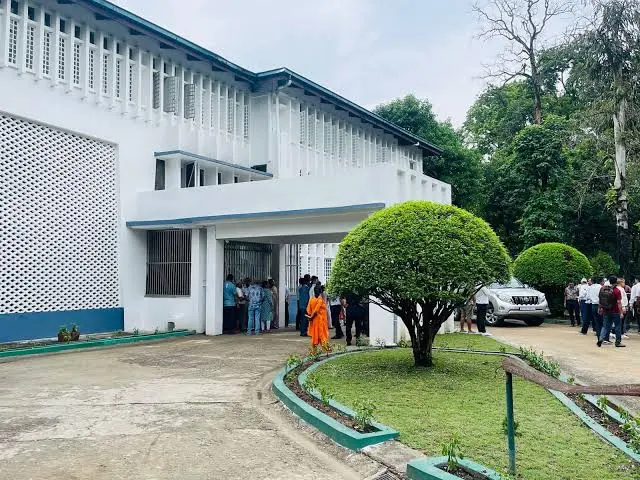
The historical complex extends beyond these rooms. Beside the palace stands Naniganj, a building used by female attendants, while the nearby ADC Quarter served the security personnel assigned to protect the former king. A garage was also constructed for vehicles used by the royal family. There is a swimming pool next to the complex, although it currently has no water, while another nearby building originally used for changing clothes is now occupied by a Nepal Trust unit. Together, these structures provide a broader picture of how the royal residence functioned, showing that Diyalo Bangla was not simply a single palace building but a larger complex designed around the needs of its occupants and staff.
Public interest helped turn the palace into a tourism site
The decision to open Diyalo Bangla was driven in part by public interest in seeing the structures that had been used by the former royal family. Bharatpur Metropolitan City’s acting mayor Chitrasen Adhikari said the metropolitan city approached Nepal Trust after members of the public expressed interest in visiting the complex. The property was subsequently made accessible to the general public, allowing visitors to experience its historical spaces and preserved materials.
The development has created a new form of heritage tourism in Bharatpur, where visitors can explore a site connected with Nepal’s royal history alongside the city’s other attractions. The 25,425 visitors recorded in the last fiscal year show that there is substantial interest in the property since it became publicly accessible. The participation of students and senior citizens further indicates that the site is attracting different categories of visitors rather than serving only as a destination for conventional tourists.

A growing heritage attraction for Chitwan
The performance of Diyalo Bangla during the last fiscal year demonstrates the tourism potential of opening historically important properties to the public. More than 25,000 visitors and Rs 24.58 lakh in entrance revenue within a year provide measurable evidence of demand for the attraction. At the same time, the site’s preserved rooms, royal-era belongings, photographs, hunting-related displays and surrounding structures allow visitors to understand an important chapter of Nepal’s history through a physical heritage site.
For Chitwan, the attraction adds another dimension to the tourism experience by bringing historical and cultural heritage into the visitor offering. The participation of foreign tourists from India and China is particularly notable, while the number of Nepali visitors demonstrates strong domestic interest. As Diyalo Bangla continues to receive visitors, its preservation and management will remain important to maintaining the historical character that makes the site attractive in the first place. The latest visitor figures suggest that a former royal residence has successfully transitioned into a publicly accessible heritage destination, creating both cultural value for visitors and a continuing source of revenue for its managing institutions.