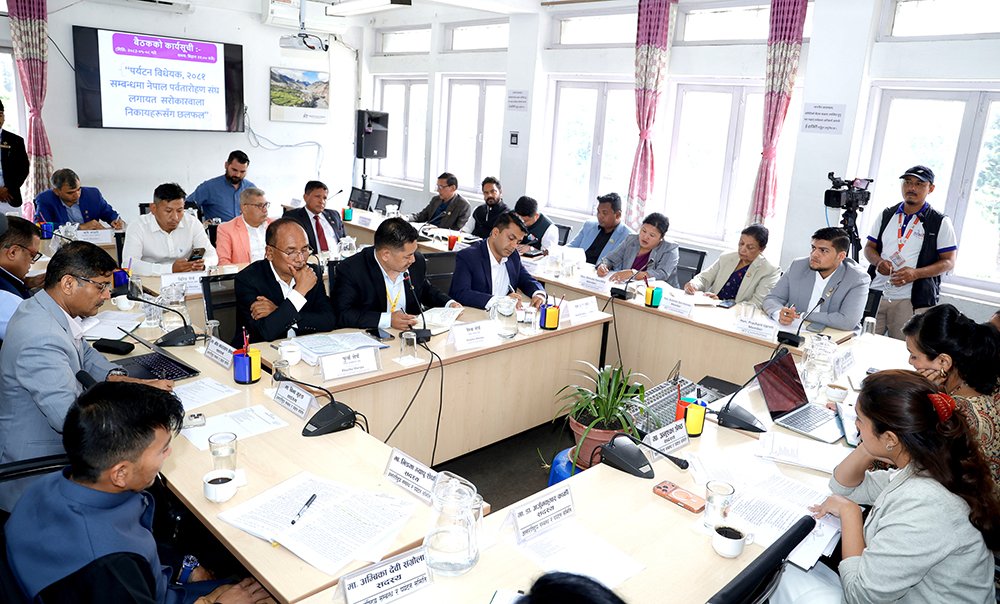
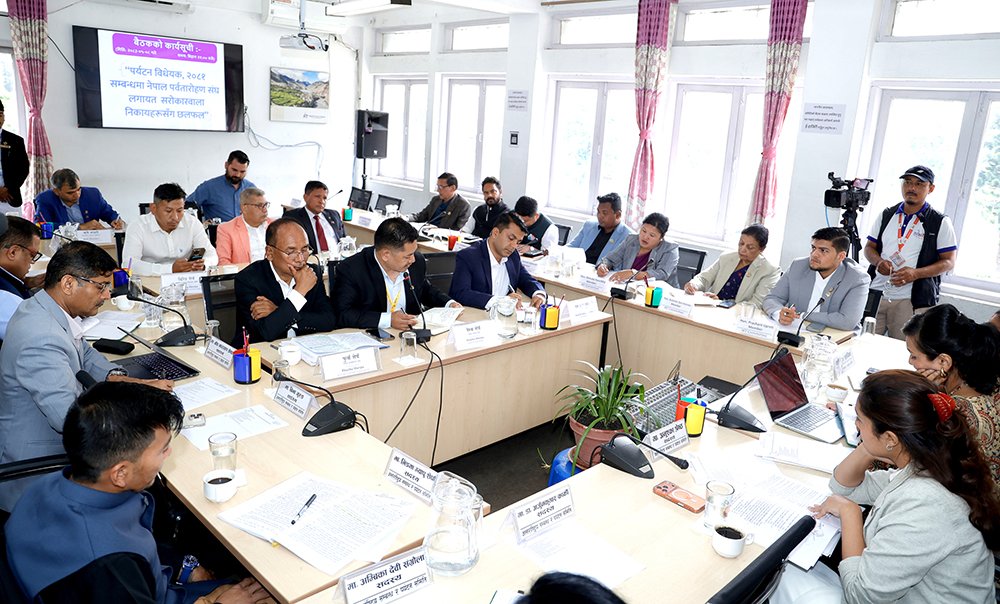
Tourism sector stakeholders have called for stronger provisions in Nepal’s proposed Tourism Bill, 2081, with particular emphasis on mountaineer insurance, climber safety, trekking sector regulation and measures to control so-called “fake rescues.” The recommendations were presented during a meeting of the International Relations and Tourism Committee on Monday, where representatives from various tourism-related organizations stressed the need for legislation that addresses the practical challenges facing Nepal’s tourism industry and supports its overall development.
Stakeholders Call For Comprehensive Tourism Legislation
Representatives participating in the committee meeting emphasized that the proposed legislation should address the broader needs of Nepal’s tourism sector and respond to the concerns of people and organizations directly involved in tourism activities. The discussion brought together representatives from mountaineering, trekking, mountain guiding, rescue, expedition and environmental organizations, who provided suggestions on how the Tourism Bill could better reflect the realities of the sector.

Nepal Mountaineering Association President Phur Gelje Sherpa said the association has 2,260 members, including mountaineers, workers and individuals involved in tourism promotion. He stressed that the proposed legislation should address the various problems affecting the tourism industry and ensure that the concerns of those working in the sector are appropriately incorporated into the legal framework.
Trekking Sector Seeks Appropriate Legal Provisions
The importance of trekking was also highlighted during the discussion. Trekking Agencies’ Association of Nepal (TAAN) President Sagar Pandey said that more than 300,000 tourists undertake trekking activities annually, while stating that more than 300,000 people are directly employed in the sector. He urged lawmakers to formulate the legislation with the specific needs and characteristics of the trekking industry in mind. Pandey’s recommendation reflects the significant role trekking plays within Nepal’s tourism sector and the large number of people whose livelihoods are connected to trekking-related activities. He called for the proposed law to provide appropriate provisions for the sector so that its concerns can be addressed through a clear and practical legal framework.
Mountaineer Safety And Welfare Fund Proposed
The safety and welfare of mountaineers was another major concern raised during the meeting. Everest Summiteers Association President Maya Sherpa stressed the need to ensure the safety of climbers and proposed the establishment of a dedicated mountaineers’ fund. The proposal for a climbers’ fund was presented as part of the broader effort to address the needs and concerns of mountaineers through the Tourism Bill. Stakeholders have also called for provisions related to mountaineers’ insurance, making climber protection and welfare important elements of the ongoing discussion over the proposed legislation.
Legal Measures Sought Against ‘Fake Rescues’
The meeting also highlighted concerns surrounding “fake rescues” in the tourism sector. Himalayan Rescue Association Nepal President Dambar Parajuli called for legal provisions to bring an end to such practices. The call places greater emphasis on establishing an appropriate legal framework for rescue-related activities within Nepal’s tourism sector. As rescue operations are closely connected with trekking and mountaineering, stakeholders have argued for clear provisions that can help ensure that rescue activities are properly managed and regulated.

Tourism Organizations Submit Recommendations
Representatives from several other tourism-related organizations also participated in the discussion and submitted their recommendations on the Tourism Bill. These included the Nepal National Mountain Guide Association, Sagarmatha Pollution Control Committee and Expedition Operators Association Nepal, along with representatives of other organizations associated with tourism businesses. The participation of organizations representing different areas of the tourism industry reflects the wide range of issues being considered during the preparation of the legislation. Their recommendations covered matters connected with mountaineering, trekking, rescue services, mountain guiding, expeditions and other tourism activities.
The meeting of the International Relations and Tourism Committee was chaired by Sumnima Udas. The discussions and recommendations are part of the ongoing process of considering the Tourism Bill, 2081, with tourism stakeholders seeking legislation that addresses sector-wide concerns while strengthening safety, welfare, regulation and overall tourism development in Nepal.