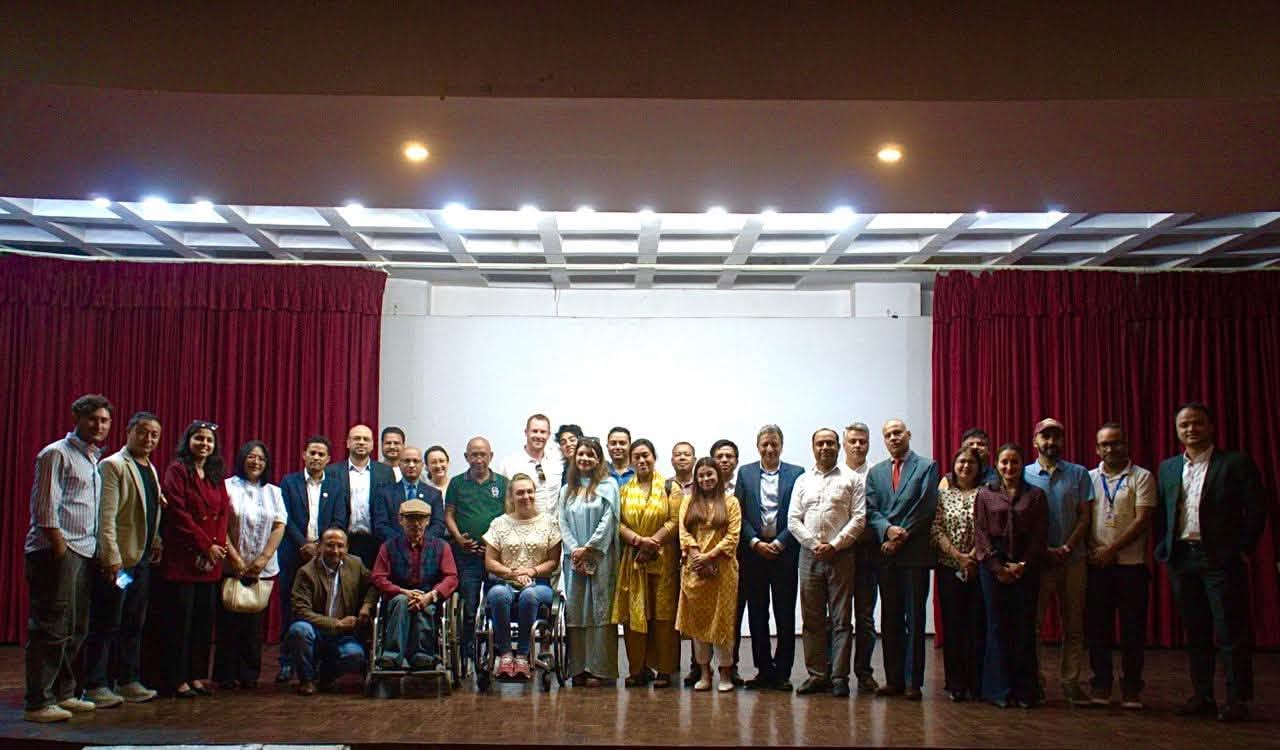
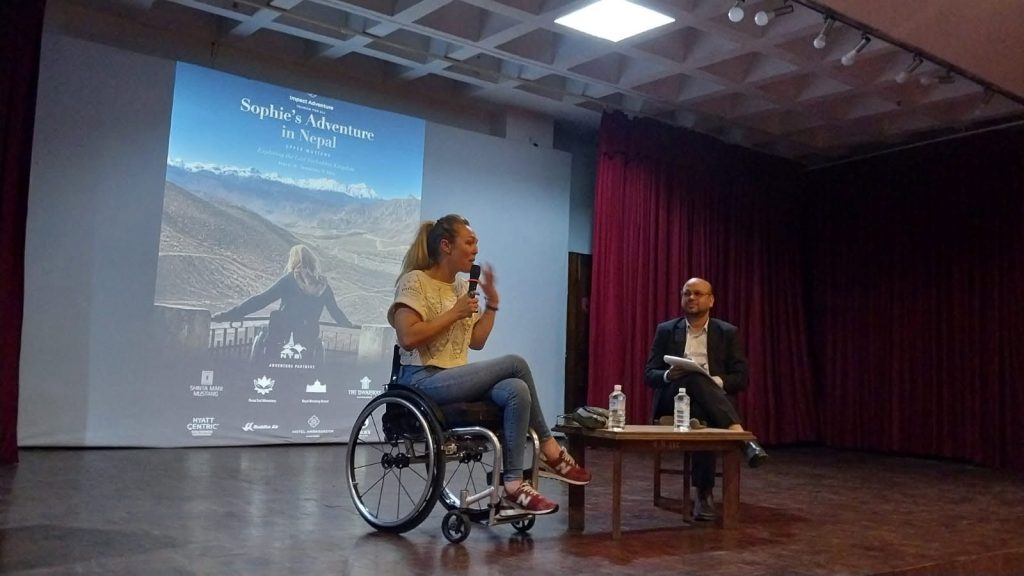
Nepal’s potential to emerge as a destination for accessible and inclusive adventure tourism has come into focus following the recent visit of British broadcaster, travel writer and disability rights advocate Sophie Morgan. Morgan shared her experiences and observations from travelling through Kathmandu, Pokhara and Upper Mustang during “Journeys Without Barriers: Sophie Morgan in Nepal,” a programme held at the Nepal Tourism Board (NTB) in Kathmandu on Friday.
The discussion explored the opportunities and challenges of making Nepal’s tourism experiences more accessible to travellers with disabilities, while highlighting the need for coordinated efforts across the government, private sector, tourism businesses and disability communities.
From Kathmandu to Upper Mustang: Experiencing Nepal First-Hand
Morgan travelled across Nepal from August 30 to September 11, 2026, in collaboration with Impact Adventure. Her itinerary included Kathmandu, Pokhara and Upper Mustang, allowing her to experience Nepal not only as a traveller but also from the perspective of a wheelchair user.
The journey provided first-hand insights into accessibility across several aspects of tourism, including transportation, accommodation, tourism activities, infrastructure and hospitality services. Rather than viewing accessibility solely through the availability of physical facilities, Morgan emphasized the importance of enabling travellers with disabilities to make independent choices and understand what they can realistically expect from a destination.
Reliable Information Can Make Travel More Independent
One of the key messages emerging from the discussion was the importance of providing clear, accurate, and honest accessibility information. According to Morgan, destinations do not necessarily need to remove every physical barrier immediately to become more inclusive. Providing detailed information about the accessibility of hotels, transportation, trails, attractions and other tourism facilities can itself make a significant difference.
Such information allows travellers with disabilities to assess their options, prepare appropriately and make decisions according to their individual needs. The approach could also help tourism businesses build greater trust with travellers by ensuring that accessibility claims accurately reflect the services and facilities available.
Nepal’s Hospitality Seen as a Major Strength
Reflecting on her experience, Morgan identified its people, culture and hospitality as some of the country’s strongest assets for developing inclusive tourism. She noted that Nepal has the potential to provide experiences that many travellers with disabilities may otherwise consider difficult or beyond their reach. According to Morgan, combining its natural hospitality with improved accessibility, dependable information and thoughtful tourism planning could allow the country to offer distinctive experiences to travellers with disabilities.
Inclusive Tourism Requires Collective Action
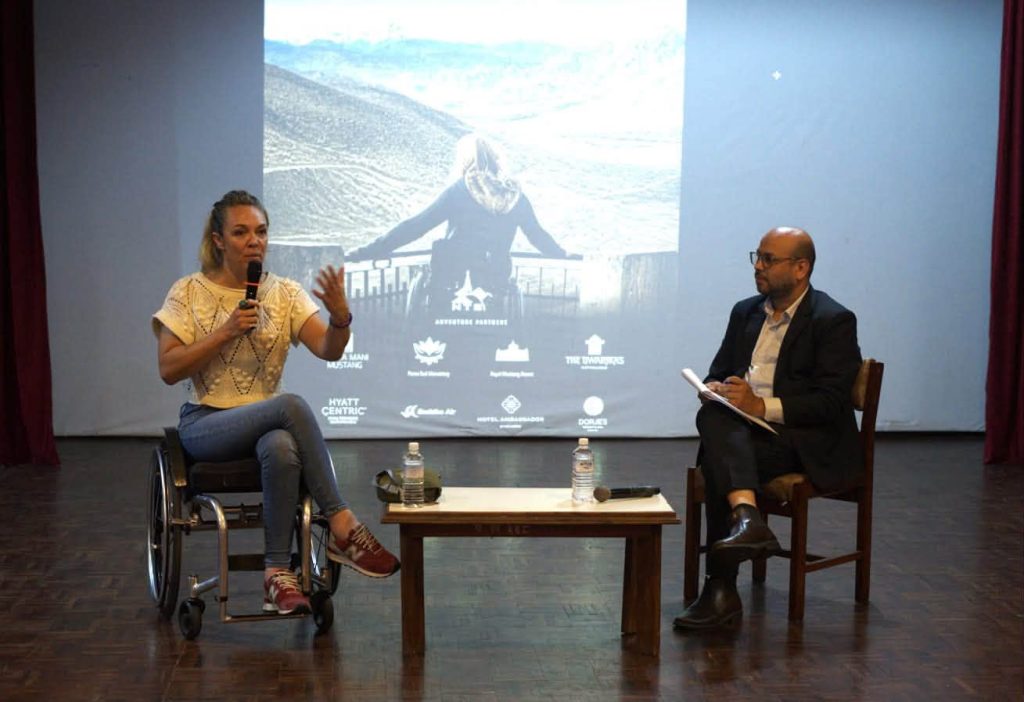
Morgan also stressed that accessible tourism cannot be developed through the efforts of individual tour operators or businesses alone. She called for stronger cooperation among government agencies, tourism businesses, the private sector, local communities and disability organizations.
Such collaboration, she said, is necessary to improve accessible infrastructure, introduce regular disability-awareness training and gradually address structural barriers across the tourism value chain. She also encouraged Nepal to look beyond treating accessible tourism as a small or specialized market. Instead, she highlighted it as a broader tourism opportunity that can generate benefits for travellers, businesses and local communities.
Accessibility Goes Beyond Physical Infrastructure
The programme further emphasized that accessibility should not be understood solely in terms of ramps, accessible rooms or other physical infrastructure. For travellers with disabilities, accessibility also involves having sufficient information, suitable transportation options, trained staff, supportive hospitality services and the freedom to participate in tourism activities as independently as possible. Improving these elements could allow Nepal to make gradual but meaningful progress toward creating more inclusive destinations without waiting for every tourism site to become fully accessible.
NTB Highlights Opportunity for Accessible Destinations
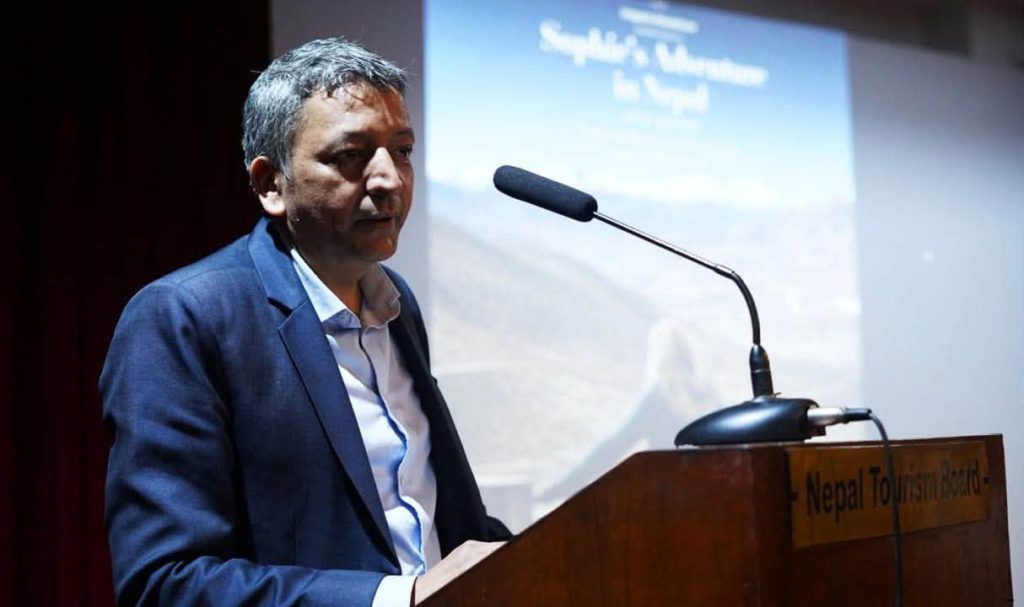
Speaking at the programme, Sunil Sharma, Officiating Director of the Nepal Tourism Board, said Morgan’s Nepal journey could inspire travellers with disabilities around the world to consider Nepal as a potential destination. He highlighted the development of Kaski as Nepal’s first certified accessible destination and said the Tourism Board is working to identify additional destinations and support infrastructure development. Sharma also expressed the Board’s willingness to collaborate with the private sector to make destination planning more inclusive and improve accessibility across Nepal’s tourism sector.
Adventure Tourism and Accessibility Can Go Together
Pankaj Pradhananga, CEO of Impact Adventure, said Morgan’s journey was intended to encourage a broader conversation about inclusion within Nepal’s tourism industry. He emphasized that adventure tourism and accessibility should not be viewed as opposing concepts and that Nepal can explore ways to make its adventure experiences more accessible to a wider range of travellers. Morgan’s journey through Kathmandu, Pokhara and Upper Mustang has also provided an international platform to highlight Nepal’s progress, challenges and opportunities in accessible adventure tourism.
A Wider Opportunity for Nepal’s Tourism Industry
The discussion comes as accessibility is increasingly becoming an important consideration in global tourism. For Nepal, improving accessibility could help diversify its visitor base while creating opportunities for tourism businesses, destinations and local communities. Practical measures such as accurate accessibility information, disability-awareness training, improved transportation and accommodation, accessible infrastructure and stronger public-private cooperation could provide a foundation for long-term progress.
Morgan’s visit has therefore brought a wider question to the forefront: how can the country retain its distinctive adventure and cultural experiences while ensuring that more people can experience them independently and with confidence? Her journey has added momentum to that conversation, positioning accessible and inclusive tourism as an emerging opportunity for Nepal’s tourism future.