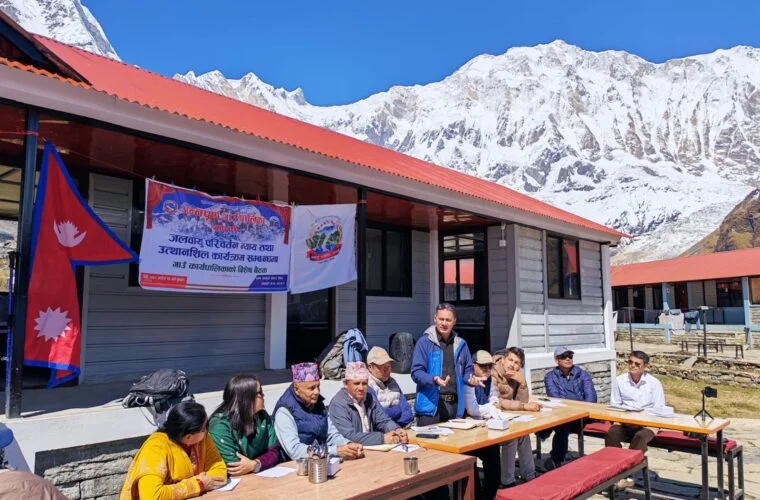
Annapurna Rural Municipality has raised a call for climate justice, stronger Himalayan protection and greater support for vulnerable mountain communities from the world-famous Annapurna Base Camp (ABC), amid growing risks linked to climate change. The rural municipality held a special meeting of its executive committee at Annapurna Base Camp, located at an altitude of 4,130 metres, on Wednesday.
The meeting focused on the increasing impacts of climate change in the Himalayan region, the need for climate justice, protection of the mountain ecosystem and measures to strengthen the resilience of local communities. According to Rural Municipality Chairperson Bishnu Bahadur KC, the meeting was organized at ABC to draw national and international attention to the climate-related challenges faced by the Annapurna region and the need for appropriate responses.
Floods and Landslides Cause Major Damage
Annapurna Rural Municipality has suffered significant damage from floods, landslides and riverbank erosion during this year’s monsoon. Repeated flooding in the Modi Khola and Kimrong Khola during Shrawan and Bhadra damaged hotels, roads and other infrastructure, while settlements including Birethanti and Syaule Bazaar have been exposed to increased risks.

Floodwaters also swept away sections of a paved road, disrupting direct road connectivity between the popular tourist village of Ghandruk and Pokhara for around 40 days. The rural municipality is still collecting details of the total damage caused by the disasters. Chairperson KC said the municipality had experienced substantial impacts from floods, landslides and river erosion this monsoon, with riverbank erosion along the Modi Khola causing particularly serious damage in several areas. He said the municipality used the platform at ABC to highlight the effects of climate change on local infrastructure, agriculture, transportation, tourism and the livelihoods of local communities.
Himalayan Ecosystem Facing Growing Climate Pressure
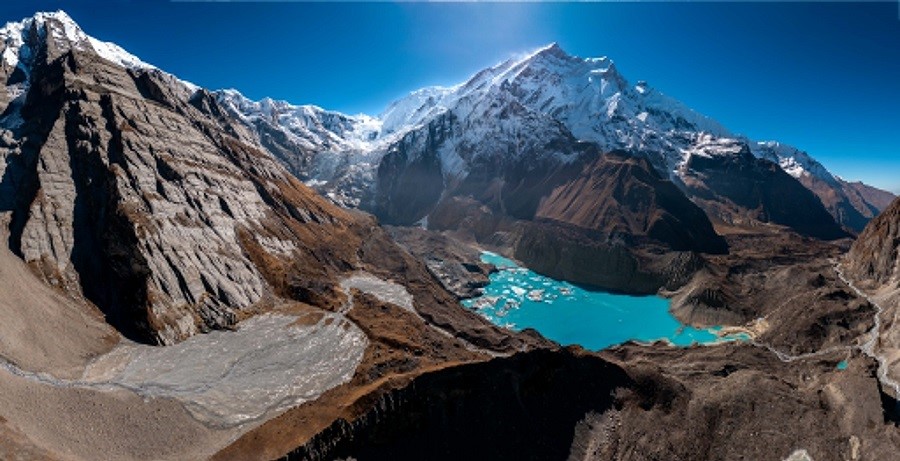
According to KC, the Annapurna region is a climate-sensitive Himalayan area that is already experiencing the direct effects of changing climatic conditions. Rising temperatures and changes in rainfall patterns in recent years have created additional challenges for the region’s mountain ecosystems, biodiversity, glaciers, water resources, agriculture and local livelihoods, he said. The increasing frequency and intensity of climate-related hazards, including floods, landslides, river erosion and extreme rainfall, have made climate resilience an increasingly important issue for local governments and mountain communities.
Local Efforts Alone Not Enough
The special meeting concluded that the growing impacts of climate change cannot be addressed through the efforts of the local government alone. The municipality has called for stronger support from the federal and provincial governments, including appropriate policies, technical assistance, adequate financial resources, access to climate finance, research, and stronger coordination among different levels of government.
Chairperson KC said the call for climate justice raised from Annapurna Base Camp should not be viewed as an issue limited to the Annapurna region. According to him, the issue is connected with the protection of the Himalayas, mountain communities, biodiversity, water resources and the wider climate system.
Climate Resilience Action Plan to Be Developed
The meeting decided to prepare an Annapurna Climate Resilience Action Plan after reviewing the overall status of climate change and disaster risks in the rural municipality, available data and national and international priorities. The action plan will subsequently be incorporated into the municipality’s policies, plans and budget processes, according to Rural Municipality Spokesperson Bharatman Gurung. The municipality aims to use the plan as a framework for identifying climate-related risks and strengthening its preparedness and response mechanisms.
Climate Risk Maps to Cover All 11 Wards
The meeting also decided to prepare climate risk and vulnerability maps for all 11 wards of Annapurna Rural Municipality. The maps will be used to support risk-sensitive planning and land-use management. The municipality expects the mapping process to provide a clearer picture of areas exposed to floods, landslides, river erosion, and other climate-related hazards. Such information will also be used to improve planning and reduce the potential impacts of future disasters on communities and infrastructure.
Early Warning and Emergency Communication System Planned
The municipality has also decided to conduct the necessary studies and establish partnerships and budget arrangements for developing a local early warning and emergency communication system. The proposed system will focus on improving advance information and emergency communication related to rainfall, river flows, landslides, and other climate-induced hazards. The municipality intends to strengthen its capacity to provide timely warnings to local residents and relevant stakeholders so that communities can take preventive measures before disasters occur.
Climate-Resilient Infrastructure to Be Prioritized
The meeting further decided to develop climate-resilient infrastructure standards and a risk-assessment system for the construction and management of public infrastructure. Roads, bridges, trails, drinking-water systems, schools and health facilities will be assessed with climate and disaster risks taken into consideration. The municipality aims to ensure that future infrastructure investments are better adapted to changing climatic conditions and less vulnerable to floods, landslides, erosion and other hazards.

Systematic Record of Climate-Related Losses
The municipality also decided to maintain regular records of damage and loss caused by climate-related disasters. It plans to gradually integrate available data related to disasters, infrastructure, climate, and tourism to create a more comprehensive information system. According to the municipality, systematic data collection will help identify emerging risks, support evidence-based planning and improve the allocation of resources for climate adaptation and disaster risk reduction.
ABC Becomes Platform for Himalayan Climate Action
The special executive meeting at Annapurna Base Camp has brought climate change and Himalayan resilience into the discussion from one of Nepal’s most prominent mountain destinations. With the Annapurna region facing increasing pressure from extreme weather, floods, landslides and river erosion, the rural municipality has emphasized the need for coordinated action involving local, provincial and federal governments.
The municipality’s decisions on climate resilience planning, risk mapping, early warning systems, resilient infrastructure and loss-and-damage documentation are intended to strengthen the region’s preparedness while drawing wider attention to the vulnerabilities of Nepal’s Himalayan communities.