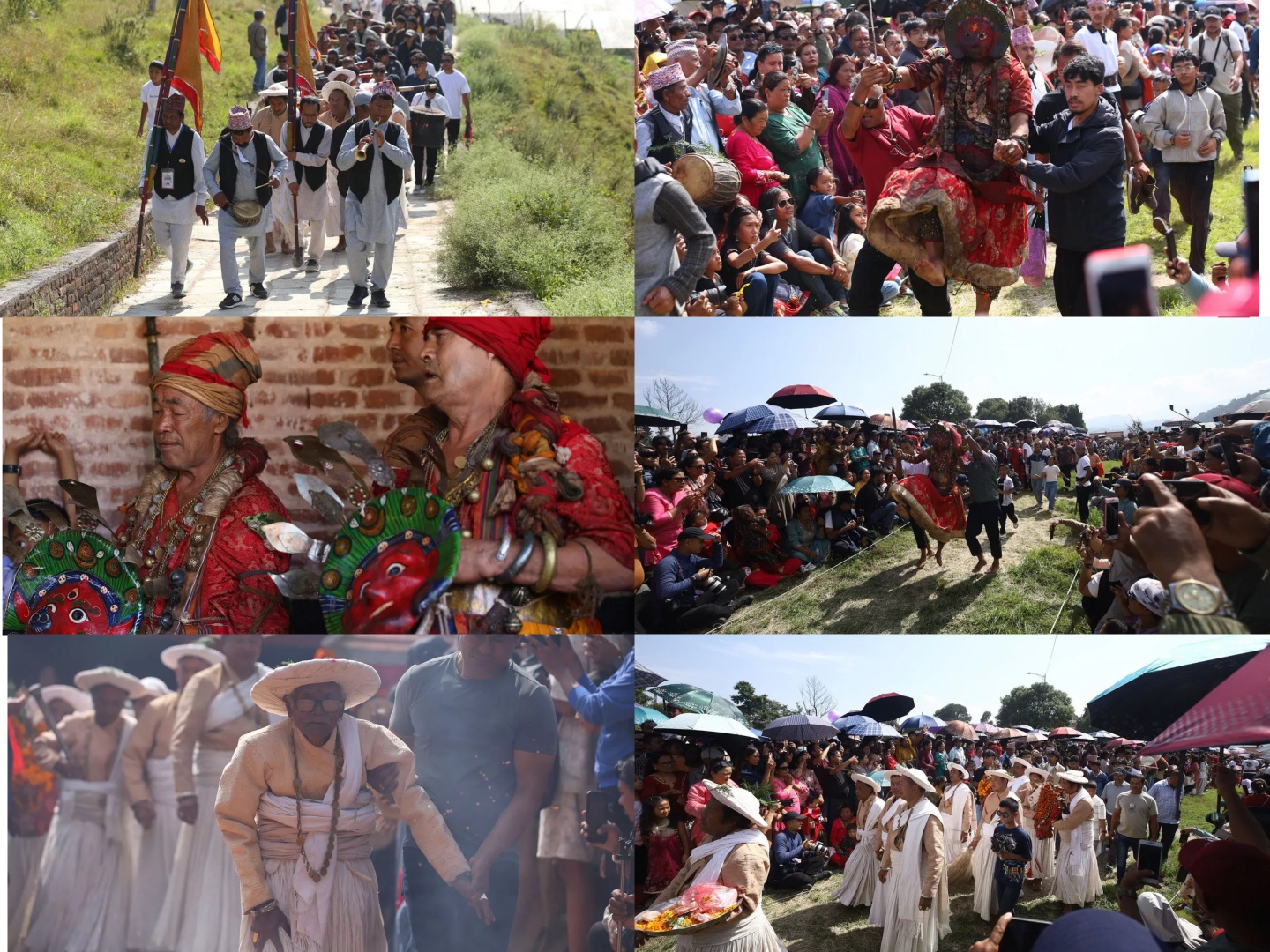
Khokana, a historic Newar settlement in Lalitpur, has come alive with the traditional Sikali Jatra, a distinctive cultural festival celebrated during the Dashain period. While much of Nepal observes Bada Dashain with Tika and Jamara, Khokana’s residents follow their own centuries-old tradition through religious rituals, deity dances and community feasts dedicated to Goddess Rudrayani.
The festival highlights the settlement’s unique cultural identity and offers a glimpse into Nepal’s rich living heritage. The celebrations take place around Sikali Chaur, where locals gather at the temple complex to perform traditional worship and rituals. Rooted in local religious beliefs and community practices, Sikali Jatra remains one of Khokana’s most distinctive annual celebrations, reflecting the continuity of indigenous Newar traditions across generations.
Sikali Jatra Rooted in Religious Tradition
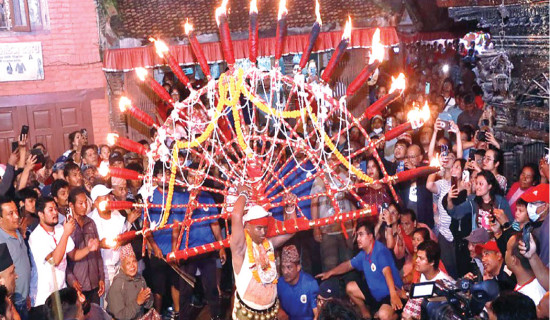
Sikali Jatra is associated with the worship of Goddess Rudrayani, the principal protective deity of Khokana. The festival is observed from Ghatasthapana through the Dashain period, following a calendar and customs distinct from the mainstream Dashain celebrations. For local residents, the Jatra holds deep religious and cultural significance, bringing together families, community groups, priests and traditional performers.
According to the account described in the Skanda Purana’s Magha Mahatmya, the festival draws on the story of Daksha Prajapati’s sacrificial ritual being destroyed by Mahakali, Virabhadra and their accompanying forces, with the assembled deities scattered in the process. A ritual enclosure is prepared at Sikali Chaur, where a Yagya is performed as part of the celebrations. These religious observances connect the festival with traditional narratives and rituals passed down through the community.
Traditional Rituals, Devi Dances and Community Feasts
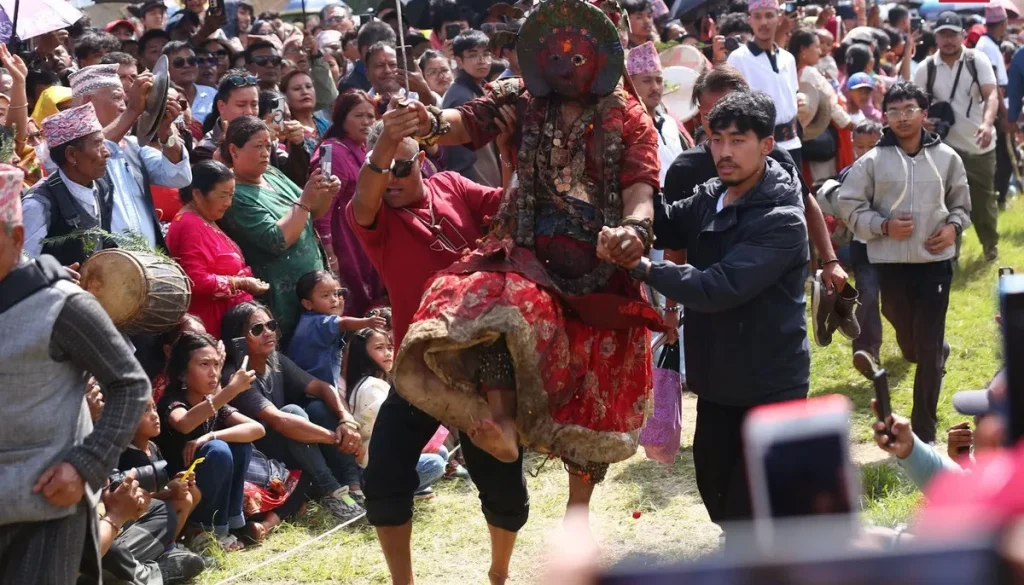
Worship, ritual performances and communal gatherings form the central elements of Sikali Jatra. During the festival, traditional Devi dances based on religious narratives are performed, while residents participate in prayers and other ceremonies at Sikali Chaur and its surrounding temple area. The celebrations bring together different generations and reinforce the community’s role in maintaining its cultural practices.
Community feasts are another important part of the Jatra, reflecting the close relationship between religious observance and social life in Khokana. Local residents celebrate according to their own customs rather than exchanging Dashain Tika in the conventional manner. The festival is organized through established community traditions, with collective participation helping preserve the rituals, performances and cultural knowledge associated with the celebration.
Khokana Preserves Its Distinctive Dashain Tradition
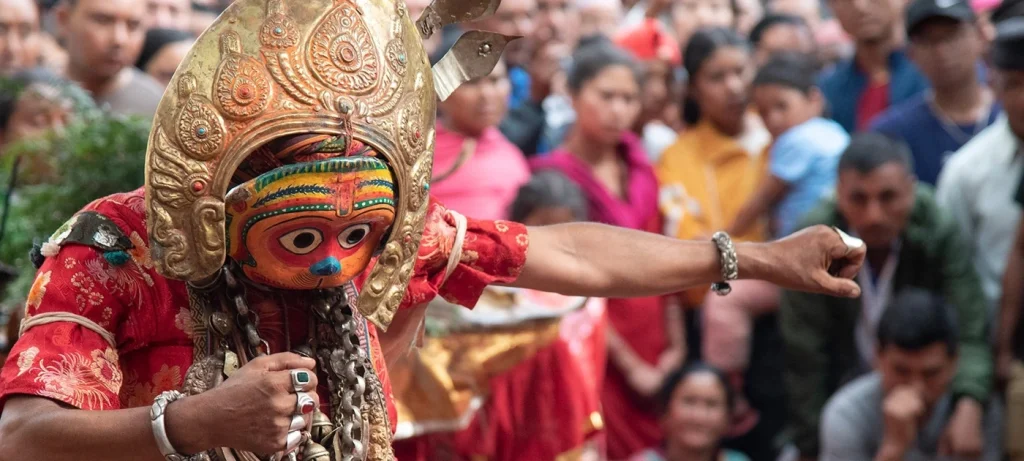
Although Dashain is one of Nepal’s largest annual festivals, Khokana is known for observing Sikali Jatra instead of following the usual Dashain customs. Residents regard the Jatra as an older and deeply rooted cultural tradition, giving it priority during the festive period.
This distinctive practice sets Khokana apart from neighbouring communities and demonstrates the diversity of religious and cultural observances within the Kathmandu Valley. Located in Lalitpur, south of Kathmandu, Khokana is also known for its traditional Newar settlement, historic architecture and mustard oil production. Its combination of living cultural traditions, religious sites and traditional craftsmanship gives the settlement significance for cultural heritage tourism.
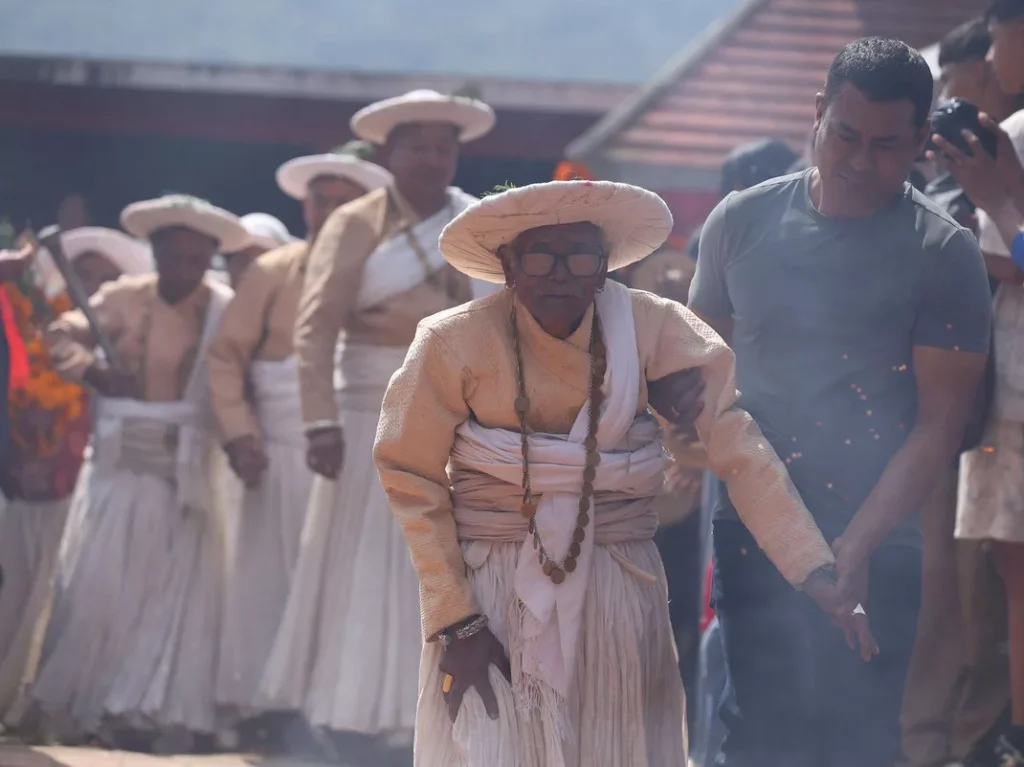
Sikali Jatra further highlights the importance of safeguarding local festivals and community practices as part of Nepal’s broader cultural heritage. The continuation of Sikali Jatra demonstrates how communities preserve their identity through rituals, religious narratives and collective celebrations.
For visitors interested in Nepal’s indigenous traditions, Khokana offers an opportunity to learn about cultural practices that differ from more widely observed national festivals, while respecting the religious significance of the ceremonies and the community that sustains them.