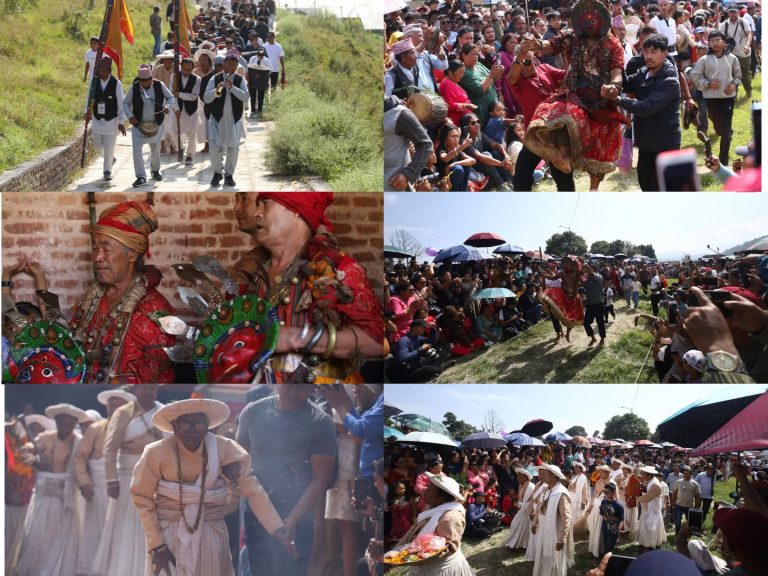
Fulpati, one of the most significant days of Nepal’s Bada Dashain festival, is being observed across the country with religious devotion, family rituals and traditional ceremonies. Falling on the seventh day of Dashain, known as Ashwin Shukla Saptami, Fulpati marks the point when the festival enters a more intense phase of worship and celebration.
In 2026, Fulpati falls on Saturday, October 17 (Ashwin 31, 2083 BS). The day is marked by the bringing of an auspicious collection of flowers, leaves, plants and other sacred items into homes, while the traditional national Fulpati is ceremonially brought from Gorkha to Kathmandu.
Beyond its religious importance, Fulpati carries a remarkable connection to Nepal’s political and cultural history. The annual journey of Fulpati from Gorkha, the ancestral seat of the Shah dynasty, to Hanuman Dhoka in Kathmandu represents a tradition that has continued through the monarchy, the political transformation of Nepal and the establishment of the republic.
What Is Fulpati?
The word Fulpati is generally understood as a combination of phul, meaning flower, and pati, referring to leaves or foliage. However, the Fulpati associated with Dashain is much more than a simple collection of flowers.
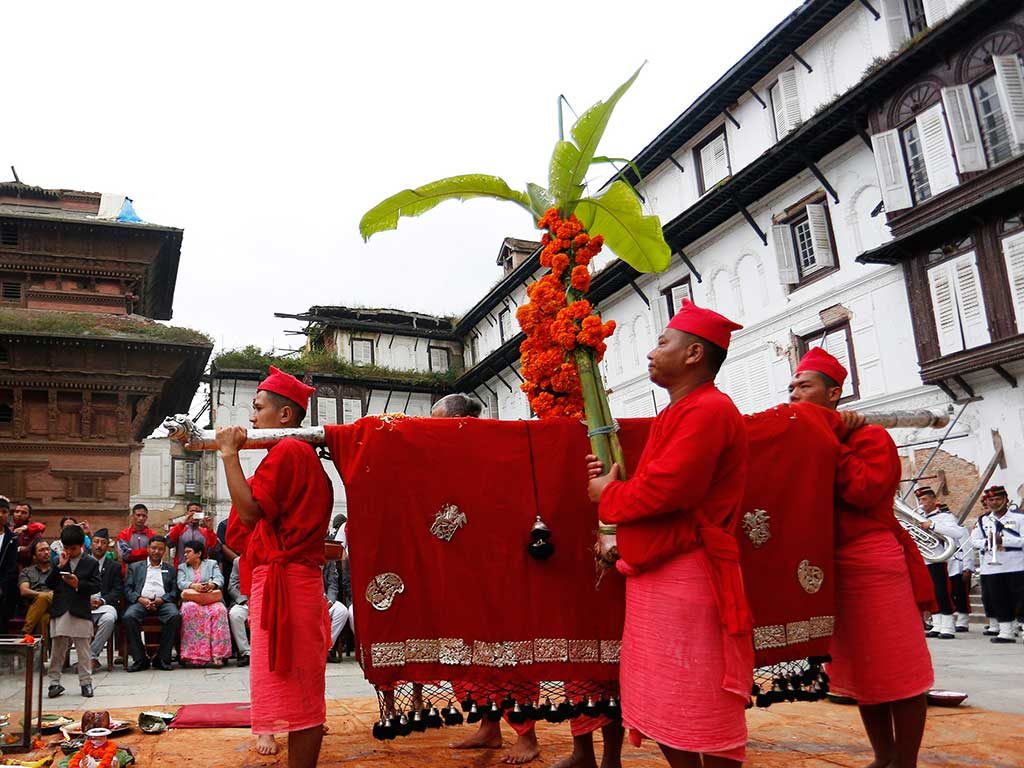
It is an auspicious assortment of plants, leaves and agricultural produce used in the worship of Goddess Durga. The traditional bundle is associated with Navapatrika, a collection of sacred plant elements. Among the items traditionally included are banana stalks, sugarcane, jamara, pomegranate and other auspicious plants. The exact composition and ritual practices can vary according to locality and tradition.
For Nepali families, bringing Fulpati into the home is an important household ritual. It is placed in the worship room or Dashain altar as families continue their prayers to Durga and prepare for the more important days of Maha Ashtami, Maha Navami and Vijaya Dashami.
The Seventh Day of Dashain
Dashain begins with Ghatasthapana, when jamara seeds are planted in a sacred vessel and worship begins. The first days are largely devoted to maintaining the sacred space and performing daily rituals. Fulpati, on the seventh day, marks a significant transition.
From this day onward, the atmosphere of Dashain becomes increasingly festive. Families prepare for gatherings, markets become busier, people begin travelling to their ancestral homes and religious activities intensify. Traditionally, government and private offices also begin the main Dashain holiday period around Fulpati, allowing people to return home and receive blessings from their elders. The following days, Maha Ashtami and Maha Navami, are among the most important days for the worship of Goddess Durga, before the festival reaches its culmination with Vijaya Dashami.
The Historic Journey From Gorkha to Kathmandu
The most distinctive Fulpati tradition in Nepal is the annual journey from Gorkha Durbar to Hanuman Dhoka in Kathmandu. Gorkha holds a special position in Nepal’s modern history as the ancestral seat of the Shah dynasty and the birthplace of the political process that eventually led to the unification of much of present-day Nepal.
Historical accounts generally associate the Gorkha-to-Kathmandu Fulpati tradition with King Prithvi Narayan Shah, after he conquered Kathmandu Valley in the eighteenth century. The practice developed as Fulpati from the Gorkha royal household was brought to the new royal seat at Hanuman Dhoka.
According to local traditions recorded at Gorkha Durbar, Fulpati rituals themselves are older than the Gorkha-to-Kathmandu procession. Local accounts associate the beginning of Fulpati worship at Gorkha with Drabya Shah, founder of the Shah kingdom, although such early dates should be treated as traditional accounts rather than firmly established documentary history.
Thus, Fulpati has several layers of history: an older religious tradition of worshipping sacred plants, its development within the Gorkha royal tradition and, later, its incorporation into the royal rituals of Kathmandu.
Why Gorkha Is So Important
The connection between Gorkha and Fulpati is closely tied to Nepal’s state history. Gorkha was the base from which Prithvi Narayan Shah expanded his kingdom. After the conquest of Kathmandu Valley, Hanuman Dhoka became the royal centre of the Shah rulers. The annual movement of Fulpati from Gorkha to Kathmandu therefore connected the dynasty’s ancestral home with its political capital.
The ritual has survived even though Nepal’s political system has changed dramatically. During the monarchy, the Fulpati ceremony was associated with the royal palace and the king. Following the abolition of the monarchy and the establishment of the republic in 2008, the state ceremony changed in character, but the Gorkha–Kathmandu Phulpati tradition continued as a cultural and religious practice.
How the Fulpati Is Prepared in Gorkha
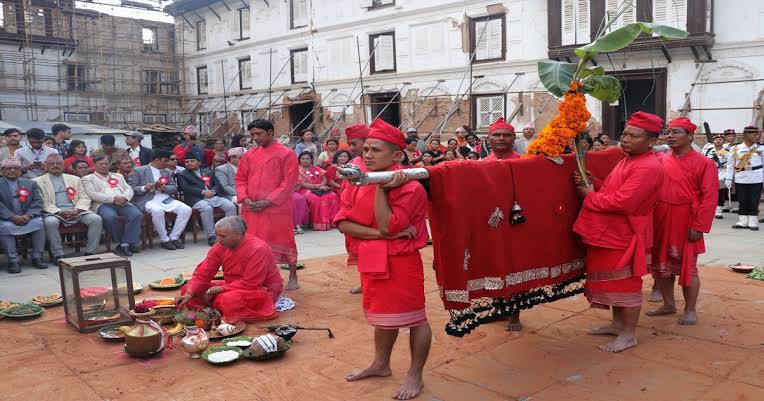
The preparation begins before the actual Fulpati day. At Gorkha Durbar, priests and attendants perform rituals before collecting the sacred plants and other components required for the Phulpati. Traditional accounts describe the collection of Navapatrika from forest areas around Gorkha.
The collected items are ceremonially arranged and prepared at the Gorkha Durbar before the Fulpati begins its journey toward Kathmandu. Part of the sacred assortment remains at Gorkha for local worship, while another portion is sent to Kathmandu. The preparation is accompanied by traditional music and religious rituals, transforming what might otherwise appear to be a simple collection of plants into an elaborate ceremonial object.
From a Long Foot Journey to Modern Transportation
The Fulpati journey has also changed with Nepal’s development. Historically, the sacred bundle was transported from Gorkha toward Kathmandu on foot. The journey covered roughly 169 kilometres and traditionally involved different groups of bearers along the route.
Historical accounts describe Magar bearers carrying the Fulpati from Gorkha toward Jivanpur in Dhading, after which Brahmin bearers continued the journey toward Kathmandu. With the expansion of Nepal’s road network, the journey is now largely completed using vehicles, although the traditional ceremonial elements have been retained. The change illustrates how an old cultural practice has adapted to modern transportation without losing its symbolic identity.
The Arrival in Kathmandu
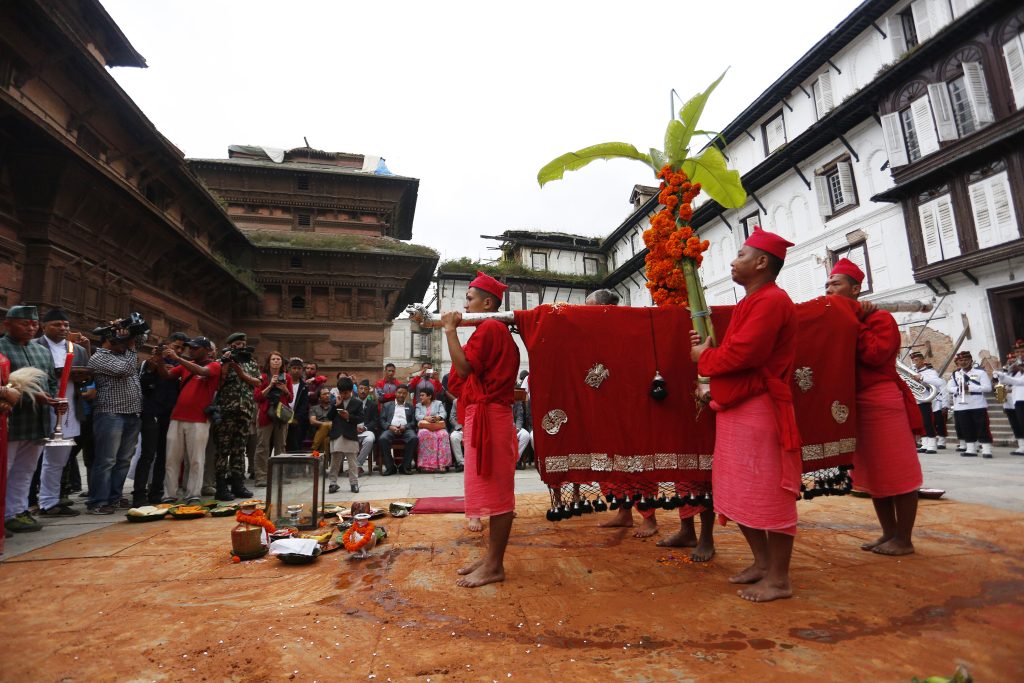
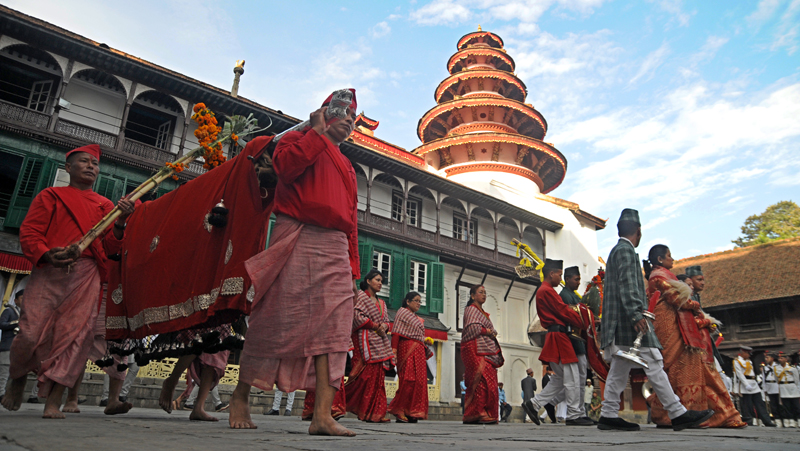
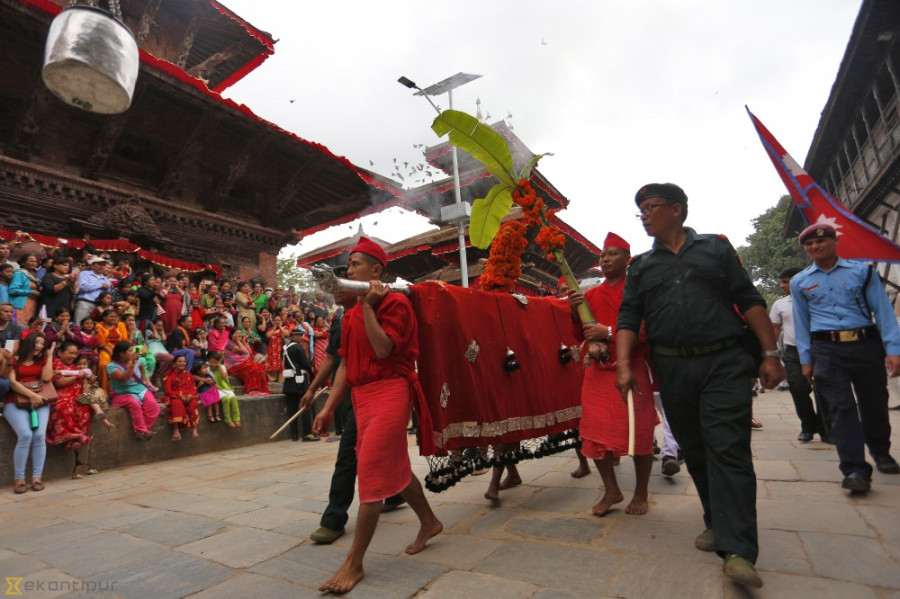
The arrival of Phulpati in Kathmandu is one of the most visible public ceremonies associated with Dashain. The sacred Fulpati is received through a ceremonial procession involving the Nepal Army, Nepal Police, Armed Police Force, civil servants, traditional musicians and cultural performers. Traditional panche baja, military music and other ceremonial elements add grandeur to the procession.
The Fulpati is then taken to the Dashain Ghar at Hanuman Dhoka, where it is formally installed and worshipped. The ceremony historically served as an important royal ritual. Today, it continues as a national cultural ceremony, reflecting the country’s long association between Dashain, state traditions and the former royal palace.
Fulpati at Tundikhel
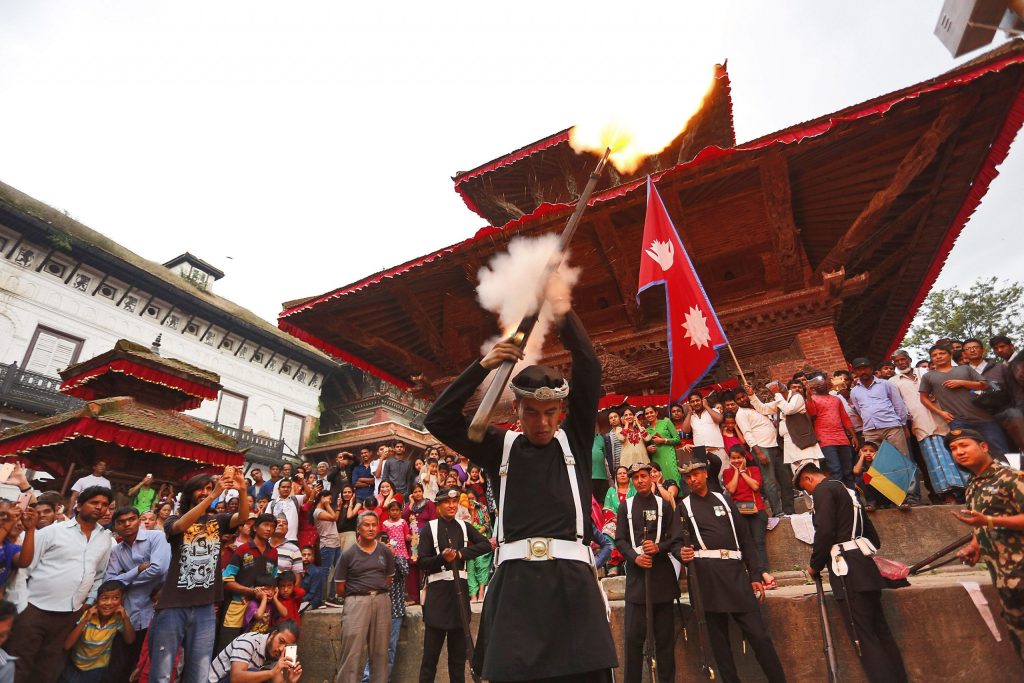
Another major public aspect of Phulpati is the ceremony at Tundikhel in Kathmandu. The Nepal Army traditionally marks the occasion with a ceremonial gun salute and military display. Senior government officials and security personnel participate in the event, making Fulpati one of the few religious festivals in Nepal that has such a visible connection with formal state ceremony. The military ceremony is not simply a religious ritual. It also represents the continuation of a historic state tradition associated with Dashain.
Fulpati Inside Nepali Homes
While the Gorkha-to-Kathmandu procession attracts public attention, the heart of Phulpati remains within Nepali households. Families collect auspicious flowers, leaves, plants and other agricultural products and bring them into their homes. The items are placed near the Dashain altar and worshipped as part of the household’s continuing devotion to Goddess Durga.
This domestic practice gives Fulpati a meaning that goes beyond the state ceremony. It connects ordinary families with the same festival traditions that have historically been observed by royal households and public institutions. For many Nepalis, Phulpati is also a time for family reunion. People living away from their ancestral homes travel long distances to return to their villages and towns. The movement of people during Dashain has consequently become one of the country’s largest annual seasonal migrations.
The Religious Meaning of Sacred Plants
Plants occupy an important position in the symbolism of Fulpati. Dashain is closely connected with agriculture, harvest and prosperity. The use of plants, leaves, flowers and crops in Phulpati reflects the relationship between religious life and Nepal’s agrarian traditions.
Jamara, which begins growing from seeds planted during Ghatasthapana, is especially significant. By the time Fulpati arrives, the green shoots have grown visibly, symbolising life, fertility, prosperity and renewal. The incorporation of agricultural products into the Dashain rituals also reflects the festival’s historical character as a major harvest celebration. The Nepal Tourism Board describes Dashain as Nepal’s great harvest festival as well as a major religious occasion dedicated to Goddess Durga.
Fulpati and the Worship of Goddess Durga
At the religious level, Fulpati is part of the broader worship of Goddess Durga. Dashain celebrates the victory of good over evil, with Goddess Durga representing divine power and victory. The days leading to Vijaya Dashami progressively intensify the worship of the goddess.
Fulpati therefore serves as a bridge between the early rituals of Dashain and the festival’s most powerful religious days. After Phulpati, worship becomes more elaborate, culminating in Ashtami and Navami before the blessings of tika and jamara are distributed on Vijaya Dashami.
A Tradition That Survived Political Change
Perhaps the most remarkable aspect of Fulpati is its ability to survive major political transformations. The tradition developed under Nepal’s historic kingdoms, became closely associated with the Shah monarchy and the royal palace, and continued after Nepal became a federal democratic republic.
Before the abolition of the monarchy, the royal family played a central role in receiving the Fulpati at the palace. After 2008, the ceremony was adapted to the republican system, with the President taking part in the national observance rather than the king. The continuation of Phulpati demonstrates how cultural traditions can outlive the political institutions that once promoted them.
Fulpati as a Symbol of Nepal’s Cultural Heritage
Today, Fulpati represents several dimensions of Nepal at the same time. It is a religious ritual dedicated to Goddess Durga. It is a household tradition bringing families together. It is an agricultural symbol connected to harvest and prosperity. It is also a public ceremony involving the country’s security forces and state institutions.
Most importantly, the journey from Gorkha to Kathmandu gives Phulpati a unique historical dimension. The sacred bundle travels from the former Gorkha kingdom to the historic royal palace in Kathmandu, linking two places that played decisive roles in Nepal’s political history. What began as a royal tradition has now become part of the country’s broader cultural heritage.
Fulpati in Modern Nepal
Despite rapid urbanisation, migration and changing lifestyles, Fulpati remains deeply rooted in Nepali society. In Kathmandu, the national procession provides a spectacular public expression of the festival. Outside the capital, families observe Fulpati according to their own local customs, bringing sacred plants into their homes and continuing traditional worship.
For younger generations, Fulpati also provides an opportunity to understand Nepal’s history through a living tradition rather than only through textbooks. Its survival shows that cultural heritage is not necessarily preserved only inside museums or monuments. It can remain alive through annual rituals, family practices and community participation.
More Than a Festival Ritual
Fulpati is much more than the seventh day of Dashain. It brings together religion, agriculture, family, history and state tradition in a single ceremony. The flowers and leaves placed inside a household shrine represent devotion and prosperity; the journey from Gorkha represents historical continuity; and the procession in Kathmandu represents the public face of a tradition that has evolved with Nepal itself.
As Nepal celebrates Fulpati each year, the ritual provides a reminder of the country’s ability to preserve its cultural identity while adapting to political and social change. From the forests and historic palace of Gorkha to the ancient courtyards of Hanuman Dhoka, Fulpati continues to carry not only sacred plants, but also centuries of Nepal’s cultural memory.