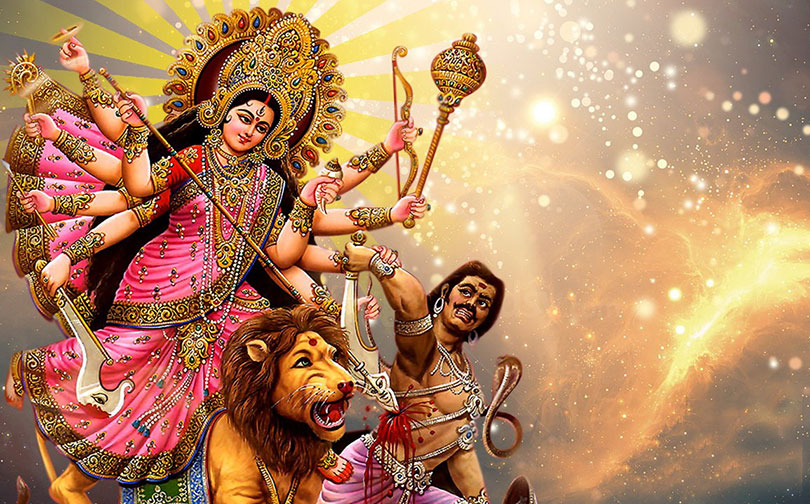
Maha Ashtami, the eighth day of Bada Dashain, is one of the most powerful and spiritually significant days of Nepal’s biggest festival. Observed with intense worship of Goddess Durga and her fierce manifestations, the day represents divine strength, the destruction of evil and the protection of devotees.
While Dashain is widely associated with family reunions, tika and jamara, Maha Ashtami reveals another, more powerful side of the festival. Across Nepal, devotees visit temples dedicated to Durga, Kali and other forms of Shakti, perform special pujas, worship weapons and traditional instruments, and, in communities where the practice continues, make animal or symbolic sacrifices.
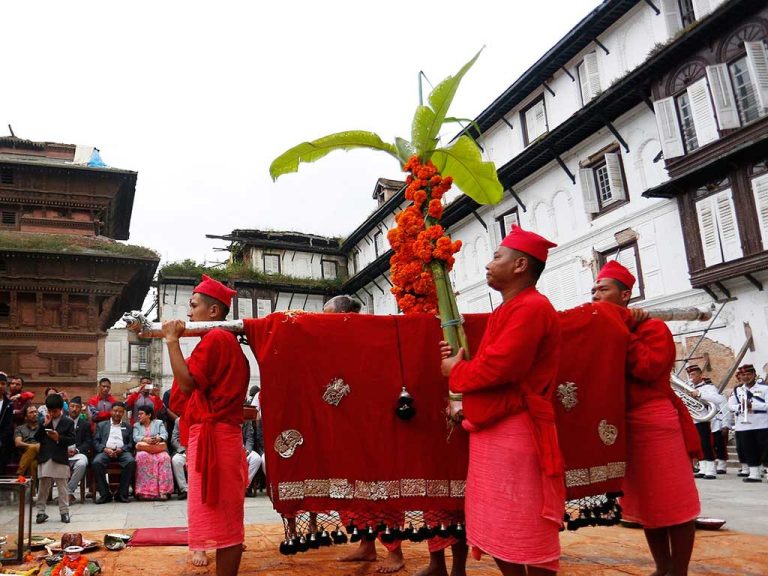
Maha Ashtami is particularly significant in the Kathmandu Valley, where centuries-old traditions associated with the Malla, Shah and later state traditions continue to shape the way the day is observed. The day also leads into Kalratri, the “dark night,” when rituals dedicated to the fierce power of the goddess become especially intense.
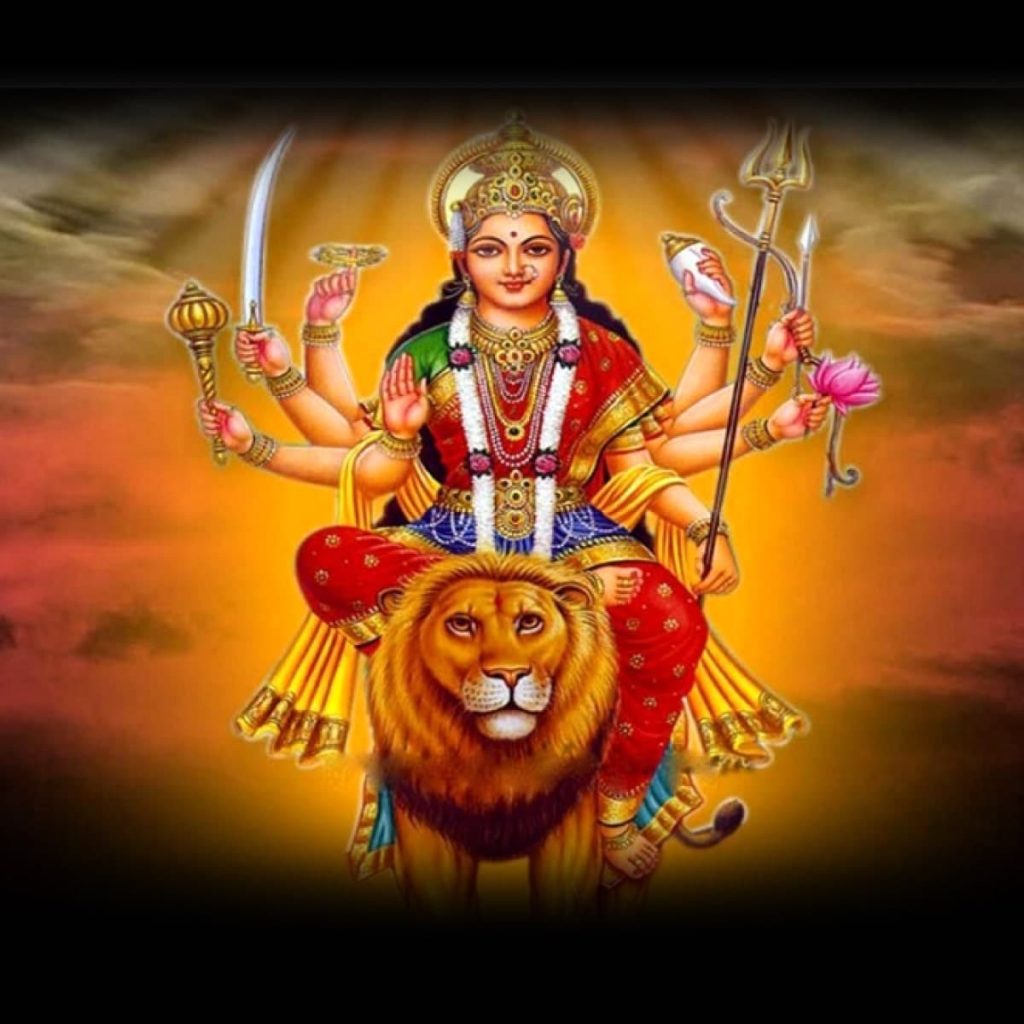
The Eighth Day of Dashain
Maha Ashtami falls on the eighth day of the bright fortnight of the Nepali month of Ashwin. It follows Fulpati and comes immediately before Maha Navami and Vijaya Dashami.
Dashain itself is traditionally a fifteen-day festival, with the first nine days devoted to different manifestations of Goddess Durga and the tenth day celebrated as Vijaya Dashami. The Nepal Tourism Board describes Dashain as both a major festival dedicated to Durga and Nepal’s great harvest festival, combining religious worship with family reunions, blessings and elaborate rituals.
The eighth, ninth and tenth days have particular religious significance. Historical research on Dashain in Nepal identifies Maha Ashtami, Maha Navami and Dashami with different manifestations and aspects of Durga, with Ashtami associated with the goddess’s fierce and powerful form.
The Historical Roots of Maha Ashtami
The history of Maha Ashtami is inseparable from the much older tradition of Shakti worship in South Asia.
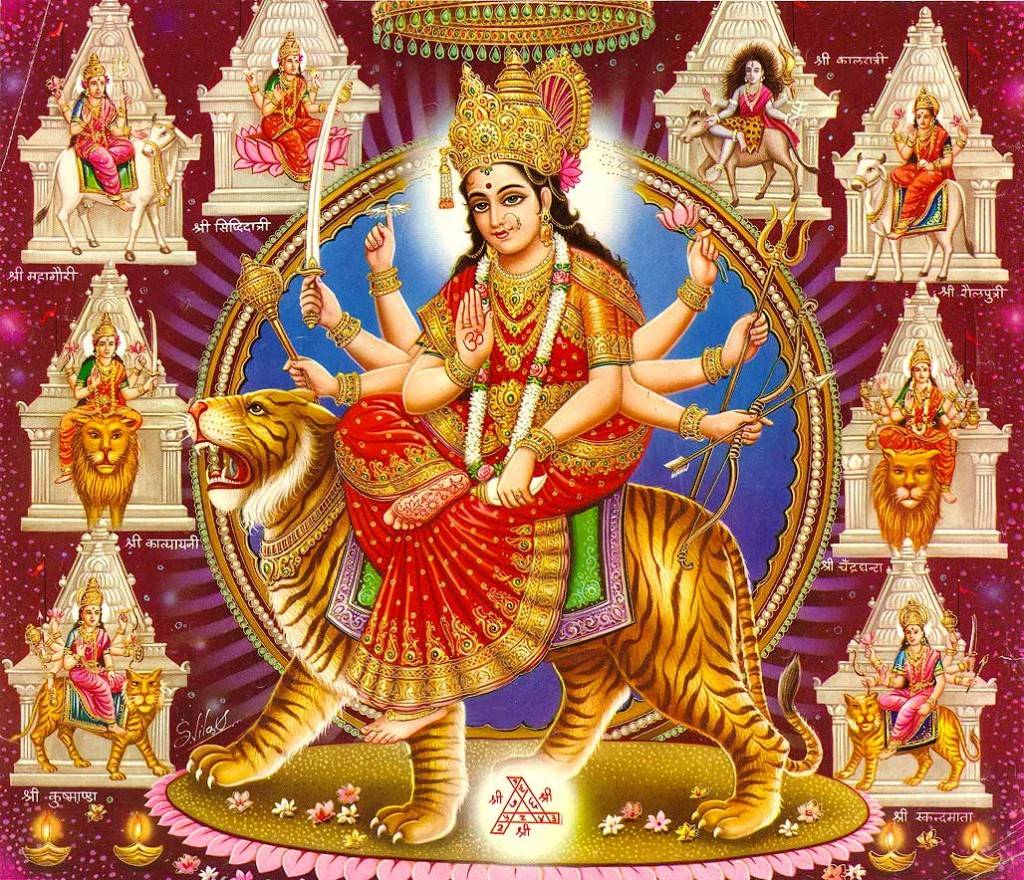
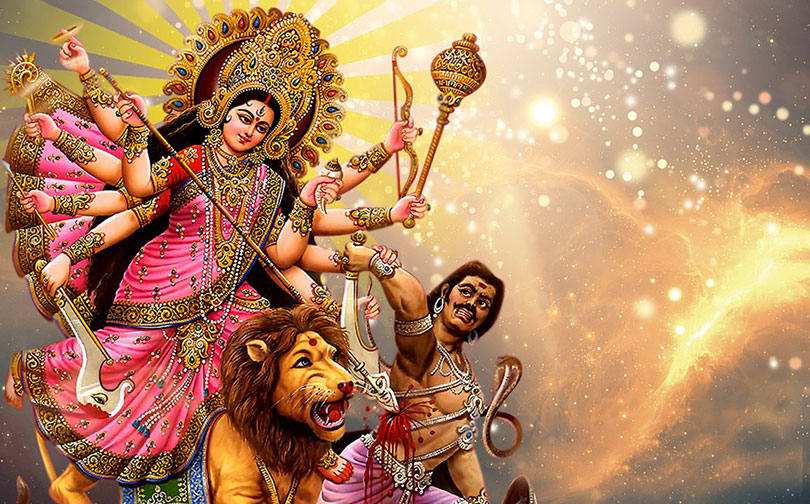
At the centre of Dashain mythology is Goddess Durga’s battle against Mahishasura, the buffalo demon. According to Hindu tradition, Mahishasura had gained extraordinary power and threatened the gods and the world. Durga was created through the combined divine energy, or shakti, of the gods and fought the demon before ultimately defeating him.
This victory forms one of the principal religious foundations of Dashain. Durga represents divine power overcoming destructive and demonic forces, while the rituals of Dashain symbolise the triumph of good over evil.
Historical scholarship on Nepal’s Dashain traditions also connects the festival with other epic narratives, including Lord Rama’s victory over Ravana in the Ramayana and the Pandavas’ victory in the Mahabharata.
The precise historical beginning of Maha Ashtami as it is observed today cannot be attributed to a single date or ruler. Rather, the festival developed through layers of Hindu Shakti traditions and Nepal’s own local, royal and community practices.
From Ancient Shakti Worship to Nepal’s Royal Traditions
The worship of powerful female deities has deep roots in Nepal. Historical accounts associate the development of Shakti worship with early periods of Nepalese history, while rituals surrounding the goddess became increasingly elaborate under the Malla rulers.
The Kathmandu Valley’s medieval kingdoms played an especially important role in institutionalising elaborate forms of goddess worship. The worship of Taleju Bhawani, the tutelary deity of the Malla royal houses, became closely associated with royal power and later remained important under the Shah rulers.
This connection between political authority and divine power is particularly visible during Dashain. Weapons, military equipment and state institutions became part of the festival’s ritual landscape, reflecting the belief that victory and protection came through divine Shakti.
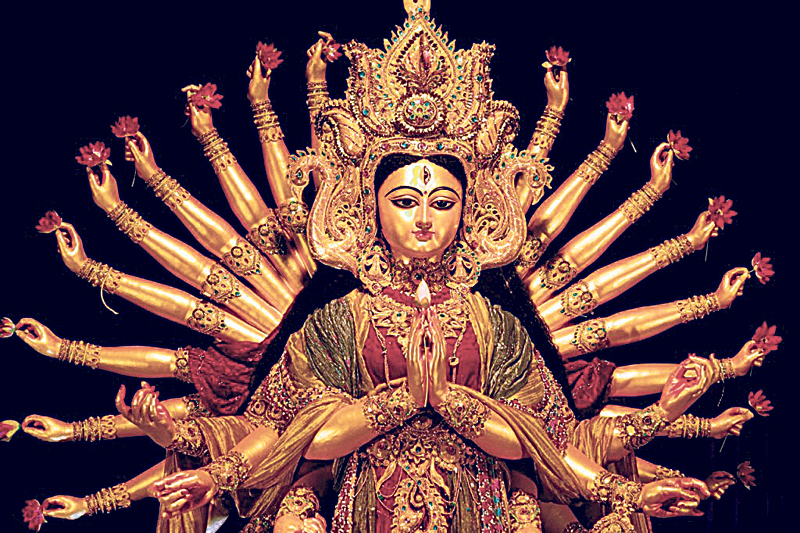
A historical study of Dashain notes that the Phulpati tradition from Gorkha to Hanuman Dhoka represented the incorporation of the Malla tutelary goddess Taleju into the religious traditions of Shah rule.
Maha Ashtami and the Fierce Forms of Durga
Maha Ashtami is not simply a day of ordinary worship. It focuses on the fierce and protective aspects of the goddess.
Devotees visit temples dedicated to Durga, Kali, Bhagawati and other Shakti forms. Among the important shrines associated with Dashain worship in and around Kathmandu are Taleju Bhawani, Naxal Bhagwati, Maitidevi, Kalikasthan, Bhadrakali, Shobhabhagwati, Guhyeshwari, Nardevi, Banglamukhi and Dakshinkali.
The worship reflects the belief that the goddess possesses the power to destroy evil and protect her devotees.
For many worshippers, the day is therefore not only about celebration but also about seeking courage, prosperity, protection and strength for the coming year.
Kalratri: The Dark Night of Dashain
One of the most distinctive aspects of Maha Ashtami is Kalratri, traditionally associated with the night of the eighth day.
The term literally refers to the “dark night” and is associated with the fierce manifestation of divine feminine power. In Nepal’s Dashain traditions, the night has historically been associated with intense worship and sacrificial rituals.
Historical and cultural accounts describe the night between Maha Ashtami and Maha Navami as a particularly important period for offerings to powerful deities, including Taleju.
The symbolism is closely connected with the broader Dashain story: destructive forces must be overcome before victory and renewal can emerge.
The Tradition of Animal Sacrifice
Animal sacrifice is among the most visible and controversial aspects of Maha Ashtami and the Dashain period.
In traditional Shakti worship, animals such as goats, buffaloes, sheep, ducks and chickens have been offered to goddesses at temples and household shrines. The practice is understood by devotees as an offering to the deity and, symbolically, as the destruction of evil or negative forces.
In Kathmandu Valley, large sacrificial ceremonies have historically been conducted at important religious sites, including Taleju temples in Kathmandu, Patan and Bhaktapur. Recent reporting also confirms that sacrificial rituals continue to be organised during Maha Ashtami and Maha Navami.
However, animal sacrifice is not compulsory for all Hindus, and many families choose symbolic offerings instead. Coconuts, pumpkins, fruits, food grains and other offerings may be used in place of animals. This variation illustrates the diversity of Dashain traditions across Nepal.
Khadga Puja: Worship of Weapons
Another important tradition associated with Maha Ashtami is Khadga Puja, the ritual worship of swords and weapons.
Historically, weapons represented military power and the ability to protect the kingdom. During Dashain, they were treated as sacred objects and worshipped as manifestations of divine power.
The tradition has particular historical importance in Nepal because of the country’s long association between political authority, military power and Shakti worship.
Today, the symbolism extends beyond traditional weapons. Tools, machinery and vehicles may also be blessed during Dashain rituals, reflecting the idea that the instruments through which people earn their livelihood should be protected and respected.
The Connection Between Goddess and Power
Maha Ashtami provides an important window into the concept of Shakti, or divine feminine energy.
Durga is not portrayed simply as a motherly figure. During Maha Ashtami, she appears as a warrior and protector capable of confronting destructive forces.
This explains why weapons, swords and sacrificial rituals occupy such an important place in traditional observances. They symbolise power directed against evil.
For devotees, the message is ultimately spiritual: negative forces must be confronted, courage must overcome fear and righteousness must prevail over destruction.
Maha Ashtami in the Kathmandu Valley
The Kathmandu Valley gives Maha Ashtami a particularly distinctive character.
Centuries of Newar religious traditions have created a complex network of temples, shrines, processions and household rituals associated with Dashain. In Kathmandu, Patan and Bhaktapur, worship of Taleju and other manifestations of the goddess remains central to the festival.
The Taleju tradition is especially significant because the temple’s rituals are historically connected with Nepal’s former royal courts.
The Nepal Tourism Board notes that Taleju Temple, normally closed to the public, opens on the ninth day of Dashain, highlighting the exceptional ritual importance of the period.
Maha Ashtami therefore forms part of a sequence in which the religious intensity of the Valley’s ancient royal and community traditions reaches its peak.
Maha Ashtami and Newar Traditions
For the Newar communities of the Kathmandu Valley, Dashain is known in various local traditions and incorporates rituals that predate or extend beyond the standard national understanding of the festival.
Animal sacrifice, goddess worship and the worship of weapons have historically been important parts of these traditions.
Academic research on Nepalese culture documents the continued importance of sacrificial rituals among Newar communities, particularly in Bhaktapur, where the worship of the goddess involves distinctive local practices and processions.
These traditions demonstrate that Maha Ashtami is not a single uniform ceremony. Its meaning and rituals differ according to community, geography, family tradition and religious practice.
A Day of Family Worship
Although public ceremonies attract attention, much of Maha Ashtami takes place inside homes.
Families clean their worship rooms, prepare offerings and perform special pujas. Devotees may worship household deities, weapons, agricultural tools and other objects considered important to their lives.
Food also plays an important role. Following religious offerings, families gather for meals and share food as part of the festival.
In this sense, Maha Ashtami connects the sacred and the domestic. A day that has historically been associated with royal ceremonies and powerful temples is simultaneously observed quietly within ordinary Nepali homes.
Why Maha Ashtami Remains Important
The significance of Maha Ashtami has survived because it combines several layers of Nepalese society.
It is a religious day dedicated to Durga. It is a continuation of ancient Shakti traditions. It carries memories of Nepal’s royal past. It preserves Newar and regional cultural practices. And it remains an important family occasion during the country’s biggest annual festival.
The Nepal Tourism Board describes Dashain as a period of prayer, offerings, family reunions and blessings, with Maha Ashtami forming one of the festival’s major ritual milestones.
A Tradition Evolving With Time
Maha Ashtami is also changing as Nepalese society changes.
Urbanisation, changing lifestyles, concerns about animal welfare and differences in religious practice have influenced how families observe the day. Some continue traditional sacrifices, while others have moved toward symbolic offerings.
Yet the central idea remains largely unchanged: the worship of divine power and the belief that good ultimately triumphs over evil.
This ability to adapt has helped Maha Ashtami remain relevant across generations.
The Spiritual Meaning of Maha Ashtami
At its deepest level, Maha Ashtami is a celebration of strength, courage and protection.
The fierce form of Durga represents the power needed to confront fear and destructive forces. The rituals performed on this day symbolically prepare devotees for the victory celebrated on Vijaya Dashami.
The journey from Ghatasthapana to Fulpati, Maha Ashtami, Maha Navami and finally Vijaya Dashami can therefore be understood as a gradual movement from invocation to confrontation and ultimately to victory.
More Than the Eighth Day of Dashain
Maha Ashtami is far more than simply the eighth day of Dashain.
It is a living expression of Nepal’s religious history, linking ancient Shakti worship with the traditions of the Malla courts, Shah-era state rituals, Newar culture and contemporary family life.
Its temples, weapons, offerings, prayers and Kalratri rituals tell a story that has evolved over centuries while retaining its central message: divine strength can overcome darkness, and good ultimately prevails over evil.
For Nepal, Maha Ashtami is therefore both a sacred religious observance and an important part of the country’s living cultural heritage.