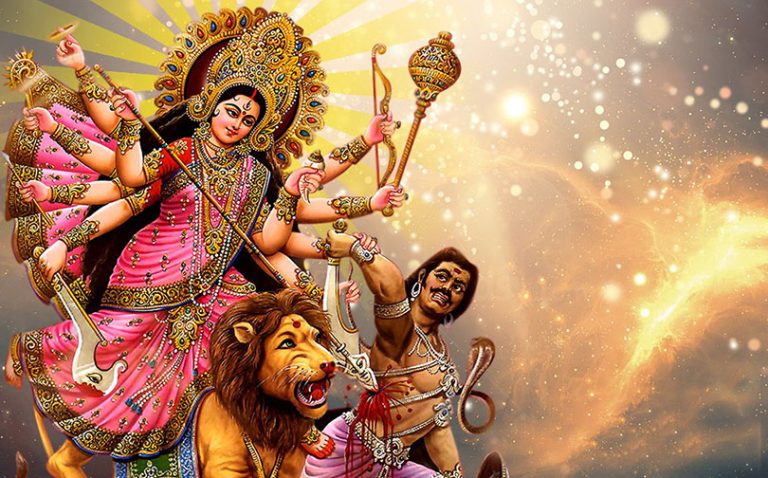
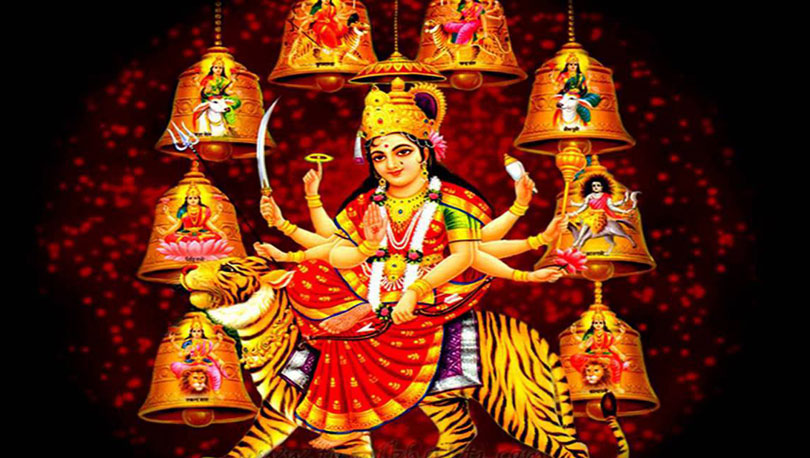
Maha Nawami, the ninth day of Dashain, is one of the most significant and spiritually intense days in Nepal’s annual religious calendar. Observed during the bright half of the lunar month of Ashwin, the day marks the culmination of Navaratri, the nine-night worship of Goddess Durga, and comes immediately before Bijaya Dashami, the day associated with the triumph of good over evil.
In Nepal, however, Nawami is much more than a religious observance. It brings together Shakti worship, the legacy of Nepal’s medieval kingdoms, the royal traditions of the Malla period, Newar culture, the worship of tools and machinery, and the age-old belief in divine protection and victory. Its rituals have evolved over centuries, but the central idea remains the same: seeking the power of the Goddess to overcome danger, evil and obstacles.
Nepal Tourism Board describes Dashain as the country’s longest Hindu festival, traditionally observed over two weeks with prayers and offerings to Goddess Durga, family reunions, blessings and elaborate religious rituals. Maha Nawami forms one of the major milestones within this extended celebration.
The Historical Roots of Maha Nawami
The story of Maha Nawami is deeply connected with the wider tradition of Navaratri, in which Goddess Durga is worshipped in her various manifestations. According to Hindu religious tradition, the Goddess represents Shakti, the divine feminine power, and her battle against forces of evil symbolizes the restoration of righteousness.
Dashain in Nepal developed within a much older tradition of goddess worship. Historical and cultural accounts associate the worship of Durga with Nepal’s ancient and medieval religious practices, while the worship of Taleju Bhawani became particularly important during the Malla period. The significance of Maha Nawami therefore cannot be separated from the history of Nepal’s Kathmandu Valley, where religious belief and political authority were closely intertwined.
Taleju Bhawani and the Malla Kings
Perhaps nowhere is the historical importance of Maha Nawami more visible than at Taleju Bhawani Temple in Hanuman Dhoka, Kathmandu. Taleju Bhawani was regarded as the royal patron goddess of the Malla kings. The Taleju tradition in the Kathmandu Valley is documented from the medieval period, and the famous Taleju Temple at Kathmandu Durbar Square was built by King Mahendra Malla in 1564.
For the Malla rulers, Taleju was not simply a goddess worshipped by individuals. She was regarded as a guardian of the kingdom and a source of royal power and protection. This was characteristic of medieval Nepal, where religion, kingship and political authority were closely connected. The king’s legitimacy was intertwined with divine protection, and important royal rituals were conducted in connection with powerful deities.
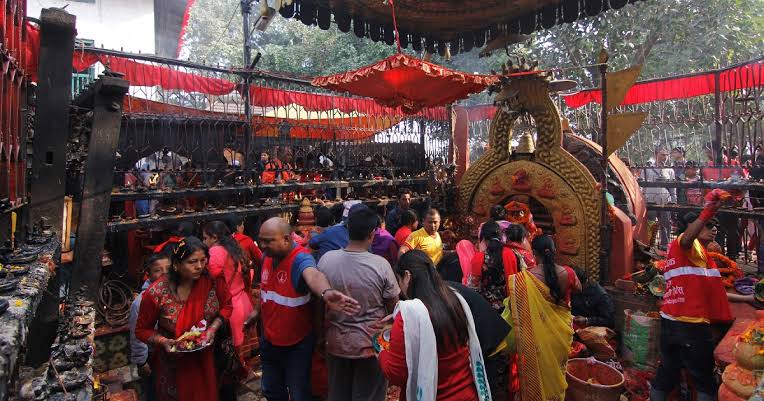
That historical relationship explains why Maha Nawami became particularly important at the royal palace. Even today, the Taleju Temple remains largely restricted throughout the year and traditionally opens to the public during Dashain, allowing devotees to enter and worship the Goddess on this special occasion.
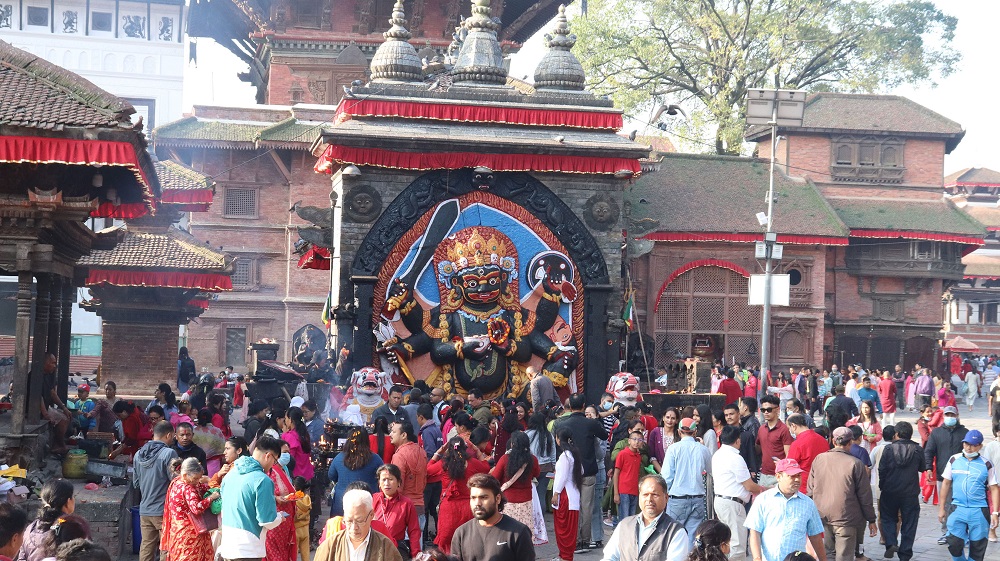
Nawami and the Story of Goddess Durga
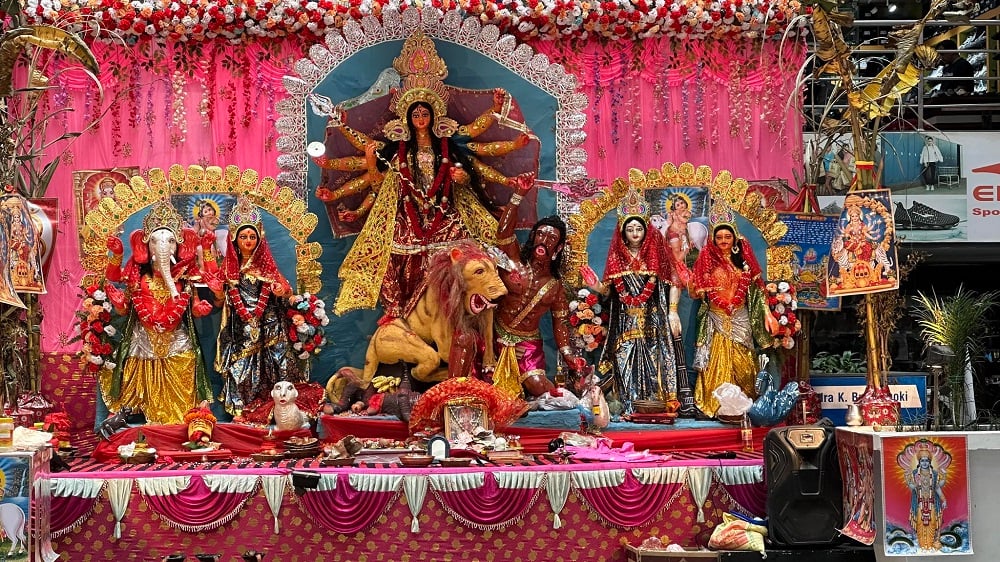
At the religious heart of Maha Nawami is the victory of the Goddess over evil. The different days of Navaratri are associated with different manifestations of divine feminine power. Durga’s battle against demons is interpreted not merely as an ancient mythological event but as a symbolic struggle between good and evil, righteousness and injustice, courage and fear.
One traditional account connects Maha Nawami with the destruction of the demon Raktabija by Goddess Chamunda. Raktabija possessed the supernatural ability that every drop of his blood falling to the ground could create another demon. The Goddess therefore had to defeat him through extraordinary power and determination. The story gives Maha Nawami a deeper symbolic meaning: evil may multiply when left unchecked, but divine power and determination can ultimately overcome it.
A Day of Shakti Worship
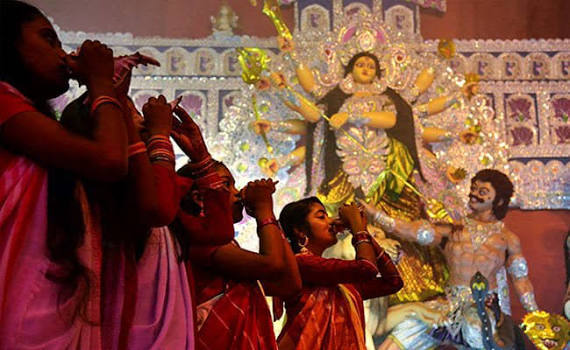
On Nawami, devotees across Nepal visit temples dedicated to Durga and other forms of the Goddess. The Kathmandu Valley becomes particularly vibrant, with devotees visiting historic shrines, Shakti Peethas and temples. Religious texts and hymns dedicated to the Goddess are recited, while offerings are made for prosperity, protection and well-being.
For many families, the day represents the culmination of the religious preparations that began with Ghatasthapana. The Jamara planted on the first day has now grown, symbolizing fertility, prosperity and the continuation of life. The journey from Ghatasthapana to Nawami can therefore be viewed as a gradual spiritual progression, from establishing the sacred space and invoking the Goddess to reaching the height of Shakti worship before the celebration of victory on Dashami.
The Tradition of Animal Sacrifice
One of the most visible and controversial aspects of Maha Nawami is the tradition of animal sacrifice. In many communities, goats, buffaloes, ducks, chickens and other animals have traditionally been offered to Goddess Durga. The practice is particularly prominent at several major temples and Shakti shrines during Ashtami and Nawami. At Hanuman Dhoka, Patan and Bhaktapur, mass sacrificial ceremonies have historically formed part of the Dashain rituals.
Recent accounts of the tradition continue to document large-scale sacrifices associated with the worship of Taleju Bhawani during Maha Ashtami and Maha Nawami. Traditionally, the sacrifice is understood by devotees as an offering to the Goddess and as a means of seeking protection, strength and prosperity. At the same time, the practice has increasingly become a subject of ethical debate, with animal-rights advocates and sections of society questioning the continuation of the tradition. Despite these debates, sacrifice remains an important part of Dashain observances in many communities and reflects the historical influence of Shakta and Tantric traditions in Nepal.
The Historic Opening of Taleju Temple
One of the most remarkable features of Maha Nawami in Kathmandu is the opening of the Taleju Temple to devotees. The temple is normally inaccessible to the general public. Its restricted nature is closely connected with its royal and tantric traditions. During Dashain, however, the temple becomes a major destination for devotees.
For visitors, entering Taleju Temple on Nawami is therefore more than an ordinary temple visit. It provides a rare connection with the religious traditions of the Kathmandu Valley’s former royal courts. The annual opening also demonstrates how Nawami has preserved a living connection between modern Nepal and its medieval royal heritage.
Nawami in Newar Culture
Among the Newar communities of the Kathmandu Valley, the festival is also observed as part of Mohani, one of the most important traditional Newar festivals. In the Newar tradition, the ninth day has its own distinctive rituals. Sacred ceremonies are conducted at household shrines and offerings are made to family deities. Tools, instruments and objects connected with people’s professions are also worshipped. This is particularly significant because it gives Maha Nawami a meaning beyond conventional temple worship.
For an artisan, farmer, craftsman, mechanic or businessperson, the tools through which livelihood is earned become worthy of respect and worship. Traditional accounts describe the worship of weighing scales, looms, machinery, tools and vehicles on Nawami. The underlying philosophy is simple but profound: the instruments that enable human beings to work and earn a livelihood are treated as sources of prosperity and therefore deserve respect.
Worship of Vehicles and Machinery
The tradition has naturally evolved with changing technology. In earlier generations, people worshipped agricultural implements, weapons, household tools and traditional equipment. In modern Nepal, cars, motorcycles, buses, trucks, tractors, machinery and other mechanical equipment have become part of Nawami worship.
Vehicle owners decorate their vehicles, place tika and flowers on them and make offerings while seeking protection from accidents and misfortune. This practice shows how traditional festivals adapt to changing society. The spiritual principle remains unchanged even though the objects being worshipped have changed with time.
Khadga Puja and the Warrior Tradition
Maha Nawami is also associated with Khadga Puja, the ceremonial worship of swords and weapons, particularly within Newar communities. The sword has historically represented strength, authority and the ability to defend society. Worshipping weapons during Dashain reflects the festival’s connection with the ancient warrior tradition and the broader symbolism of Goddess Durga as a divine force of protection.
In the past, kings, soldiers and political authorities placed particular importance on such rituals. The worship of weapons therefore connects the religious festival with Nepal’s historical political and military traditions. Even today, ceremonial swords and processions can be seen in parts of the Kathmandu Valley during Dashain. Nepal Tourism Board also notes the continuation of sword processions, known as Paayaa, in different parts of the Valley.
From Royal Palace to People’s Homes
The history of Maha Nawami illustrates an important transformation in Nepali society. What was once strongly associated with royal courts, palace rituals and state deities gradually became a festival celebrated across households and communities. The royal associations have not disappeared. They remain visible at Hanuman Dhoka, Taleju temples and traditional Newar rituals. But Nawami today belongs equally to ordinary families. A household may worship its family deity, sacrifice or offer food, bless its tools, decorate a vehicle and gather for a feast. In this way, the festival connects royal heritage with everyday life.
Nawami as a Festival of Work and Livelihood
Another important dimension of Nawami is its connection with economic life. Dashain is often described as a festival of family, but Nawami adds another layer, the celebration of the means through which people sustain their families. Farmers honor agricultural tools. Craftspeople worship their instruments. Traders and shopkeepers may worship account books and business equipment. Drivers and vehicle owners worship their vehicles. Modern industries may conduct puja for machinery. This creates a fascinating cultural message: prosperity is not only something to pray for; the means of creating prosperity must also be respected.
The Final Day Before Bijaya Dashami
Maha Nawami represents the final major ritual stage before Bijaya Dashami. The first day of Dashain begins with the planting of Jamara and the invocation of divine power. The following days gradually build toward the major worship of Durga. By Nawami, the Goddess is at the height of her power.
The following day, Bijaya Dashami, changes the character of the festival. The focus moves from intense temple rituals toward family gatherings, tika, Jamara and blessings from elders. Thus, the transition from Maha Nawami to Dashami carries a powerful symbolic message: Nawami represents the culmination of the struggle and invocation of divine power, while Dashami represents victory.
A Living Link to Nepal’s History
Maha Nawami has survived because it has continuously adapted while retaining its historical core. The rituals practiced today contain layers of Nepal’s history, from ancient Shakti worship and Hindu mythology to the medieval Malla kingdoms, Newar religious traditions, royal rituals, Tantric practices and modern urban life. The Taleju Temple remains one of the strongest reminders of this history.
The sword worship recalls the warrior culture of the past. Vehicle worship shows the festival’s adaptation to modern life. Household rituals demonstrate how royal and temple traditions entered ordinary people’s homes. For this reason, Nawami should not be viewed simply as the ninth day of Dashain. It is a living cultural archive, where mythology, history, religion, craftsmanship, royal heritage and contemporary Nepali society meet.
Preserving the Meaning of Nawami
As Nepal modernizes, the deeper meaning of Nawami remains relevant. Its traditions remind people of the importance of courage, responsibility, gratitude and respect for the forces that sustain life and livelihood. At the same time, preserving the festival does not necessarily mean preserving every practice unchanged. Nepal’s cultural heritage continues to evolve, and debates over animal sacrifice, environmental concerns and changing social values are already part of the contemporary conversation surrounding Dashain. What makes Nawami remarkable is precisely this ability to carry the past into the present.
From the courtyards of the old Malla palace to modern garages and workshops, from Taleju Bhawani to household deities, from ceremonial swords to automobiles, the ninth day of Dashain continues to express an enduring Nepali belief: strength, protection and prosperity come from respecting both the divine power within society and the means through which people build their lives. And as the rituals of Maha Nawami conclude, Nepal moves toward Bijaya Dashami, the day when the Goddess’s victory becomes a blessing carried from temples and palaces into homes across the country.