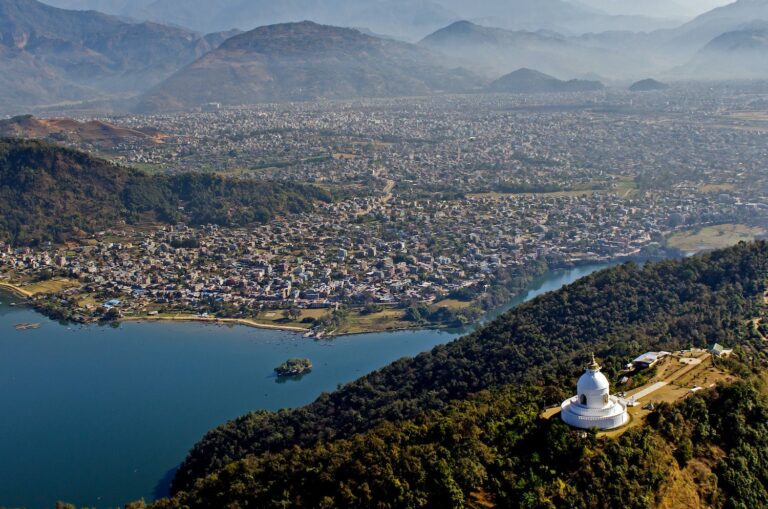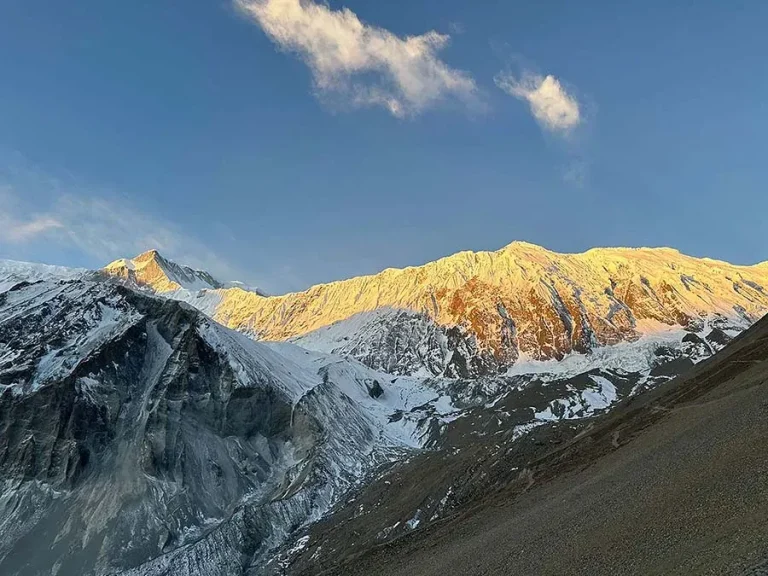
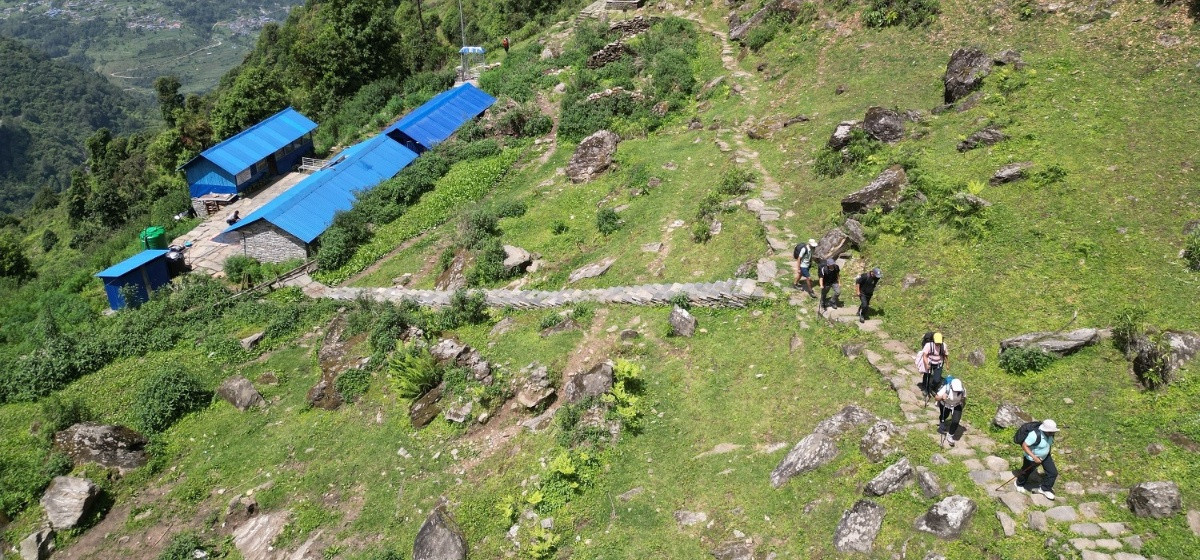
The Tamang Heritage Trail in Rasuwa and the Ruby Valley Trail in Dhading have reopened to tourists following the restoration of key access routes damaged by recent floods. The reopening comes after the construction of a temporary bridge over the Bhotekoshi River at Syafrubensi, which sustained significant damage during the August 26 flood, restoring access to popular trekking destinations in the region.
Temporary Bridge Restores Access to Tamang Heritage Trail
According to Balram Neupane, Chairman of the Rasuwa-Nuwakot Tourism Association, the Tamang Heritage Trail has been reopened following the installation of a temporary bridge at Syafrubensi. The bridge has restored vehicular access across the Bhotekoshi River, enabling tourists to reach the trekking route and continue their journeys through the affected area.
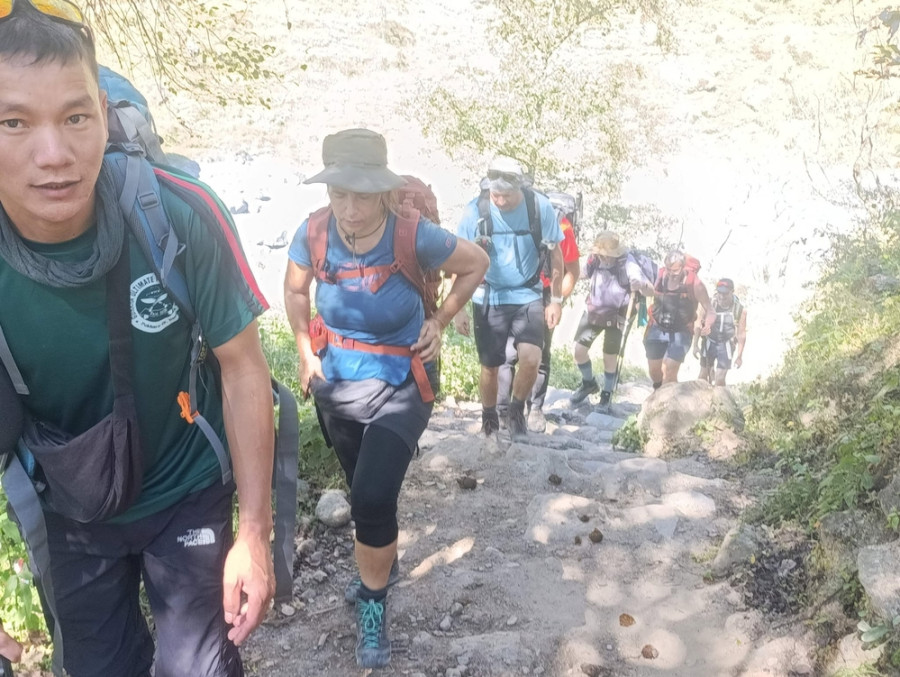
Approximately 1,000 domestic and international tourists visit the Tamang Heritage Trail each year. The reopening is expected to provide relief to tourism businesses and local communities that depend on trekking activities and hospitality services along the route.
Seven-to-Ten-Day Trek Offers Rich Cultural Experience
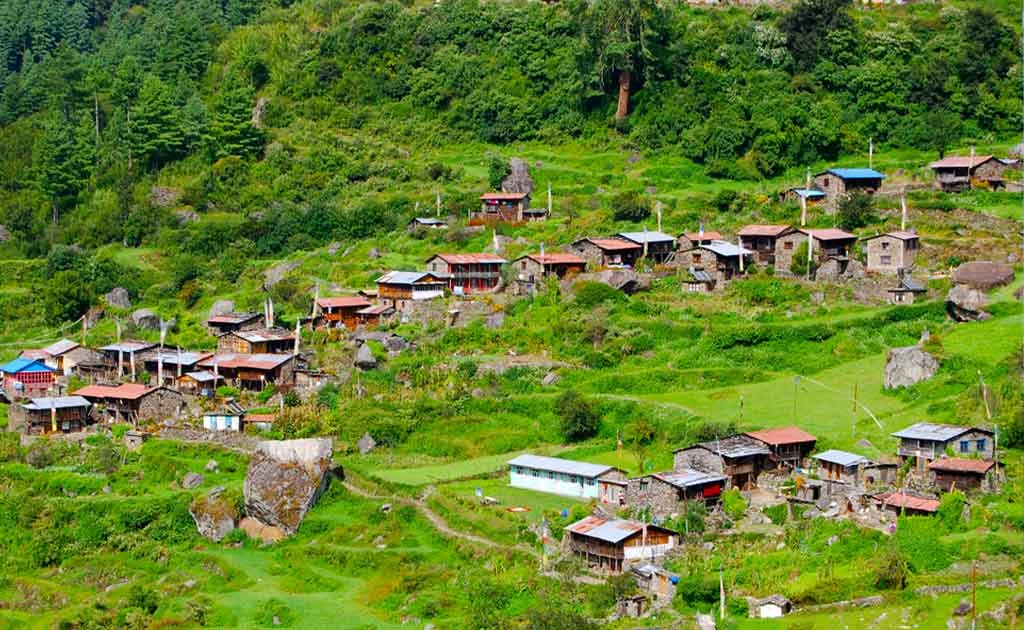
The Tamang Heritage Trail can be completed in approximately seven to ten days, offering visitors an opportunity to experience the distinctive culture, traditions and lifestyle of the Tamang community. The trail is characterized by strong Tibetan cultural influences, traditional stone-built houses with wooden windows, monasteries, prayer walls and other cultural and religious structures.
The route also provides access to Parvatikunda, with trekkers travelling through Syafrubensi, Bahundanda, Goljung and Gatlang in Aamachhodingmo Rural Municipality. The combination of cultural heritage, mountain landscapes and traditional settlements makes the route an important trekking destination in northern Nepal.
Spectacular Himalayan Views Along the Trail
Dinesh Tamang Phulung, Secretary of the Rasuwa-Nuwakot Tourism Society, said trekkers can enjoy panoramic views of Ganesh Himal, the Langtang Snow Range and the Nepal-China border from different sections of the trail. The route also provides access to the scenic Ruby Valley in Dhading, creating opportunities to combine two important trekking destinations.
Tourism entrepreneur Rakesh Dhamala of Dhading said the completion of the temporary bridge at Syafrubensi has made both the Tamang Heritage Trail in Rasuwa and the Ruby Valley Trail in Dhading accessible to tourists. The restoration of connectivity is expected to support the revival of tourism activities in communities along both routes.
Ruby Valley Trail Reopens Through Ganesh Himal
The Ruby Valley Trail attracts approximately 400 to 500 domestic and international tourists annually. Trekkers travelling along the route pass through Gangajamuna in Dhading and the Manaslu region of Gorkha, with the trail extending through Somtang, Pangsang Pass, and Setodaha in the Ganesh Himal area of Ruby Valley Rural Municipality.
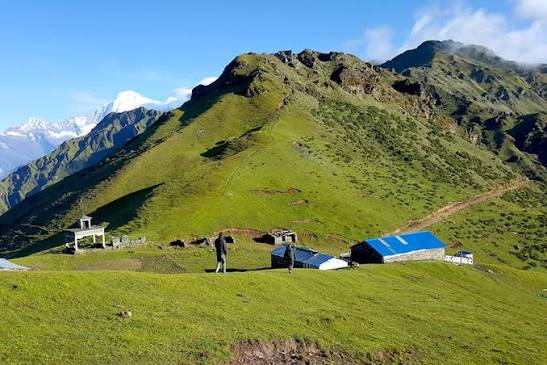
The reopening of the route has also improved access to trekking destinations that had been affected by the recent floods. Meanwhile, the Manaslu Larke Pass area, which had been temporarily inaccessible following flooding in the Budhi Gandaki River in Gorkha, has also reopened for trekking activities.
Langtang and Gosaikunda Routes Also Restored
Several other major trekking destinations affected by the August 26 Bhotekoshi flood have also been restored, including the Langtang and Gosaikunda areas. Following the installation of the Belly Bridge at Betravati, which was damaged by the flood, the Trekking Agencies’ Association of Nepal (TAAN) has established alternative routes to provide access to the Langtang region.
The first alternative route takes trekkers from Kathmandu through Trishuli and Betravati to Dhunche or Bolsyafru, before continuing through Bambu, Lama Hotel and Langtang to Kyanjin. This route provides an alternative connection to the Langtang Valley while regular infrastructure continues to recover from flood damage.
Alternative Route via Helambu Available
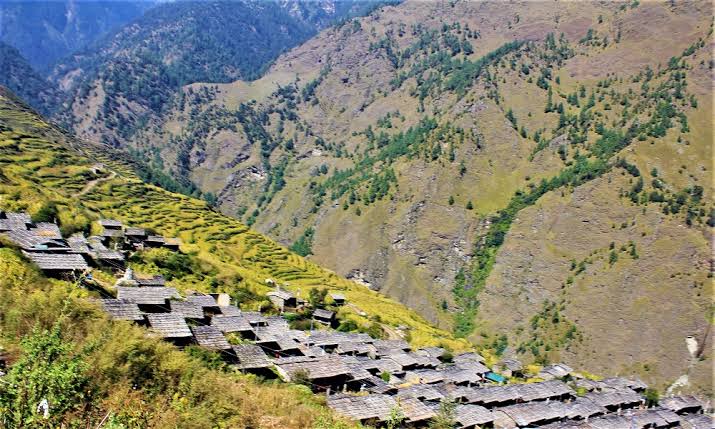
The second alternative route connects Kathmandu with Langtang through Chisapani, Helambu, Tharepati, Ghopte, Gosaikunda, Thulosyafru, Bambu, Lama Hotel and Langtang, before reaching Kyanjin. The alternative route provides trekkers with another option while supporting the gradual restoration of tourism connectivity in the affected region.
TAAN has urged trekkers, tourists, guides, agencies and other tourism professionals to check the latest trail conditions before beginning their journeys. It has also advised travellers to follow local safety instructions and take appropriate precautions, as some sections of the trekking routes may still be undergoing restoration following the flood damage.