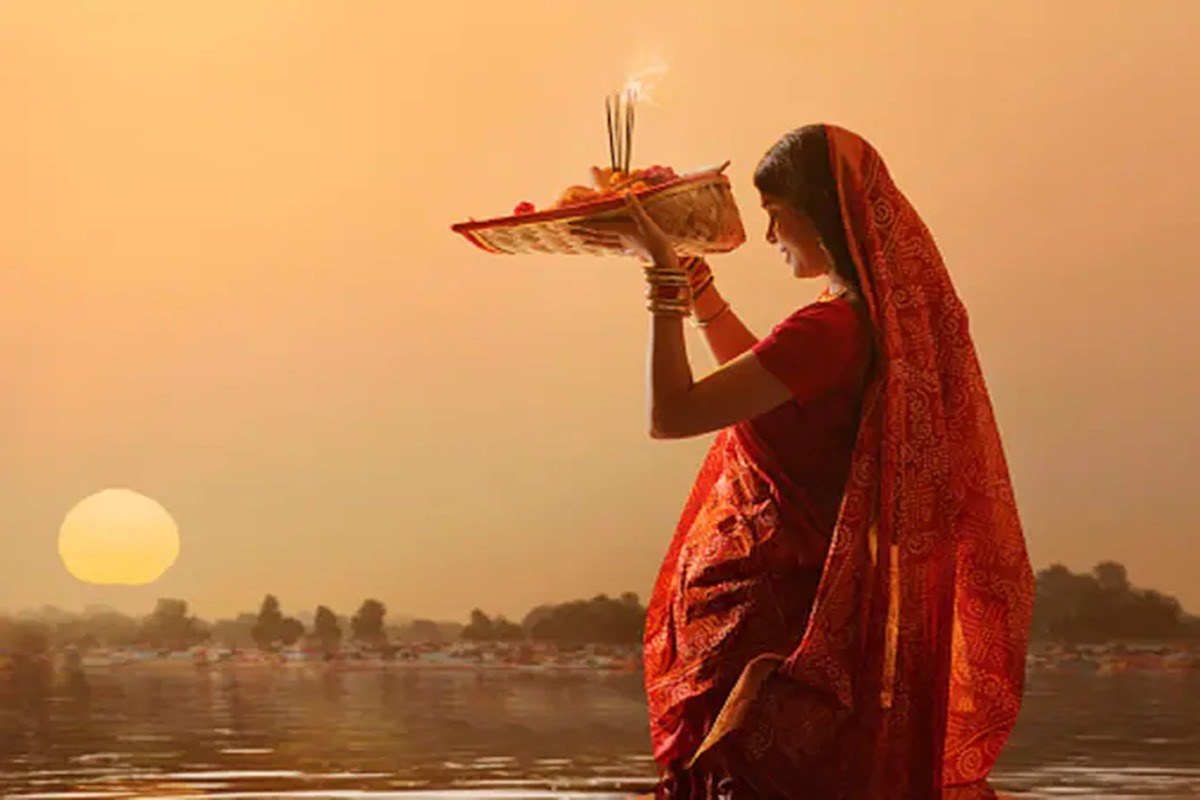
Chhath Parva is one of Nepal’s most distinctive festivals, combining devotion to the Sun, reverence for nature, family traditions and community participation. Celebrated particularly across the Madhesh and Terai plains, the four-day festival has gradually expanded beyond its traditional heartland and is now observed in Kathmandu and other parts of the country. For visitors, Chhath offers more than a religious experience: it provides an opportunity to witness living Mithila and Madhesh culture, traditional food, music, rituals, handicrafts and the transformation of rivers, ponds and historic cities into vibrant cultural spaces.
The festival is observed during Kartik Shukla Shashthi, generally in October or November. In 2026, Chhath falls on November 15, with the rituals taking place over four days. The festival is dedicated primarily to Surya, the Sun God, and Chhathi Maiya, and devotees pray for the health, prosperity, longevity and wellbeing of their families. Nepal Tourism Board describes Janakpur as one of the major destinations for Chhath, while noting that the festival is celebrated throughout Nepal, including Kathmandu along the Bagmati River.
An Ancient Tradition of Sun Worship
The exact historical beginning of Chhath cannot be established with certainty. However, the festival is associated with the ancient South Asian tradition of Sun worship and has connections with Vedic traditions. The Sun has traditionally been revered as the source of light, energy and life, making Chhath a celebration deeply connected with nature.

Several traditional stories are associated with the festival. One connects Chhath with Karna of the Mahabharata, who is described as a devoted worshipper of Surya. Another tradition links the practice with Draupadi and the Pandavas. Mithila traditions also associate the festival with Sita, reflecting the deep cultural relationship between Chhath and the land of Mithila. These accounts are part of the festival’s rich oral and religious heritage, although they should be understood as traditions rather than historically established evidence for the festival’s precise origin.
The name Chhath is commonly associated with the sixth lunar day, or Shashthi, on which the principal worship takes place. The festival is also known as Chhath Parva, Surya Shashthi and Chhathi Puja. In Nepal, its strongest traditional roots are found in the eastern and central Terai, particularly in places such as Janakpur and surrounding districts. Janakpur’s large number of sacred ponds gives the festival a particularly strong cultural and tourism identity. Nepal Tourism Board notes that Janakpur has more than 200 sacred ponds, including the prominent Dhanush Sagar and Ganga Sagar.
Four Days of Purification, Fasting and Worship
The beauty of Chhath lies in its carefully structured four-day process. Each day has its own meaning and ritual.
Day One: Nahay Khay
The festival begins with Nahay Khay, a day associated with purification. Devotees clean their homes and surroundings and take a ritual bath, traditionally in a river, pond or other water source. A simple meal is prepared after the purification process.
The cleaning of water bodies and their surroundings is also an important community aspect of Chhath. In many traditional celebrations, local communities prepare the ghats and clean the riverbanks and ponds before the main rituals begin.
Day Two: Kharna
The second day is known as Kharna or Lohanda. Devotees observe a rigorous fast during the day and prepare offerings in the evening. Traditional food includes kheer, fruits and other offerings.
After worship, the fast is broken and the prasad is shared among family members and relatives. The preparation of food itself is an important part of the cultural experience, with family members participating in preparing traditional delicacies.
Day Three: Sandhya Arghya
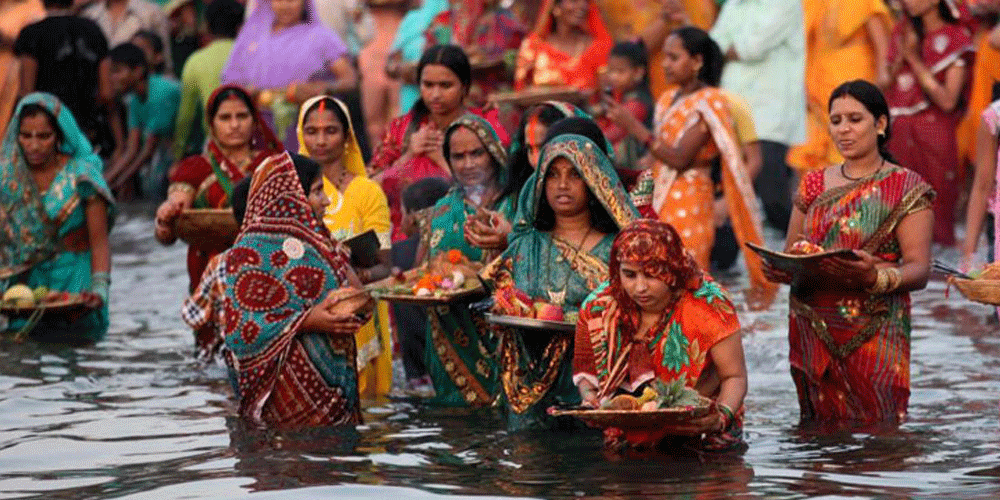
The third day is the visual centrepiece of Chhath. Devotees prepare traditional offerings throughout the day and travel to rivers, ponds and lakes in the afternoon.
As the sun begins to set, devotees stand in water and offer Arghya, water and other offerings, to the setting Sun. Bamboo baskets, traditional soop, sugarcane, bananas, coconuts, sweets, earthen lamps and other natural products form part of the offerings.
The sight of thousands of devotees dressed in traditional clothing gathering around illuminated ghats creates a remarkable cultural landscape. Traditional songs, lamps and decorations add to the atmosphere.
In many communities, Kosi Puja is also performed on the third night. Sugarcane stalks and lamps are arranged as part of the ritual, with variations depending on family and regional traditions.
Day Four: Usha Arghya
The final day begins before sunrise. Devotees return to the ghats and wait for the first rays of the Sun. Standing in the water, they offer Arghya to the rising Sun.
This is followed by the breaking of the fast and distribution of prasad among family, friends and the wider community. The festival therefore concludes not simply as an individual religious observance but as a collective celebration of gratitude, family and community.
Chhath and Nepal’s Tourism Potential
Chhath has enormous potential as a cultural and religious tourism attraction in Nepal. Unlike festivals centred primarily around temples, Chhath takes place in open public spaces, rivers, ponds, lakes, and ghats. This allows visitors to experience the festival as a living cultural event. Tourists can observe traditional dress, folk songs, ritual practices, local cuisine, handicrafts and community activities while simultaneously exploring the destinations where the festival takes place.
Janakpur is naturally positioned as the country’s flagship Chhath tourism destination. The city’s connection with Mithila civilisation, Janaki Temple, sacred ponds, Mithila art and the Ram-Sita heritage provides an opportunity to package Chhath within a wider cultural tourism itinerary. Visitors can combine Chhath celebrations with visits to Janaki Temple, Dhanush Sagar, Ganga Sagar, Mithila cultural sites and local markets.
Janakpur’s cultural landscape makes the festival particularly attractive for international visitors interested in religious heritage and living traditions. Nepal’s official tourism information identifies Chhath as an important festival of the Madhesh region and highlights the city’s sacred ponds as major pilgrimage sites.
Other cities across the Terai can similarly develop their own Chhath tourism identity. Birgunj, Biratnagar, Lahan, Rajbiraj and other Madhesh destinations can promote their local ghats, food, music and cultural traditions as part of seasonal tourism programmes.
From Madhesh to Kathmandu
One of the most interesting developments in the history of Chhath in Nepal is its expansion from the Terai and Mithila heartland to Kathmandu. Migration, education, employment and urbanisation brought communities from the Terai to the capital, and they gradually began celebrating their traditions in Kathmandu. Historical accounts suggest that communal Chhath celebrations in Kathmandu began at Thapathali Ghat in the late 1980s and later expanded to other locations along the Bagmati and around the Kathmandu Valley.
Today, Chhath is no longer limited to the Mithila and Madhesh communities in the capital. People from different backgrounds increasingly participate in or observe the celebrations, turning the festival into an example of Nepal’s multicultural urban identity. This expansion itself has tourism significance. A visitor to Kathmandu during Chhath can experience a different side of the capital, one where riverbanks and ponds become cultural gathering spaces filled with traditional music, lights, colours and rituals.

A Festival That Supports Local Livelihoods
Chhath also generates an important seasonal economic cycle. Farmers, fruit sellers, flower vendors, bamboo artisans, potters, sweet makers, transport operators, restaurants and small retailers all benefit from increased demand during the festival. Bamboo baskets and soop, sugarcane, bananas, coconuts, fruits, earthen lamps and traditional sweets become particularly important seasonal products.
The festival’s connection with locally produced and biodegradable materials also provides an opportunity to promote responsible and sustainable tourism. Bamboo, banana leaves, earthen lamps and natural flowers traditionally form an important part of Chhath celebrations.
However, growing visitor numbers also create challenges. Crowded ghats require proper sanitation, waste management, lighting, water safety, traffic management, emergency services and crowd control. Plastic waste and pollution can undermine the very rivers and ponds that are central to the festival. Sustainable Chhath tourism therefore needs to protect the cultural and environmental character of the destinations.
Chhath as a Cultural Tourism Brand
Nepal can develop Chhath as more than a religious festival. It can be positioned as a living cultural heritage experience. A dedicated Chhath tourism programme could connect Janakpur and other Terai destinations through cultural circuits featuring Mithila art, traditional cuisine, sacred ponds, temples, local markets, folk music and community-based experiences. Hotels and travel companies could offer festival-season packages, while local governments could develop designated visitor areas and cultural interpretation centres.

For international tourists, the festival provides a rare opportunity to experience a living tradition rather than simply visiting a monument. The combination of spirituality, water, music, food, architecture, traditional crafts and community participation makes Chhath particularly suitable for cultural, religious and experiential tourism.
Beyond Religion: A Celebration of Nature and Community
At its heart, Chhath is a celebration of the relationship between people and nature. Devotees worship the Sun, gather around water and offer locally produced fruits and food. The rituals express gratitude for the natural forces that sustain life. This connection gives Chhath relevance to contemporary tourism trends that increasingly value authentic cultural experiences, wellness, spirituality and sustainable travel.
For Nepal, the festival also represents an opportunity to showcase the cultural diversity of the Madhesh and Terai to domestic and international visitors. From the sacred ponds of Janakpur to the illuminated ghats of Kathmandu, Chhath demonstrates how a centuries-old tradition can continue to evolve while retaining its spiritual core. As Nepal seeks to diversify its tourism beyond mountains and adventure, Chhath can become an important cultural tourism product, one that brings together heritage, spirituality, community, local livelihoods and sustainable destination development.