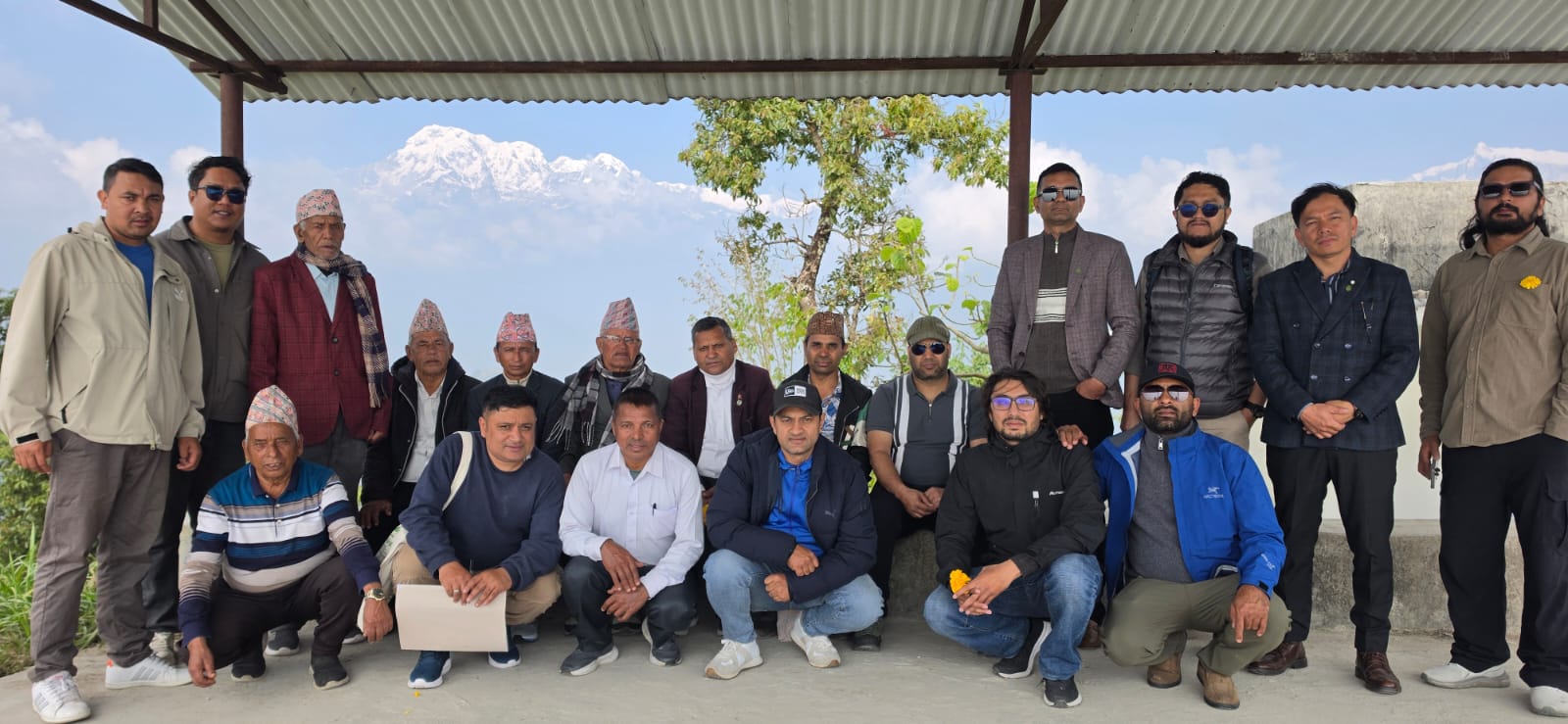
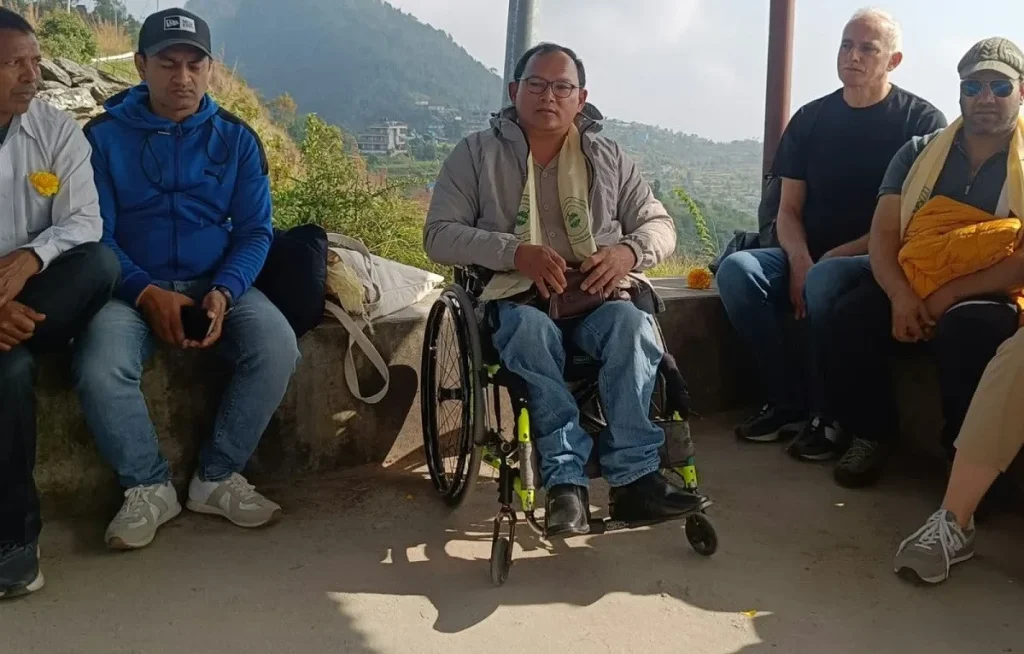
Hem Gurung, a physically disabled tourism advocate and President of the National Federation of the Disabled Nepal, Gandaki Province, embarked on a wheelchair trek on Tuesday, travelling from Deurali in Pokhara Metropolitan City–24 to the boundary of Annapurna Rural Municipality. The trail, recognized as South Asia’s first trekking route designed specifically to accommodate people with physical disabilities, has emerged as an important example of how tourism infrastructure can be developed to promote accessibility and inclusion in Nepal’s tourism sector.
Gurung travelled the route in a wheelchair to observe the condition of the trail and assess the improvements made to make it more accessible to wheelchair users and other visitors with mobility challenges. The trekking route was originally inaugurated on March 31, 2018, but several sections subsequently suffered damage and technical problems, making movement difficult for wheelchair users, elderly people and individuals using artificial limbs. Recognizing the need to improve the infrastructure, the United Nations Development Programme (UNDP), in collaboration with the Nepal Tourism Board (NTB), supported the improvement of the trail under the Board’s Sustainable Tourism Project, with active involvement from the Trekking Agencies’ Association of Nepal (TAAN), Gandaki Province.
1.7-Kilometre Section Upgraded with Wheelchair-Friendly Infrastructure
The trail stretches approximately three kilometres in total, of which around 1.7 kilometres falls within Pokhara Metropolitan City–24. This section has been upgraded through stone paving and the installation of additional technical structures designed to make the trail safer and more accessible for wheelchair users. The improvement work has been carried out at an estimated cost of around NPR 50 lakh, although the remaining 1.3-kilometre section extending toward Annapurna Rural Municipality has yet to receive the required upgrade.
One of the major challenges identified in the earlier infrastructure was the lack of adequate safety features for wheelchair users. The existing trail made it difficult for people with disabilities, elderly visitors and people using artificial limbs to move safely, particularly on sloping sections. Under the recent improvement, a small safety curb of approximately five inches has been constructed along the edge of the trail to prevent wheelchairs from slipping or losing balance and moving outside the designated path.
Resting areas have also been constructed along the trail, particularly at sections with uphill and downhill gradients. These facilities are intended to allow wheelchair users and other visitors to stop safely when they become tired or require assistance while navigating the route. The improvements are expected to make the trail more practical for visitors with mobility challenges while also providing a safer experience for elderly tourists and other users.
TAAN Gandaki Calls for Completion of the Remaining Section
Immediate Past President of TAAN Gandaki, Krishna Prasad Acharya, said that the improvements made so far have demonstrated the potential of the trail as an inclusive tourism product. According to Acharya, TAAN Gandaki President Tirtha Raj Subedi has also emphasized the need for continued coordination among tourism stakeholders and local governments to ensure that the trail is completed and maintained as a fully accessible trekking route.
The stakeholders have stressed that developing only a portion of the trail is not sufficient to establish it as a complete disability-friendly tourism product. The remaining 1.3-kilometre section from the boundary of Pokhara Metropolitan City and Annapurna Rural Municipality toward Himalayan Deurali Resort remains unimproved. The absence of an accessible route in this section means wheelchair users cannot currently enjoy the entire trail without facing significant difficulties.
A proposal had been prepared to upgrade the remaining section at an estimated cost of NPR 50 lakh. Under the proposed funding arrangement, NPR 25 lakh would be provided through the Nepal Tourism Board with support from UNDP, while Annapurna Rural Municipality would contribute an additional NPR 25 lakh as matching funds. However, the proposal has not moved forward as the project has reportedly not been prioritized by the rural municipality.
Accessibility Improvements Still Face Local Challenges
Although an accessible toilet has been constructed and improved at the middle section of the trail, wheelchair users are still unable to use the facility conveniently. A local land dispute has prevented the construction of a small access route connecting the main trail to the toilet, leaving the facility difficult to reach for its intended users.
Gurung said that the recent improvements were assessed during an on-site inspection and that the newly installed structures were found to be in good condition. He emphasized that completing the remaining section and resolving the issues surrounding the accessible toilet would be essential to make the entire route genuinely disability-friendly.
The development of accessible tourism infrastructure in Nepal is particularly significant in Nepal, where trekking routes are often characterized by steep terrain and difficult geographical conditions. While the country has considerable potential for nature-based and adventure tourism, inadequate accessibility remains a major barrier preventing people with disabilities and other mobility challenges from participating fully in tourism activities.
UNDP Ready to Support Further Development
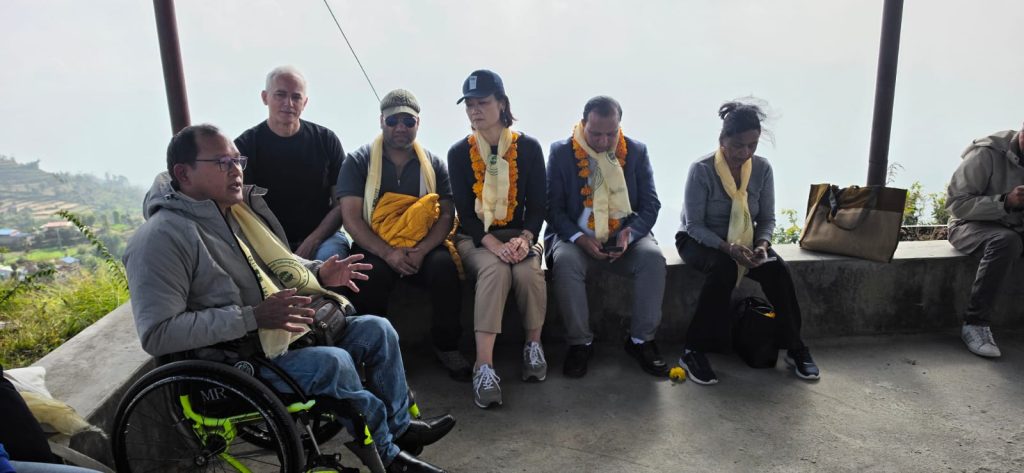
Following an observation of the trail, Kyoko Yokosuka, Head of UNDP Nepal, expressed willingness to support the further development of the accessible trekking route. She highlighted Pokhara’s rapid development as a tourism destination and said that the next challenge was to ensure that the city’s tourism growth becomes greener and more inclusive.
Yokosuka said that Pokhara has considerable reasons to be proud of its tourism development but stressed that future tourism growth should place greater emphasis on environmental sustainability and inclusion. She noted that UNDP was pleased to contribute through the project and indicated that further cooperation could be considered for the continued improvement of the trail.
Her remarks underline the broader significance of the project, which extends beyond the construction of a single trekking route. Accessible infrastructure can help expand tourism participation among people with disabilities while also improving convenience for elderly travellers, families and visitors with temporary mobility limitations.
Tourism Stakeholders Highlight Inclusive Tourism Potential
President of the Pokhara Tourism Council, Hari Bhujel, described the disability-friendly trail as a valuable tourism product capable of delivering both economic and social benefits. According to Bhujel, the route allows visitors to experience nature while also demonstrating that tourism destinations can be developed in a way that respects the rights and needs of people with disabilities.
He said the trail represents a practical example of social inclusion and provides a platform for people with disabilities to enjoy recreational activities in nature. He also emphasized that inclusive infrastructure should not be limited to tourism but should become part of development across all sectors.
The trail passes through Kaskikot, an area with considerable historical significance. Kaskikot is associated with the history of the Shah dynasty, which played a major role in Nepal’s political history. In the past, a broader concept had been proposed for a 74-kilometre trekking route connecting Jarebar in Pokhara with Kaskikot and extending toward Pumdibhumdi. However, the larger trail concept has yet to be fully implemented.
Scenic Trail Offers Views of Phewa Lake and Annapurna Range
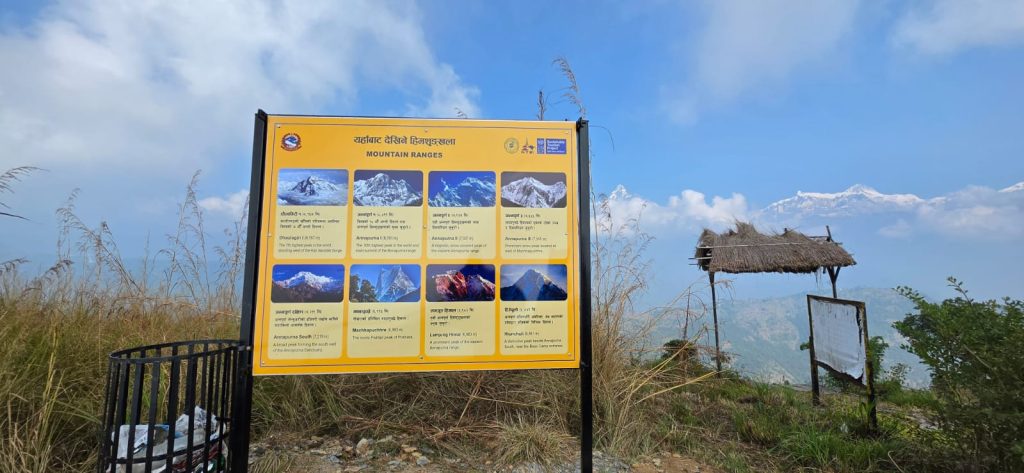
Despite its relatively short length, the accessible trail has significant tourism potential because of its natural and cultural attractions. Visitors can enjoy views toward the upper section of Phewa Lake as well as panoramic scenery of the Annapurna mountain range. Its combination of natural landscapes, cultural heritage and accessible infrastructure gives the route potential to become a distinctive tourism product for Pokhara.
Stakeholders believe that completing the trail could also create new business opportunities for local communities by attracting domestic and international visitors seeking accessible tourism experiences. Accommodation providers, restaurants, guides, transport operators and other local businesses could benefit from increased visitor movement if the route is developed and promoted effectively.
Accessible Tourism Could Open New Opportunities for Nepal
Globally, around one billion people are estimated to live with some form of disability, while Nepal is estimated to have more than 500,000 people with physical disabilities. Tourism stakeholders argue that accessible infrastructure can therefore serve a much larger market than is often recognized.
For a geographically challenging destination such as Nepal, the development of disability-friendly tourism infrastructure could play an important role in making trekking and nature-based tourism more inclusive. The Pokhara trail demonstrates that accessibility can be incorporated into trekking infrastructure through relatively practical interventions such as safe curbs, resting areas, accessible toilets and properly designed pathways.
The continued development of the trail, however, will depend on stronger coordination among the Nepal Tourism Board, UNDP, local governments, tourism associations and community stakeholders. Completing the remaining 1.3-kilometre section, resolving the land-related issue affecting the accessible toilet and ensuring regular maintenance could transform the existing route into a fully functional inclusive tourism product.
Gurung’s wheelchair journey has once again drawn attention to both the progress and remaining challenges of accessible tourism in Nepal. Stakeholders believe that completing and properly promoting the trail could establish Pokhara as a stronger destination for inclusive tourism while sending a wider message that people with disabilities should have equal opportunities to experience Nepal’s natural, cultural and recreational attractions.