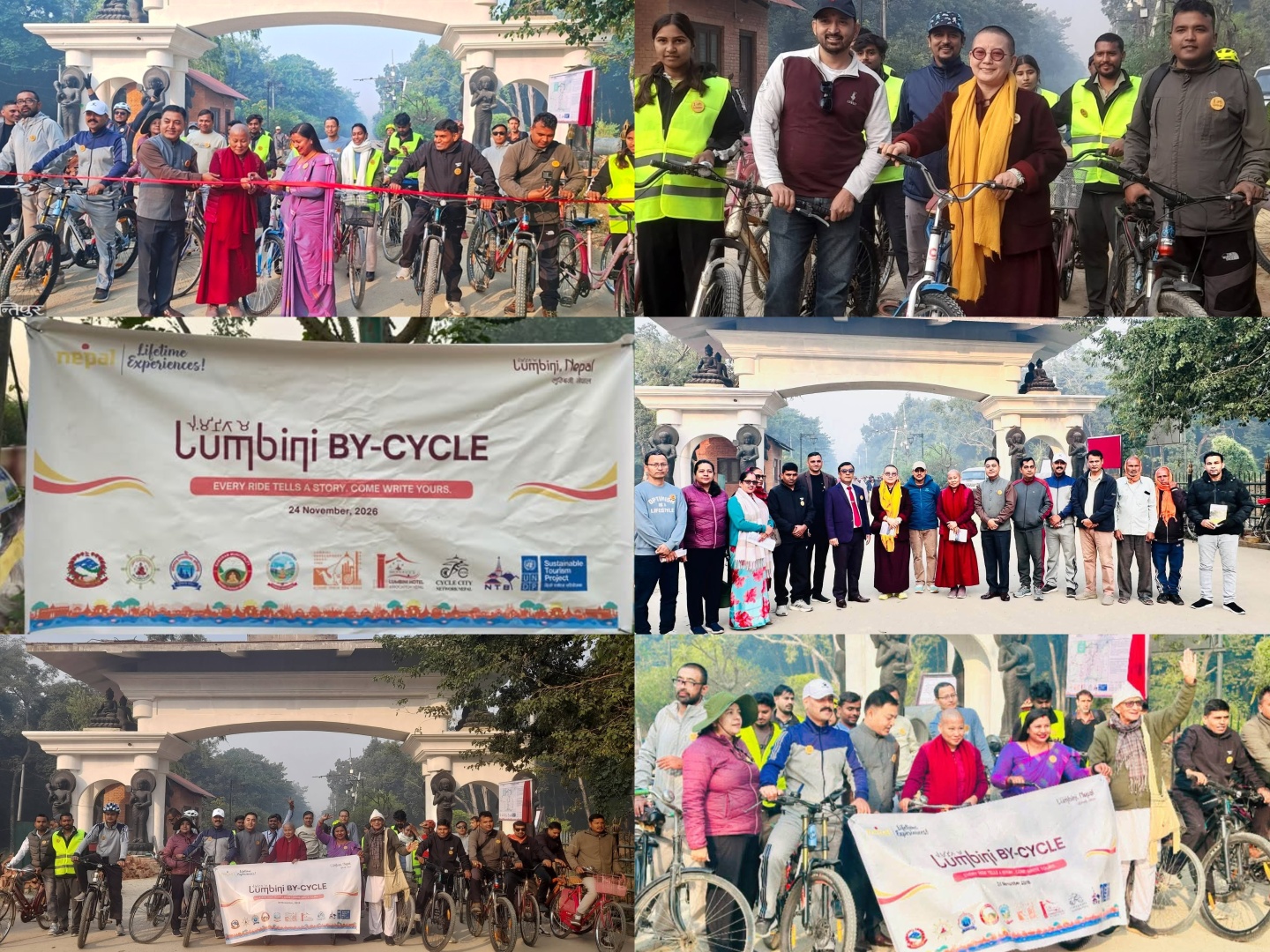
Lumbini, the birthplace of Gautama Buddha, has introduced a new cycling tourism initiative to encourage visitors to explore the villages, cultural heritage and everyday life surrounding its renowned Buddhist pilgrimage site. The programme, titled ‘Lumbini By Cycle’, began on November 24, 2026, with the opening of an 8-kilometre route along Maitri Marg, marking an effort to extend tourism activities beyond the Lumbini Development Trust’s main premises and bring surrounding communities into the tourism experience. The initiative aims to create stronger connections between visitors and local communities while supporting rural tourism, environmental conservation and local livelihoods.
Through organised cycling routes, tourists will have opportunities to discover traditional settlements, religious sites, ponds, agricultural landscapes and local cultural practices that are often overlooked during conventional visits to Lumbini. The first route was inaugurated on Tuesday morning by Kalpana Harijan, acting chief of Lumbini Sanskritik Municipality. The programme was attended by Lumbini Development Trust Vice-Chairperson Ani Choying Dolma, representatives of the Nepal Tourism Board and the United Nations Development Programme (UNDP), tourism professionals and local stakeholders.
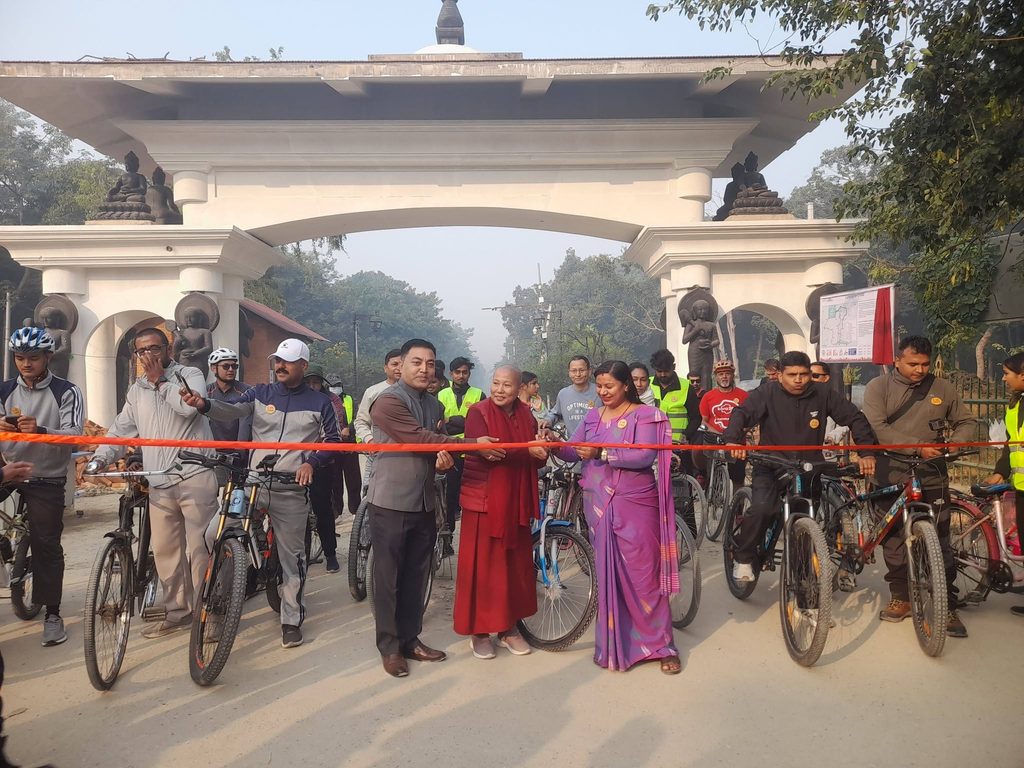
8-Km Maitri Marg Connects Villages Around Lumbini
The initial phase of the programme introduces an 8-kilometre cycling route known as Maitri Marg. The journey begins from Lumbini Bazaar Chowk, passes through Osho Tapoban and continues across several surrounding settlements, including Mahilwar, Budhanipur, Laxmipur, Sano Mahilwar and Thulo Mahilwar, before returning towards Gate No. 5 of the Lumbini area. The route is designed to provide a different perspective of Lumbini by taking visitors beyond the established pilgrimage and heritage attractions. Cyclists can experience the region’s traditional villages, local temples and monasteries, ponds, farmland and community life while travelling through the surrounding landscape.
Until now, tourism activities in Lumbini have largely centred on the area managed by the Lumbini Development Trust. The new cycling programme seeks to expand the visitor experience by introducing attractions and communities outside the main development area. This approach is expected to encourage tourists to explore more of the destination and discover its wider cultural and rural character. Lila Mani Sharma, president of the Lumbini Hotel Association, said the cycling routes would allow visitors to experience the settlements and local heritage surrounding the development area’s boundary. He noted that the initiative could also help increase the length of tourists’ stays in Lumbini by offering additional activities beyond conventional sightseeing.
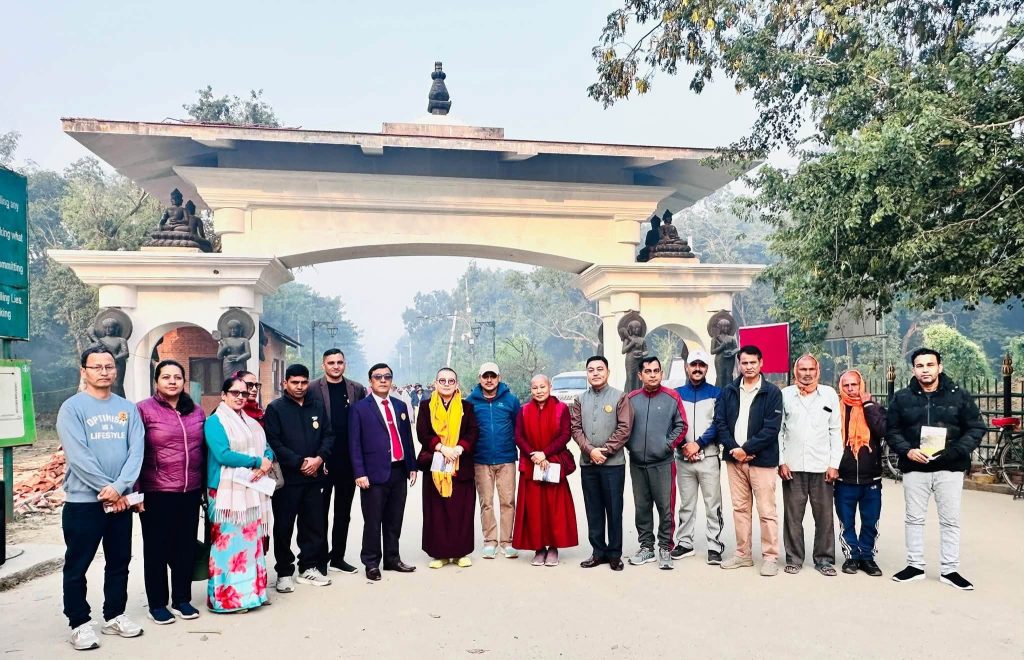
Cycling to Support Sustainable and Community-Based Tourism
The programme has been introduced with the broader objective of linking tourism development with environmental protection and economic opportunities for local residents. By encouraging cycling as a way to explore the destination, the initiative promotes a low-impact mode of travel while creating opportunities for visitors to interact more closely with the surrounding communities. Khagda Bikram Shah, senior manager at the Nepal Tourism Board, said the initiative was intended to contribute to sustainable tourism development, protect Lumbini’s environment and improve local livelihoods by ensuring that communities benefit directly from tourism activities.
He highlighted the importance of connecting the Lumbini development area with the Greater Lumbini region through cycling routes. Such connectivity, he said, could play a meaningful role in promoting rural tourism and expanding the benefits of tourism beyond the main heritage complex. The initiative also reflects an effort to diversify Lumbini’s tourism products. While the destination is internationally recognised for its religious and archaeological importance, its surrounding villages, agricultural landscapes and cultural traditions offer additional experiences for visitors. Cycling can make these attractions more accessible while encouraging responsible exploration.
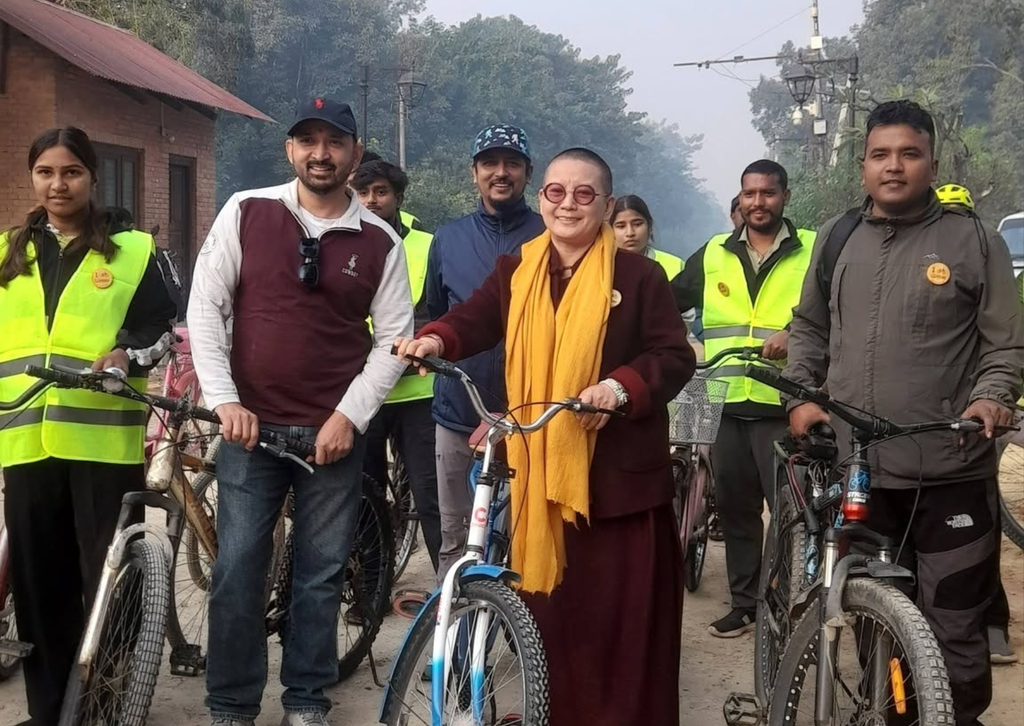
More Routes Planned to Expand Rural Tourism
Maitri Marg is the first route introduced under the Lumbini By Cycle programme. The initiative also envisages the development of additional routes, including Pragya Marg and Karuna Marg, to further connect visitors with the surrounding rural areas. The planned expansion is expected to strengthen the programme’s contribution to rural tourism, environmental conservation and community-based livelihoods. By linking different parts of the Greater Lumbini region, the routes could provide visitors with more opportunities to explore local heritage and landscapes while encouraging tourism-related economic activities in nearby settlements.
The participation of the Lumbini Development Trust, Nepal Tourism Board, UNDP, Lumbini Hotel Association and local government reflects cooperation among public institutions, development partners and the private sector to broaden the destination’s tourism offerings. With the introduction of the 8-kilometre Maitri Marg route and plans for further cycling connections, Lumbini is taking steps to develop a more diverse visitor experience. The initiative aims to ensure that tourism in the birthplace of Buddha extends beyond its established religious attractions and creates greater opportunities for local communities to participate in and benefit from the region’s growing tourism activities.