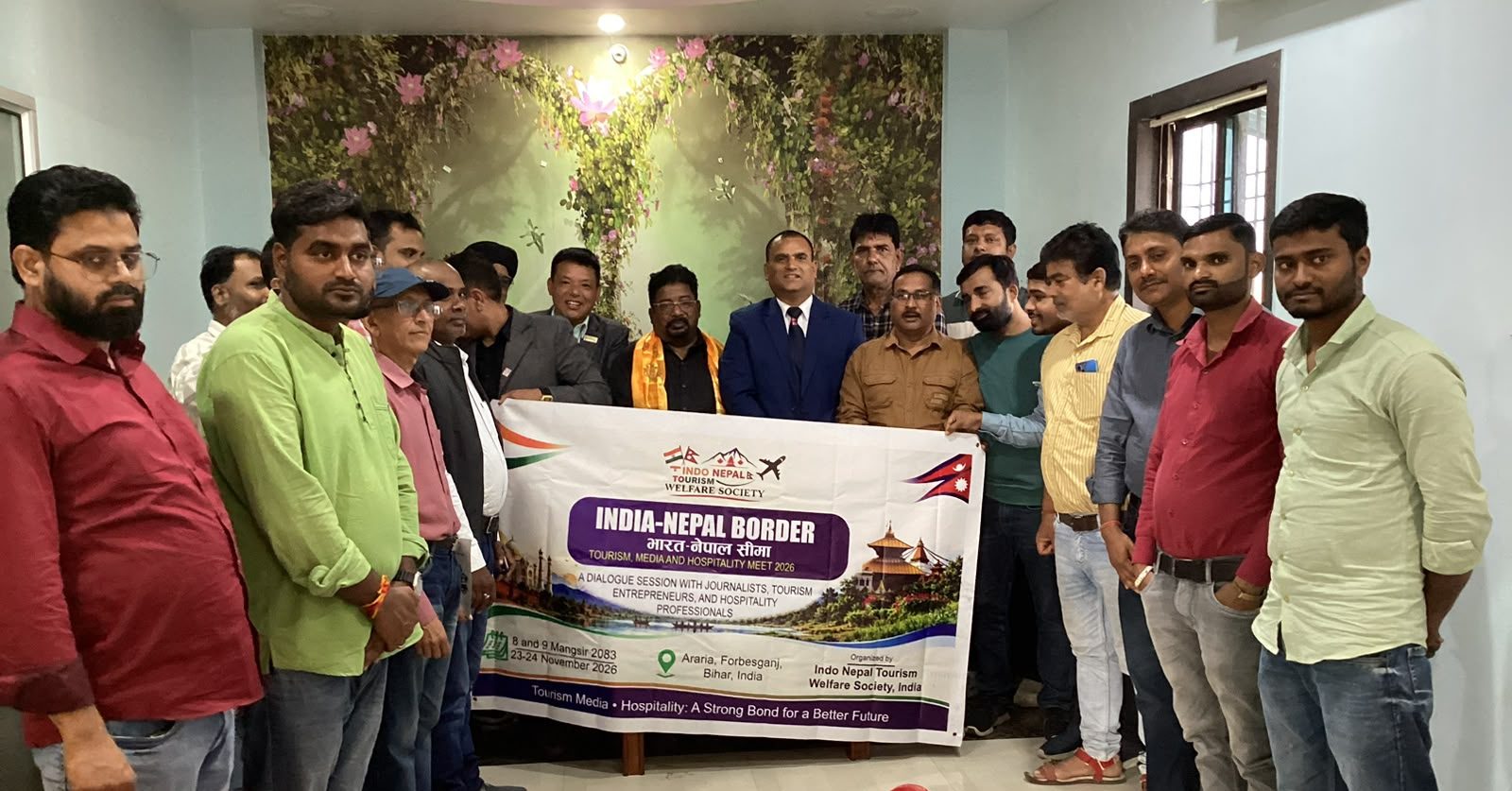
The India–Nepal Cross-Border Tourism, Media and Hospitality Meeting 2026 has concluded in Bihar with key recommendations to simplify border procedures, improve facilities for Indian tourists visiting Nepal and strengthen bilateral tourism cooperation. The meeting highlighted digital vehicle permits, simplified customs and immigration procedures, better border amenities and targeted promotion of Nepal’s hill destinations to encourage more Indian visitors. The India–Nepal Cross-Border Tourism, Media and Hospitality Meeting 2026 has concluded successfully in Bihar, India, following extensive discussions on improving cross-border movement and strengthening tourism relations between the two neighbouring countries.
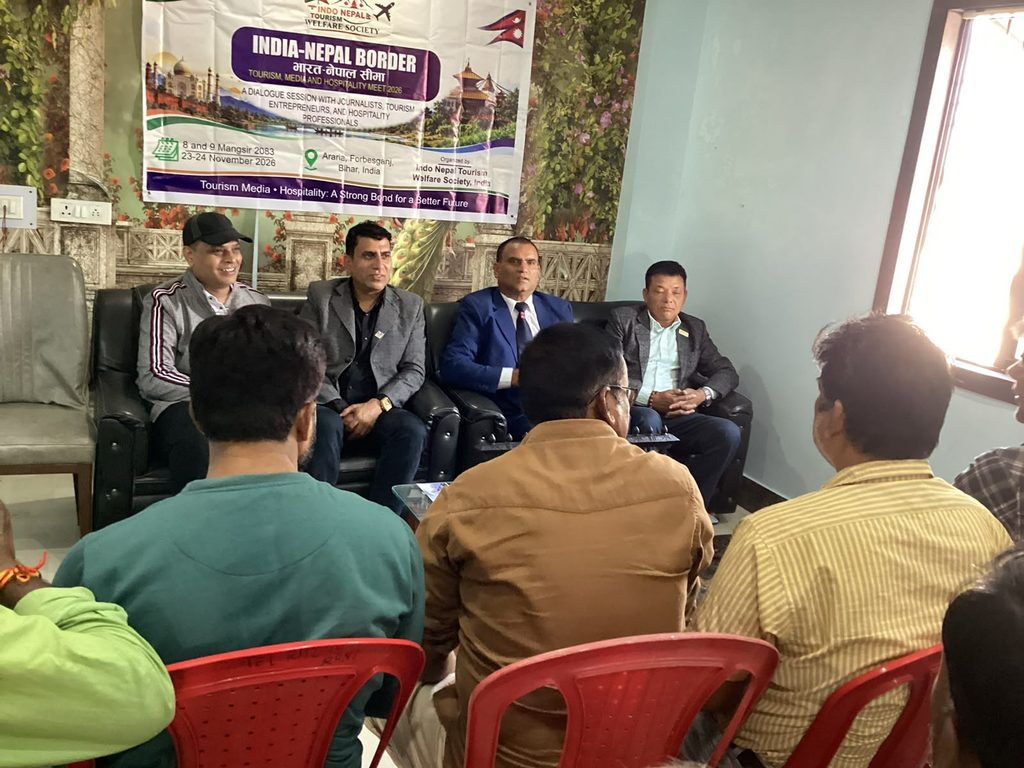
Held under the theme “Connecting Borders, Media, Hospitality & Tourism,” the meeting brought together tourism entrepreneurs, travel operators, hospitality professionals, media representatives and other stakeholders from Nepal and India. Participants discussed practical challenges faced by Indian tourists travelling to Nepal and explored measures to make cross-border journeys more convenient, comfortable and visitor-friendly. The discussions focused on simplifying administrative procedures at border checkpoints, improving tourism infrastructure, introducing digital services and strengthening coordination among government agencies and tourism stakeholders.
The meeting also emphasised the importance of promoting Nepal as an attractive destination for Indian travellers, particularly in hill destinations that have experienced a decline in Indian tourist arrivals compared to previous years. Organised jointly by the Indo–Nepal Tourism Welfare Society and the Indo–Nepal Journalist Coordination Committee of India, the programme included active participation from the Global Nepal Tourism Promotion Council, representing Nepal.
Simplifying Border Procedures to Improve Tourist Movement
One of the major outcomes of the meeting was a series of recommendations aimed at making cross-border travel between India and Nepal easier and more efficient. Participants highlighted the need to establish free Wi-Fi facilities at major border crossings, popular tourist destinations, hotels and public spaces. Improved internet access was identified as an important requirement for international visitors who depend on digital communication, online information and travel services during their journeys.
The meeting also proposed exploring dedicated “Tourism Free Zones” at important entry points. Such facilities would provide simplified procedures and essential visitor amenities, helping tourists complete necessary formalities more conveniently. Another important recommendation was the introduction of a One-Door Policy at border checkpoints. Under this proposed system, customs, immigration, vehicle permits and tax-related payments could be streamlined through a coordinated process, reducing the need for travellers to approach multiple offices.
Stakeholders also called for reviewing the existing system of multiple taxes and VAT collection in favour of a more transparent and unified single-payment mechanism. The recommendations aim to reduce administrative complications, improve the overall visitor experience and make Nepal more accessible to Indian tourists travelling for holidays, family visits, business and other purposes.
Digital Vehicle Permits and Better Border Facilities Proposed
Vehicle movement between India and Nepal was another major topic discussed during the meeting. Participants highlighted the need for a more efficient permit system for Indian vehicles entering Nepal. The meeting recommended introducing an Online Vehicle Time Card system that would allow eligible Indian vehicle owners and tourists to extend or modify their permits digitally while staying in Nepal. Under the proposed system, visitors would not need to return to border offices simply to make changes to their vehicle permits. This could help reduce unnecessary travel, save time and provide greater flexibility for tourists exploring destinations across the country.
Additional recommendations included establishing clear timeframes for customs clearance and considering annual or seasonal permits for eligible tourist vehicles. Participants also stressed the importance of providing safe, well-managed and affordable parking facilities at major border crossings to improve convenience for visitors travelling by private vehicles. The meeting further highlighted the need for practical entry arrangements for Indian guests visiting Nepal to attend weddings, social functions and other special occasions.
In addition to administrative improvements, stakeholders emphasised the importance of hospitality-oriented training for border security personnel and police officers. Such training would help ensure that visitors receive courteous assistance, clear information and a welcoming experience when entering Nepal.
Promotion of Nepal’s Hill Destinations to Attract Indian Tourists
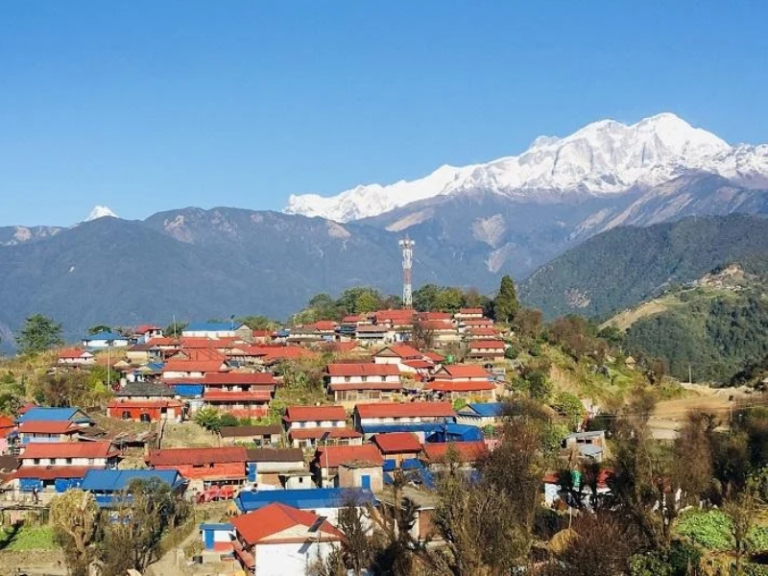
The meeting also raised concerns about a decline in Indian tourist arrivals to several of Nepal’s hill destinations compared with previous years. Participants stressed that Nepal needs more targeted promotional campaigns to attract Indian travellers to destinations beyond the country’s most established tourism centres. Destinations specifically highlighted during the discussions included Ilam, Dhankuta, Tansen, Bandipur and Pokhara. These places offer opportunities for nature-based tourism, scenic experiences, cultural exploration, relaxation and domestic and cross-border holiday travel.
Ilam is known for its tea gardens, green hills and scenic landscapes, while Dhankuta offers natural beauty, pleasant hill environments and cultural experiences. Tansen provides opportunities to explore traditional architecture and heritage, while Bandipur attracts visitors through its preserved Newari settlement, mountain views and cultural atmosphere. Pokhara remains one of Nepal’s major tourism destinations, known for its lakes, Himalayan views, adventure activities and hospitality services. The participants emphasised that coordinated marketing and promotional activities could help increase awareness of these destinations among Indian travel operators and potential visitors.
The Global Nepal Tourism Promotion Council also announced plans to organise a Nepal Familiarization (FAM) Trip in the near future. The proposed initiative is expected to provide travel industry representatives with opportunities to experience Nepal’s tourism products and destinations firsthand, helping them develop travel packages and promote Nepal in the Indian market. Such familiarization programmes can strengthen relationships between tour operators, travel agents, hospitality businesses and destination promoters while encouraging greater cross-border visitor movement.
Nepali Tourism Delegates and Indian Industry Stakeholders Participate
The meeting witnessed the participation of prominent tourism representatives and professionals from Nepal and India. Among the Nepali delegates were Non-Resident Nepali Association (NRNA) International Coordination Council Spokesperson Som Nath Sapkota, Nepali tourism expert and Everest summiteer PK Sherpa, and Kathmandu District Hotel Association President Suresh Baral. The Global Nepal Tourism Promotion Council represented Nepal during the discussions, contributing perspectives on tourism promotion, cross-border cooperation and the challenges experienced by Indian visitors.
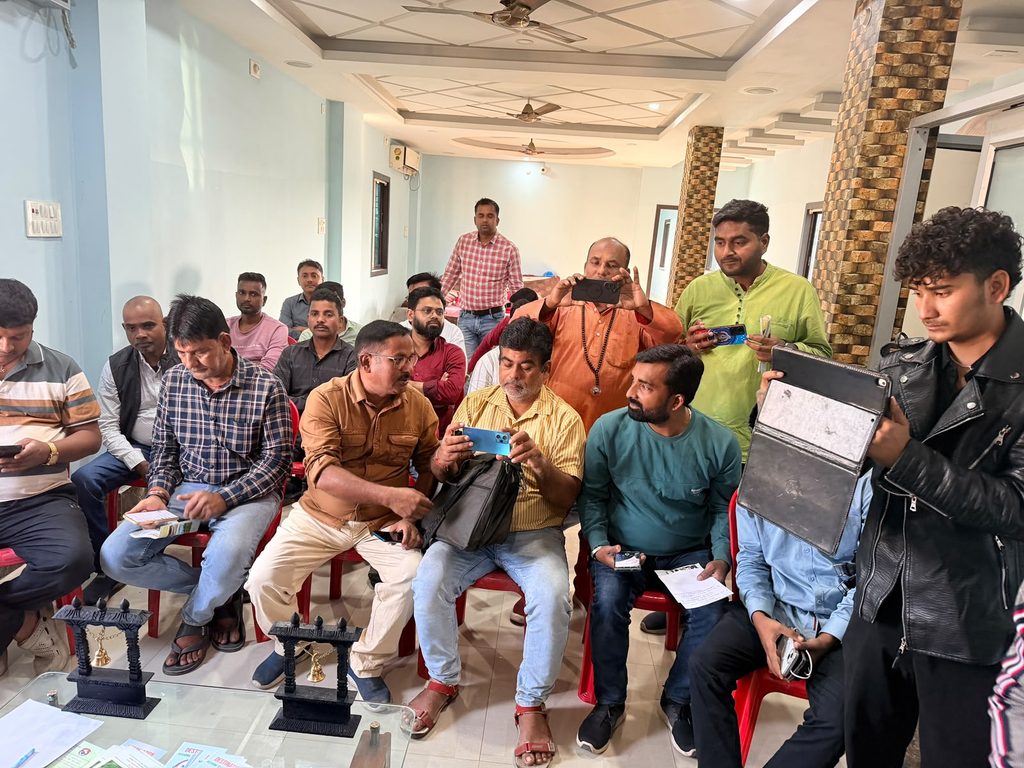
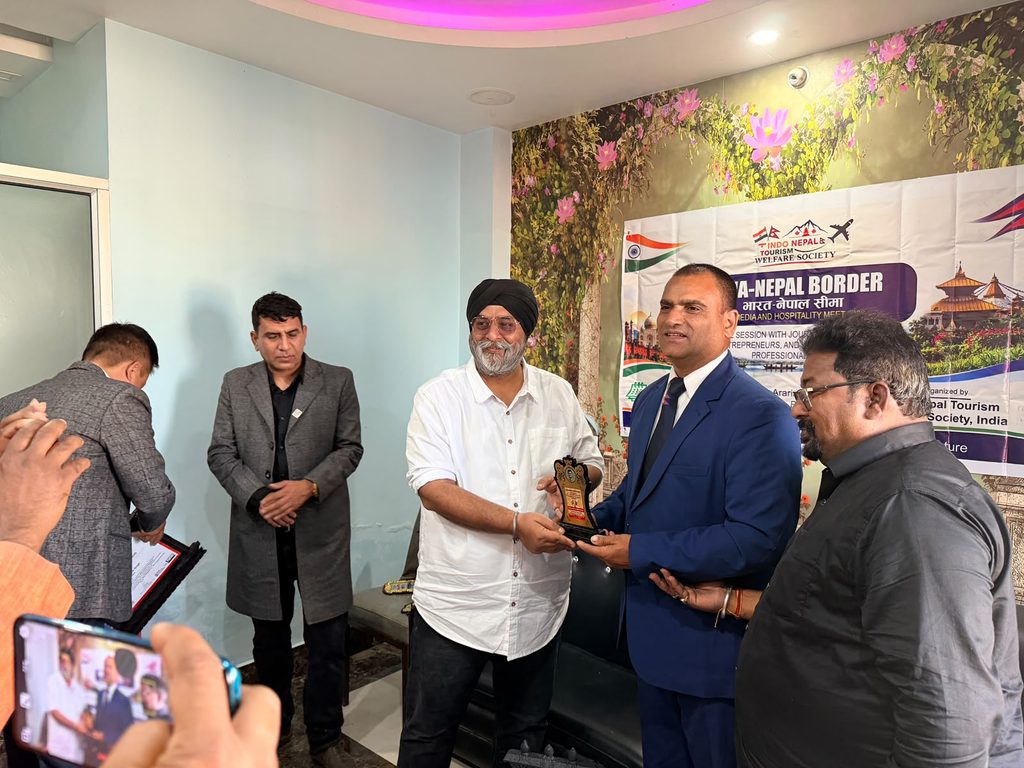
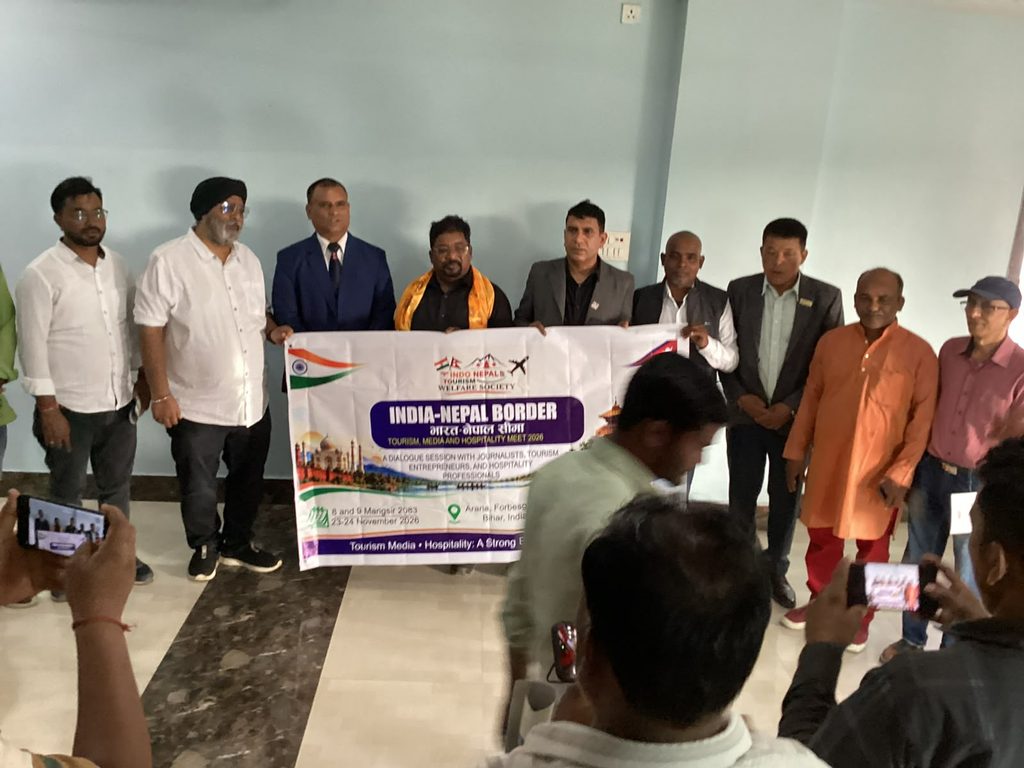
The event also brought together Indian tour operators, travel agents, tourism entrepreneurs, hospitality professionals and media representatives. Their participation provided an opportunity to discuss practical issues affecting tourist movement and identify areas where stronger cooperation could benefit both countries. During the programme, the organisers presented tokens of appreciation to the visiting Nepali delegates. The Nepali delegation reciprocated by presenting mementos to the hosts as a gesture of friendship and mutual respect.
Promotional materials highlighting Nepal’s diverse tourism attractions and travel experiences were also distributed among participants to strengthen destination awareness and encourage further engagement with the Nepali tourism industry. Delivering the closing remarks, Pankaj Ranjit and Dr. JP Singh expressed appreciation to the participants, delegates and partner organisations for their contributions to the programme. The Global Nepal Tourism Promotion Council also thanked the organisers, stakeholders and journalists for supporting cross-border tourism discussions.
Stronger India–Nepal Cooperation to Support Regional Tourism Growth
India is an important tourism market for Nepal, with geographical proximity, cultural connections, family relationships and established travel links creating significant opportunities for cross-border tourism. Improving the movement of visitors between the two countries can benefit hotels, restaurants, travel agencies, transport operators, tour guides and other tourism-related businesses on both sides of the border. The recommendations emerging from the Bihar meeting highlight the importance of addressing practical travel difficulties through simplified administrative procedures, digital services, improved infrastructure and better coordination among relevant authorities.
The proposed One-Door Policy, online vehicle permits, improved border facilities and hospitality training could contribute to a more convenient and welcoming travel environment if implemented by the concerned authorities. Similarly, targeted promotion of Nepal’s hill destinations and the planned FAM Trip could help strengthen destination awareness among Indian tourism businesses and encourage more visitors to explore different parts of Nepal.
The meeting concluded with a shared commitment to bring the recommendations to the attention of relevant government authorities in Nepal and pursue practical solutions to the challenges raised by participants. By strengthening cooperation between tourism organisations, media, hospitality businesses and government stakeholders, the initiative aims to transform the Nepal–India border from an administrative bottleneck into a more welcoming gateway for tourism, friendship, trade and shared prosperity.