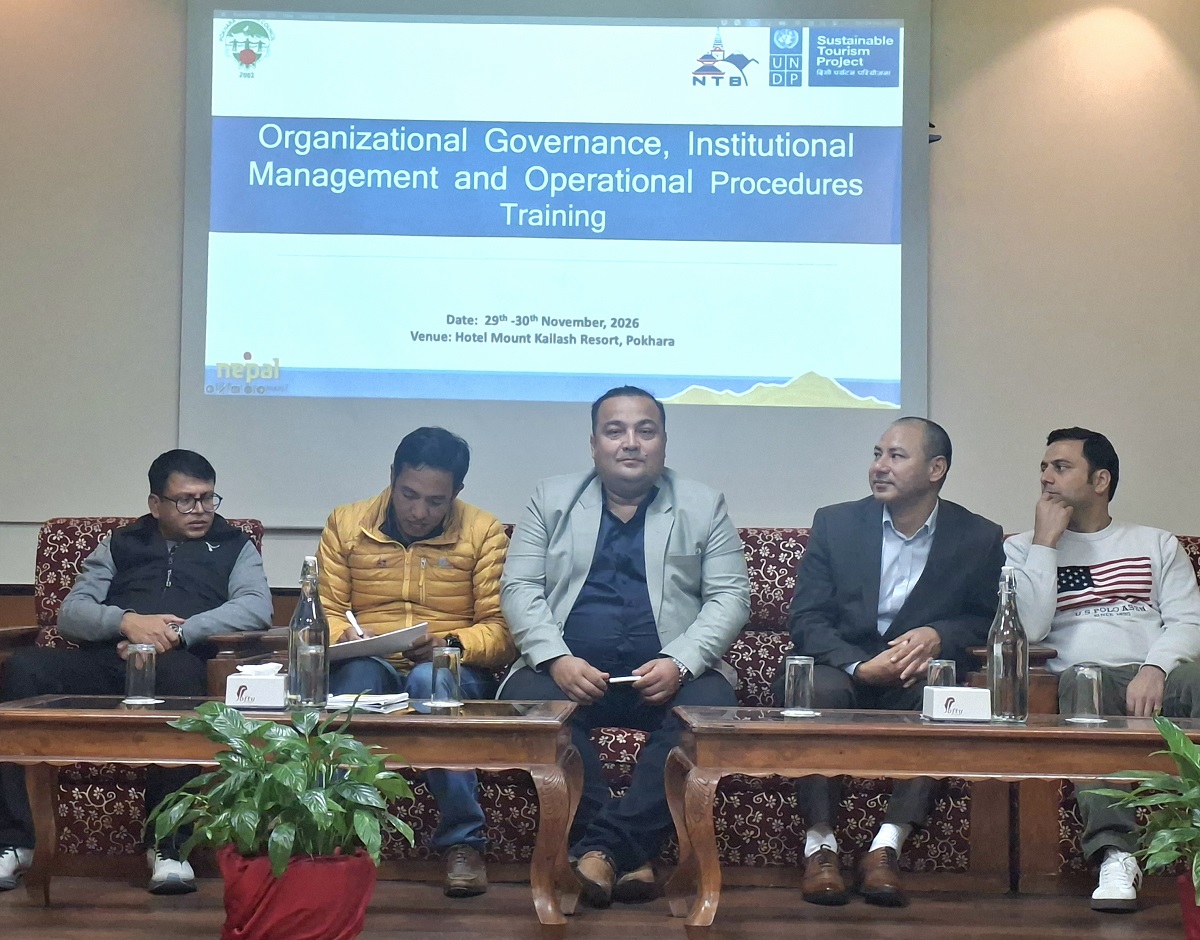
A two-day capacity-building training aimed at strengthening institutional governance, management capacity, and operational systems of organizations affiliated with Nepal’s tourism sector has commenced in Pokhara. The training is being organized under the Sustainable Tourism Project (STP), a joint initiative of the Nepal Tourism Board (NTB) and the United Nations Development Programme (UNDP), with coordination from the Pokhara Tourism Council. The programme focuses on improving the institutional effectiveness of tourism-related associations and private-sector organizations through practical knowledge on governance, financial management, project management, and operational procedures.
Strong Institutions Essential for Tourism Development
Speaking at the inauguration of the training, Pokhara Tourism Council President Hari Bhujel said that strengthening the institutional capacity of organizations is essential for the sustainable development and promotion of the tourism sector. He emphasized that the overall development of tourism can become more effective only when tourism-related associations and organizations operate in a systematic, transparent and accountable manner. According to him, institutions working in the tourism sector need stronger management systems and clearly defined operational procedures to effectively contribute to tourism development.
Bhujel expressed confidence that capacity-building programmes of this nature would provide practical support in improving institutional management, financial transparency and day-to-day operational procedures. He also stressed the need for tourism organizations to continuously enhance their internal systems as the sector becomes increasingly diverse and competitive.
Institutional Capacity Key to Sustainable Tourism
Yubaraj Gurung, Senior Officer at the Nepal Tourism Board, Gandaki Province, said that institutional capacity development is equally important alongside the expansion of tourism infrastructure and services for achieving sustainable tourism development. He said the training would contribute to strengthening good governance, management practices and operational systems among associations and private-sector organizations engaged in tourism. Stronger institutions, he noted, can improve coordination, accountability and efficiency across the tourism industry while supporting the long-term sustainability of tourism activities.
Training Covers Governance, Tax and Financial Management
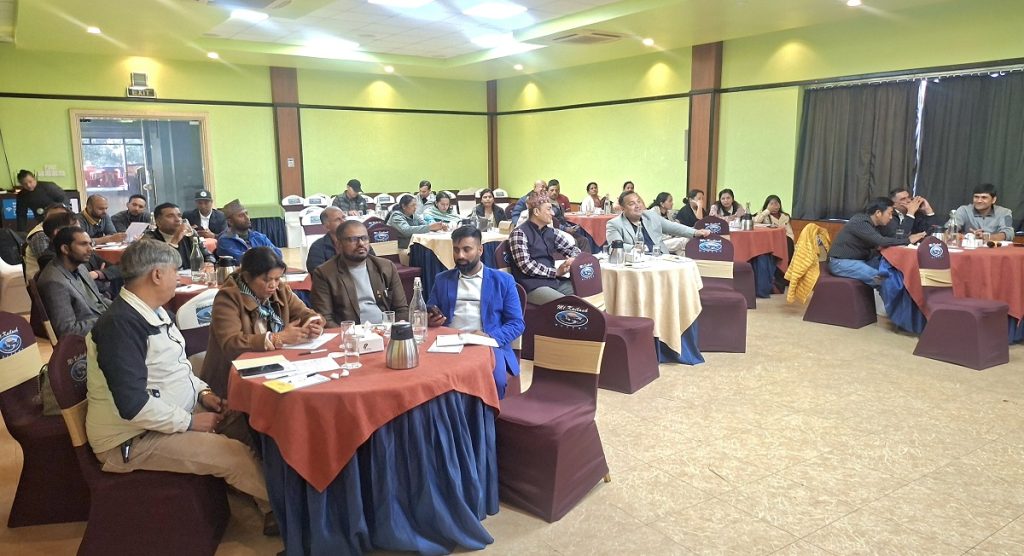
During the inaugural session, Pokhara Tourism Council First Vice-President Hariram Adhikari welcomed the participants and highlighted the objectives of the programme. According to Adhikari, representatives of tourism-related associations and private-sector tourism businesses are participating in the two-day training. The programme has been designed to address practical areas that are directly relevant to the management and operation of tourism organizations.
The training covers topics including project management, institutional governance, professional ethics, internal control systems, procurement procedures, income tax, tax deduction and tax return filing. The sessions are intended to help participants understand the procedures and compliance requirements involved in managing tourism-related institutions more effectively.
Practical Sessions on Project and Financial Management
Milan Tiwari, General Secretary of the Pokhara Tourism Council, said the training would include practical sessions on project and financial management. Khagendra Khadka, Finance Officer at the UNDP Sustainable Tourism Project (STP), Senior Chartered Accountant Anil Joshi, and Prahlad Gautam are conducting sessions on various aspects of institutional and project management.
The practical training includes budgeting and planning, procurement planning, cost estimation, contract management, and institutional operational procedures. Participants will be provided with practical exercises and guidance to help them apply these concepts within their respective organizations. The two-day programme is expected to enhance the managerial and institutional capabilities of tourism organizations in Pokhara and contribute to establishing more transparent, accountable, and professionally managed institutions within the tourism sector.