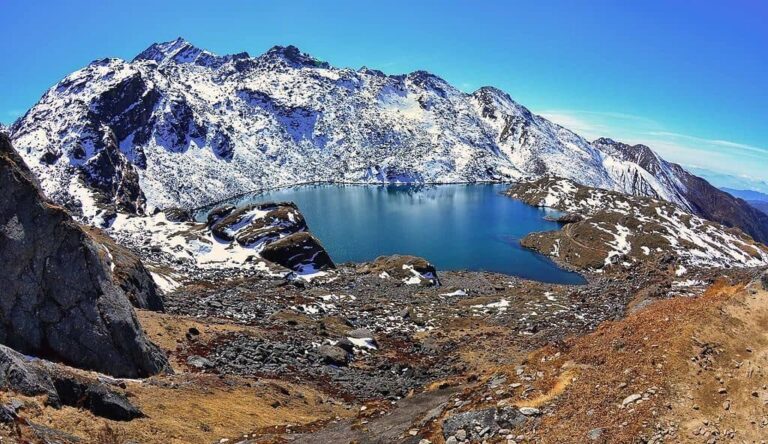
A detailed scientific study has begun in the Himalayan district of Mustang to determine the population of the elusive and endangered snow leopard, one of the world’s most iconic mountain predators. The initiative has been launched jointly by Biocos Nepal and the Annapurna Conservation Area Project (ACAP), Jomsom Unit Office, with the aim of generating reliable data on snow leopard presence, habitat use, prey species dynamics, and the rising incidents of human–wildlife conflict.
According to the researchers, the study, based on camera trapping technology, is expected to provide the most accurate assessment to date of the leopard population living in Mustang’s rugged high-altitude terrain.

Camera Trapping Begins Across Varagung Muktichhetra Highlands
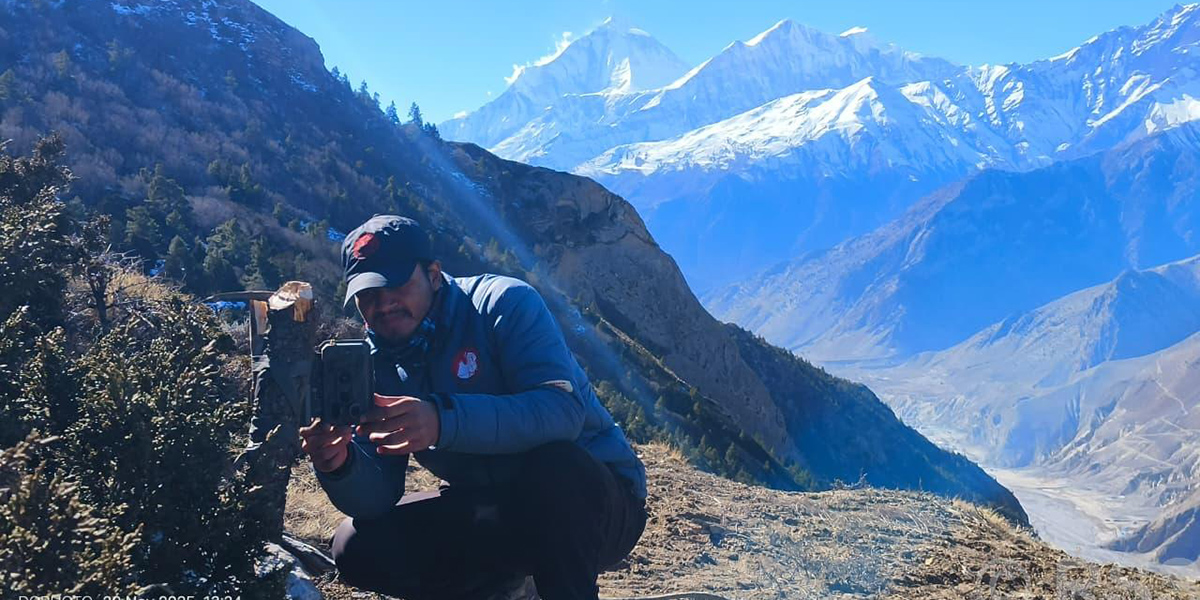
Field Biologist Buddhi Bahadur Gurung from Biocos Nepal informed that the camera-trapping phase officially began last week in the highlands of Varagung Muktichhetra Rural Municipality. Cameras have been installed in several potential snow leopard habitat zones including Jhong, Pudak, Chhengur, Thorong Phedi, Phalyak, Dharkajung, and sections of the Mustang–Dolpa highland corridor.
A total of 15 camera traps have already been placed in these remote and rocky landscapes. Gurung explained that the primary objectives are to verify the number of snow leopards in the area, assess the condition of their prey species such as blue sheep (naur), and evaluate the status of human–snow leopard conflict, which has been steadily increasing in recent years.
Expansion of Study Area into Gharapjhong Region
The research team is also preparing to expand camera trapping into the highlands of Gharapjhong Rural Municipality, particularly in the areas above Syang, Marpha, and Chimang. These regions are known for frequent sightings and are considered important movement corridors for leopards.
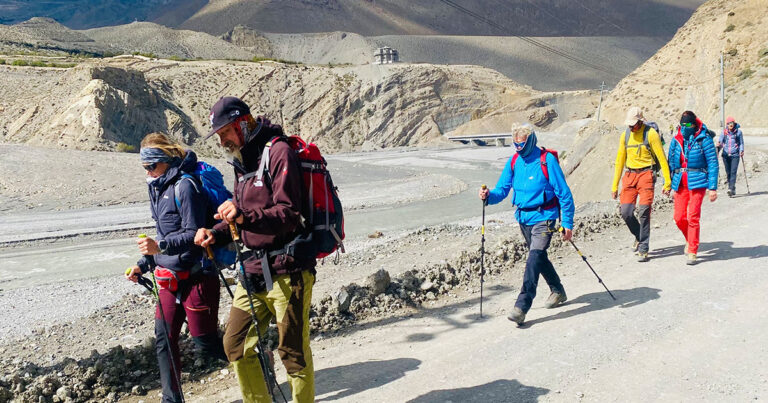
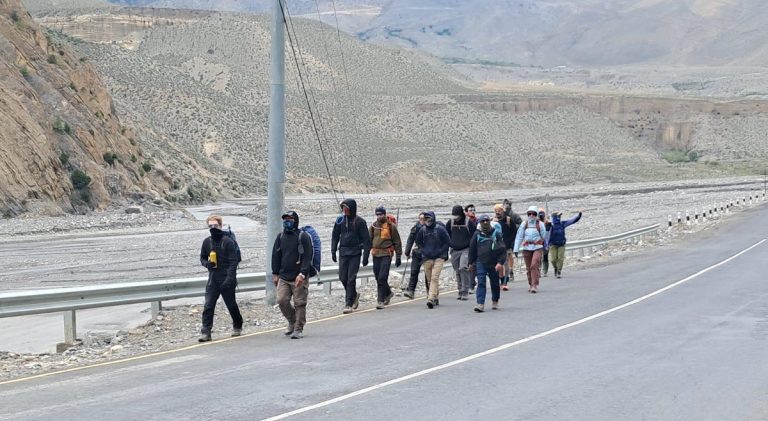
The fieldwork is being conducted by Biocos Nepal’s Biologist Gurung and Assistant Praveen Lama, with technical support from Deepak Oli, Natural Resource Conservation Assistant at ACAP Jomsom. Together, the team has been trekking for hours each day to reach steep cliffs, ridges, and gorges where leopards are most likely to be photographed.
Cameras to Remain for Two Months; Data to Be Fully Analyzed
The camera traps will remain in place for two months, covering the peak winter season when snow leopard movement becomes more predictable due to limited prey availability at higher elevations. According to Biologist Gurung, the cameras will be retrieved after two months for data retrieval.
“After we bring the cameras back, we will update the software and extract all image and video evidence,” Gurung said. “All verified data will be handed over to ACAP. Our role is to ensure scientific confirmation of snow leopard activity.”
Biocos Nepal has been conducting similar camera-trap–based snow leopard studies across the Annapurna Conservation Area for several years. While previous studies focused mainly on Manang, this is the first large-scale scientific camera-trapping initiative in Mustang.
Parallel Study Conducted in Upper Mustang
ACAP officials also confirmed that a doctoral-level researcher has begun a separate snow leopard study in Upper Mustang using camera traps. ACAP Lomanthang Chief Umesh Paudel noted that although camera trapping has been carried out periodically over the years, the exact population of snow leopards in Mustang is still uncertain. “We hope these new studies will finally provide clear numbers and help us understand population trends,” Paudel said.
Rising Human–Snow Leopard Conflict in Mustang
The urgency of the study is amplified by the increasing human–snow leopard conflict across Mustang. Snow leopards, traditionally confined to higher alpine zones, have been descending towards roads, river valleys, and settlements in recent years.
Incidents of snow leopards entering livestock sheds and killing domesticated animals such as goats and sheep have become more frequent. Local herders have reported significant losses, creating tension between communities and the endangered big cat.
Experts attribute this behavioral shift partly to climate change. Warmer temperatures have reduced the growth of grasses in high-altitude pastures, causing prey species such as naur and thar to move downward. Snow leopards then follow these prey animals into lower altitudes, bringing them into closer contact with human settlements.
Climate Change and Shifting Wildlife Patterns
Rising temperatures have also begun pushing common leopards, normally found in lower altitudes, higher into snow leopard habitats, leading to new ecological challenges. Conservationists warn that competition between these two big cat species could intensify, creating further imbalance in the fragile Himalayan ecosystem.
The combined pressure of habitat shrinkage, prey depletion, and climatic disruption has made snow leopard conservation increasingly urgent. Mustang, with its vast high-altitude landscapes, remains one of Nepal’s most important habitats for this species.

Need for Conservation and Coexistence
Researchers emphasize that ensuring the survival of snow leopards in Mustang requires both scientific understanding and strong community cooperation. Human–wildlife coexistence programs, improved livestock protection measures, and climate-adaptive conservation strategies will be crucial in the years ahead.
As the largest scientific snow leopard study in Mustang moves forward, conservationists hope the findings will guide sustainable, evidence-based policies that protect both snow leopards and the livelihoods of Mustang’s Himalayan communities.