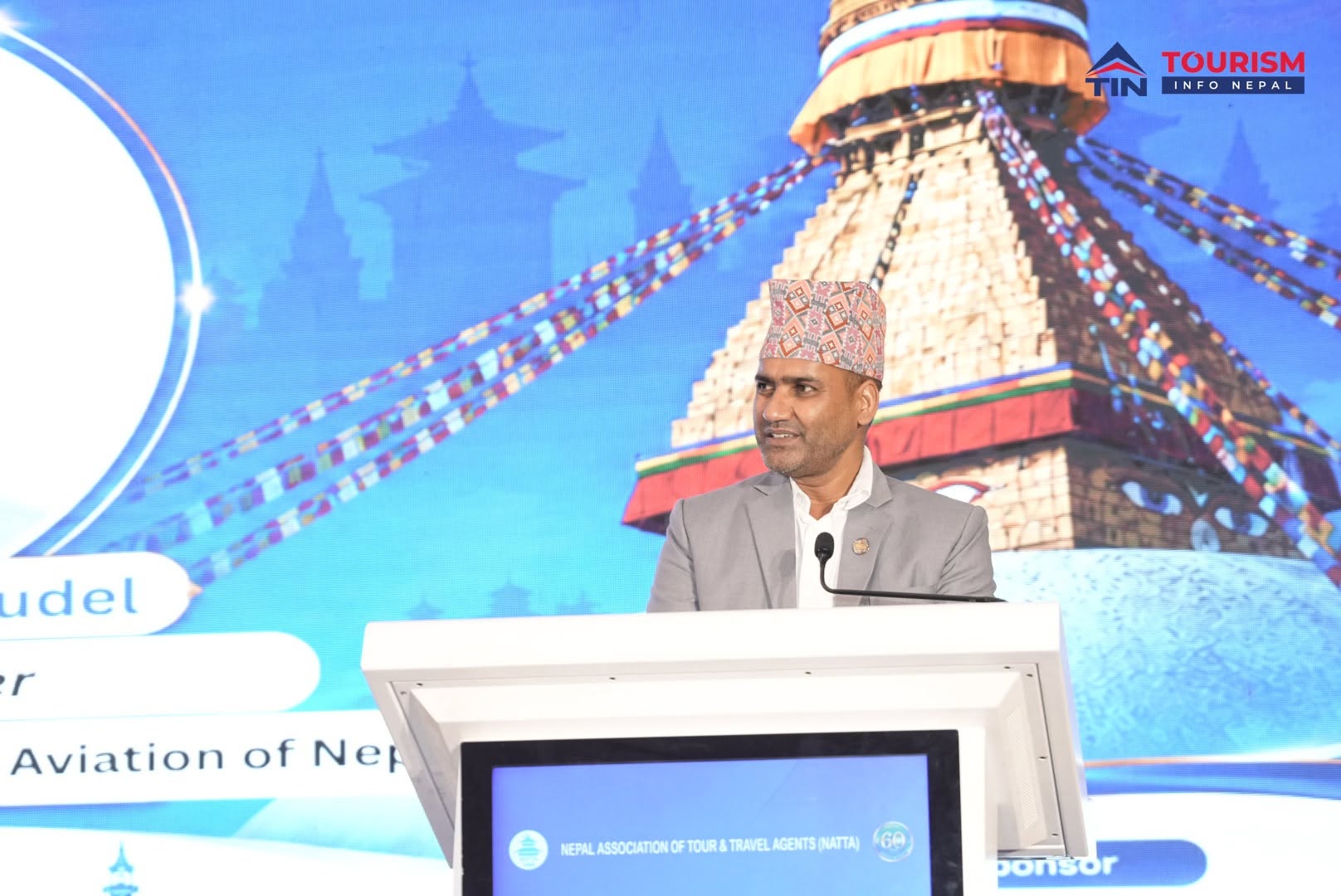
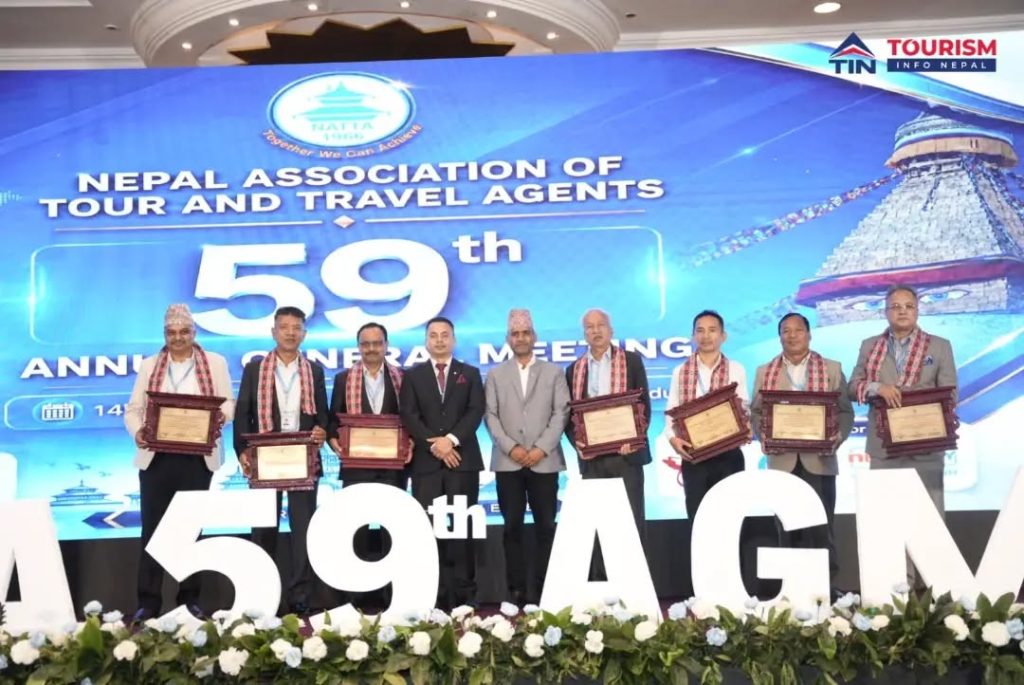
The government has reiterated its commitment to working closely with the private sector to accelerate the development of Nepal’s tourism industry, with Culture, Tourism and Civil Aviation Minister Khadak Raj Paudel emphasizing that cooperation between the government and tourism businesses is essential for achieving broader economic prosperity. Speaking at the 59th Annual General Meeting (AGM) of the Nepal Association of Tour and Travel Agents (NATTA) in Kathmandu, Minister Paudel said the current government is giving priority to the development of tourism and is committed to working with the private sector to strengthen the industry.
He stressed that tourism cannot be developed through government efforts alone and that businesses and professional organizations directly involved in the sector must work alongside the government to identify problems, improve the tourism environment and make better use of Nepal’s considerable tourism potential.
Government focuses on policy and structural reforms
Minister Paudel said the government is actively working to address the policy and structural problems affecting the tourism sector, describing their resolution as an important requirement for sustainable industry growth. He said he has been personally engaged in efforts to address such challenges and create conditions that can support the expansion of tourism-related activities. The minister emphasized that tourism businesses need a more supportive policy and institutional environment to operate effectively and contribute to the national economy.

He therefore called for continued cooperation between government agencies and private sector organizations in identifying practical difficulties and developing appropriate solutions. According to his remarks, addressing these issues through cooperation can help create a stronger foundation for tourism development and enable the sector to make a greater contribution to national economic growth and prosperity.
Private sector identified as an important tourism partner
The minister placed particular emphasis on the role of the private sector in Nepal’s tourism development, saying that government and businesses should move forward together rather than working separately. Private companies and tourism entrepreneurs are directly involved in providing travel-related services, while professional organizations such as NATTA represent businesses that have direct experience with tourists and the tourism market.
Minister Paudel stressed that this experience and private sector involvement should be used in the broader development process. He called for a partnership-based approach in which the government works with tourism businesses to overcome existing difficulties and create expansion opportunities. Such cooperation, he said, can help move the country toward economic prosperity by strengthening tourism activities and encouraging the sector to play a larger role in the national economy.
Wellness tourism education planned at bachelor’s and master’s levels
A significant announcement made by Minister Paudel was that the Nepal Academy of Tourism and Hotel Management (NATHM) is preparing arrangements to introduce wellness tourism-related studies at both bachelor’s and master’s levels. The initiative would introduce a specialized academic focus within Nepal’s tourism and hospitality education system and help prepare human resources for the growing field of wellness tourism.
The announcement indicates an effort to broaden Nepal’s tourism offerings and develop expertise in areas beyond the country’s established trekking, mountaineering and cultural tourism products. By incorporating wellness tourism into higher education, NATHM would provide students with an opportunity to gain formal academic knowledge in this area, while the tourism industry could benefit from professionals with specialized training to support the development of related services and activities.
Tourism product diversification through wellness sector
The planned introduction of wellness tourism programs is also significant in the context of diversifying Nepal’s tourism industry. Nepal is widely known for its mountains, trekking routes, cultural heritage and adventure activities, but the development of additional tourism products can help broaden the country’s appeal to different categories of visitors. Minister Paudel’s announcement suggests that the government is looking at new areas through which the tourism sector can expand and generate additional economic opportunities.
The development of academic programs can also support this process by creating a pool of trained professionals who understand the requirements of wellness-related tourism and can contribute to its development and management. The initiative therefore connects tourism education with the government’s wider objective of strengthening and diversifying the national tourism industry.
Nepal Airlines planned for public-private partnership
In another major announcement at the NATTA gathering, Minister Paudel said the government plans to operate Nepal Airlines Corporation (NAC), the national flag carrier, under a public-private partnership model. The minister presented the proposal as part of the government’s approach to involving the private sector in important areas connected with the country’s economic and tourism development.
Nepal Airlines has a significant role in Nepal’s aviation and tourism sectors because air connectivity is closely linked with the movement of international visitors and the country’s connection to overseas travel markets. The proposed public-private partnership would therefore represent an important development in the operation of the national flag carrier, although the minister, according to the statement, did not provide further details about the structure, implementation process, or timeline of the proposed arrangement.
Air connectivity remains important for tourism growth
The announcement concerning Nepal Airlines is particularly relevant to tourism because international and domestic air connectivity is an important component of tourism development. Tourists travelling to Nepal rely heavily on air services to enter and leave the country, while the performance of the national flag carrier can influence the country’s connectivity with international destinations.
A more effective partnership involving the government and private sector could potentially strengthen cooperation in the aviation sector and support the wider tourism industry. The government’s decision to explore private sector participation in the operation of Nepal Airlines also reflects the broader message delivered by Minister Paudel at the NATTA that government institutions and private businesses need to work together in areas that directly affect tourism and economic development.
NATTA AGM highlights closer government industry cooperation
The minister made the remarks while addressing the 59th Annual General Meeting of NATTA, one of the country’s professional organizations representing the travel and tourism business community. The event provided a platform for discussion between the government and tourism entrepreneurs at a time when the sector is seeking stronger institutional support and solutions to its policy and structural challenges.
By addressing the gathering, Minister Paudel highlighted the importance of maintaining regular communication between the government and organizations representing tourism businesses. Such engagement can allow authorities to better understand issues faced by travel agencies and other tourism enterprises while also enabling businesses to contribute their practical experience to tourism policy and development initiatives.
Government seeks tourism-led economic growth
Minister Paudel’s remarks collectively point toward a government approach that places tourism, private sector cooperation, education and aviation development within the wider objective of economic prosperity. His commitment to resolving policy and structural problems is aimed at creating a stronger environment for the tourism industry, while the planned wellness tourism programs at NATHM indicate an effort to develop new skills and diversify tourism products.

At the same time, the proposed public-private partnership for Nepal Airlines represents a major potential change in the way a key tourism-related institution could be operated. Together, these initiatives underline the government’s stated intention to work with the private sector rather than treating tourism development as the responsibility of government agencies alone.
Private sector cooperation expected to strengthen tourism industry
The government’s renewed emphasis on public-private cooperation comes with the recognition that tourism involves a wide network of businesses and services, including travel agencies, tour operators, hotels, airlines, guides and other tourism-related enterprises. These businesses are responsible for delivering many of the services experienced directly by visitors, while government institutions provide the policies, regulations and institutional framework within which they operate.
Minister Paudel’s message was therefore a call for both sides to work more closely in resolving existing challenges and developing new opportunities. By strengthening this partnership, the government aims to create a more effective tourism sector capable of supporting economic activity, business development and national prosperity, while initiatives such as wellness tourism education and the proposed public-private operation of Nepal Airlines are intended to contribute to the sector’s longer-term development.