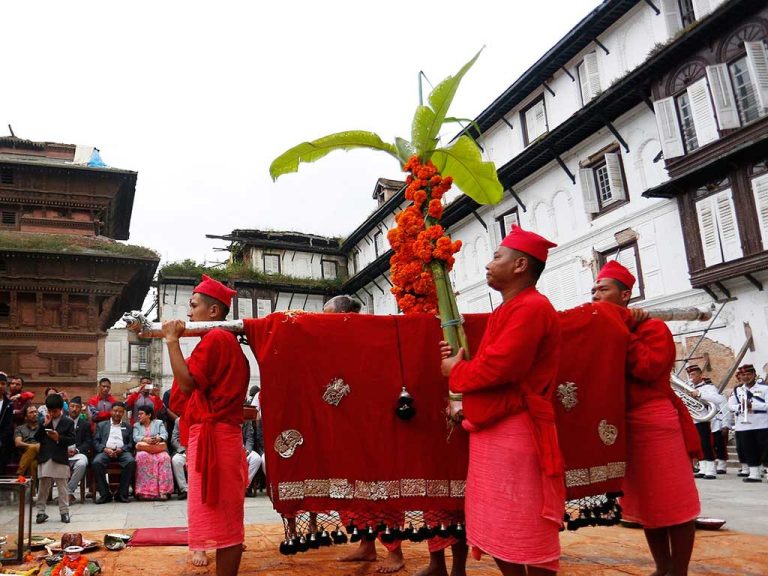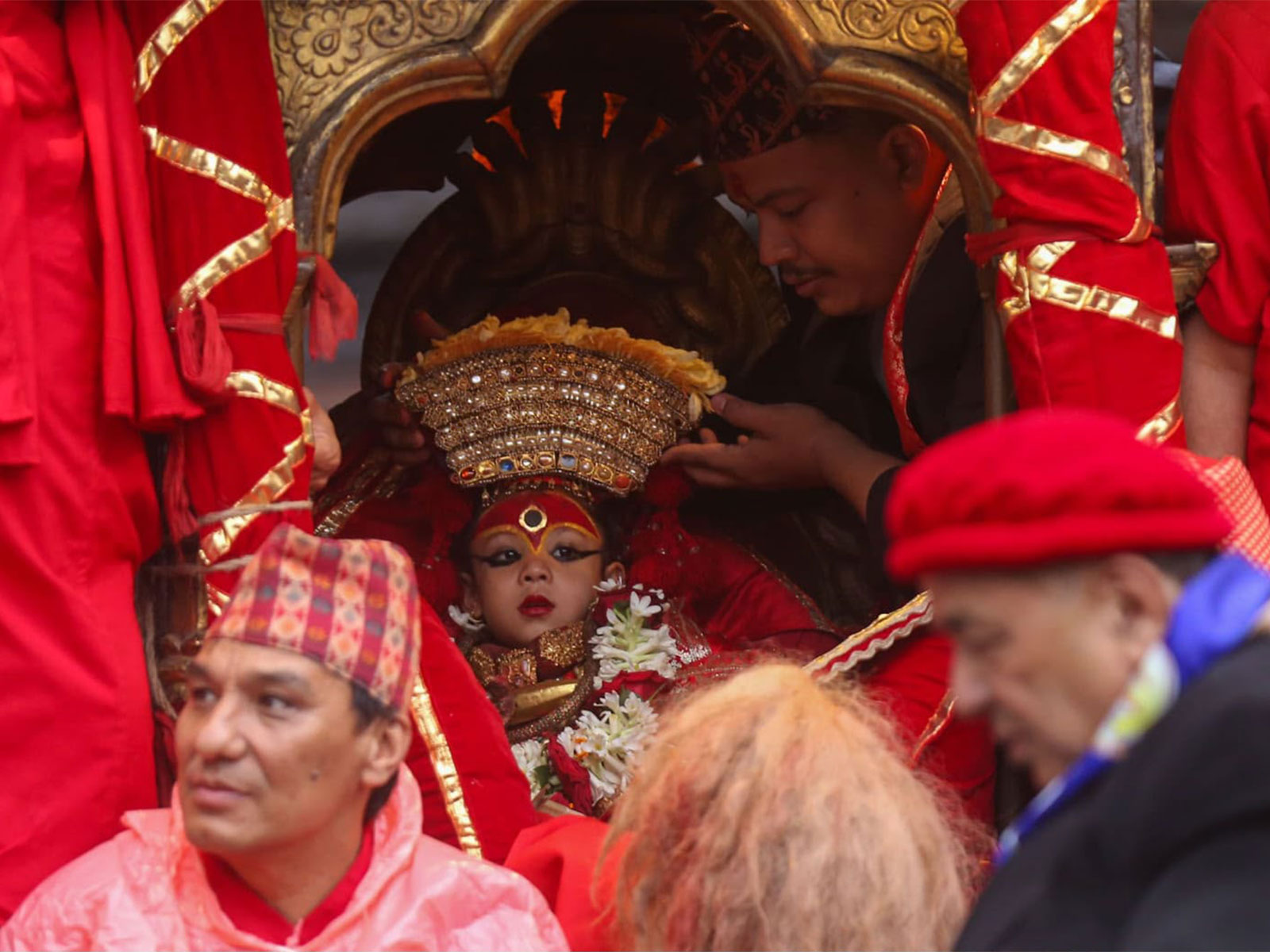
The Living Goddess Kumari received a ceremonial visit from Pachali Bhairav in Kathmandu as part of an annual religious tradition taking place on the fifth day of the bright lunar fortnight of Ashoj. The centuries-old religious tradition draws devotees to the Kathmandu streets, celebrating the cultural heritage of the Newar community.
This ritual draws together vital elements of Kathmandu’s religious heritage as well as traditional processions and community participation. Per longstanding custom, Pachali Bhairav is brought to Hanuman Dhoka at night so that Kumari can pay her respects.
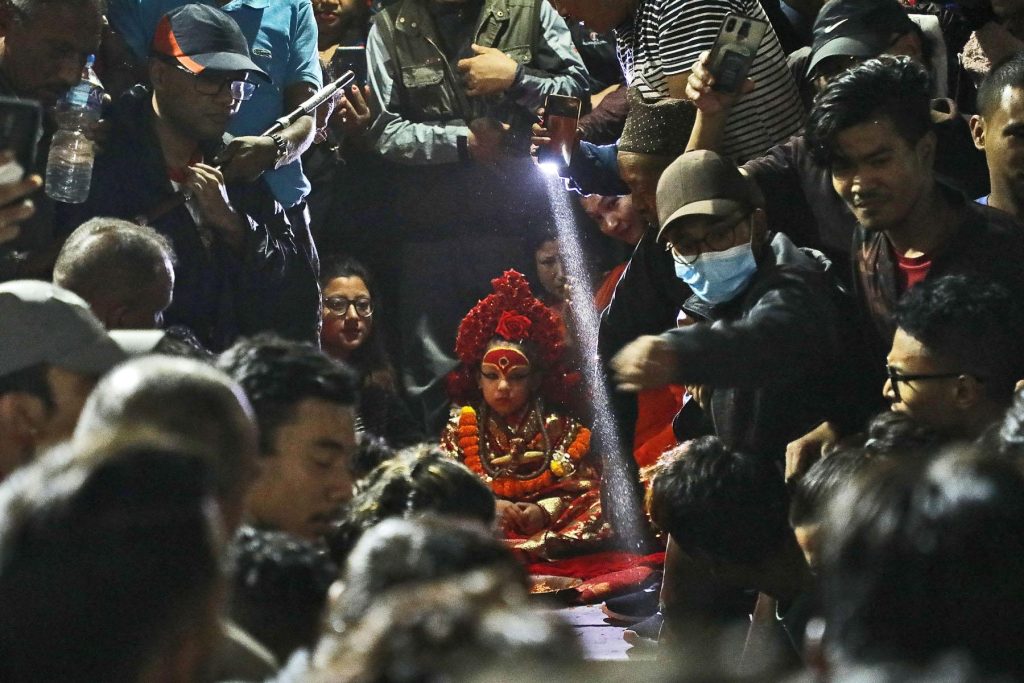
The ceremony is a reminder of the close ties between deities and the traditional religious practices associated with the Kathmandu Valley. Held each year, the ritual is seen as having religious significance by devotees who believe that the meeting allows Kumari to gain divine power. It also promotes a cultural tradition passed on through generations and strengthens Kathmandu’s status as a centre of Nepal’s living heritage.
Kumari Puja Ceremony Procession Links Pachali Peeth and Hanuman Dhoka
To enable the ritual, an ceremonial procession carrying the symbolic representation of Pachali Bhairav along with Kumari was organised from Pachali Peeth in Kathmandu Metropolitan City 12 to Hanuman Dhoka. This procession, known as the Aap Jatra, brought the Bhairav image to the historic palace area for the meeting with Kumari and was accompanied by traditional musical instruments to add to the religious atmosphere of the event.
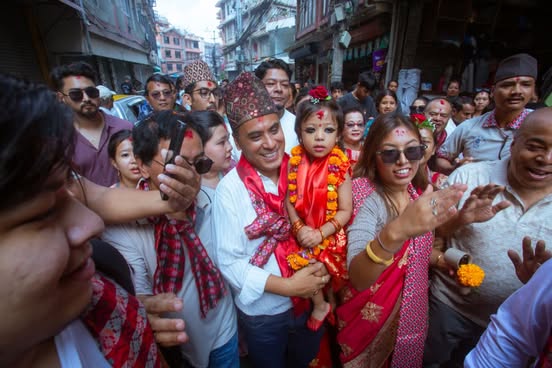
After the ceremony, the procession passed through several historic neighbourhoods and landmarks of the inner city, namely Teku, Lagana, Jyabahal, Maru, Hanuman Dhoka, Dalachhi, Shwet Bhairav and Yangal. The symbolic image of Bhairav, represented in a ceremonial pot, was taken around the city and residents welcomed the procession on its way and received blessings, demonstrating the continued relevance of traditional festivals to the local community.
Religious Beliefs and Cultural Roots of Bhairav
Pachali Bhairav occupies an important role in the local religious beliefs, with the deity associated with protection against harmful forces and safeguarding the Kathmandu Valley. According to popular belief, Bhairav was established at Teku to protect residents and the surrounding settlement. Such beliefs underpin the ritual’s religious significance and explain how the annual procession continues to draw public interest.
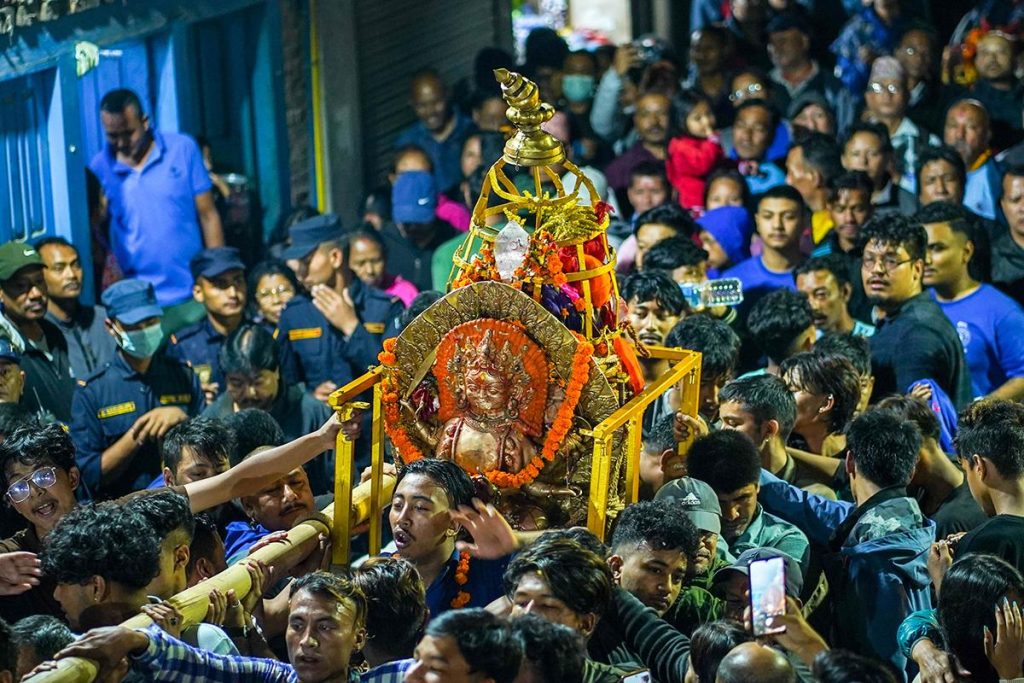
Meanwhile, the festival reflects the artistic and cultural heritage of the Newar community and the religious practices and celebrations held there are seen as a valuable part of Kathmandu’s cultural identity. Traditional music, ceremonial items, the passage routes and community participation are all key features of the observance and serve as an opportunity for residents and visitors to witness the living religious traditions in the historic city.
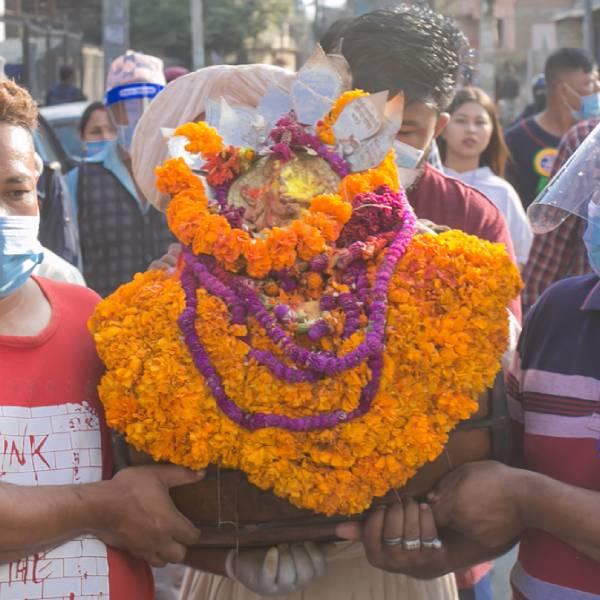
Living Heritage Promotes Kathmandu’s Cultural Tourism
Kathmandu’s traditional religious festivals are a major draw for the valley’s cultural tourism industry as they allow visitors a chance to understand the relationship between local communities, sacred sites and longstanding customs. The festival also serves to strengthen the connection between the city’s residents and Kathmandu’s architectural and cultural landscape.
The annual ceremony demonstrates how religious practices continue to influence community life and reinforce the valley’s intangible heritage. The procession is regarded as complete once Bhairav is returned to Teku. By upholding such traditions, the community sustains a key aspect of the valley’s cultural identity while also preserving opportunities for visitors to gain an appreciation of Nepal’s diverse heritage.