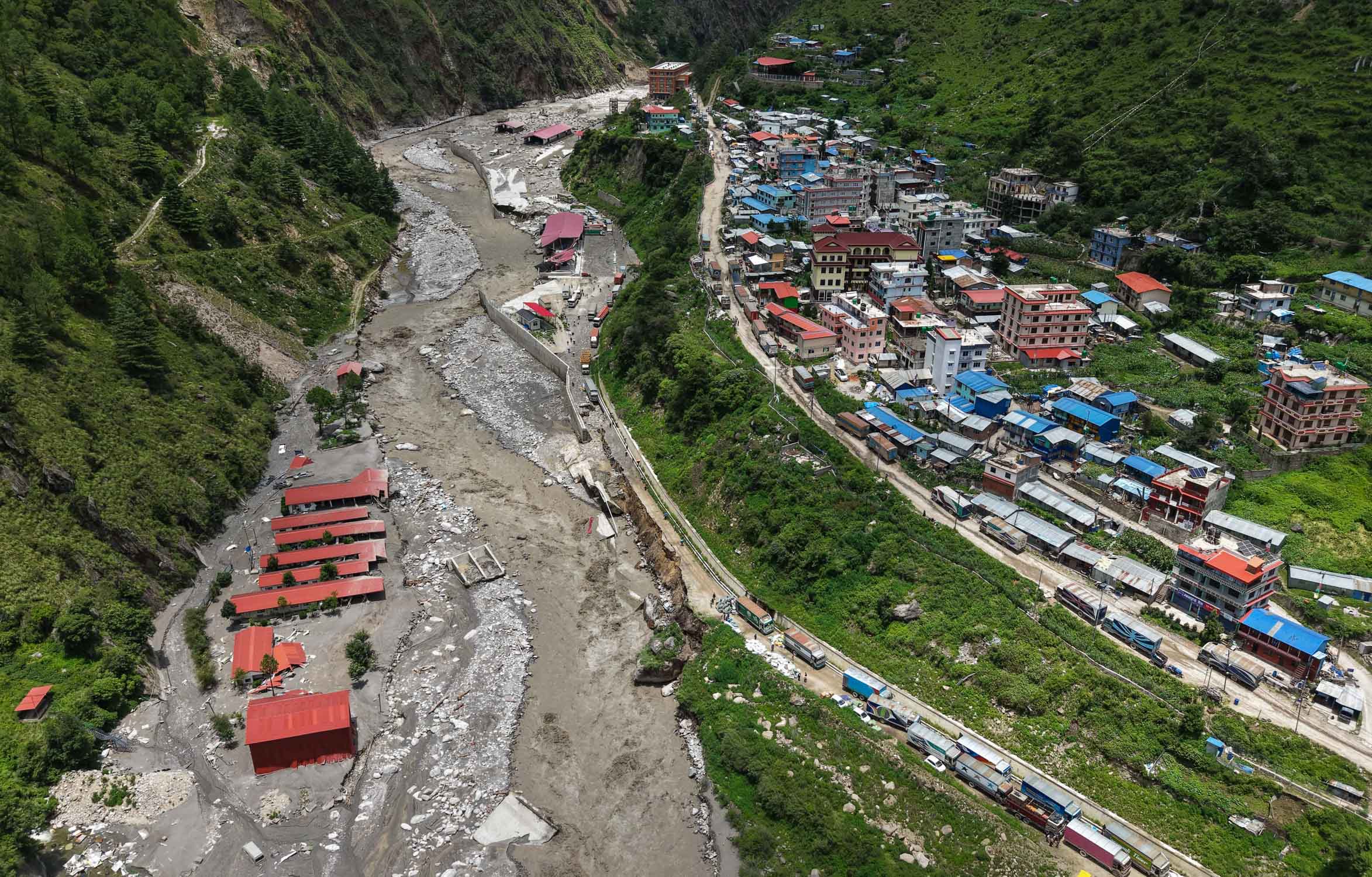
Severe flooding and landslides in and around Rasuwa have disrupted road transportation across Nepal, leaving hundreds of vehicles stranded and raising concerns over the safety of passengers traveling toward Gosaikunda for the Janai Purnima pilgrimage. The Nepal Transport Entrepreneurs’ National Federation estimates that around 300 passenger buses have been affected, while the combined number of passenger and freight vehicles stranded, submerged or otherwise impacted could be between 800 and 1,000. The federation has now begun efforts to determine the exact number of missing vehicles and passengers and coordinate emergency rescue operations.
Gosaikunda-Bound Buses Reportedly Unreachable
A significant number of vehicles carrying pilgrims from Kathmandu toward Gosaikunda have reportedly lost communication after floods and landslides disrupted the Rasuwagadhi road corridor. Federation President Saroj Sitaula said approximately 18 to 20 buses operated through Araniko Transport Company and traveling toward Gosaikunda could not be contacted. Only three bus employees are reportedly known to have established contact, although the information has not yet been independently verified. The status of the other passengers and vehicles remains unclear.

The federation had attempted to send a 25–30-member team toward the affected area to assess the situation and assist stranded travelers. However, worsening road conditions due to flooding and blockages prevented the team from reaching the intended location, forcing it to return midway. The concern also extends beyond the Gosaikunda pilgrimage route.
A vehicle traveling from Pokhara has reportedly gone out of contact, although five people associated with it have been reached. Likewise, five people from a vehicle traveling from Gorkha were initially reported to the Home Ministry as being in contact, but communication with them was subsequently lost.
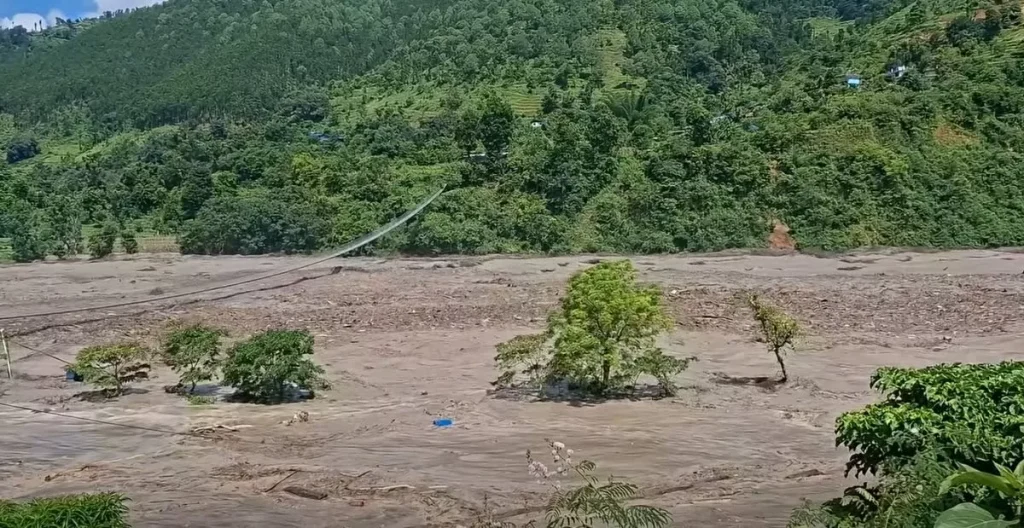
Widespread Transport Disruption Leaves Travelers Stranded due to flooding
The flooding has created serious obstacles along several major road corridors, with sections of the Nagdhunga–Muglin route among those affected. According to the federation’s preliminary assessment, passenger buses and freight vehicles have been caught in the disaster at multiple locations. Many travelers have been forced to remain along disrupted routes, while others have reportedly begun walking after being unable to continue by road.
The scale of the disruption has also complicated rescue efforts. Blocked highways and damaged road sections have made it difficult for transport operators, emergency teams and other responders to reach passengers in isolated locations. The federation says establishing reliable information about missing vehicles and travelers is currently one of the most urgent priorities.

Transport Federation Prepares Coordinated Rescue Response
The transport federation has called an emergency meeting at 12:30 p.m. Thursday at its central office in Balkumari to assess the impact and plan a coordinated response. The meeting is expected to focus on verifying the number of affected vehicles and passengers and mobilizing transport entrepreneurs and workers for rescue and relief operations. Sitaula said transport operators are prepared to send vehicles toward the affected areas, including sections of the Pasang Lhamu Highway and Tokha–Chhahare road, wherever road conditions allow safe access.
However, the federation has stressed that transport operators cannot independently enter disaster zones without coordination with the Home Administration and disaster-management authorities. It has therefore asked the government to facilitate the deployment of vehicles for rescue operations. At the same time, the federation has warned drivers and transport companies against attempting to travel through dangerous sections without official coordination. With floodwaters, landslides and road damage continuing to pose risks, the federation has urged operators to prioritize passenger safety and consult local authorities before operating vehicles in affected or potentially hazardous areas.