The team led by Jiswan Tuladhar Shrestha, who is contesting for the presidency of the Nepal Association of Tour and Travel Agents (NATTA) for the 2026–2028 term, has unveiled a 12-point election agenda focused on strengthening Nepal’s travel trade, protecting tourism businesses, promoting international markets and accelerating the digital transformation of the association.
The panel announced its candidacy ahead of the 59th Annual General Meeting of NATTA, scheduled for August 14 (Shrawan 29), when the new leadership for the 2026–2028 term will be elected. Under the campaign slogan “Strong Leadership, Secure Business; Prosperous Tourism for NATTA,” the team has emphasized practical and implementable reforms aimed at addressing long-standing challenges faced by travel agencies and tourism entrepreneurs.
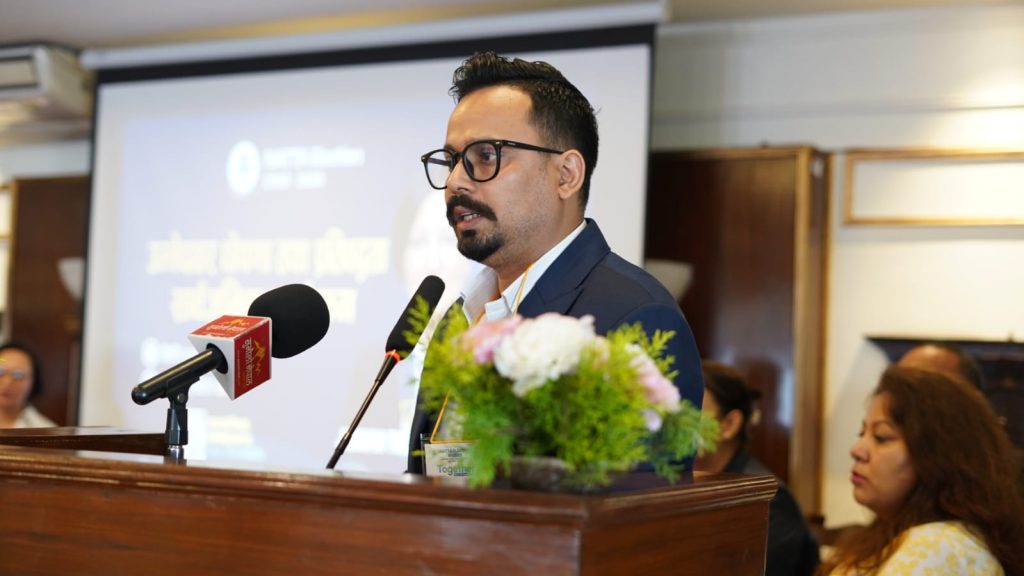
Speaking at a press conference, Bishnu Pandey, the team’s candidate for Senior Vice President, said the panel had deliberately focused on agendas that could realistically be implemented during its tenure. He said the team would work closely with the government, airlines, tourism associations and other stakeholders to address issues affecting the travel and tourism industry.
“Our focus is on practical agendas that can actually be implemented. We will work together with government agencies and all tourism-related associations and organizations to address the sector’s problems,” Pandey said.
1. International Tourism Promotion
International tourism promotion has been placed at the top of the panel’s priorities. The team plans to strengthen the international promotion of Nepal’s major tourism destinations and expand the country’s presence in key source markets. It has proposed giving balanced attention to both inbound and outbound tourism.
The panel has also emphasized the use of digital technology, artificial intelligence (AI) and B2B platforms to connect Nepali travel agencies directly with international buyers, tour operators and tourism partners. According to the team, greater use of digital platforms will help Nepali tourism businesses access international markets, generate new business opportunities and reduce dependence on traditional promotional mechanisms.
2. IATA and Air Ticketing Reforms
The panel has proposed reforms in the IATA and airline ticketing system to make the sector more transparent, competitive and business-friendly. It plans to lobby for a transparent and practical capping policy across airlines, while also seeking equal access to Global Distribution Systems (GDS) for eligible travel companies registered and licensed by the government.
The team has also identified Agency Debit Memo (ADM) policies as an area requiring reform. It has pledged to advocate for an ADM system that is transparent, reasonable and fair to travel agencies. The panel also plans to address disparities in airfares and agency-related charges that it says have placed additional pressure on travel businesses.
3. Support for New Entrepreneurs and Small Businesses
The panel has proposed measures to encourage new entrepreneurs and small tourism businesses. One of its major proposals is the establishment of a Single Window System and NATTA Help Desk to make business registration, renewal, licensing and related administrative processes easier for travel entrepreneurs. Special advisory services and startup support programs will also be introduced for young and women entrepreneurs, to encourage new investment and entrepreneurship in the travel and tourism sector. The team believes such initiatives could reduce procedural difficulties faced by new businesses and create a more supportive environment for emerging tourism entrepreneurs.
4. VAT and Air Ticket Issues
Tax-related challenges, particularly VAT imposed on air tickets, have also been highlighted as a major concern. The team has pledged to take strong initiatives with the government to remove VAT imposed on international and national air tickets, arguing that excessive taxation can increase travel costs and make Nepal less competitive as a tourism destination. Pandey said the team would work toward creating a tax environment that encourages tourists to spend more in Nepal while allowing tourism businesses to operate under a practical and business-friendly framework. He stressed that taxation policies should support the overall tourism economy rather than create additional burdens for businesses and travelers.

5. Tourist Bus Services and Intercity Connectivity
The panel has proposed expanding tourist bus services and intercity transportation networks connecting major tourism destinations. It plans to coordinate with federal, provincial and local governments to establish modern tourist bus terminals and bus parks at strategically important locations. The initiative aims to improve connectivity between tourism destinations, make ground transportation more convenient for visitors and strengthen the overall tourism infrastructure.
6. Restructuring of NATTA’s Working Committee
The team has proposed restructuring NATTA’s working committee to make the association more efficient, responsive and representative. It has also pledged to increase provincial participation in NATTA’s decision-making process. The panel has said that provincial chapters should have greater responsibilities and opportunities to contribute to policy discussions, ensuring that the concerns of tourism entrepreneurs outside Kathmandu are also effectively represented.
7. Smart NATTA and Digital Transformation
The “Smart NATTA” concept is another major pillar of the panel’s election agenda. Under this initiative, the team plans to digitize NATTA’s activities, services, and internal processes and make the organization more technology-friendly. The panel has also proposed testing an online voting system as a pilot project, with the objective of making future organizational processes more accessible and efficient. The broader Smart NATTA initiative is expected to focus on improving communication, member services, data management and digital engagement between NATTA and its members.
8. Action Against Unauthorized and Illegal Tourism Activities
The panel has pledged to take stronger measures against unauthorized tourism activities that affect the interests of legally registered Nepali travel businesses. It plans to coordinate with relevant government agencies to regulate activities involving unauthorized foreign tour operators, tour leaders and tour groups, as well as the promotion and sale of tourism packages through social media and other channels without proper authorization. The team has said protecting the professional and commercial rights of legally registered Nepali tourism entrepreneurs will be a key priority.
9. Regional Development and Strengthening of Air Connectivity
The panel has included the effective operation of Pokhara International Airport and Gautam Buddha International Airport in Bhairahawa among its priorities. It plans to take initiatives with the concerned authorities to improve the operation and connectivity of the two international airports. The team has also pledged to make NATTA’s provincial chapters more empowered, active and financially self-sustaining while advocating for stronger regional air connectivity. The agenda aims to support balanced tourism development beyond Kathmandu and improve access to major tourism destinations across the country.
10. Challenges in Outbound Tourism
The panel has proposed recognizing outbound tourism as an important component of Nepal’s tourism economy and giving it appropriate policy attention. It plans to advocate for policies that connect outbound tourism with the national economy while facilitating foreign currency management and international partnerships. The team has also proposed initiatives to make travel to destinations such as Kailash and Bhutan more convenient for Nepali travelers. According to the panel, a more organized and formally recognized outbound tourism sector can contribute to the broader travel industry and create additional business opportunities for Nepali agencies.
11. Capacity Building and Technology Transfer
The panel has proposed strengthening the NATTA Academy to provide regular training and professional development programs for tour operators, guides, and other tourism professionals. The proposed training areas include digital marketing, foreign languages, artificial intelligence, crisis management, and modern tourism technologies. The team believes continuous skills development and technology transfer are essential for Nepali tourism businesses to remain competitive in an increasingly digital and technology-driven international market.
12. Facilitation of Domestic Tourism
The promotion and development of domestic tourism has also been included as a key agenda. The team plans to coordinate with federal, provincial and local governments to improve access to domestic tourism destinations. It has proposed focusing on the periodic maintenance of destinations, infrastructure development, and destination promotion to make domestic travel easier and more attractive. The panel has emphasized greater cooperation between NATTA and different levels of government to address infrastructure and accessibility challenges affecting tourism destinations.
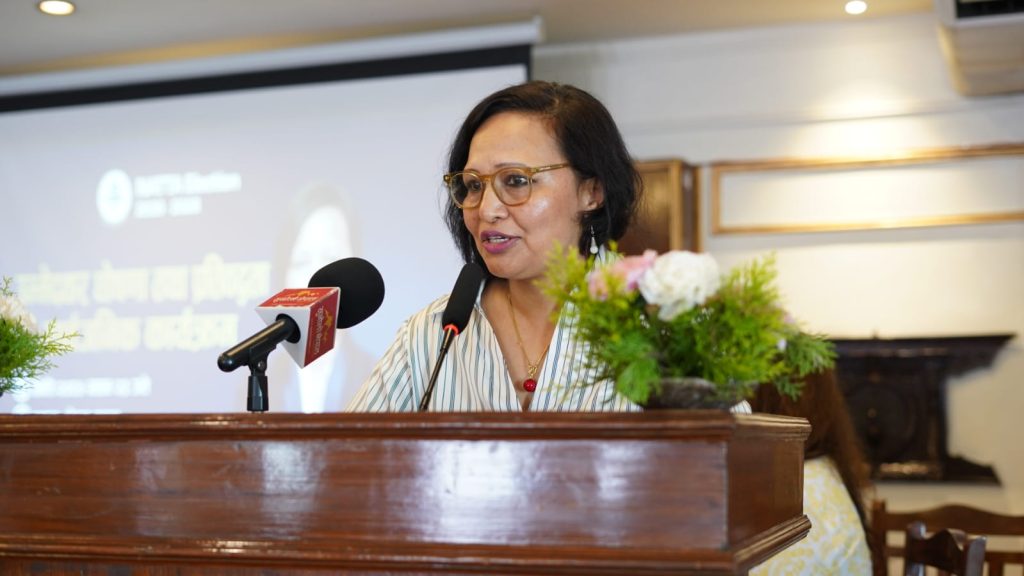
Shrestha: NATTA Must Become Stronger, Inclusive and Technology-Friendly
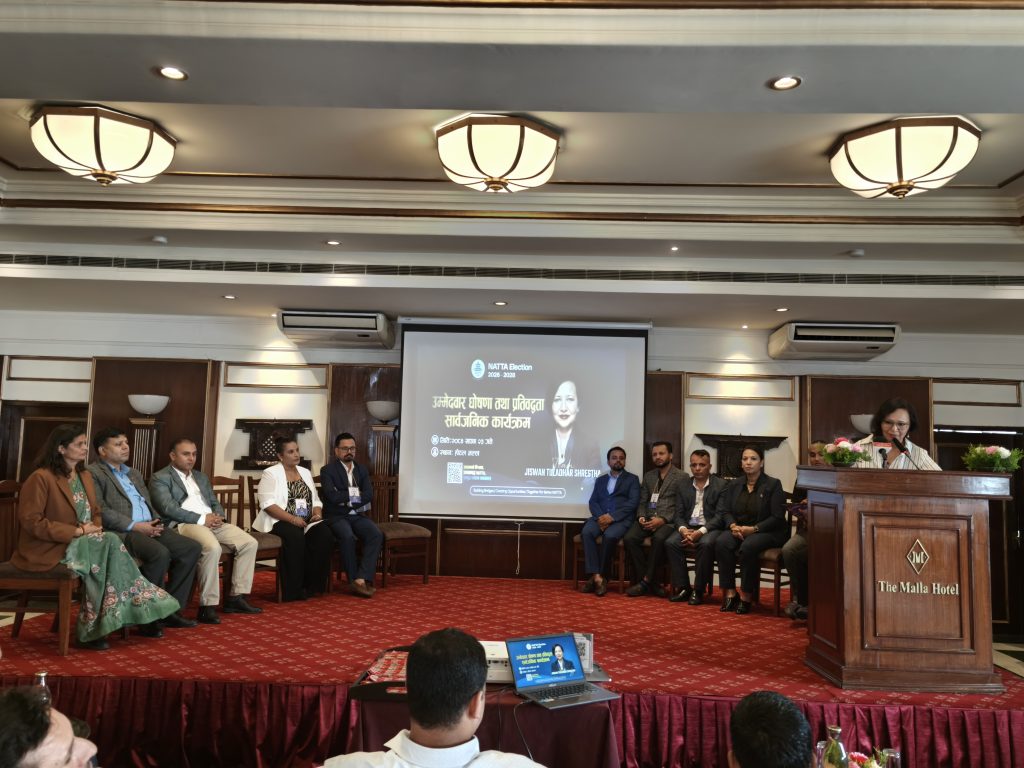
Presidential candidate Jiswan Tuladhar Shrestha said her team has prepared a comprehensive agenda aimed at strengthening Nepal’s travel trade and creating greater opportunities for tourism entrepreneurs. Shrestha has placed international tourism promotion, support for new entrepreneurs and small businesses, and the Smart NATTA concept among the major priorities of her campaign.
She said the team intends to make NATTA a stronger, more inclusive and technology-oriented organization while keeping the interests and concerns of travel and tourism entrepreneurs at the centre of its activities.
According to Shrestha, the proposed digital transformation will enable NATTA to provide more efficient services to its members while technologies such as AI and B2B platforms can help Nepali travel companies compete more effectively in international markets.
She also emphasized the need for NATTA to play a stronger role in policy advocacy and coordination with government agencies and other tourism organizations.
Pandey Calls for Industry-Wide Coordination
Senior Vice Presidential candidate Bishnu Pandey said NATTA should not operate in isolation while addressing the challenges of the travel industry.
He said the association needs stronger coordination with government agencies, airlines, tourism-related associations and other stakeholders to resolve issues related to taxation, ticketing, business regulations and tourism promotion.
Pandey particularly highlighted the need to address tax-related issues affecting the travel sector, including VAT on international air tickets.
He said the panel would pursue policy reforms and practical solutions that could create a more favorable operating environment for travel agencies while also improving Nepal’s competitiveness as a tourism destination.
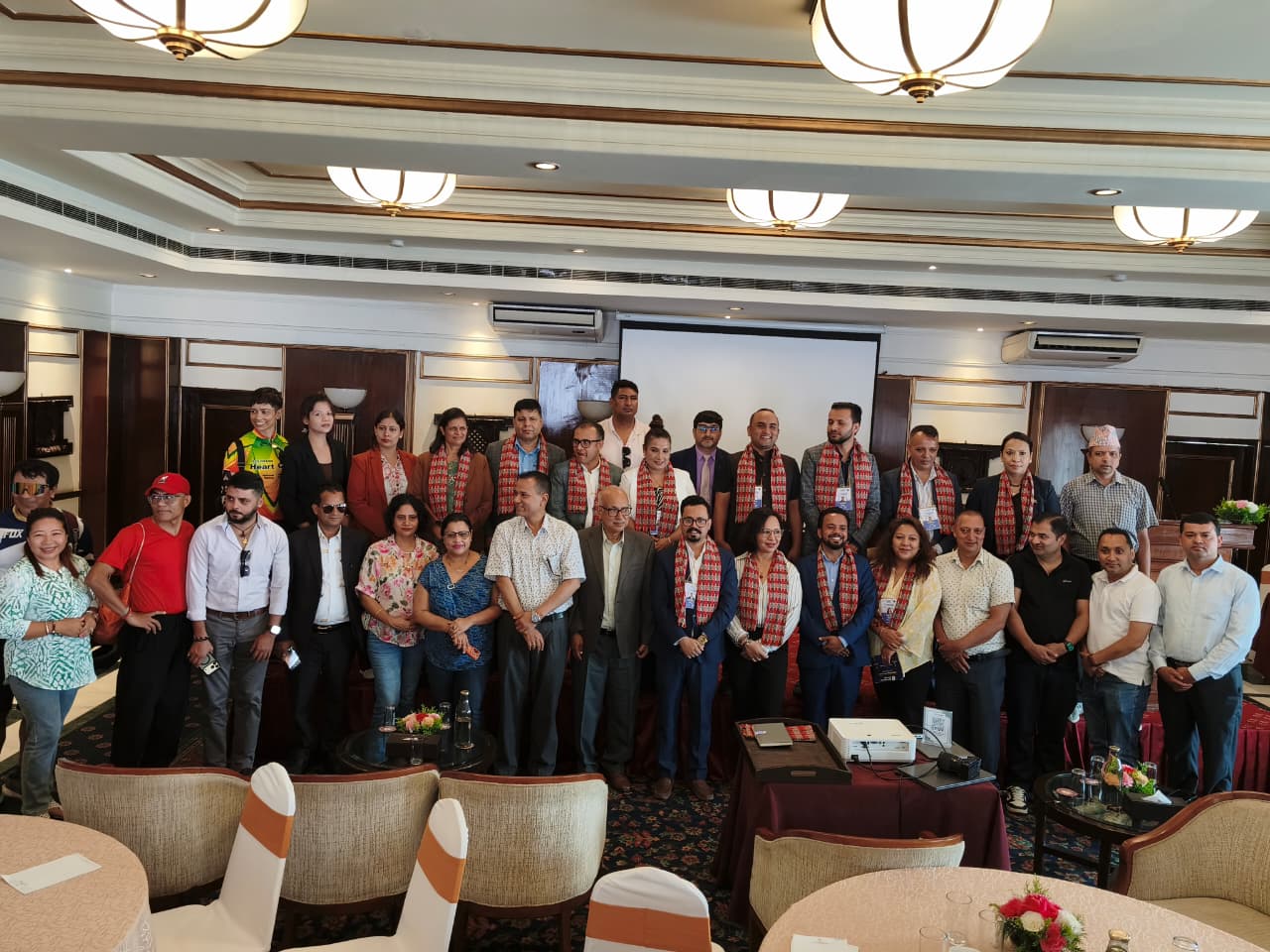
Team Jiswan Tuladhar Shrestha
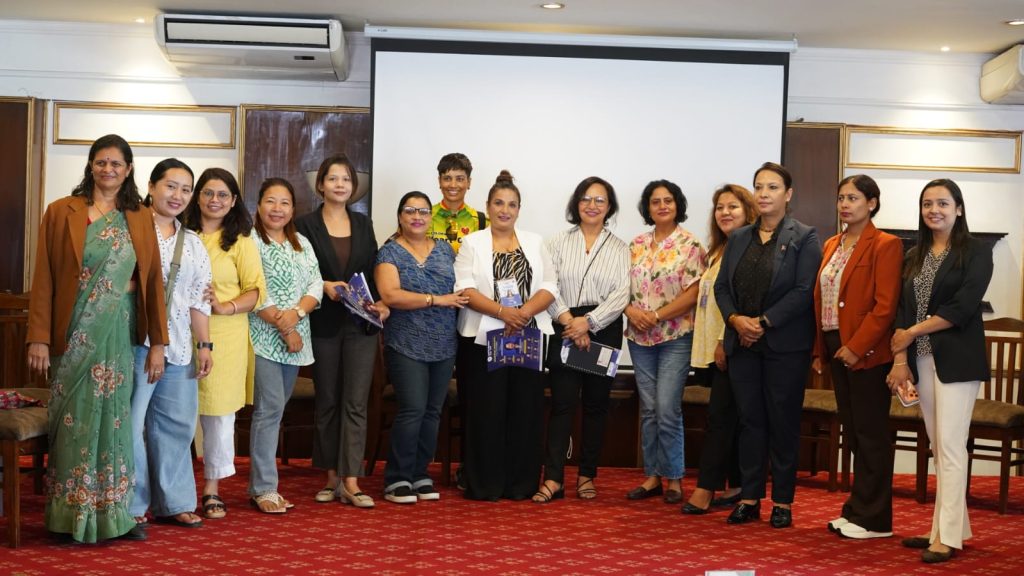
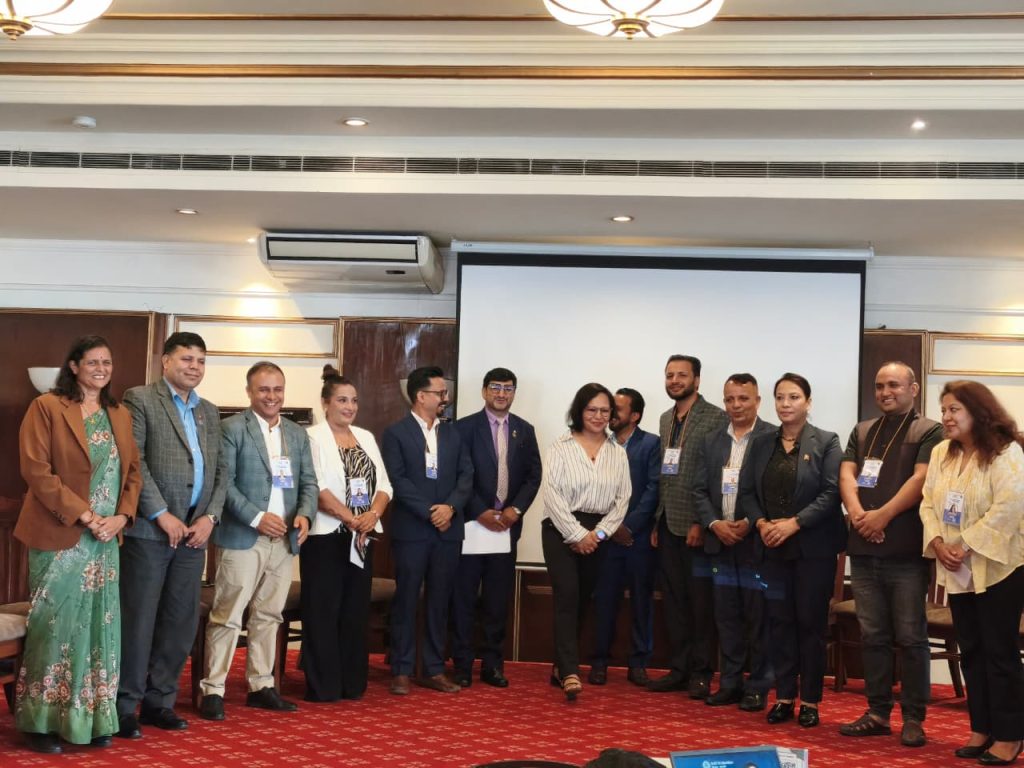
The panel contesting the NATTA election for the 2026–2028 term comprises:
- President: Jiswan Tuladhar Shrestha (Swaa Tours & Travel)
- Senior Vice President: Bishnu Pandey (Himalayan Club Tours & Travels)
- Vice President: Pragya Pathak Sharma (Adventure Outdoor Excursion)
- General Secretary: Susil Pant (Gorkha International Travels)
- Secretary: Ramesh Ghimire (Well Nepal Tours & Treks)
- Treasurer: Krishna Prasad Dhakal (Kathmandu Holiday Tour & Travel)
- Joint Treasurer: Dr. Bimala Dahal (Selected Tours & Travel)
- Executive Members: Pradeep Acharya, Sudarshan Gajurel, Dinesh Ghimire, Trilochan Neupane, Anu Raut (Adhikari) and Rojina Ranjitkar
Focus on Practical Reform
The Shrestha-led team has presented its campaign as an effort to move NATTA toward practical reform, stronger business protection, digital transformation and international market expansion.
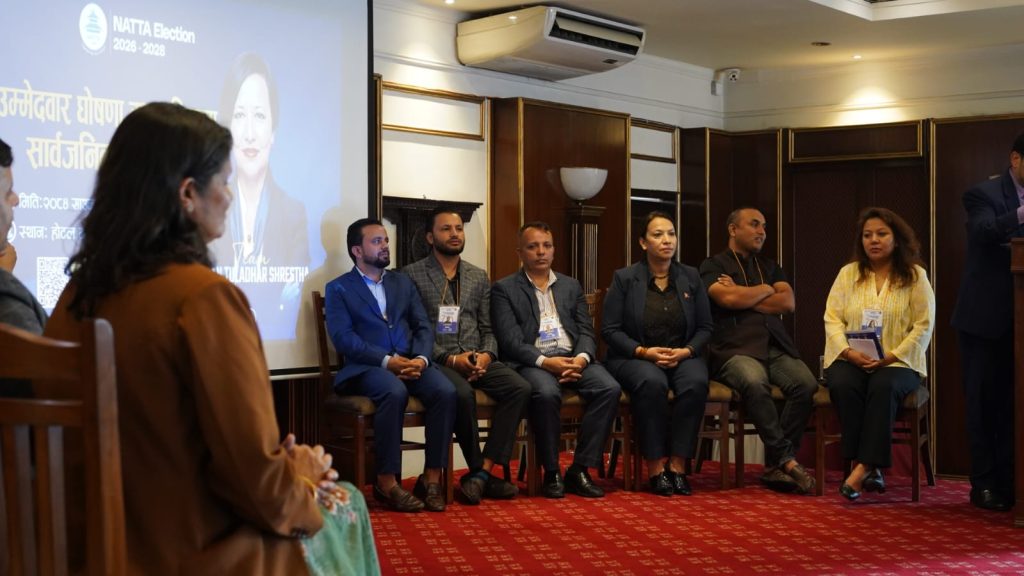
While the panel has pledged to address immediate challenges such as taxation, ticketing, unauthorized tourism activities and transportation, it has also proposed longer-term initiatives involving international promotion, technology adoption, capacity development and regional tourism growth.
With the NATTA election approaching, the proposed agenda is expected to attract considerable attention from Nepal’s travel and tourism industry. The incoming leadership will face the challenge of addressing long-standing issues related to business protection, taxation, air ticketing, policy reform, market access and the competitiveness of Nepal’s travel trade.
The panel has summed up its campaign under the slogan: “Strong Leadership, Secure Business – Prosperous Tourism for NATTA.”