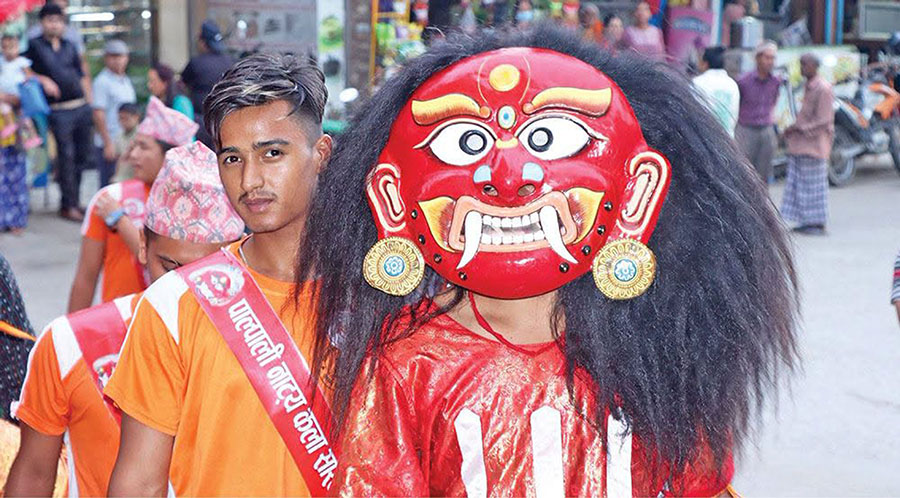
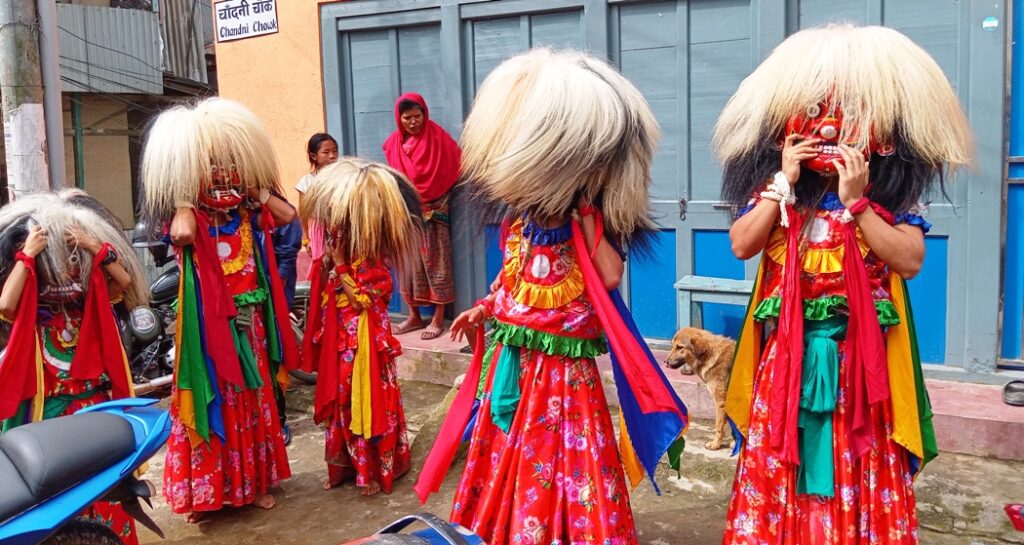
As evening falls in Tansen, the traditional sounds of dhol and jhyamta are once again filling the town’s historic streets with Lakhe dance. Amid the gathering crowds, performers wearing striking Lakhe masks move through the streets, accompanied by the energetic dance of Bhuchha.
For visitors, the spectacle offers a glimpse into Palpa’s vibrant cultural traditions. For a group of young locals, however, the performances represent something more important: the effort to protect a heritage tradition that has been gradually losing its connection with younger generations.

Young Generation Takes the Lead
Members of the Palpali Natya Kala Sanskritik Samuha have launched a sustained campaign to keep the Lakhe tradition alive. The group has been presenting Lakhe dance every evening from Ghantakarna through the Bhagwati Jatra period, which coincides with Krishna Janmashtami. Performances begin at around 6 p.m. and continue for approximately three hours, bringing traditional music, costumes and masked dancing to different parts of Tansen. Regular performance locations include the bus park, Hulak Chowk, Taksar, Shitalpati, Narayansthan, Asan Tole and Basantapur.
Group chairman Kiran Chitrakar says the initiative is not simply about entertaining audiences. It is intended to reconnect younger generations with their ancestral traditions and encourage the community to take greater responsibility for protecting its cultural heritage. According to Chitrakar, the Lakhe dance has been gradually declining as traditional knowledge is passed less frequently from older generations to younger people. He believes revitalizing the performances can help prevent the tradition from disappearing.
A Cultural Attraction with Deep Roots
Lakhe dance is strongly associated with Newar cultural traditions and is widely recognized as an important feature of festivals in the Kathmandu Valley. In Palpa, however, the tradition has developed its own long-standing presence. Cultural historians say the practice in Palpa and surrounding areas dates back around five centuries, with its introduction linked to the period of King Manimukunda Sen. Historical accounts suggest that Newar communities skilled in woodcarving, craftsmanship, and cultural practices were brought to Palpa during his reign, contributing to the development of local guthi and festival traditions.
The dramatic masks, colorful costumes, and powerful rhythms of the traditional instruments remain among the main attractions of the performance. Historian Pushkar Raj Regmi notes that the distinctive Lakhe mask draws audiences of all ages, from children to older generations. During performances, the Lakhe character appears in a frightening mask and traditional costume, while Bhuchha accompanies the dance in a contrasting male-style appearance. Traditional materials, including yak-tail ornaments, garments and decorative tails made from maize leaves or cloth, add to the visual character of the performance.

Strengthening Palpa’s Cultural Tourism
The revival of Lakhe dance is also creating opportunities to promote cultural tourism in Tansen and wider Palpa. Visitors can experience not only the performance itself but also the traditional music, costumes, festivals and community practices surrounding it. Beyond Tansen, Lakhe dance traditions are also found in Newar settlements including Rampur, Sarai, Harthok and Aryabhanjyang.
As young performers bring the tradition back into public spaces, the campaign is gaining positive attention beyond Palpa as well. The effort demonstrates how community-led preservation of living traditions can strengthen a destination’s cultural identity while offering domestic and international visitors a more authentic experience of Nepal’s heritage. For Tansen, the revival of the Lakhe dance adds another dimension to its appeal as a cultural destination, where history, festivals, traditional arts and living community practices continue to shape the visitor experience.