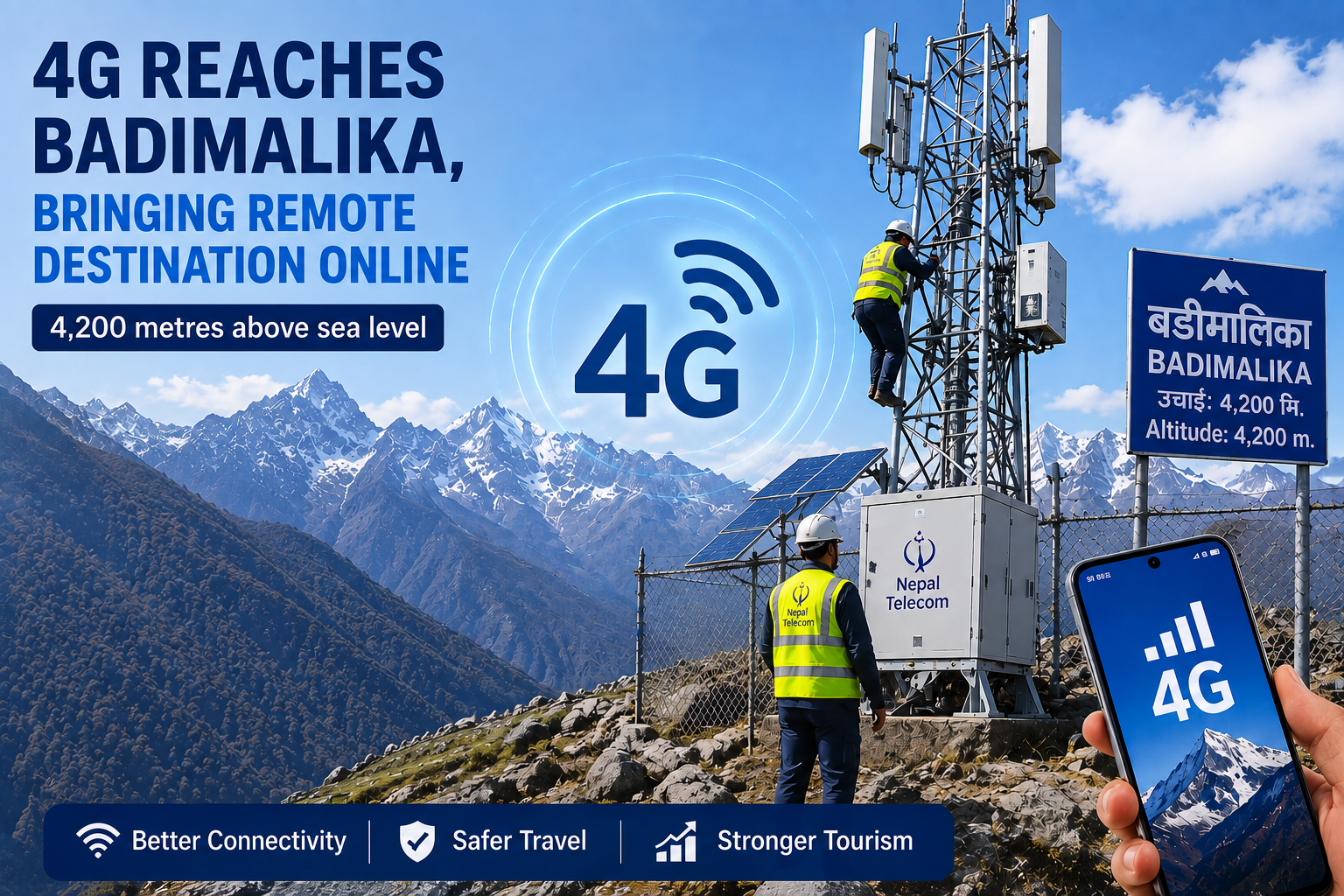
Nepal Telecom has airlifted telecommunications equipment to Badimalika in Bajura using a Nepali Army helicopter, bringing high-speed mobile connectivity closer to one of Nepal’s remote religious and tourism destinations. The equipment was transported to the high-altitude area on Tuesday because of difficult terrain, and the absence of road access made conventional transportation impractical. Around 4,000 kilograms of equipment now needs to be carried by workers from the helicopter landing site to the location where the communication infrastructure will be installed. Nepal Telecom expects 4G services to come into operation within about five days after the equipment reaches the installation site.
Connectivity Reaches a 4,200-Metre Destination
Badimalika Temple is situated at approximately 4,200 metres above sea level and has been gaining recognition as an important religious and tourist destination in Bajura. Despite its growing popularity, the area has lacked reliable telephone and internet services. The connectivity gap has affected not only local communities but also pilgrims and tourists visiting the remote destination. The planned 4G connection is therefore expected to make communication considerably easier for visitors travelling to the area.

Equipment Transported by Nepali Army Helicopter
The challenging geography of Badimalika has been one of the major obstacles to installing telecommunications infrastructure. Following a government directive to accelerate communication services in the area, Nepal Telecom arranged for the necessary equipment to be transported by helicopter. The Nepali Army helicopter carried the equipment to the site, after which workers will transport the heavy materials overland to the proposed installation location. The development demonstrates the logistical challenges involved in extending digital infrastructure to Nepal’s high-altitude destinations.
4G Expected to Improve Tourist Experience
Once operational, the service could provide visitors with easier access to mobile internet and telephone communication during their journey to Badimalika. For tourists and pilgrims, reliable connectivity can be particularly useful for navigation, emergency communication, digital payments, sharing travel experiences and staying in contact with family members.

Better connectivity could also help local tourism businesses communicate with visitors and service providers, potentially making it easier to promote accommodation, transport and other tourism services.
Part of Wider Remote Connectivity Expansion
The Badimalika project is not an isolated effort. Nepal Telecom has been working to extend 4G services to other remote and high-altitude parts of the country. According to recent reports, the company is also studying the possibility of expanding 4G connectivity toward the Sagarmatha Base Camp region. Services have already been extended to other remote locations, including parts of Dolpa and Olangchungola in Taplejung. The government has also begun work related to around 1,600 new telephone towers and associated infrastructure as part of efforts to improve communication access across the country.

Digital Connectivity and Tourism Development
For Nepal’s remote tourism destinations, telecommunications infrastructure is increasingly becoming part of basic tourism infrastructure. Destinations such as Badimalika attract visitors precisely because of their remoteness, landscapes and cultural and religious significance. However, limited communication facilities can create difficulties for visitors and constrain tourism businesses. The arrival of 4G could help bridge that gap by connecting the destination with the wider digital economy while also improving communication during emergencies.
A New Step for Badimalika Tourism
Badimalika’s connectivity expansion comes as the destination receives increasing attention from domestic travelers and religious tourists. Better telecommunications could complement future improvements in roads, trekking infrastructure, accommodation and visitor facilities. The immediate priority, however, is completing the difficult task of moving the equipment to the installation point. Once that work is completed, Nepal Telecom expects the 4G service to become operational within approximately five days. For a destination located at 4,200 metres in one of Nepal’s remote districts, the arrival of reliable mobile internet could mark an important step toward making Badimalika more accessible, connected and tourism-ready.