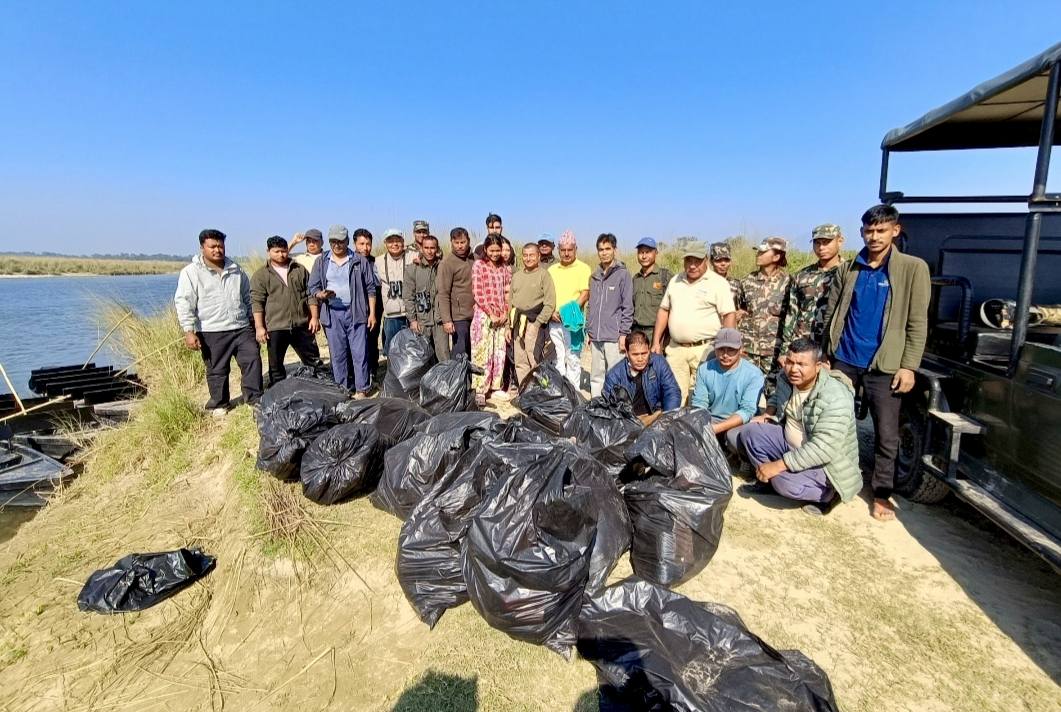
The third annual Rapti River Day–2082 was marked on Monday with the most extensive cleanup operation ever conducted along the Rapti River, signaling a renewed and strengthened commitment toward its conservation, cleanliness, and sustainable management. The initiative builds on more than a decade of continuous local efforts dedicated to protecting one of Nepal’s most significant river systems.
Massive Cleanup Operation Across 16 Locations
The highlight of this year’s commemoration was the Rapti River Cleanup Campaign, a coordinated single-day drive that began simultaneously at 8 AM across 16 designated points. The campaign stretched from the Bhimphedi area in Makawanpur, passed through Hetauda, and concluded at Golaghat in Chitwan, covering a long and ecologically sensitive stretch of the river. Campaign coordinator Apil Ghimire said the cleanup was executed simultaneously across different areas of Makawanpur and Chitwan districts, ensuring a widespread and impactful operation.

Focus on Tourism, Wetlands, and Community Forests
Recognizing the Rapti River’s rising value as a prominent tourist destination, the campaign extended beyond the river channel to clean adjacent riverbanks, wetlands, and nearby community forests. Organizers believe these efforts will help preserve biodiversity, improve the scenic beauty of the area, and boost tourism potential.
Future Plans: Waste Management, Awareness, and Tree Plantation
Looking ahead, the campaign has outlined a comprehensive conservation strategy emphasizing:
- Stronger waste management systems around riverbanks and settlements
- Regular public awareness programs
- Strategic tree plantation campaigns
- Increased community participation, especially from youth and local groups
Experts stress that the Rapti River is home to a wide range of endangered and rare wildlife, tigers, bears, rhinos, elephants, turtles, and gharials, particularly within the Chitwan-Parsa ecological zone, making its protection critically important.

Rising Pollution Threatens the River Ecosystem
Despite conservation efforts, the Rapti River continues to face severe pressures from growing pollution. Waste discharged from industrial corridors, hotels, and commercial centers, along with poor waste disposal practices by some municipalities, has led to escalating environmental concerns. Activists warn that the unchecked dumping of solid and liquid waste threatens aquatic life, endangers wildlife habitats, and poses serious health risks to communities dependent on the river.
Call for Unified Action
To safeguard the Rapti River for future generations, the campaign has urged stronger and coordinated support from all stakeholders, including the:
- Ministry of Forest and Environment
- Ministry of Tourism
- Local governments and people’s representatives
- Government agencies
- Community groups and social organizations
- Journalists, students, youth networks
- Industrialists and business owners
The campaign concluded with a unified message: only a collective, sustained, and responsible approach can ensure the long-term preservation of the Rapti River.