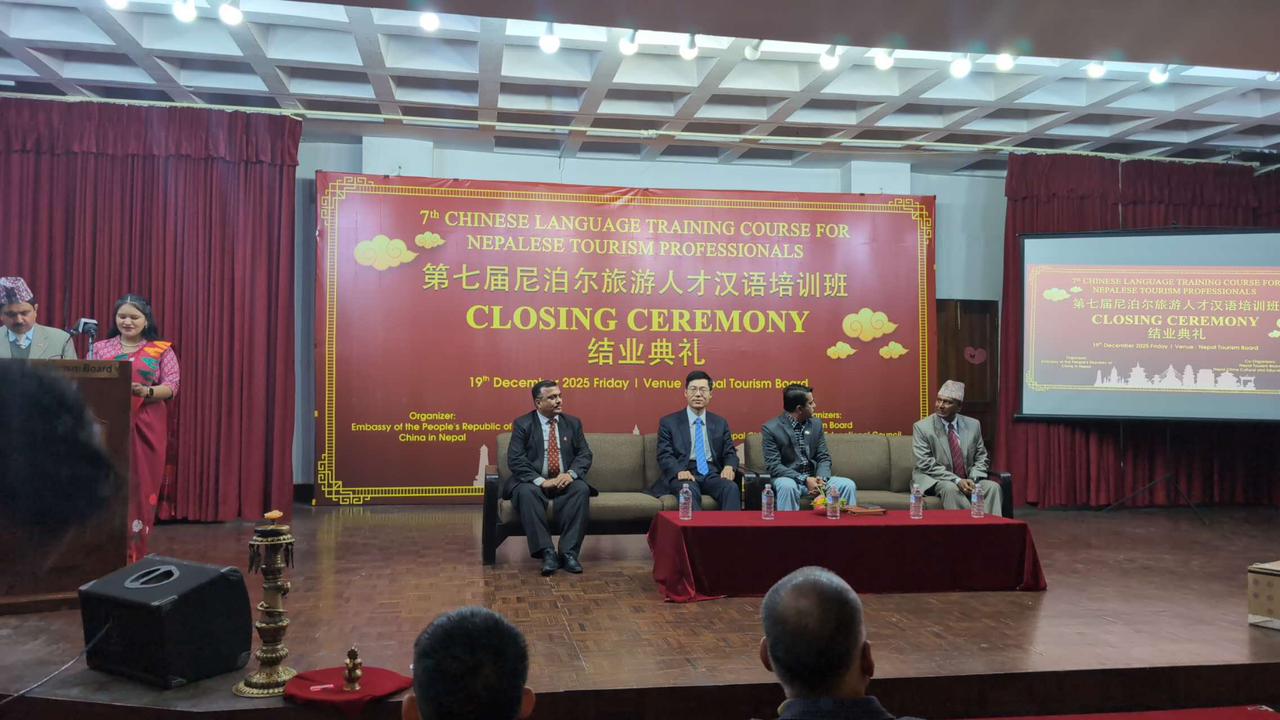
Nepal has taken another significant step toward strengthening its tourism workforce for the rapidly expanding Chinese outbound travel market with the successful completion of the seventh edition of the Chinese Language Training Program. The capacity-building initiative, designed to equip Nepali tourism professionals with practical language and cultural skills, concluded with a formal ceremony in Kathmandu, marking yet another milestone in Nepal–China tourism cooperation.
A Strategic Initiative for Tourism Workforce Development
The Chinese language training program has been implemented as part of a long-term human resource development strategy aimed at improving service quality for Chinese visitors to Nepal. Conducted annually, the program targets tourism entrepreneurs, tour guides, hotel staff, students, and frontline service providers who regularly interact with international travelers. Each year, more than 50 participants benefit from structured language instruction and cultural orientation tailored specifically to tourism-related needs.
The program was initiated following a bilateral assistance agreement signed after the official visit of former Prime Minister Pushpa Kamal Dahal ‘Prachanda’ to China, during which high-level discussions emphasized people-to-people connectivity and tourism cooperation. Since then, the initiative has grown into a flagship example of practical collaboration between the two countries.

Collaborative Effort Between Key Institutions
The training has been jointly implemented by the Nepal Tourism Board (NTB) in partnership with the Embassy of the People’s Republic of China in Nepal and the Nepal-China Cultural and Educational Council (NCCEC). This tripartite collaboration reflects a shared commitment to enhancing mutual understanding through education, language, and cultural exchange, while directly supporting Nepal’s tourism ambitions.
Closing Ceremony and Recognition of Participants
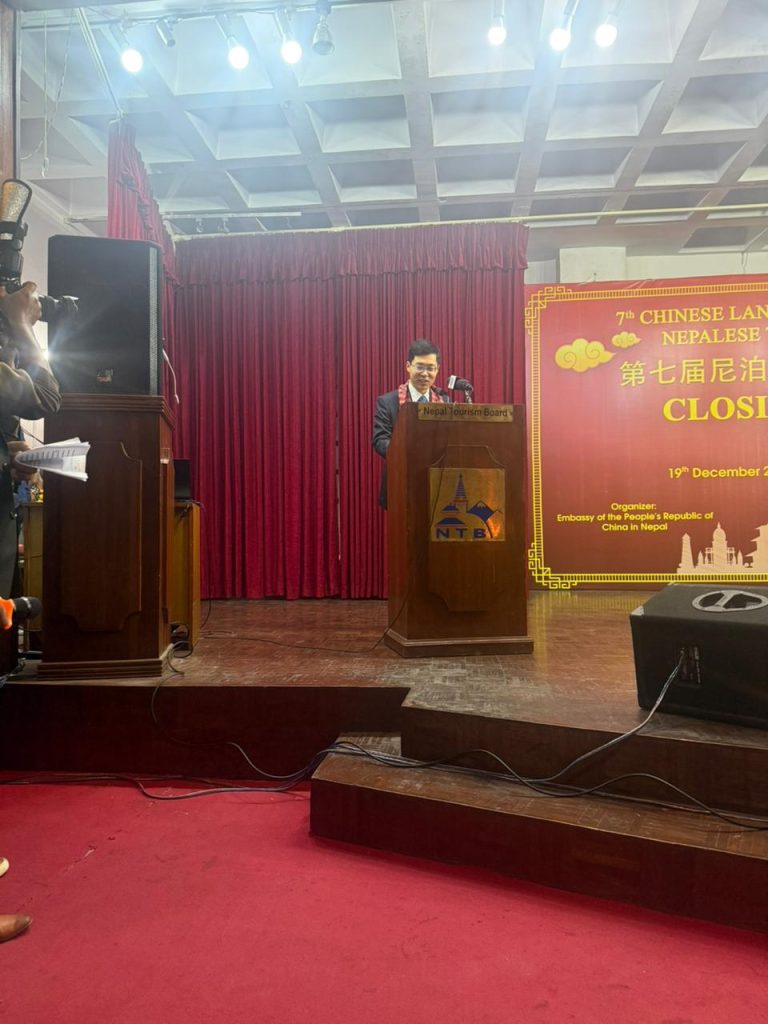
The completion of the seventh batch was marked by a certificate distribution ceremony attended by senior officials and representatives from both countries. Among those present were Zhou Pan, Deputy Chief of Mission at the Chinese Embassy in Nepal; Ram Krishna Lamichane, Director General of the Department of Tourism; and Hikmat Singh Ayer, Senior Director of the Nepal Tourism Board. Certificates were awarded to all graduates in recognition of their successful completion of the course.
Showcasing Language Skills and Cultural Confidence
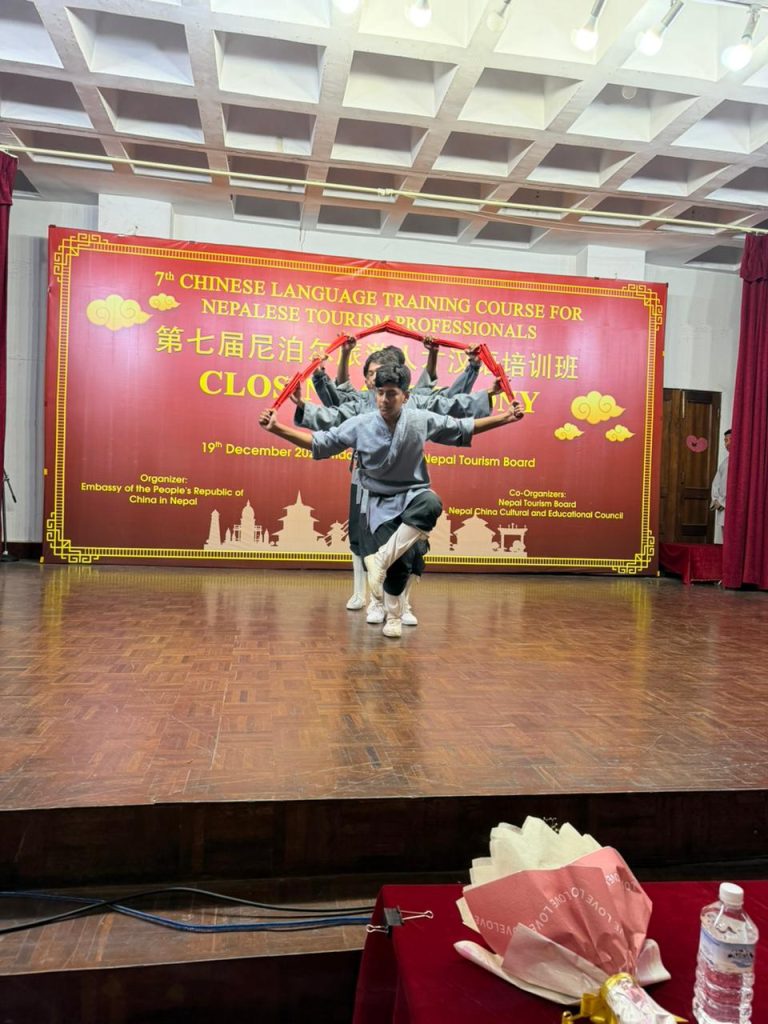
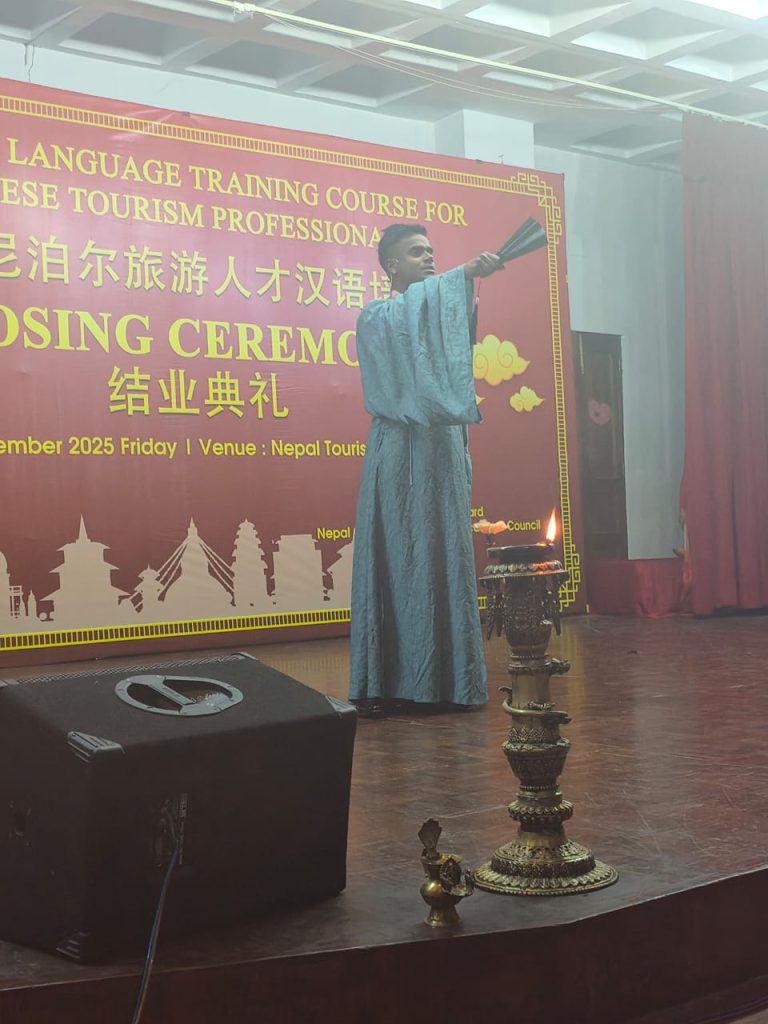
One of the highlights of the closing event was the participants’ live demonstration of their newly acquired language skills. Graduates delivered presentations in Chinese and performed cultural showcases, including traditional art forms and martial arts demonstrations. These confident performances were widely applauded and served as clear evidence of the program’s effectiveness in building both linguistic ability and cultural understanding.
Remarks from Dignitaries Emphasize Broader Impact
Addressing the gathering, Deputy Chief of Mission Zhou Pan praised the enthusiasm shown by Nepali learners toward the Chinese language and culture. He noted that proficiency in Chinese opens doors to engagement with the world’s largest outbound tourism market, creating long-term benefits for Nepal’s tourism sector and broader economy. He also referred to China’s 15th Five-Year Plan, which places strong emphasis on tourism development, expressing confidence that its positive effects would extend to partner destinations like Nepal.
NCCEC Chairman Dr. Harish Shah highlighted the rising global importance of the Chinese language, particularly in tourism and international trade. He emphasized that investing in language education today would generate lasting returns for Nepal’s service industries and cross-border economic engagement.

Aligning Language Skills with National Tourism Goals
Director General Ram Krishna Lamichane underlined that language-trained manpower is essential to position Nepal as a preferred destination for Chinese travelers. He stated that such initiatives directly support the government’s objective of increasing Chinese tourist arrivals by ensuring better communication, hospitality, and visitor satisfaction.
Echoing these views, NTB Senior Director Hikmat Singh Ayer congratulated the graduates and reaffirmed the Board’s commitment to continuing and expanding the program. He stressed that developing Chinese-speaking professionals would enhance Nepal’s competitiveness and improve the overall visitor experience.
Senior NTB official Robin Regmi noted that the training program is part of NTB’s broader capacity-building efforts, with benefits extending beyond tourism to trade, business, and economic cooperation. By nurturing skilled professionals, the initiative also strengthens people-to-people ties and mutual trust between Nepal and China.
With its successful seventh edition, the Chinese Language Training Program continues to play a vital role in preparing Nepal’s tourism sector for future growth while deepening bilateral cooperation and cultural connectivity between the two nations.