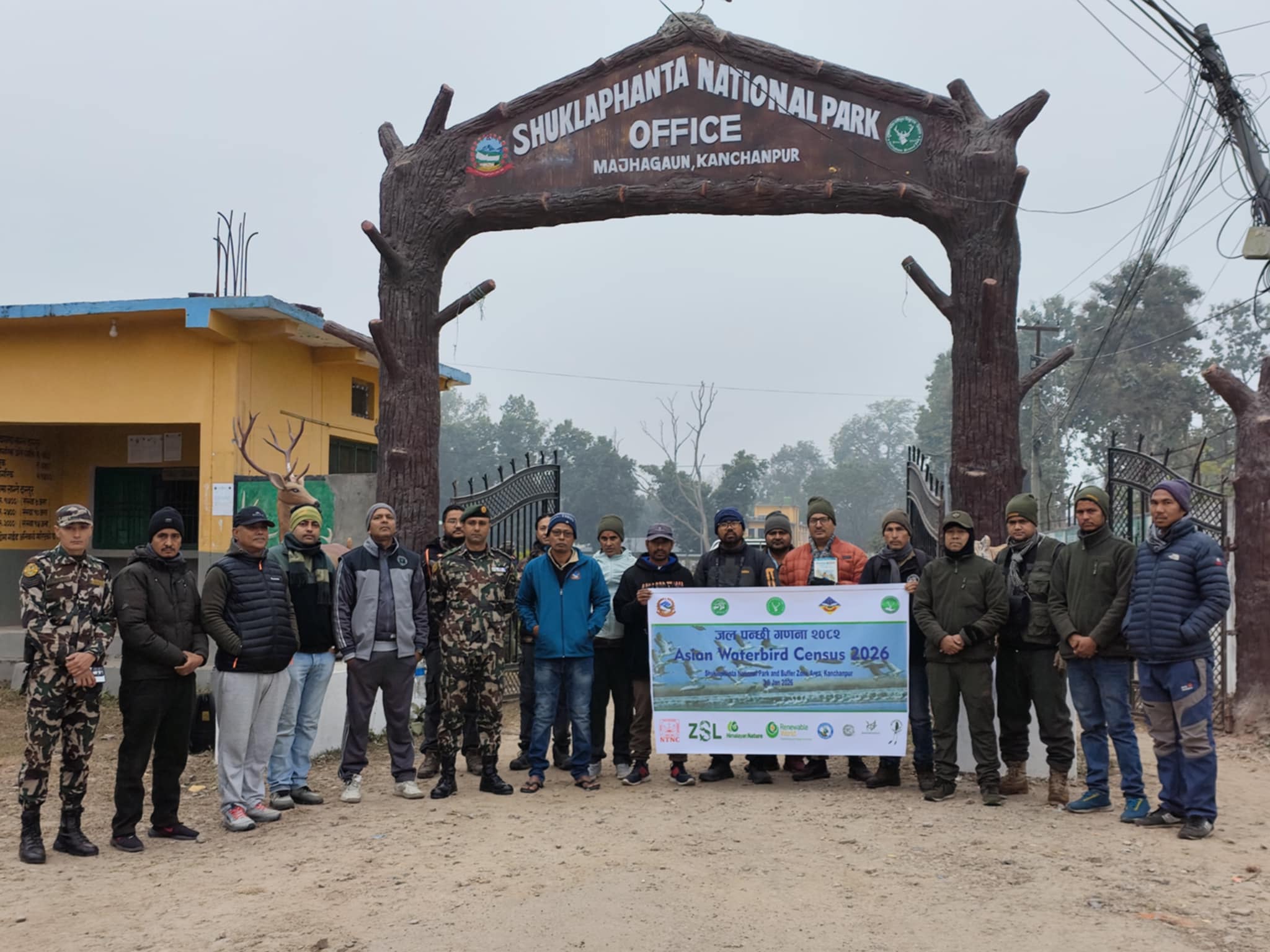
The annual wetland bird census in Kanchanpur has been successfully completed, covering various lakes, rivers, and wetlands in the district. The census aimed to record the population and status of both resident and migratory waterbirds in these habitats.

Improved Waterbird Numbers Observed
According to senior ornithologist Hirulal Dagoura of the Bird Conservation Nepal (BCN), the census revealed an improvement in waterbird numbers compared to previous years. Notable areas such as Sikari Lake within Shuklaphanta National Park, and Puraini Lake and Nakaiya Wetland outside the park, showed a significant increase in bird populations.
“Following the completion of the census in Kanchanpur, the team is now updating numbers and identifying species,” he said. “Some areas in Kailali remain to be counted, and all data will be officially released by January 18.”
Collaborative Efforts and Advanced Methods
The census was conducted under the leadership of BCN in coordination with Shuklaphanta National Park. Binoculars, telescopes, cameras, GPS devices, and even elephants were used to access wet lands that were otherwise difficult to reach, Dagoura added.
Representatives from BCN, Shuklaphanta National Park, the National Nature Conservation Fund, the Nepal Ornithologists’ Society, the Connect Project, ZSL, the Park Intermediate Management Committee, Himalaya Nature, Nature Guide Association, and the Kanchanpur Bird Conservation Group participated in the census.
Key Areas Surveyed
Within the national park, the census covered Sikari Lake, Baba Lake, Tara Lake, Rani Lake, Chaudhar River, Radhapur Wetland, Jhilmila, and Ratanpur Wetland. Outside the park, teams surveyed the Mahakali River, Puraini Lake, and Banda Lake to document waterbird populations and their habitat conditions.

Threats to Wetland Habitats
Ornithologists highlighted that wetlands are increasingly threatened by encroachment, unscientific fish farming, riverbed exploitation, human activities, and climate change. The census not only counted bird populations but also assessed the challenges these habitats currently face, providing vital information for future conservation efforts.