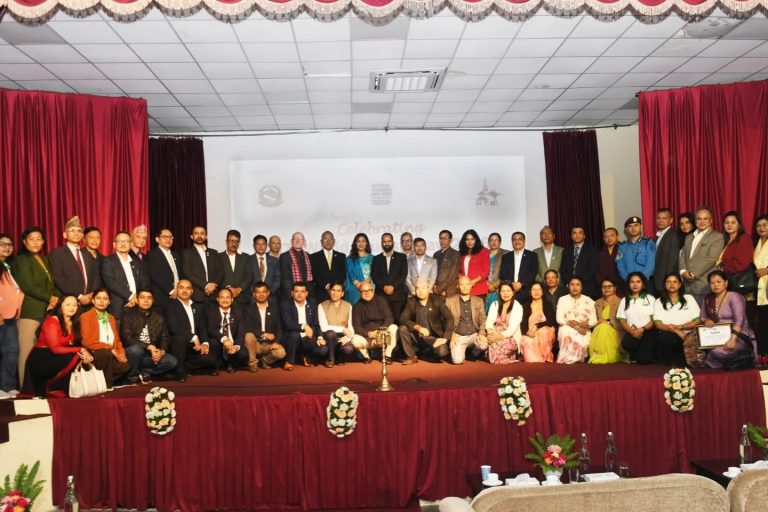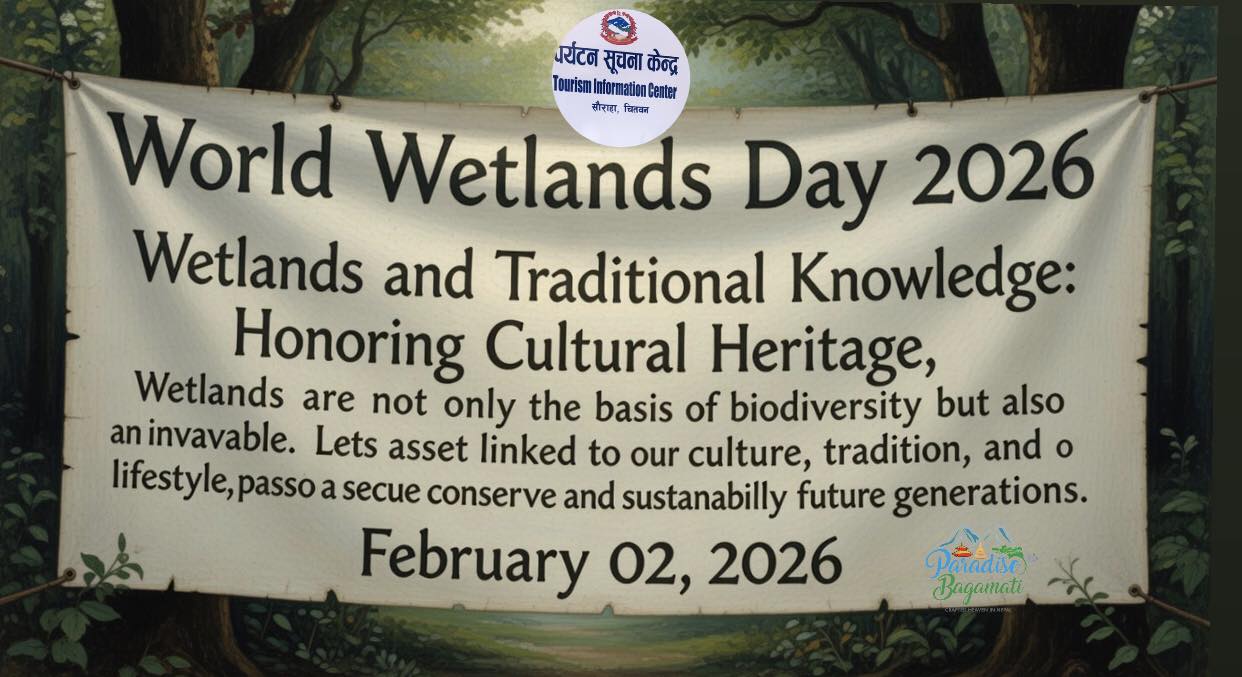
Nepal is celebrating World Wetlands Day today under the theme “Traditional Knowledge: Celebrating Cultural Heritage”, highlighting the crucial role of wetlands in environmental conservation, cultural heritage, and sustainable tourism.
With 242 wetlands spanning nearly 5% of the country’s land area, Nepal is home to some of the most productive and resilient ecosystems on Earth. These wet habitats not only provide critical habitats for countless species of plants and animals but also ensure clean water, carbon storage, and protection against floods.
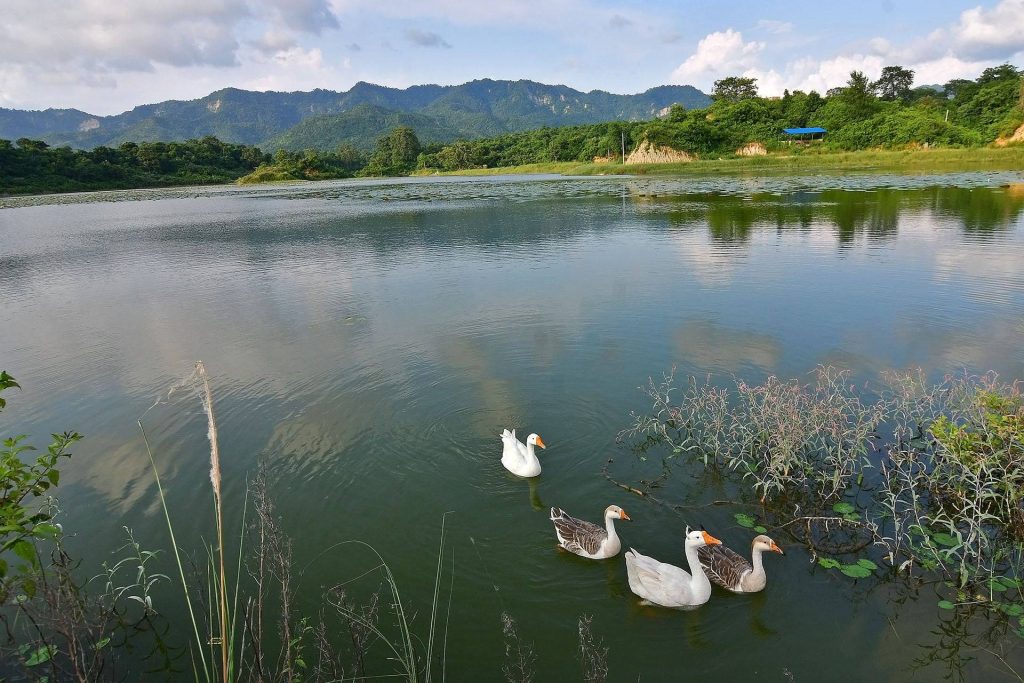
“Wetlands are not just water bodies; they are vital to biodiversity, human livelihoods, and our cultural heritage,” said a spokesperson from the Ministry of Culture, Tourism, and Civil Aviation. “Observing World Wetlands Day reminds us of our responsibility to protect these invaluable ecosystems for future generations.”
Chitwan Wetlands: A Shared Home for Wildlife
The Chitwan wetlands, located in the heart of Nepal’s Bagmati Province, serve as more than a water source; they are a sanctuary for endangered species such as rhinos, gharials, and hundreds of bird species. The wet habitats play a pivotal role in maintaining ecological balance and supporting livelihoods through eco-tourism and sustainable resource use.
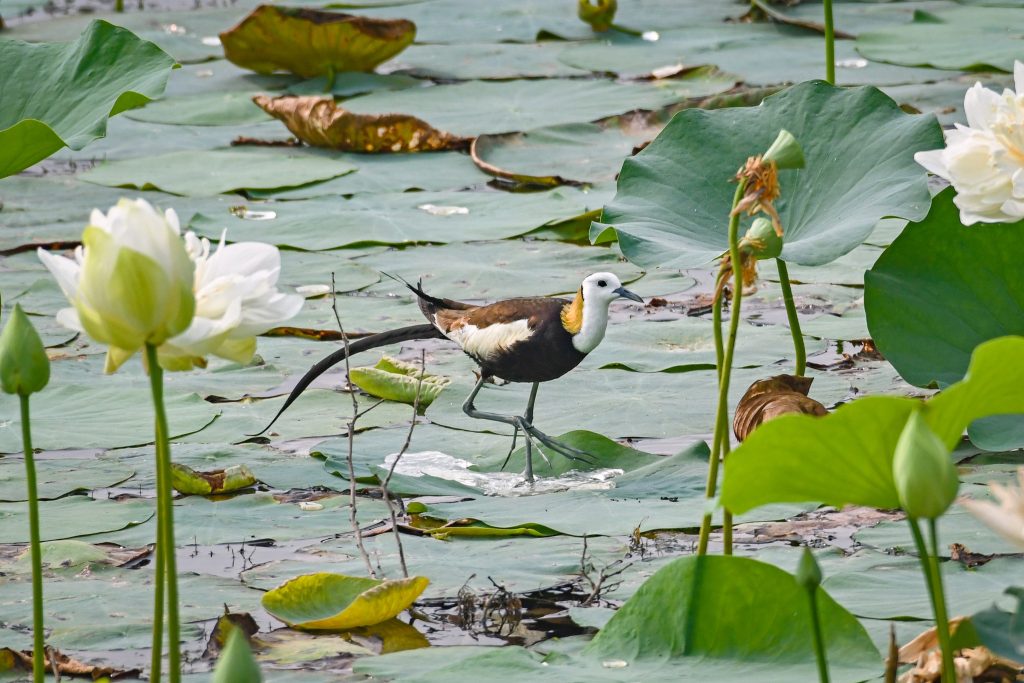
“Prakriti jogie matra paryatan jogie, ra paryatan jogie matra hami jogie” (Only if nature survives, tourism survives, and only if tourism survives, we survive), the Ministry emphasized in a message urging citizens and visitors to actively participate in wetland conservation.
Local communities have long depended on wet habitats for fishing, agriculture, and cultural rituals. Traditional knowledge and practices, passed down through generations, have helped sustain these ecosystems even amidst growing environmental challenges. Today, conservation experts stress that incorporating indigenous knowledge is essential to maintain the ecological integrity of wetlands while promoting sustainable tourism.
Protecting Wetlands Through Community Engagement
Efforts to conserve wetlands in Nepal are increasingly community-driven. Organizations and local authorities work closely with residents to revive and adapt indigenous methods for wetland management. These initiatives range from regulating fishing and grazing to maintaining natural water flows, controlling pollution, and monitoring wildlife populations.
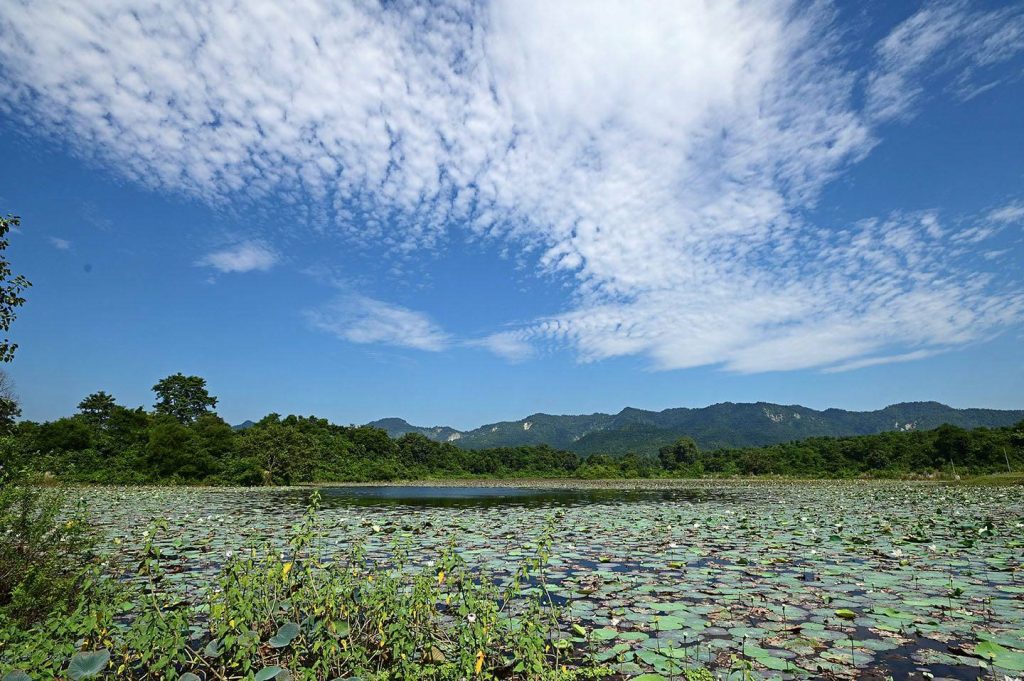
Tourism offices across Chitwan, including the Tourism Office Sauraha and the Tourism Information Center Chitwan, have joined the celebrations, emphasizing that eco-tourism and cultural heritage preservation go hand in hand. By promoting responsible tourism, these bodies aim to generate income for local communities while safeguarding fragile ecosystems.
“Cultural heritage and biodiversity are inseparable,” said a representative from the Bagmati Province Tourism Office. “By celebrating traditional knowledge today, we honor both our environment and our history. Visitors are encouraged to explore Chitwan’s wetlands responsibly, learn about local customs, and support conservation efforts.”
Global Significance and Local Responsibility
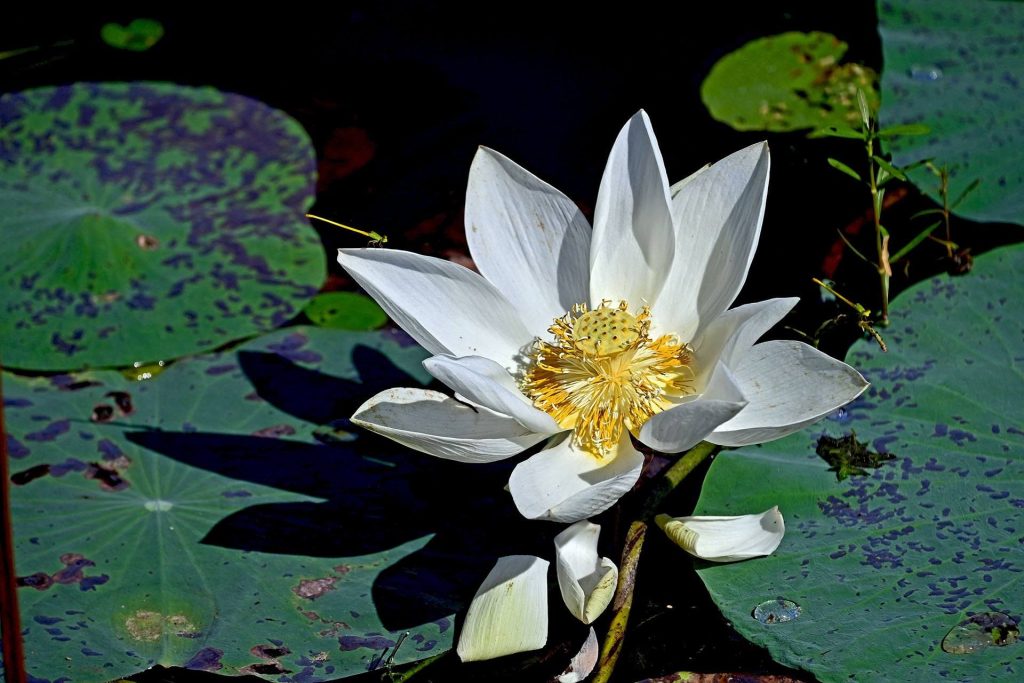
World Wetlands Day, celebrated annually on February 2, draws attention to the importance of wet habitats worldwide. In Nepal, these ecosystems are particularly significant due to their contribution to carbon sequestration, flood control, water purification, and biodiversity support. The day serves as a reminder that protecting wet habitats is not only an environmental imperative but also a cultural and economic one.
Experts emphasize that in the face of climate change, urbanization, and pollution, safeguarding wetlands requires active participation from all sectors, government agencies, NGOs, tourists, and local communities. Integrating traditional knowledge into modern conservation strategies can enhance resilience and promote sustainable livelihoods.

“The wetlands of Chitwan are a treasure for wildlife, culture, and tourism alike,” said a local conservationist. “By protecting these habitats, we protect the future of our communities, our heritage, and the countless species that call this ecosystem home.”
As celebrations continue across the country, the Ministry urges everyone to contribute to wetland conservation and to enjoy the natural and cultural richness of Nepal responsibly. Preserving these ecosystems ensures that future generations can witness the beauty of rhinos grazing, gharials basking, and migratory birds nesting in harmony with human communities.