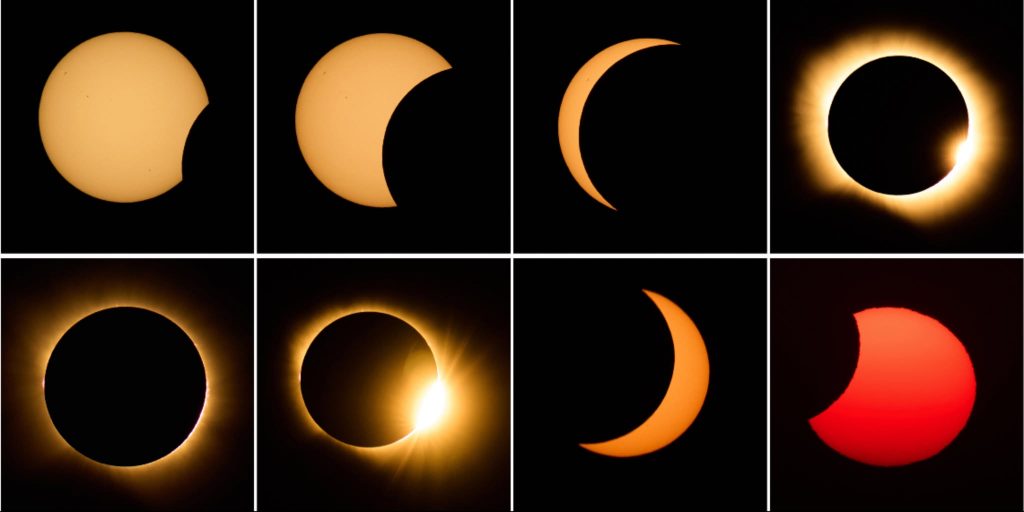
A rare total solar eclipse drew huge crowds across Spain, Iceland, Portugal and other parts of Europe on Wednesday, turning viewing locations into major temporary tourism hotspots. In Spain, the event was particularly significant as it marked the country’s first total solar eclipse visible from the mainland in more than a century. The astronomical spectacle not only attracted skywatchers but also generated a major surge in tourism, hotel demand and visitor spending. Spain’s government estimated that the Solar eclipse would bring around 446,700 additional tourists during the week of August 10–16, generating €342.19 million in additional tourism spending and a net economic contribution of €347.6 million.

A Century-After Eclipse Captivates Spain
The total solar eclipse occurred when the Moon passed directly between the Sun and Earth, temporarily blocking the Sun’s light and plunging parts of the country into darkness. The path of totality crossed northern and central Spain before moving toward the Mediterranean. Spanish cities and rural communities along the path attracted large numbers of visitors seeking unobstructed views of the rare phenomenon. Spain’s National Geographic Institute said the eclipse crossed numerous provincial capitals, including A Coruña, Oviedo, León, Bilbao, Zaragoza and Valencia. People gathered in parks, open fields and designated viewing areas with special eclipse glasses, chairs and umbrellas. As daylight gradually disappeared and the sky darkened, crowds cheered and applauded the unusual spectacle.
Solar Eclipse Tourism Drives Visitor Surge
The eclipse created a major boost for astronomical or astrotourism, with travelers choosing destinations specifically to experience the rare celestial event. Spain’s official economic assessment projected an additional 446,700 visitors during the eclipse week. It also reported a 7.9 percent increase in scheduled airline seats compared with the same period in 2025 and a 17.8 percent increase in hotel bookings for August 2026 compared with August 2025. The government estimated that foreign tourists would account for €247.29 million of the additional tourism spending, while domestic residents would contribute another €94.90 million. The increase demonstrates how a short-duration astronomical event can create significant demand for accommodation, transportation, food, local attractions and other tourism services.
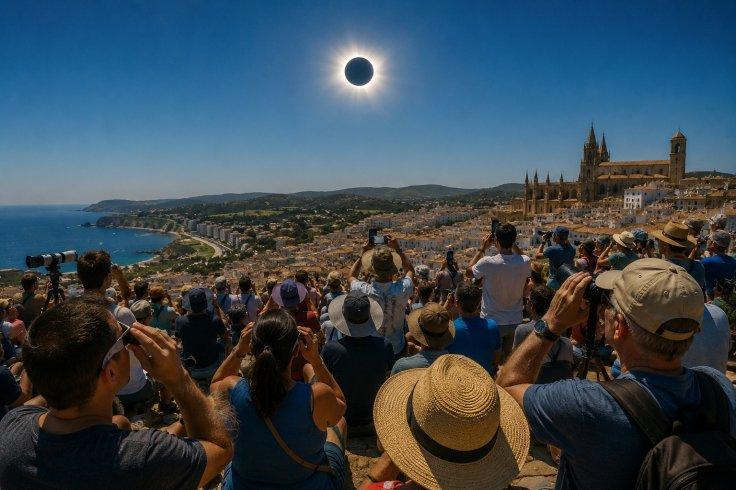
Rural Destinations Benefit from Eclipse Tourism
One of the notable features of the eclipse was the influx of visitors into less densely populated areas. Rural towns and natural landscapes along the eclipse path became important viewing destinations as tourists searched for locations with clear horizons and favorable weather conditions. The concentration of visitors also created opportunities for communities that traditionally receive fewer tourists. Spain prepared approximately 350 official viewing locations in less densely populated inland areas to manage the expected crowds. More than 33,500 security personnel were deployed around viewing sites and access routes.
Iceland Also Becomes an Eclipse Destination
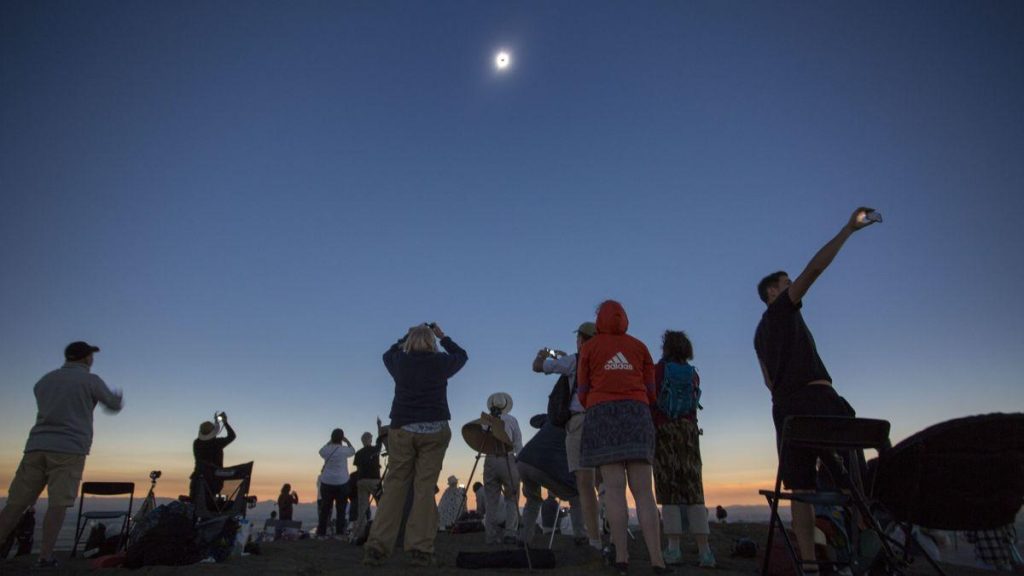
Iceland was another major destination for Solar eclipse travelers. The total eclipse passed through western Iceland, including Reykjavík and the Reykjanes Peninsula, where large numbers of visitors gathered. Reykjavík experienced just over one minute of totality, while locations farther west could experience longer periods of complete darkness. Tourism authorities had warned that the event could put significant pressure on roads, parking areas, accommodation and other services. Visitors were advised to arrive early and remain at viewing locations after the eclipse to reduce congestion.
Hotel Demand Surges
The Solar eclipse produced a noticeable increase in accommodation demand in Iceland and Spain. In Iceland, many travelers had booked rooms well in advance to secure locations close to the eclipse path. Reykjavík and other viewing areas experienced particularly strong demand as visitors planned their trips around the event. The tourism surge illustrates the economic power of astronomical events. Travelers were willing to organize entire trips around a phenomenon lasting only a few minutes, demonstrating the ability of astrotourism to generate demand for destinations beyond their traditional attractions.
Cruise Tourism Adds Another Dimension
The eclipse also generated opportunities for cruise and expedition tourism. The MS Spitsbergen carried 126 passengers on an Arctic voyage and attempted to position the vessel at a suitable location near Greenland so passengers could experience totality. The cruise passengers were traveling through a region experiencing almost 24 hours of daylight, making the sudden transition to darkness particularly dramatic. For the travelers, the eclipse became a distinctive experience within an already specialized Arctic tourism itinerary.
Safety and Crowd Management Become Priorities
The huge influx of visitors required extensive preparation from authorities. Spain faced additional challenges because temperatures in several regions exceeded 35 degrees Celsius and parts of the country remained at risk of wildfires following a severe fire season. Authorities therefore combined eclipse viewing arrangements with emergency and crowd-management measures. Iceland also introduced traffic-management measures around popular viewing locations.
Authorities expected congestion and limited parking in areas attracting large numbers of visitors. The experience highlighted an important challenge for event-based tourism: destinations must be able to accommodate sudden visitor surges without placing excessive pressure on infrastructure, local communities or the environment.
Eclipse Glasses Become a Tourism Essential
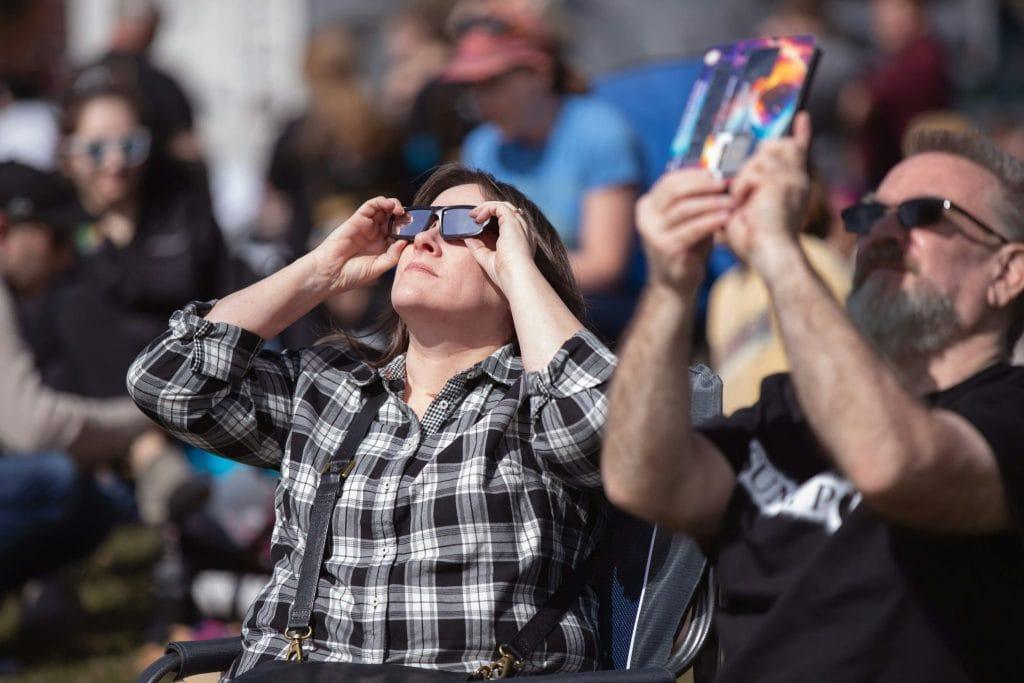
Special solar-viewing glasses became highly sought-after across Spain. Supermarkets, department stores, museums and planetariums had been selling or distributing eclipse glasses for months, while some pharmacies reportedly ran out of supplies before the event. The demand demonstrated how astronomical tourism can create opportunities not only for hotels and travel companies but also for local retailers, museums, science centers and tourism attractions.
A New Model for Astronomical Tourism
The eclipse showed that astronomical phenomena can become powerful tourism products when destinations combine the event with suitable infrastructure, accommodation, viewing areas and visitor experiences. Spain’s experience was particularly significant because the eclipse attracted visitors to both major cities and rural communities. Official projections indicated that the event could generate hundreds of millions of euros in additional tourism-related economic activity. For destinations around the world, the event provides an example of how rare natural and astronomical phenomena can be incorporated into tourism strategies while encouraging visitors to explore lesser-known areas.

Tourism Impact Beyond the Eclipse
The August 12 eclipse was therefore more than a scientific or astronomical event. It became a major international tourism phenomenon, influencing travel decisions, hotel bookings, transportation demand, visitor spending and destination management. Spain’s experience demonstrates the growing potential of astrotourism, while Iceland’s preparations show the importance of managing infrastructure and visitor flows when a small destination experiences a sudden increase in international arrivals. The event ultimately placed Spain and Iceland in the global tourism spotlight, showing how a few minutes of darkness can create a substantial and memorable tourism opportunity.