
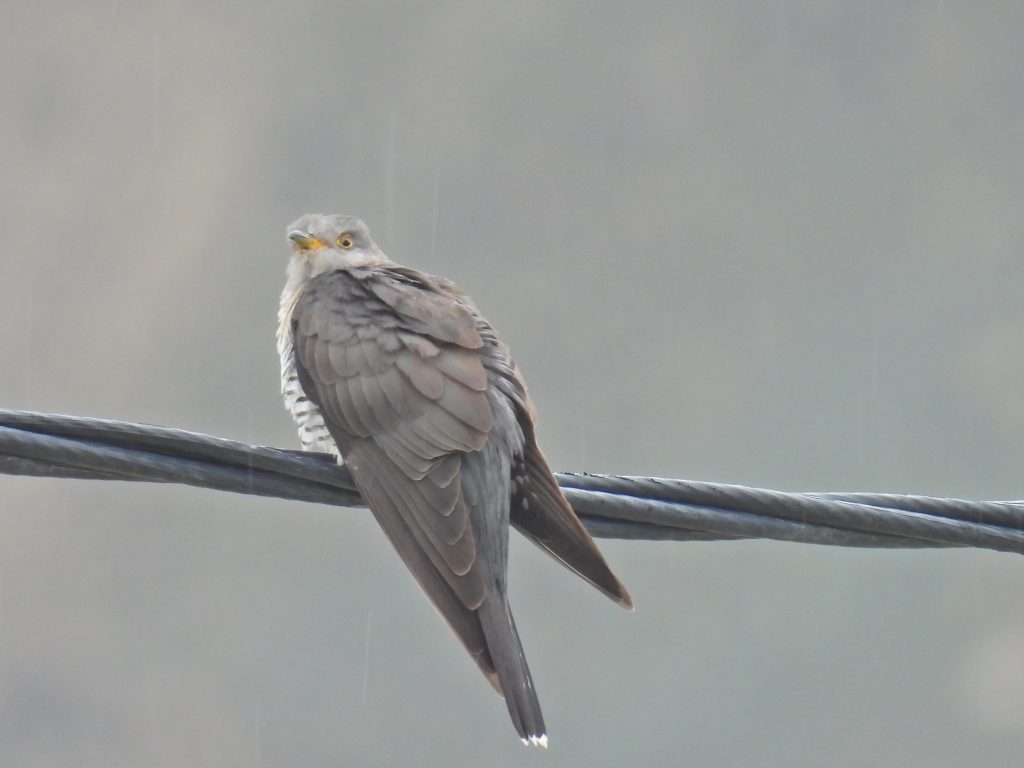
The Common Cuckoo (Cuculus canorus), a medium-sized bird renowned for its distinctive call and unusual breeding habits, continues to capture the attention of birdwatchers and ornithologists alike. Recognizable by its gray upper parts, finely barred white underparts, and striking yellow eye-ring, the male cuckoo’s signature “cu-coo” call is one of the most familiar bird sounds across its habitat range.
Unique Breeding Strategy
One of the most intriguing aspects of the Common Cuckoo is its brood parasitism, a breeding strategy in which the female lays her eggs in the nests of other passerine species. The unsuspecting host birds then raise the cuckoo chicks as their own, often at the expense of their biological offspring. This remarkable adaptation allows cuckoos to invest less in parental care while still ensuring the survival of their young, demonstrating a complex evolutionary strategy unique among many bird species.

Researchers have long studied the cuckoo’s ability to mimic the eggs of host species, improving the chances that the host birds will incubate and feed the chick. This fascinating behavior has made the Common Cuckoo a subject of interest in the fields of behavioral ecology and evolutionary biology.
Habitat and Distribution
The Common Cuckoo occupies a wide range of habitats, showcasing its adaptability and ecological versatility. It can be found in forests, farmlands, wetlands, and montane landscapes, as long as suitable host species are present for its breeding cycle. Its ability to thrive in diverse environments underscores the species’ resilience and ecological importance.
In addition to its unique reproductive behavior, the cuckoo plays a vital role in the ecosystems it inhabits. By preying on certain insects and helping regulate populations of smaller species indirectly through its parasitic interactions, the Common Cuckoo contributes to maintaining ecological balance in both natural and semi-natural habitats.

Significance for Birdwatchers and Ecologists
For birdwatchers, the male cuckoo’s distinct call is often the first indicator of its presence, even in dense vegetation. Ornithologists note that observing the species provides insight into complex ecological interactions, especially regarding interspecies relationships and coevolutionary dynamics.

Conservationists emphasize the importance of preserving habitats that support both the cuckoo and its host species. Maintaining healthy ecosystems ensures the continuation of natural behaviors like brood parasitism, which, while unusual, forms an essential part of avian biodiversity.
The Common Cuckoo’s combination of unique breeding strategies, wide habitat adaptability, and distinctive appearance and call makes it one of the most fascinating birds in Asia and Europe. Its continued presence across varied landscapes highlights the intricate interdependencies of species in the wild and underscores the importance of habitat conservation for maintaining ecological balance.