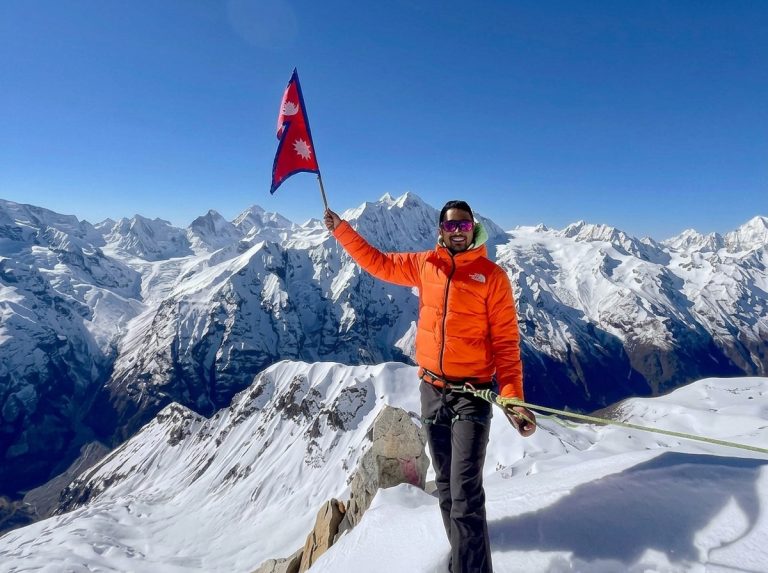
Preparations for the Spring 2026 climbing season on Mount Everest are underway as the team of Icefall Doctors mobilised by the Sagarmatha Pollution Control Committee (SPCC) began fixing the crucial climbing route through the Khumbu Icefall on Monday. The work marks the official start of activities aimed at ensuring a safe ascent for the hundreds of climbers expected this spring.
Traditional Puja Marks Start of Route Fixing
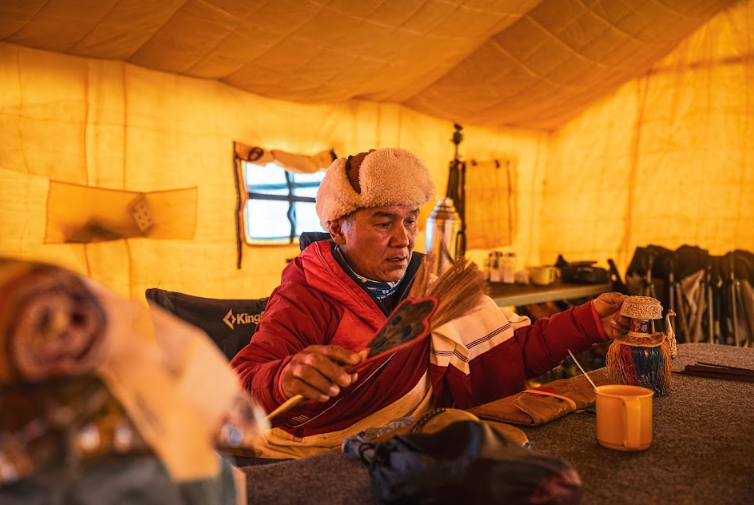
According to SPCC Chief Executive Officer Tshering Sherpa, the team began its operations with a traditional puja ceremony at Everest Base Camp. “The puja is an important ritual to seek blessings for safety before entering the icefall section of the mountain,” Sherpa explained. After completing the ceremony, the Icefall Doctors proceeded to the Khumbu Icefall to start the technically demanding task of route fixing.

Icefall Doctors Undergo Training Before Deployment
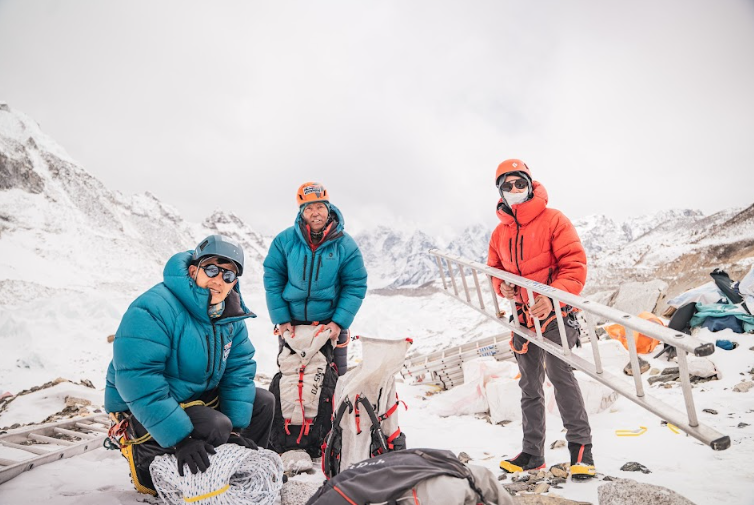
The team of Icefall Doctors arrived at Base Camp on March 4 and spent a week undergoing intensive training before commencing their duties. The training focused on navigation, ladder and rope installation, and monitoring icefall conditions, ensuring the team is fully prepared to manage the most dangerous section of the climb.
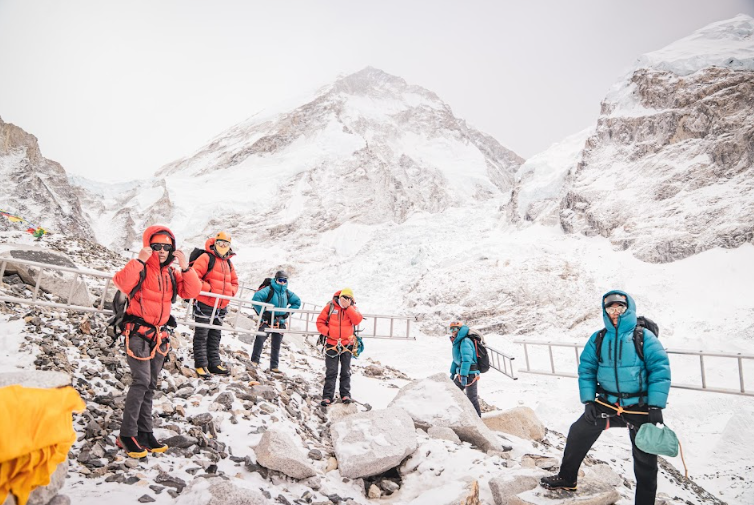
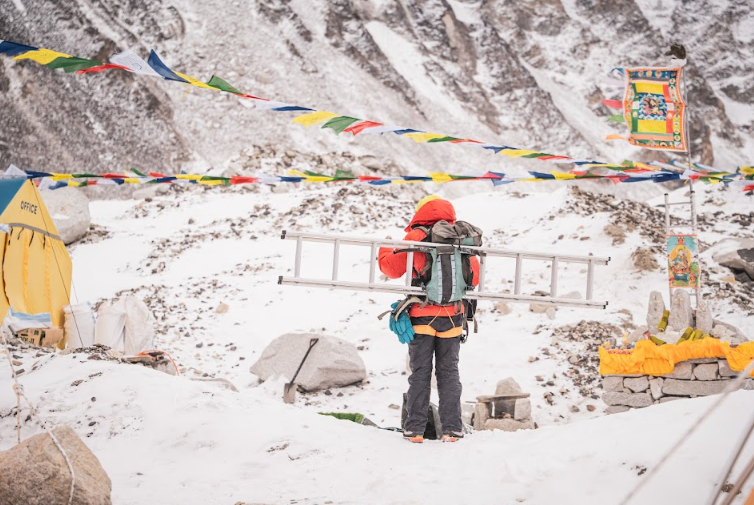
“They will identify the safest route through the icefall and install ladders and ropes along the section,” Sherpa said. The Icefall Doctors will also maintain the route from Base Camp to Camp II throughout the season, ensuring climbers can ascend and descend safely.
Role and Challenges of the Icefall Doctors
The Khumbu Icefall is widely regarded as the most technically challenging segment of the Everest climb. Constantly shifting ice blocks, deep crevasses, and unstable seracs make it extremely hazardous. The Icefall Doctors play a critical role in minimizing risks for climbers by establishing ladders and ropes, creating a safer passage through this dangerous zone.
Above Camp II, the route toward the summit will be managed and fixed by the Expedition Operators’ Association of Nepal (EOAN), ensuring continuity in route safety up to the higher camps.
Expected Climber Turnout
Expedition organizers estimate that more than 400 foreign climbers, along with their guides and support staff, will attempt the world’s highest peak this spring. To manage the high traffic efficiently, the Icefall Doctors will remain stationed at the SPCC Base Camp office for approximately three months, also assisting climbers attempting neighbouring peaks such as Lhotse and Nuptse.
The Spring 2026 team is led by Ang Sarki Sherpa as chief leader and Dawa Jangbu Sherpa as team leader, under Base Camp Manager Tshering Tenzing Sherpa. Other members include Tendu Sherpa, Ngima Tenji Sherpa, Phura Chheten Sherpa, Dawa Chhirri Sherpa, Sonam Geljen Sherpa, and Mingma Gyaljen Sherpa.
Stricter Waste Management Rules Introduced
In line with preparations, the SPCC has announced stricter waste management regulations for the climbing season. Climbers are now required to carry back at least two kilograms of garbage from areas above Camp II, including higher camps such as Camp III and Camp IV. This replaces the previous rule, which required climbers to deposit eight kilograms of garbage at Base Camp, a system that often resulted in waste being left scattered in higher camps.
SPCC monitoring teams will be stationed at Camp II to verify that climbers are collecting and transporting waste from higher camps. Additionally, the use of official “poop bags” provided by SPCC and the Khumbu Pasang Lhamu Rural Municipality is now mandatory, replacing personal waste bags.

Protecting Everest’s Fragile Environment
Officials say these measures aim to curb the growing environmental pressure on Everest, where expedition traffic has steadily increased in recent years. The new regulations and the work of the Icefall Doctors reflect the combined efforts of authorities and local organizations to maintain the mountain’s fragile ecosystem while ensuring the safety of climbers.
As the spring climbing season progresses, the coordinated work of the Icefall Doctors and monitoring teams will be critical in balancing safety, environmental protection, and the continued allure of Mount Everest for climbers from around the world.