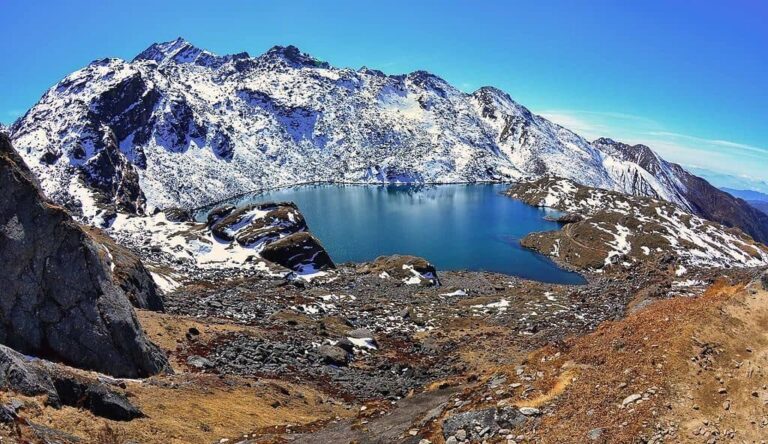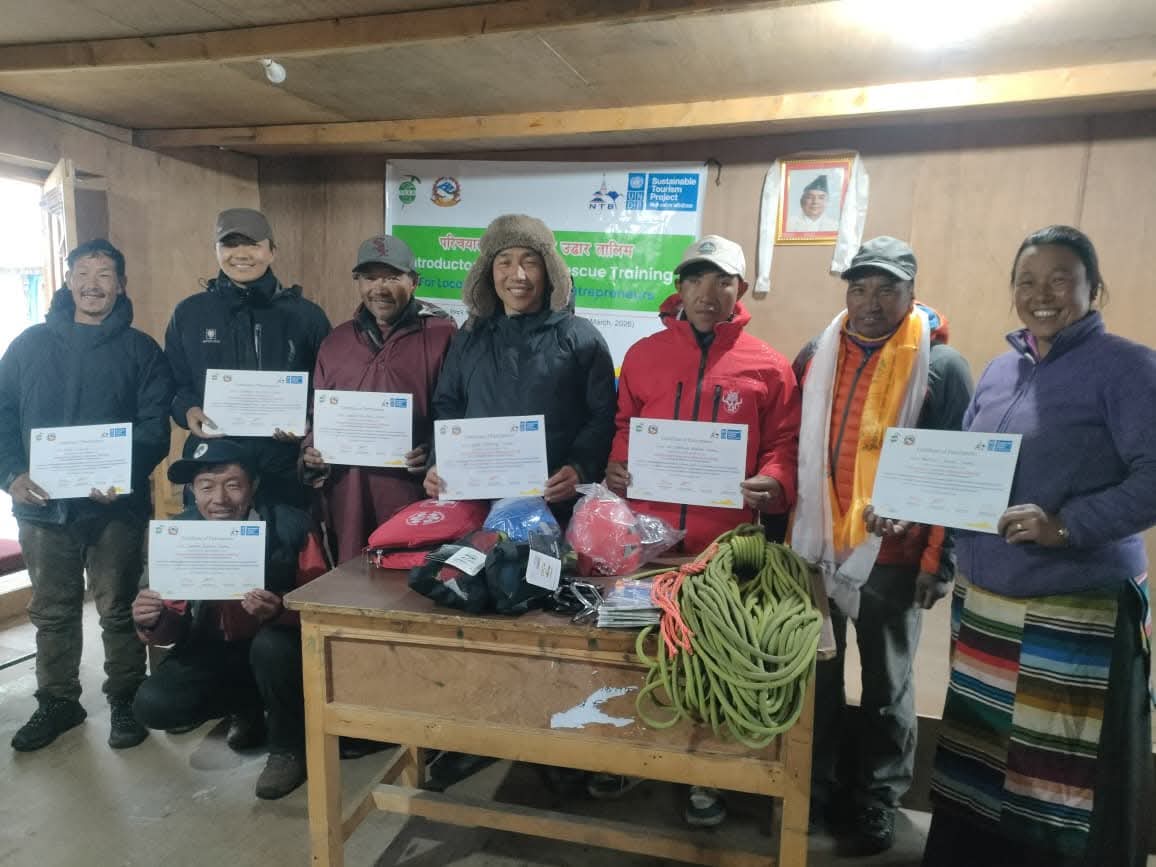
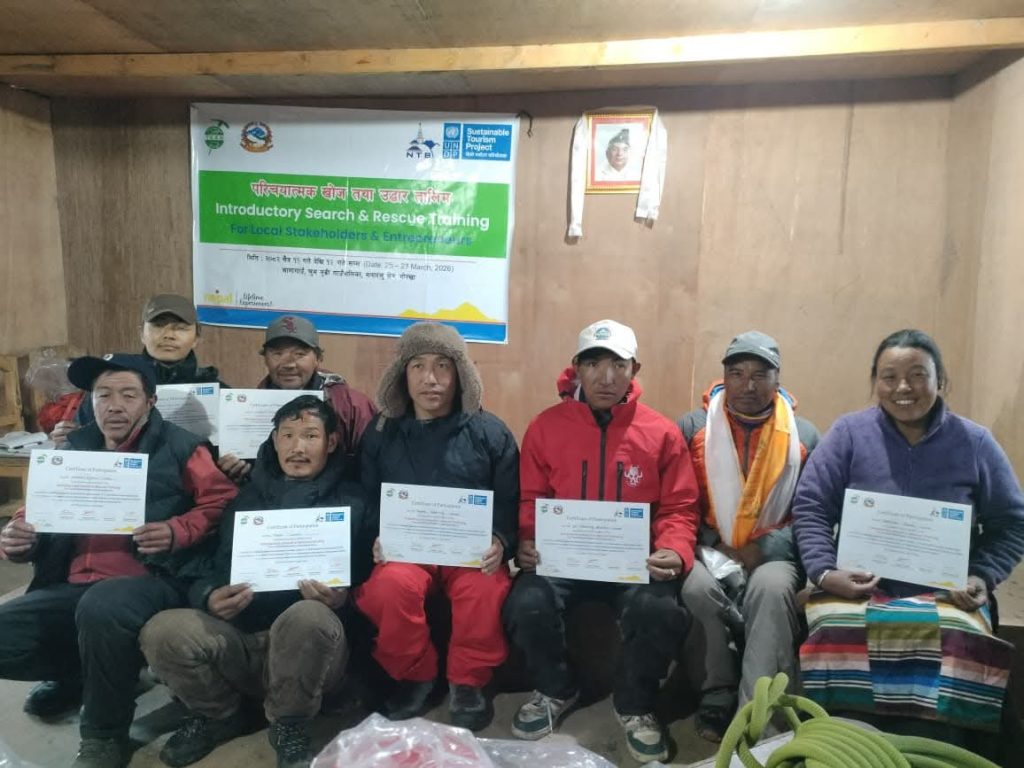
In a significant step toward enhancing trekking safety in the Nepal Himalayas, an Introductory Search & Rescue (SAR) Training was successfully conducted in the Samagaon area of the Manaslu Circuit Trail, Upper Gorkha, from 24 to 27 March 2026. The program aimed to strengthen local capacities in responding to emergencies, particularly along high-risk trail sections such as the Samagaon-Larke Pass, which is prone to accidents and hazards.
Community Participation and Stakeholders
The four-day training saw active participation from more than 15 localstakeholders and entrepreneurs representing Samagaon, Shyala, Samdo, and Dharmashala communities in Chum Nubri Rural Municipality. Participants included a diverse range of community members: local government officials, police personnel, health post staff, hotel and lodge committee members, tea-house operators, local trekking guides, Mother Group members, yak herders, and Non-Timber Forest Products (NTFP) entrepreneurs.
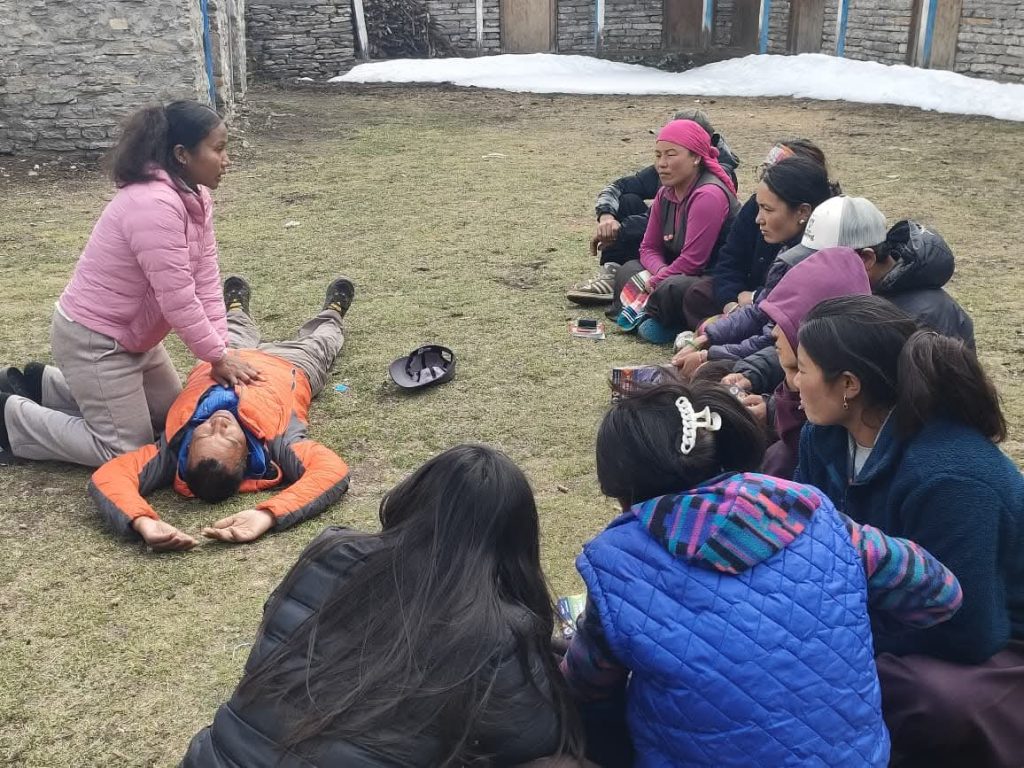
Such inclusive participation ensured that the skills learned would reach multiple layers of the community, allowing a more coordinated and effective response during emergencies affecting trekkers, workers, and local entrepreneurs.
Collaborative Effort for Safety
The training was jointly organized by the Trekking Agencies’ Association of Nepal (TAAN) and the Sustainable Tourism Project (STP), a collaborative initiative of the Nepal Tourism Board and the United Nations Development Programme (UNDP). By combining technical expertise with local knowledge, the program aimed to create a sustainable model for community-based search and rescue operations in high-altitude trekking areas.
Mr. Lal Bahadur Jirel, a certified SAR instructor, led the sessions, providing hands-on guidance and simulations. Under the supervision of the Chairperson of Chum Nubri Rural Municipality, the Ward No. 1 committee locally coordinated logistics, ensuring that the training was tailored to the needs and realities of the communities along the trail.
Skills Development and Training Focus
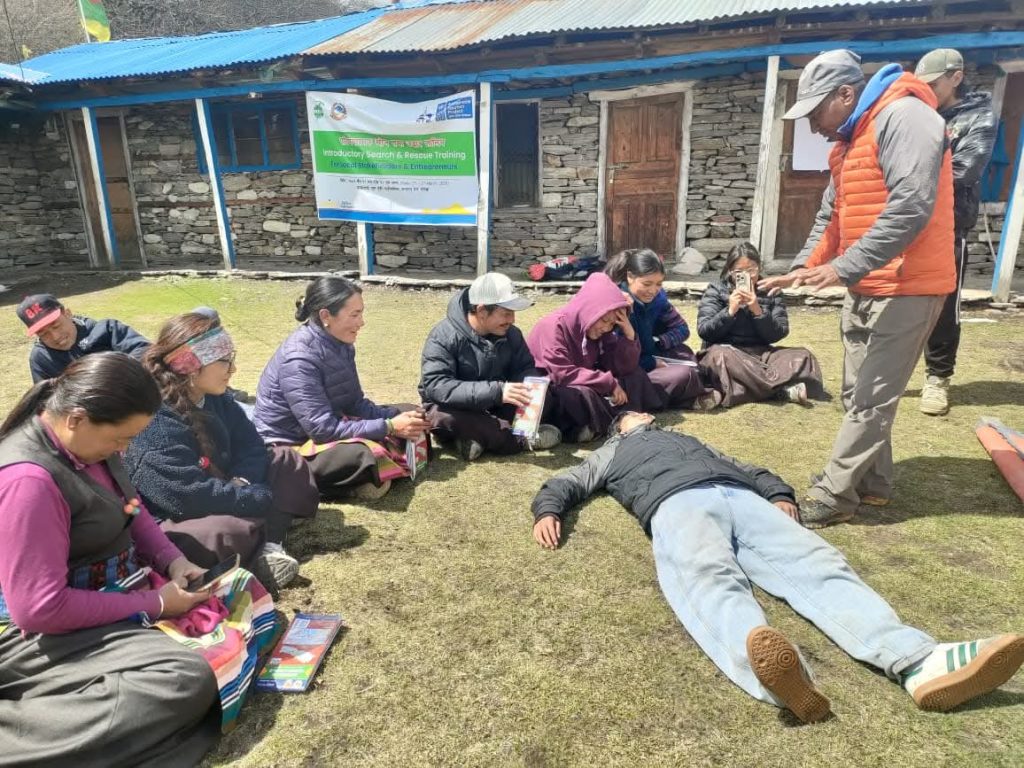
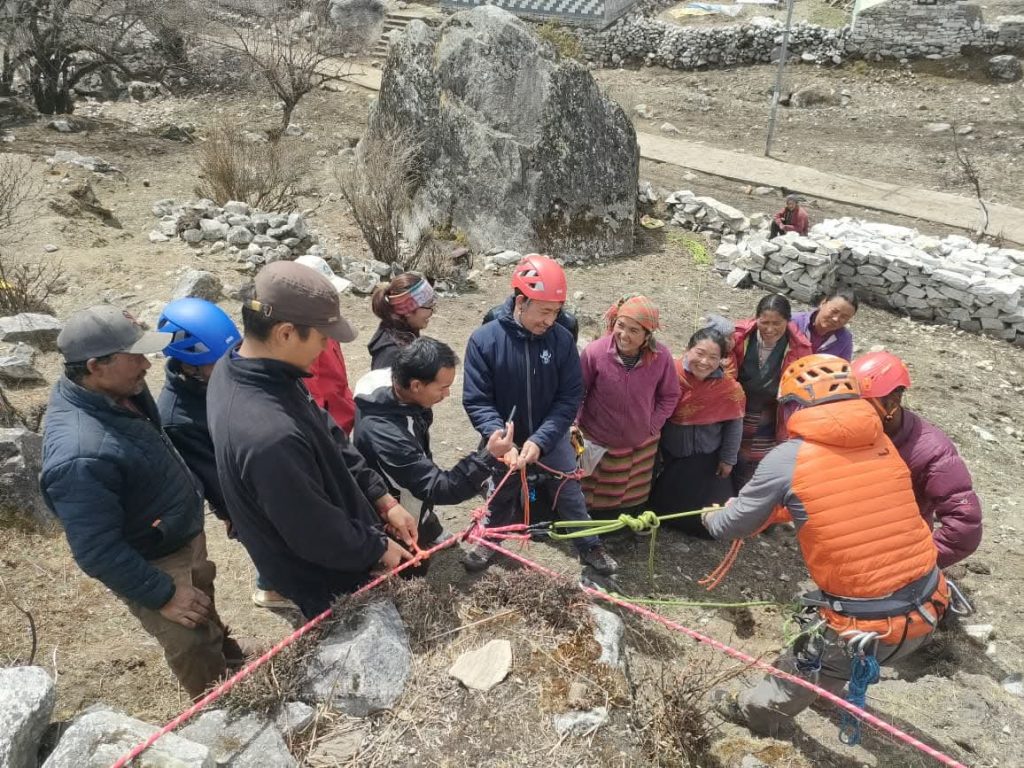
The program focused on equipping participants with essential skills in search operations, rescue procedures, and emergency life-saving techniques. Trainees received instructions on the safe use of rescue ropes, carabiners, helmets, and first aid procedures, alongside theoretical guidance on risk assessment and disaster preparedness in the mountainous terrain.
Practical exercises included mock rescue drills along challenging sections of the trail, emphasizing rapid response and team coordination. The inclusion of local guides and yak herders, who are often the first responders during trekking emergencies, was crucial in making the training contextually relevant and immediately applicable.
Equipment Provision and Community Preparedness
At the conclusion of the training, the Ward No. 1 Office of Chum Nubri Rural Municipality was provided with essential SAR equipment, including rescue ropes, safety helmets, first aid kits, and carabiners. This equipment will support ongoing local efforts to respond to emergencies effectively, ensuring safer trekking experiences for both visitors and residents.
The training not only enhanced technical skills but also reinforced the importance of collaboration between local authorities, community groups, and tourism stakeholders. By empowering local actors with the knowledge and tools to act decisively during emergencies, the initiative contributes to both tourism safety and community resilience in the Manaslu region.
Strengthening Local Resilience
Officials emphasized that community-based SAR training is vital for remote trekking areas like the Manaslu Circuit, where immediate access to professional rescue services can be limited due to difficult terrain and weather conditions. By building local capacities, the region is better prepared to prevent accidents from escalating into serious incidents, safeguarding both lives and livelihoods dependent on trekking tourism.
The successful completion of this training marks a milestone in sustainable tourism development, aligning with Nepal’s broader vision of safe, community-driven trekking experiences that promote both adventure and responsibility.