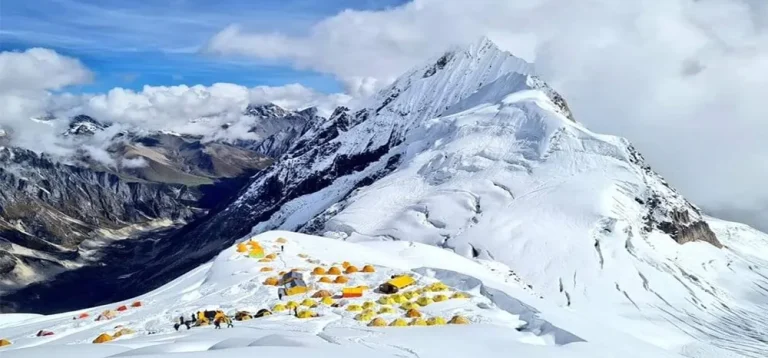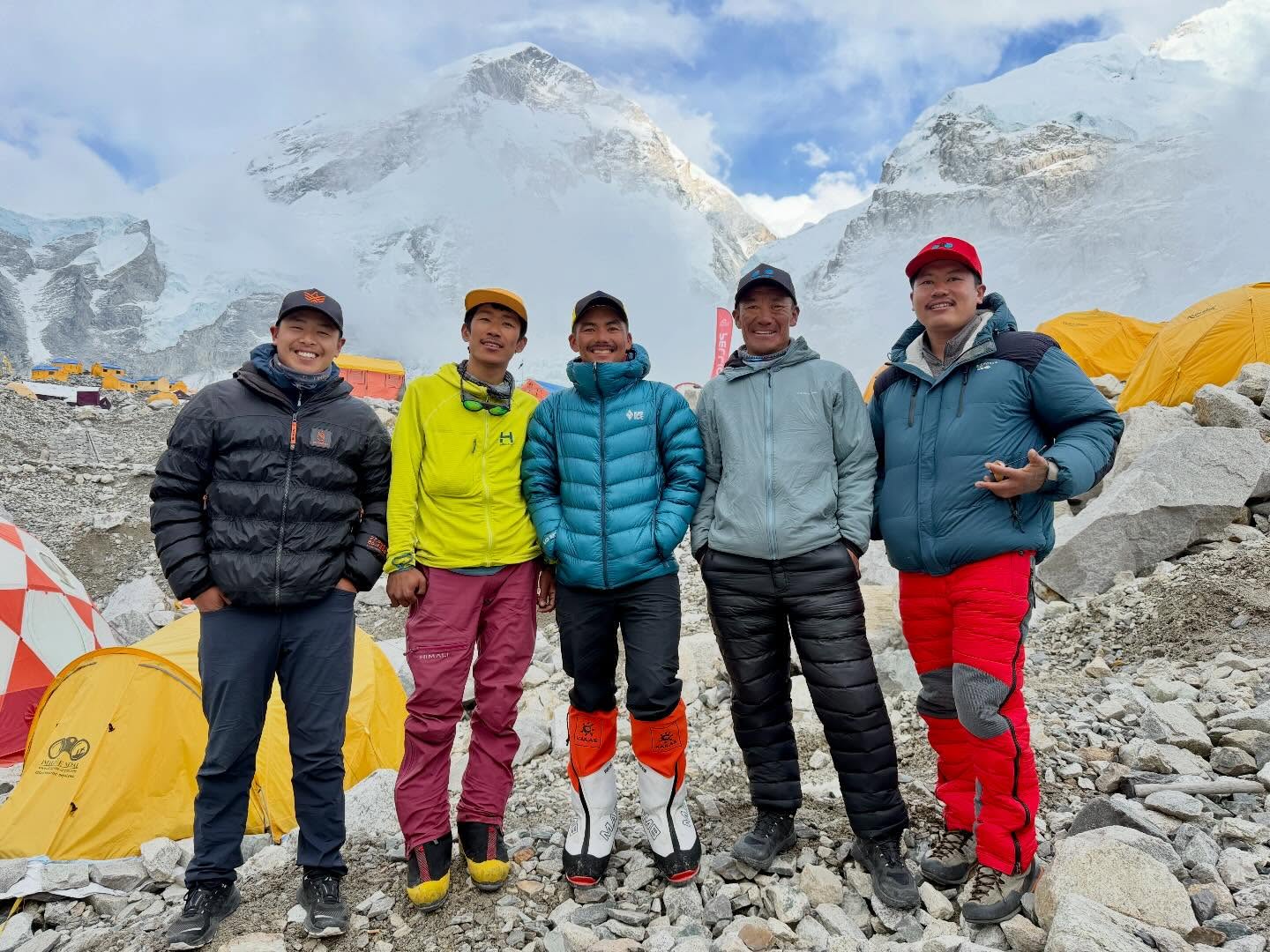
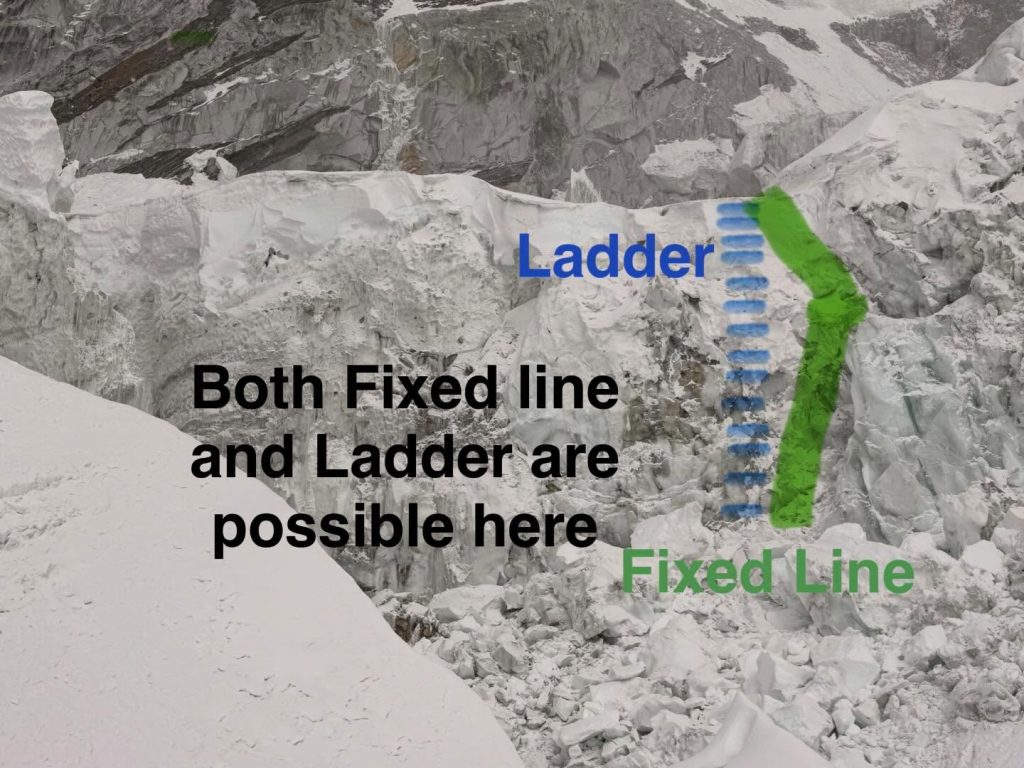
A five-member Sherpa team from Imagine Nepal, Elite Expeditions, and Altipro, along with Polish climber Bartek Ziemski, successfully advanced above a disputed ice blockage in the Khumbu Icefall on Sunday, marking the most significant progress on the stalled Everest climbing route since the season’s delay.
The team installed ladders and fixed ropes toward Camp I, despite being forced to turn back just short of the camp due to a sudden whiteout. Expedition operators say the route to Camp I is now nearly complete, offering renewed optimism for the ongoing climbing season.

Safer Conditions Reported Despite Earlier Concerns
According to Imagine Nepal, the team reported unexpectedly stable conditions in the section above the ice blockage, contradicting earlier concerns raised by other inspections. “All climbers who have been above the ice blockage think the route is safe,” the company stated, adding that “Mother Qomolangma has shown us a path to make a safe climb.” Drone footage captured during the operation is said to indicate alternative and safer routing options through the challenging icefall section.
Experienced Sherpa Team Leads Technical Operation
The expedition team included some of the most experienced high-altitude climbers in Nepal. The Sherpa members were:
- Pemba Waiba, drone pilot
- Dawa Tenzing Sherpa, 30-year Everest veteran and first winter K2 summiteer
- Saila Mingma of Altipro
- Dipen Gurung, IFMGA aspirant guide
- Phuri Kitar of Elite Expeditions
Their coordinated effort focused on assessing safer passages and securing fixed lines through unstable ice formations.
Whiteout Halts Progress Near Camp I
Despite successful ladder installation and rope fixing, the five-member Sherpa team from Imagine Nepal, Elite Expeditions, and Altipro, was forced to retreat just below Camp I due to a sudden whiteout condition that reduced visibility to near zero. However, expedition operators emphasized that the physical progress made before the weather change significantly improves the chances of opening the route fully in the coming days.
Ongoing Debate Over Icefall Safety and Serac Risk
The breakthrough comes amid ongoing uncertainty at Everest Base Camp, where hundreds of climbers have been waiting due to a large hanging serac blocking the standard route below Camp II. Earlier, a joint inspection involving 17 senior mountain guides and eight icefall doctors from the Sagarmatha Pollution Control Committee (SPCC) and Expedition Operators Association of Nepal (EOAN) had concluded that no safe alternative route exists until the serac collapses naturally.
SPCC field officials reported that the serac gap has widened from approximately three feet to eight feet, suggesting a possible natural collapse in the near future. However, experts remain divided over the timeline and safety implications.
Calls for Patience and Ground-Based Decision Making
Field coordinators have urged stakeholders to rely on on-site assessments rather than remote speculation. “Rather than making silly statements from Kathmandu, all need to know the ground situation here on the mountain,” said expedition director Lakpa Sherpa and SPCC base camp manager Tshering Tenzing Sherpa, stressing the need for patience. They emphasized that conditions on the mountain are highly dynamic and require continuous monitoring before final route decisions are made.
Authorities Explore Flexible Climbing Season Options
The Expedition Operators Association of Nepal (EOAN) has intensified coordination with government agencies to address the ongoing route delay. A high-level coordination committee led by the Director General of the Department of Tourism, including EOAN, the Nepal Mountaineering Association, and SPCC, is currently reviewing possible solutions.
EOAN General Secretary Rishi Ram Bhandari stated that ensuring a safe climbing season remains the top priority. Options under discussion include airlifting logistics support, deploying additional rope-fixing Sherpas to Camp II, and potentially extending the official climbing season beyond the traditional May 29 deadline. He also warned that continued delays could lead to congestion during peak climbing windows and urged climbers to focus on acclimatization while awaiting final route clearance.

Icefall Doctors Defend Safety Protocols
The Department of Tourism has authorized a separate EOAN-led guiding team to work alongside SPCC icefall doctors, aiming to streamline route preparation and reduce delays. SPCC officials defended their work, stating that icefall doctors follow strict safety protocols when placing ladders and fixing ropes in highly unstable terrain. “There is no ground for blaming icefall doctors for delays,” said SPCC representatives, emphasizing that their priority remains climber safety over speed.
Cautious Optimism as Everest Season Builds Momentum
With the latest ladder-fixing operation offering renewed hope, attention now shifts to whether weather conditions will stabilize and whether the hanging serac will collapse naturally to open a safer route. While uncertainty remains, the recent progress in the Khumbu Icefall has injected cautious optimism into the Everest climbing season, as teams continue balancing urgency with safety on the world’s highest peak.