Nepal has urged the international community to actively practice the teachings of Lord Buddha as a pathway to achieving global peace, harmony, and cooperation, emphasizing that Buddha’s timeless wisdom offers practical solutions to today’s rising conflicts, inequalities, and environmental challenges.
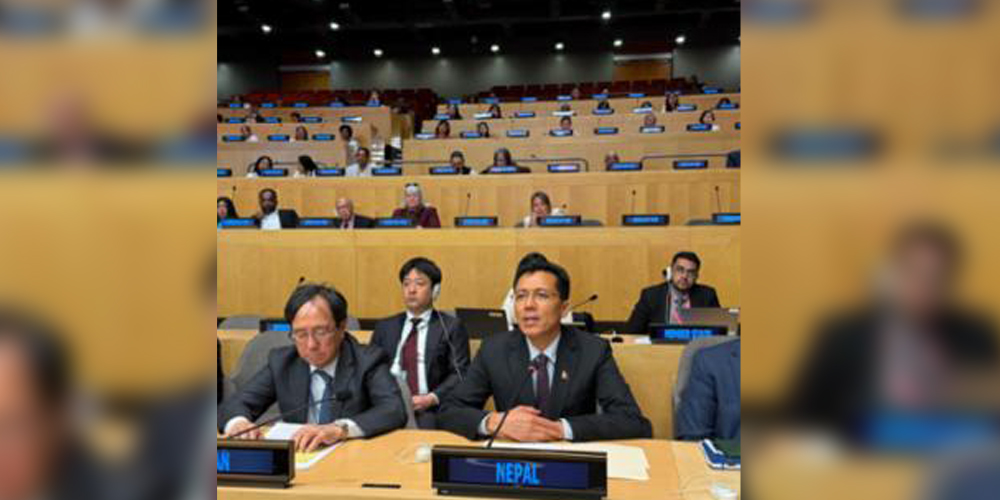
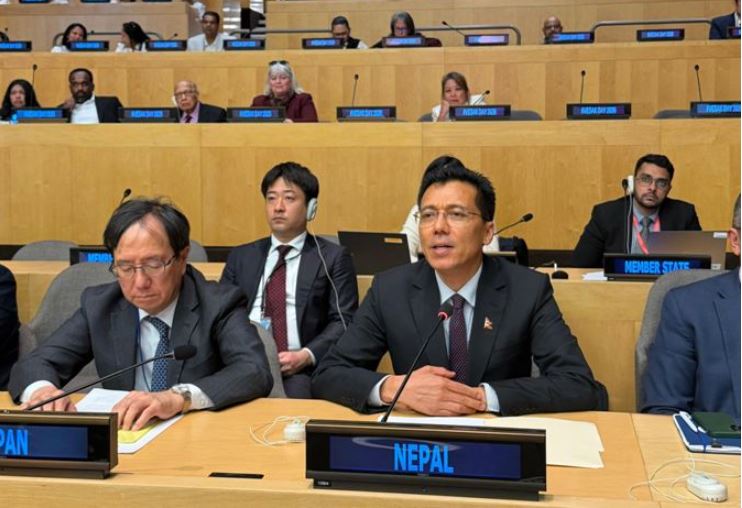
The appeal was made by the Permanent Representative of Nepal to the United Nations, Ambassador Lok Bahadur Thapa, while addressing the Commemorative Event of the International Day of Vesak 2026 held at the United Nations Headquarters in New York, United States, on Monday. The event was jointly organized by the Permanent Missions of Sri Lanka and Thailand, bringing together diplomats, religious leaders, and representatives from various member states.

Lumbini Highlighted as Global Symbol of Peace
In his address, Ambassador Thapa emphasized the global significance of Lumbini, the birthplace of Lord Buddha, describing it as a powerful symbol of peace, spiritual awakening, and shared human values. He noted that Lumbini continues to attract pilgrims and scholars from around the world, serving as a living reminder of Buddha’s message of compassion and non-violence.
Thapa stressed that the teachings of Lord Buddha remain deeply relevant in the modern era, particularly in a world increasingly affected by armed conflicts, social division, economic inequality, and climate-related crises. He highlighted that Buddhist principles such as compassion, mindfulness, unity, and wisdom can guide humanity toward more peaceful and sustainable ways of living.
Call for Inner Peace and Global Solidarity
“Peace begins within and must be consciously cultivated,” Ambassador Thapa said during his remarks, underscoring the importance of individual transformation as the foundation for global harmony. He further called on nations to strengthen solidarity, uphold human dignity, promote justice, and enhance international cooperation in addressing shared global challenges.
According to him, the teachings of Buddha are not limited to religious doctrine but represent universal values that can guide policymaking, governance, and interpersonal relations. He added that in a time when divisions and mistrust are increasing worldwide, the need to return to these principles has become more urgent than ever.
Vesak: A Global Reflection on Buddhist Values
The International Day of Vesak, observed annually at the United Nations, is recognized as a moment for reflection on the birth, enlightenment, and passing away of Lord Buddha. The United Nations General Assembly, through Resolution 54/115, declared the full moon day of May as the International Day of Vesak, acknowledging its universal relevance beyond religious boundaries.
Officials noted that Vesak is not merely a religious celebration but a global call to action for peace, compassion, and sustainable development. The event aims to encourage dialogue among civilizations and promote mutual understanding among diverse cultures and faiths.
Religious Leaders and Member States Participate
This year’s commemorative event featured a high-level segment with statements from participating member states, religious blessings, and thematic discussions on peacebuilding. A special address was delivered by Most Venerable Bhikkhu Paññakāra, who is widely recognized for leading a 2,300-mile “Walk for Peace,” symbolizing dedication to non-violence and global harmony.
Speakers throughout the program highlighted the relevance of Buddhist teachings in addressing modern global challenges such as conflict resolution, climate change, and social inequality. They emphasized that Buddha’s message continues to serve as a moral and philosophical foundation for peaceful coexistence among nations.

Nepal Reaffirms Commitment to Peace and Buddhist Heritage
Nepal, the birthplace of Lord Buddha, reiterated its commitment to promoting Buddhist heritage and values on the global stage. Officials stressed that the country views its cultural and spiritual legacy as a responsibility to contribute to international peace efforts.
By calling for the practical application of Buddha’s teachings, Nepal aims to reinforce the idea that peace is not only a diplomatic goal but also a personal and collective responsibility. The message delivered at the United Nations reflects Nepal’s broader vision of positioning itself as a bridge of peace, dialogue, and spirituality in the global community. The commemorative event concluded with a shared commitment among participants to uphold the principles of Vesak and work collectively toward a more peaceful, just, and compassionate world.