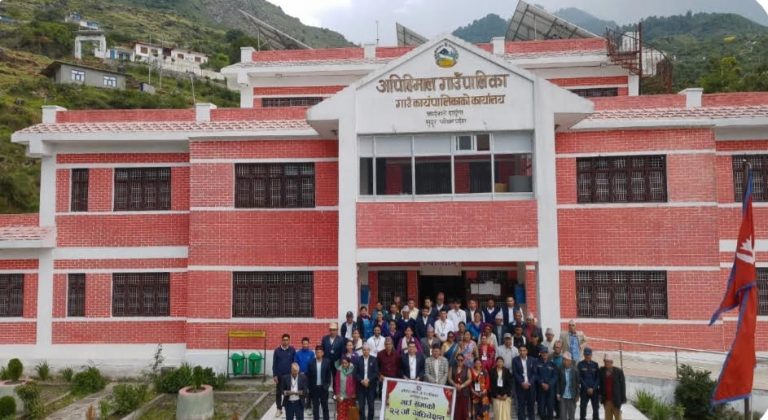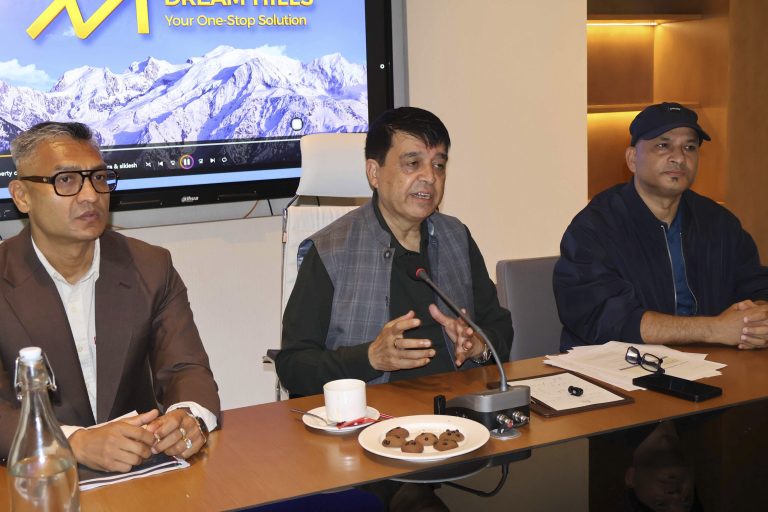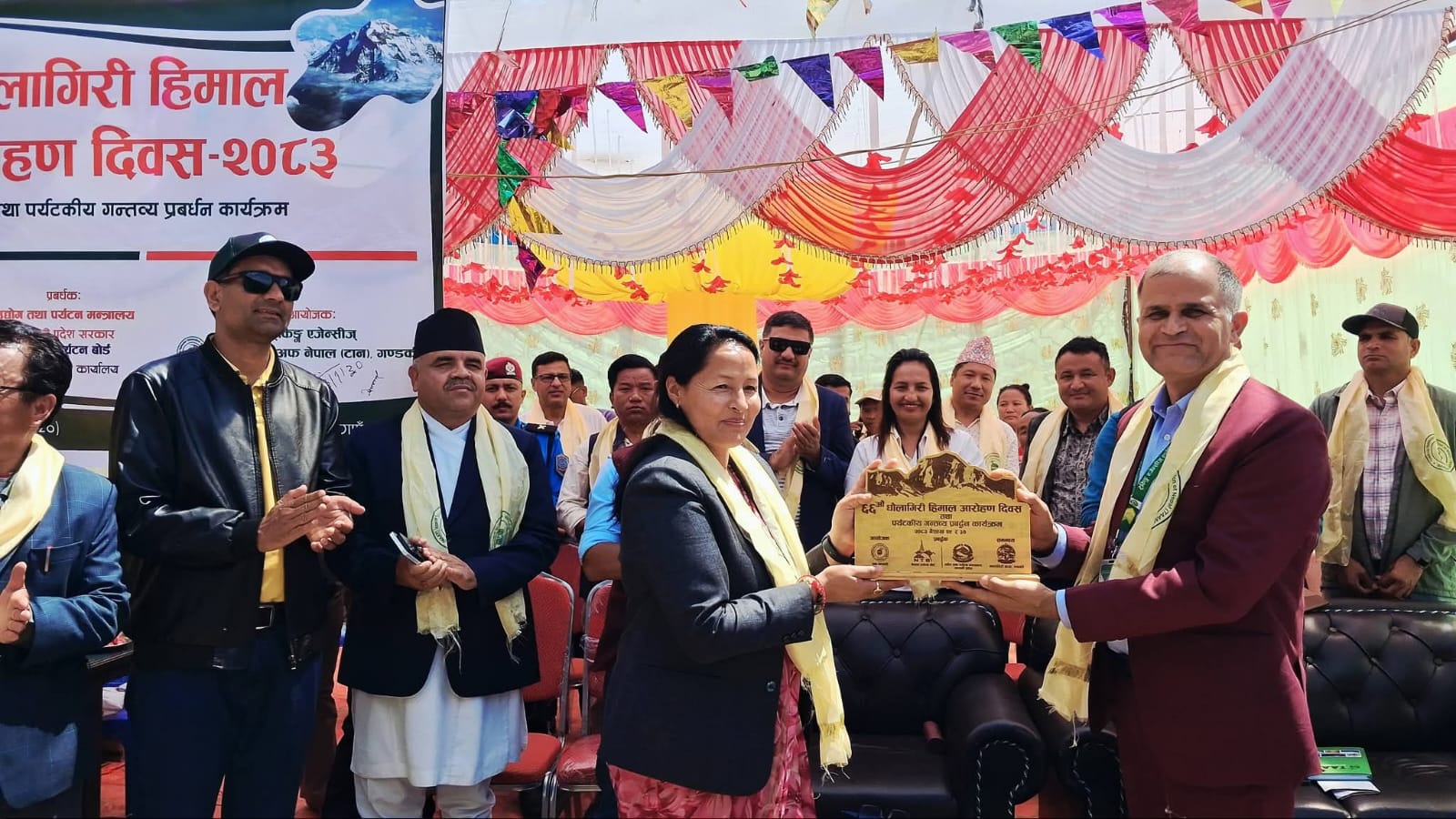
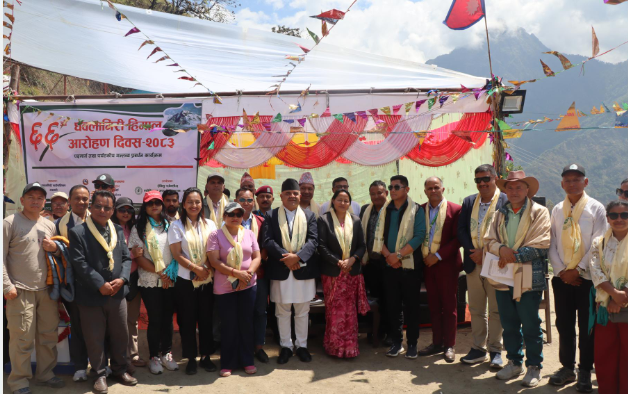
The 66th anniversary of the first successful ascent of Dhaulagiri was celebrated with various programmes in Mudi of Dhaulagiri Rural Municipality-4 in Myagdi district on Wednesday. The event, organized by the Trekking Agencies’ Association of Nepal Gandaki with support from tourism-related agencies, brought together tourism entrepreneurs, government officials, mountaineering experts, local representatives, and conservation stakeholders to discuss the future of mountain tourism and conservation in the Dhaulagiri region.
Mt. Dhaulagiri was first successfully climbed on May 13, 1960, by an international expedition team led by Swiss-Austrian climbers. Austrian mountaineer Kurt Diemberger became one of the first climbers to summit the peak along with Peter Diener, Ernst Forrer, Albin Schelbert, Nima Dorje, and Nawang Dorje.
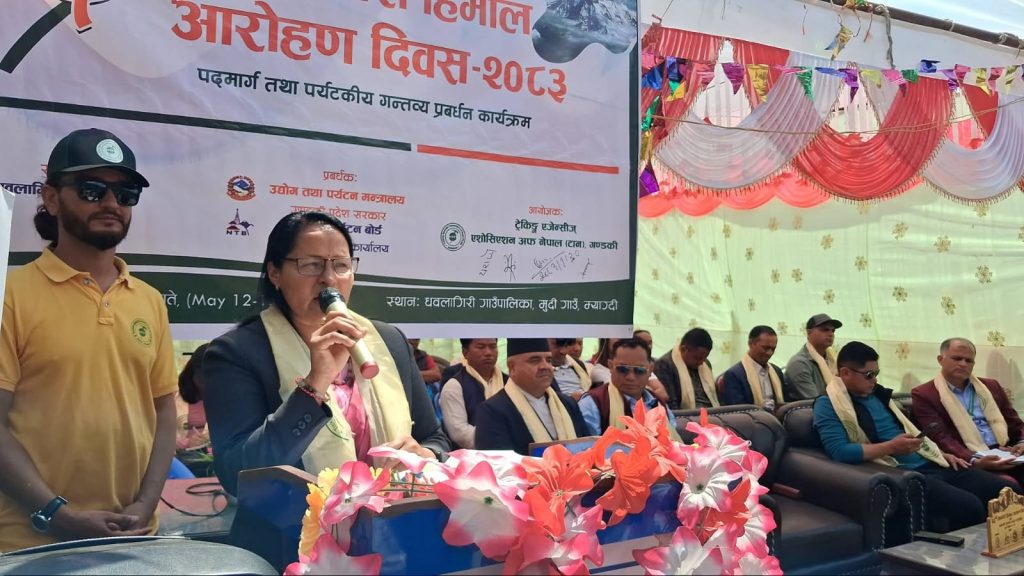
Celebration Held at the Foot of Dhaulagiri
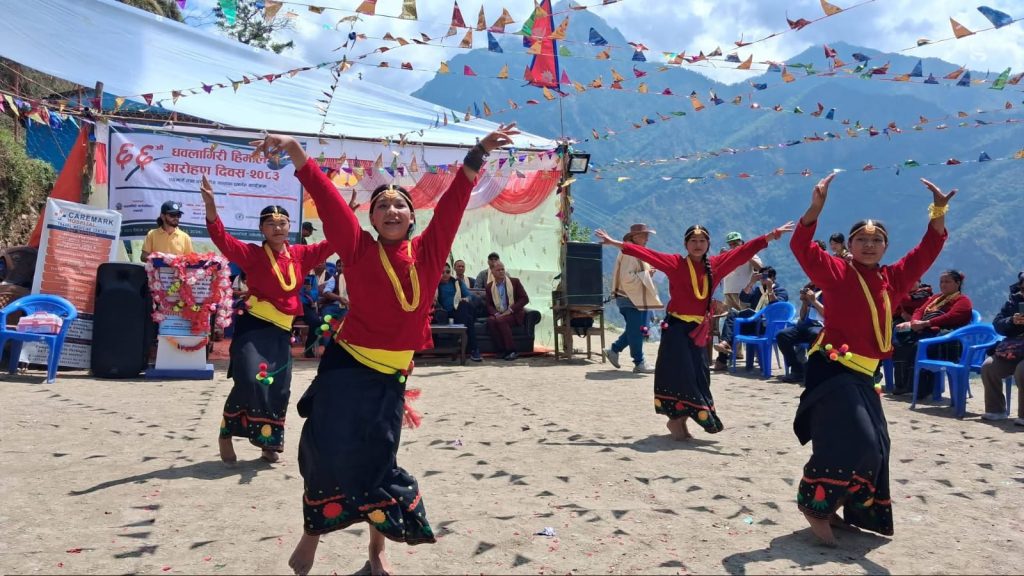
For the first time, the Dhaulagiri Ascent Day was celebrated in the geographical area where the mountain is actually located. Previous celebrations had mostly been limited to Kathmandu and Pokhara due to limited accessibility and coordination.
The event was organized in Mudi village, situated along the Dhaulagiri trekking route, with programmes focused on promoting trekking trails, homestays, local tourism, and honoring individuals contributing to mountain tourism development.
Speaking at the programme, Dhaulagiri Rural Municipality Chairperson Prem Prasad Pun said holding the celebration in the mountain’s own region was important for strengthening the identity of Dhaulagiri and highlighting Myagdi as a major Himalayan tourism destination.
“Earlier, the Dhaulagiri Ascent Day was mainly celebrated in Pokhara and Kathmandu due to a lack of access and initiative,” he said. “This programme has successfully conveyed the message that Dhaulagiri belongs to Myagdi and that the region itself carries immense tourism potential.”
Concerns Raised Over Declining Trekking Activities
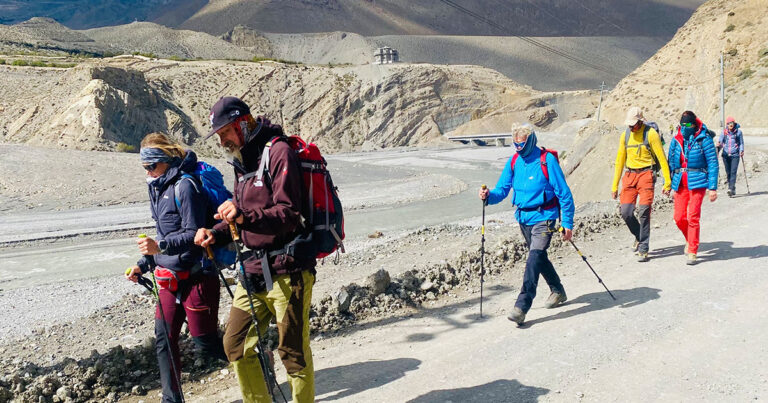
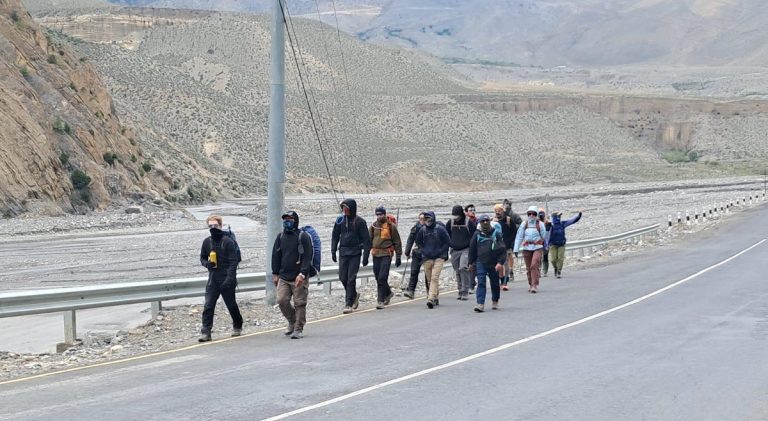
During the programme, several speakers expressed concern about the gradual decline of foreign trekkers along traditional trekking routes due to the expansion of motor roads and increasing helicopter access to mountain base camps.
Local tourism entrepreneurs and community leaders said the famous Dhaulagiri Circuit Trek has been losing its charm as roads have reached several parts of the traditional trekking trail. They also noted that climbers increasingly prefer direct helicopter access to base camps, reducing the economic benefits previously enjoyed by local communities along trekking routes.
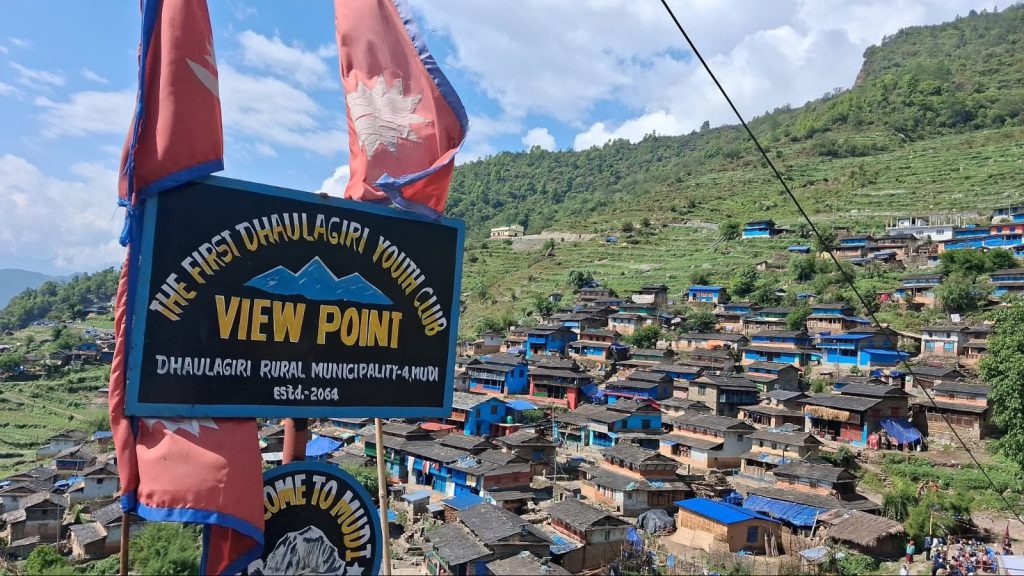
Ward Chairperson Yam Prasad Gharti and tourism entrepreneur Ganesh Gharti stated that many sections of the classic Dhaulagiri Circuit have become deserted because of changing travel patterns and inadequate tourism infrastructure. Speakers stressed the need to develop alternative trekking routes, diversify tourism products, and improve accommodation and safety facilities to revive tourism activity in the region.
Calls for Conservation Area and Sustainable Tourism
At the event, tourism stakeholders strongly advocated for the establishment of a dedicated Dhaulagiri Conservation Area similar to the successful model of the Annapurna Conservation Area Project. ACAP Chief Rabin Kadariya stated that the mountain possesses enormous tourism and biodiversity potential, which could be effectively developed through a conservation-based tourism model. “Like Annapurna, Dhaulagiri also requires a conservation-focused approach to preserve nature while promoting sustainable tourism,” he said.
However, some local representatives expressed concern that conservation regulations should not restrict local communities from utilizing natural resources essential for their livelihoods. Gandaki Province Assembly member Resham Jugjali emphasized the need to develop tourism plans targeting domestic tourists and alternative trekking routes. He also highlighted the importance of balancing infrastructure development with environmental conservation. “People naturally want road access in their villages, but at the same time we must protect trekking routes and tourism-based livelihoods,” he said.
Climate Change Impact Highlighted
Gandaki Province Minister for Industry and Tourism Yashoda Rimal stressed the importance of promoting Dhaulagiri and other Himalayan destinations internationally while also addressing climate change challenges affecting Nepal’s mountains.
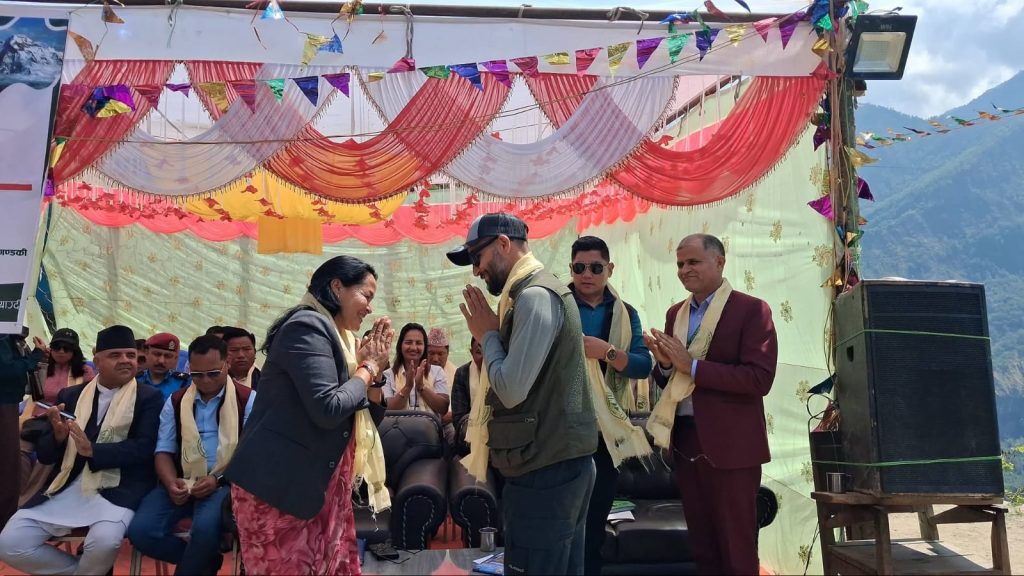
“The impacts of climate change are clearly visible in our mountains,” Minister Rimal said. “The existence of human civilization is closely linked to the protection of the Himalayas.” She added that effective promotion of Gandaki Province’s Himalayan destinations could significantly improve local livelihoods by increasing tourist arrivals and generating employment opportunities.
Government Revenue and Climbing Statistics
According to the Department of Tourism Nepal, the government has collected more than Rs 13.45 million in royalty fees from Dhaulagiri climbing permits during the current climbing season. This season, a total of 30 climbers, including 18 men and 12 women from four expedition teams, received permits to climb Dhaulagiri. Last season, 36 climbers had obtained climbing permits for the mountain. Department records show that more than 700 climbers have successfully summited Dhaulagiri over the past 66 years since its first ascent in 1960.
Tourism Stakeholders Urge Infrastructure and Safety Improvements
Speakers from tourism organizations, including Nepal Tourism Board, Pokhara Tourism Council, and TAAN Gandaki, stressed the need for detailed feasibility studies, infrastructure development, improved security, and integrated tourism promotion connecting Dhaulagiri, Dhorpatan, Dolpa, and nearby trekking regions. TAAN Gandaki also honored mountain tourism activist Krishna KC during the programme in recognition of his contribution to Nepal’s mountain tourism sector.
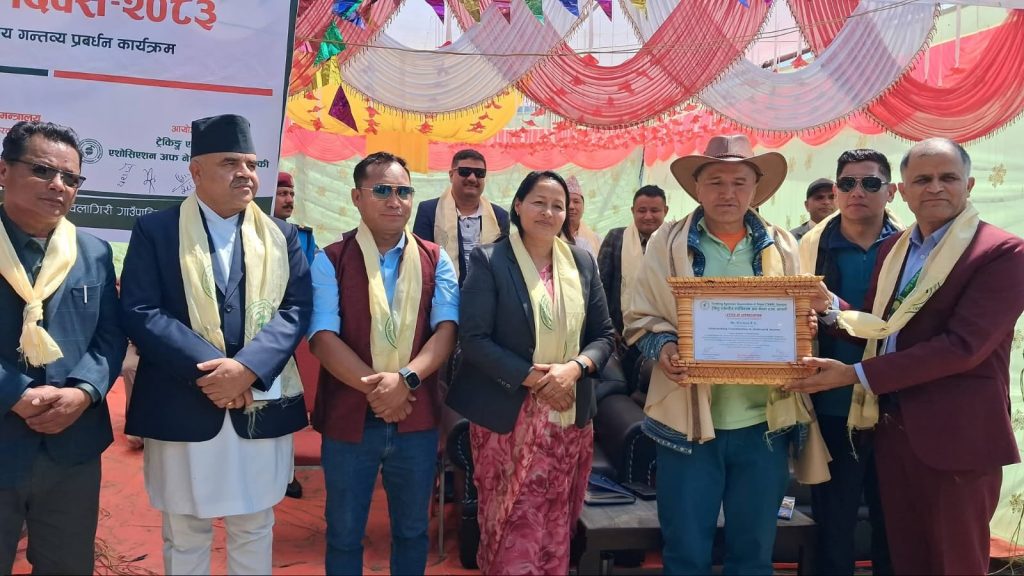
TAAN Gandaki Chairperson Krishna Acharya suggested that a “Dhaulagiri Conservation Area Project” could be developed under a modified version of the Annapurna conservation model, adding that detailed project reports and tourism development plans should now move forward systematically.
The celebration concluded with renewed calls for collaboration among government agencies, tourism entrepreneurs, local communities, and conservation groups to preserve Dhaulagiri’s natural heritage while transforming the region into a globally recognized mountain tourism destination.