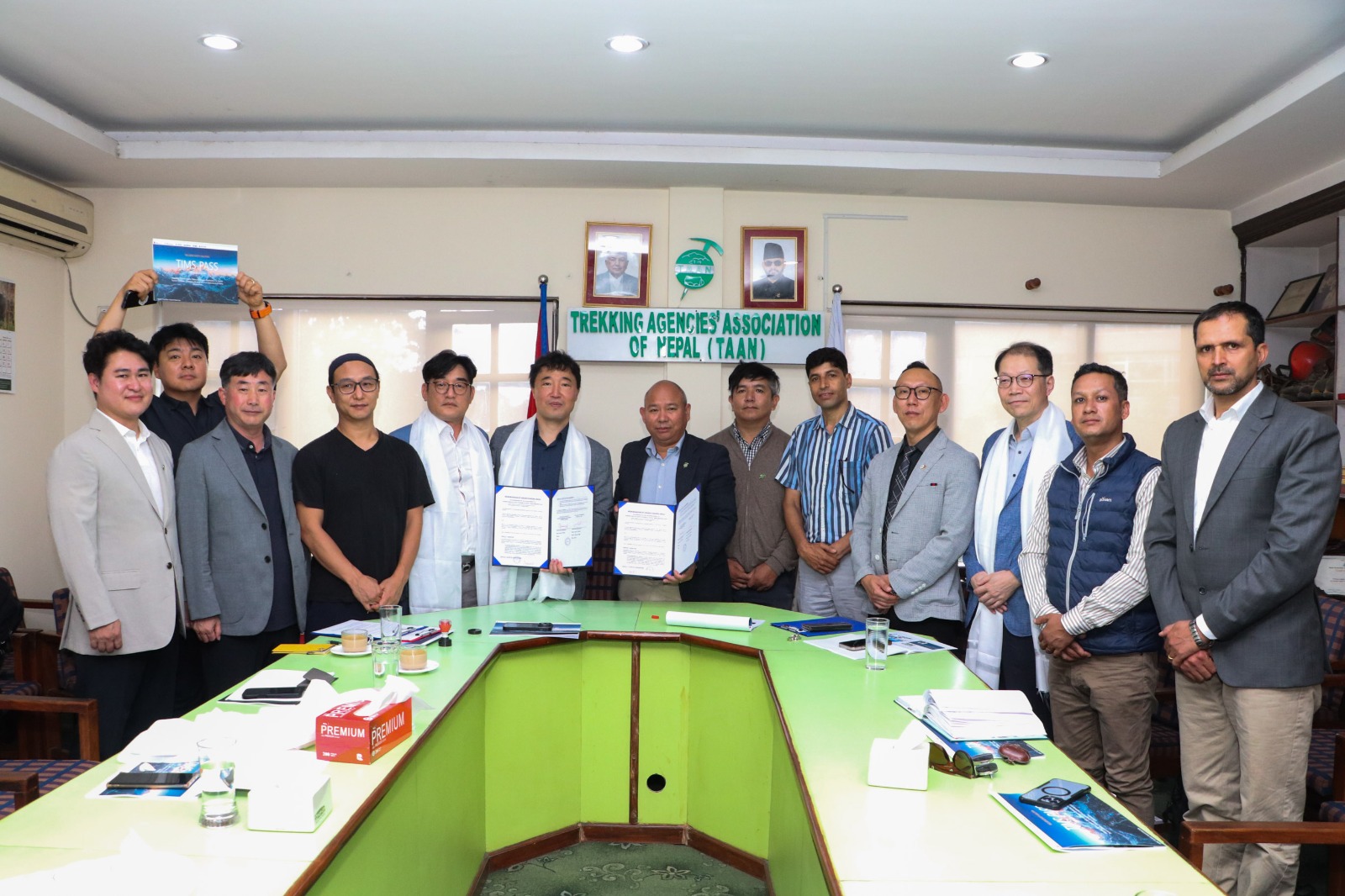
In a major step toward modernizing Nepal’s trekking and mountain tourism sector, the Trekking Agencies’ Association of Nepal (TAAN) has signed a Memorandum of Understanding (MoU) with South Korean technology company IBL Co. Ltd. to introduce an advanced AI-powered digital safety and tracking system aimed at making trekking and mountain tourism in Nepal safer, more predictable, and risk-free.
The agreement focuses on deploying the Edgetrek Digital Safety System, a smart technology platform that uses Artificial Intelligence (AI) to provide real-time tracking, risk prediction, tourist monitoring, and faster rescue coordination in trekking and high-altitude tourism activities.
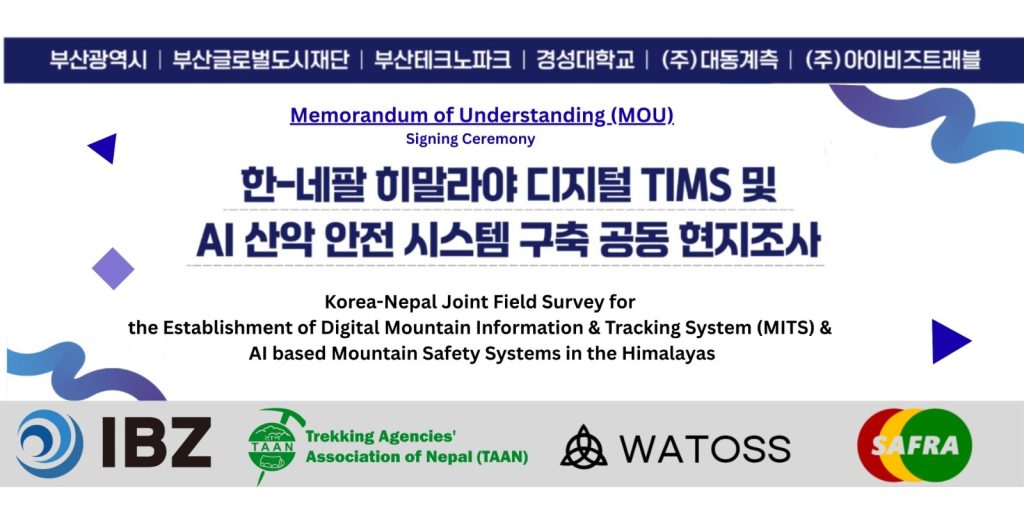
MoU Signed Between TAAN and South Korean Technology Partner
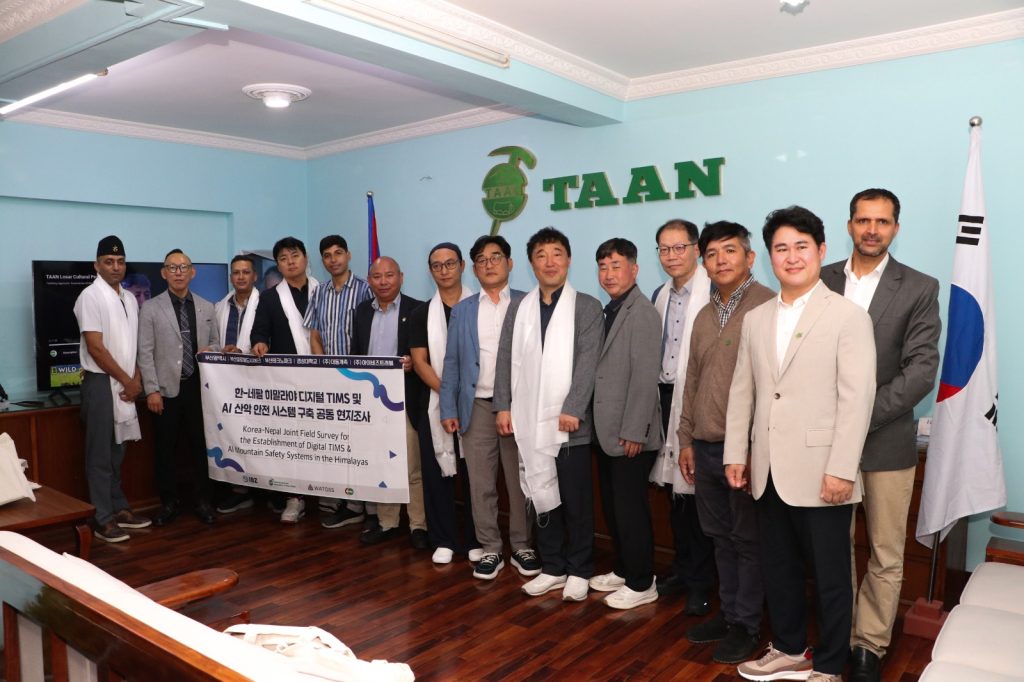
The agreement was formally signed on behalf of TAAN by General Secretary Sonam Gyaljen Sherpa, while Chief Executive Officer of IBL Co. Ltd., Su Do Kim, signed on behalf of the South Korean company.
The signing ceremony was coordinated by TAAN Assistant Treasurer Lakpa Temba Sherpa as part of a broader Korea-Nepal collaboration initiative focused on developing smart tourism technologies for the Himalayan region.
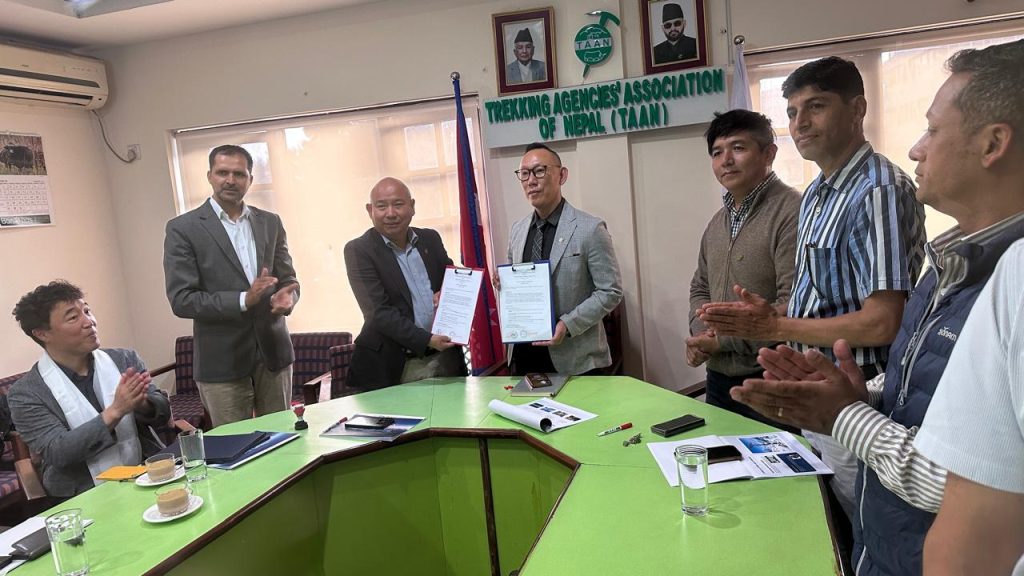
The initiative has been introduced under the joint field survey program titled “Korea-Nepal Joint Field Survey for the Establishment of Digital Mountain Information & Tracking System (MITS) and AI-Based Mountain Safety Systems in the Himalayas.”
AI Technology to Improve Trekker Safety and Emergency Response
Under the agreement, TAAN and its Korean technology partners will work together to pilot a smart software-based safety system on one selected trekking route in Nepal. The technology will help track trekkers, guides, and support staff in real time while using AI to predict potential risks during expeditions.
The system will generate a real-time digital database of travelers, monitor trekking movement, issue early warning alerts regarding possible dangers, and significantly improve emergency rescue coordination in mountain regions.
Officials said the technology is expected to make trekking routes safer while improving Nepal’s disaster preparedness capabilities in high-risk mountain tourism destinations.
Pilot Testing to Begin Through Government and Private Sector Coordination
According to the agreement, the pilot phase will be implemented in coordination with key stakeholders including the Ministry of Culture, Tourism and Civil Aviation, Department of Tourism Nepal, Nepal Tourism Board, local governments in trekking destinations, private tourism businesses, research institutions, and tourism entrepreneurs.
Korean Experts Join Strategic Himalayan Tourism Safety Initiative
If the pilot project proves effective, TAAN plans to seek necessary government approvals and gradually implement the technology more broadly among its member trekking companies. Orientation programs and technical training will also be provided to ensure effective adoption of the new system.
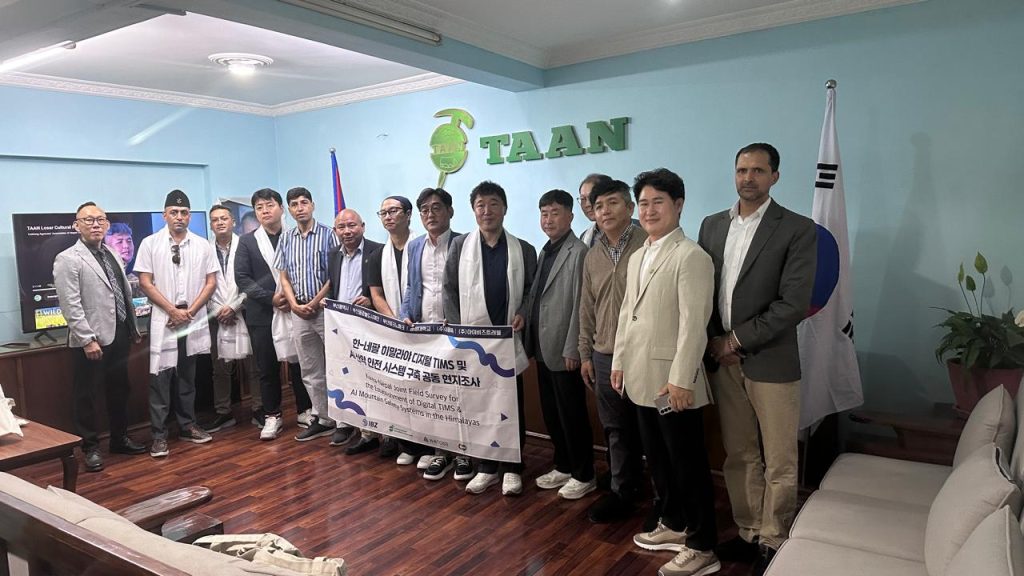
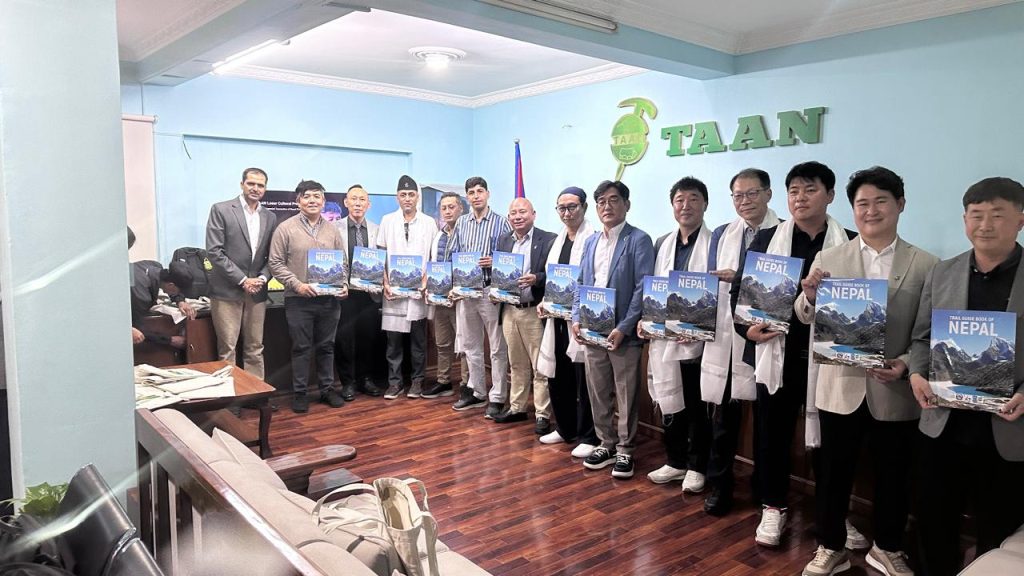
The signing ceremony was attended by several South Korean technology and academic experts, including IBL Co. Ltd. Vice President Dr. James Park, Kyungsung University Electronics Engineering Department Head Dr. Park Jung Sik, Korea Disaster and Safety Industrial Technology Research Association Board Chair Noh Hee Jung, and Korea Association in Nepal President Cha Seungwon.
TAAN Chief Executive Officer Ram Chandra Sedai said the association will move forward by closely coordinating with government agencies, destination stakeholders, TAAN member companies, and technology experts to implement the system effectively.
Technology Expected to Strengthen Nepal’s Adventure Tourism Competitiveness
Industry experts believe the integration of AI-powered safety technologies could transform Nepal’s trekking industry by significantly improving visitor confidence, reducing risks in remote mountain regions, and strengthening Nepal’s position as one of the world’s safest and most technologically advanced adventure tourism destinations.
The initiative also aligns with Nepal’s broader efforts to modernize tourism infrastructure and improve international confidence in Himalayan expeditions.