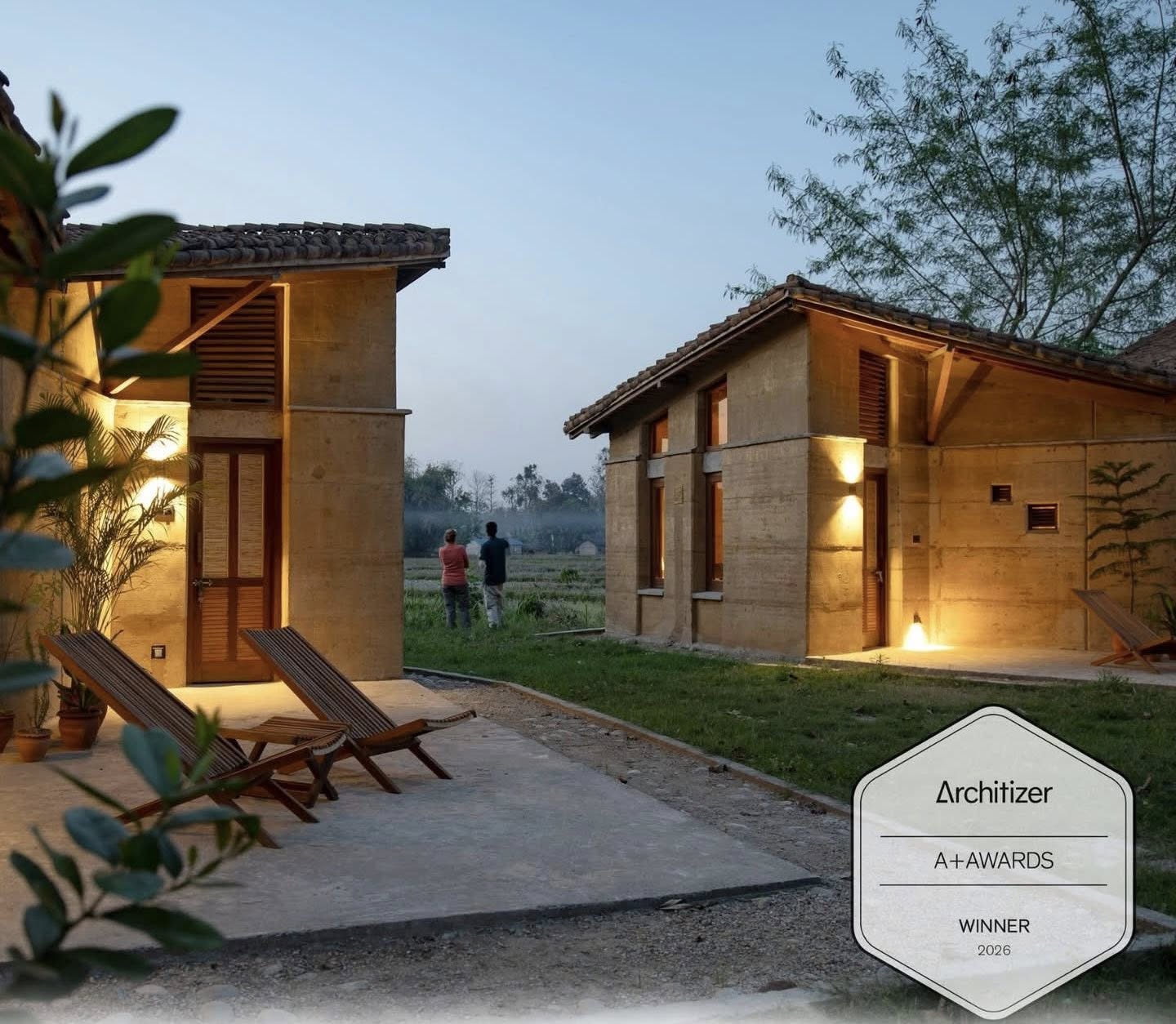
The Tiger Track Ecolodge, located in Bardiya, Nepal, has been honored with the globally recognized Architizer A+ Awards 2026, one of the world’s most prestigious architecture accolades. The eco-lodge secured the “Popular Choice Winner” title under the category of Sustainable Hospitality Building, marking a significant achievement for Nepali architecture on the international stage. The project has drawn global attention for its unique blend of Tharu indigenous architectural heritage, environmental sustainability, and community-centered tourism development.

A Landmark in Sustainable Hospitality Design
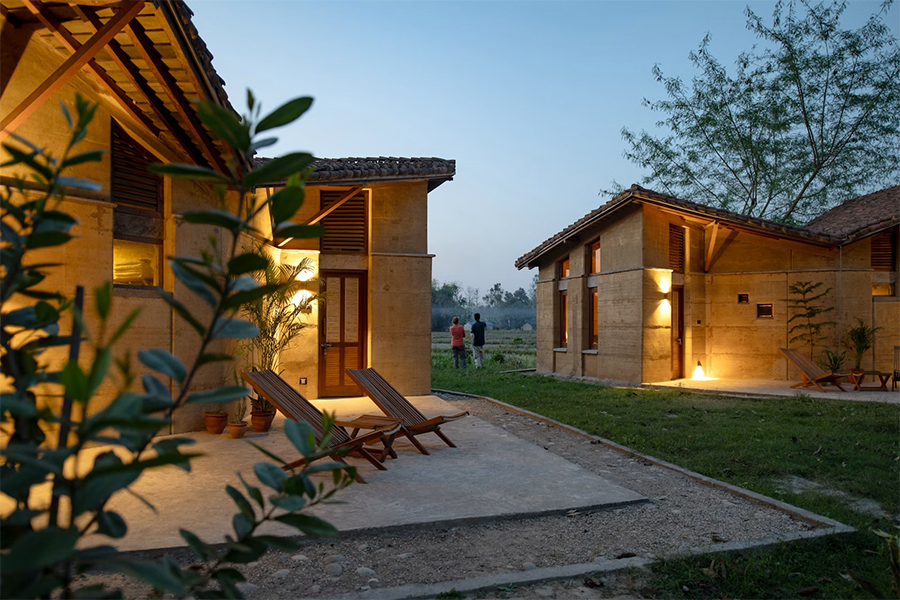
Designed by the non-profit organization Building Bureau, the Tiger Track Ecolodge stands as a model of eco-friendly hospitality infrastructure. Completed in 2026, the structure is located near the Khata Corridor, which connects Bardiya National Park in Nepal with the Katarniaghat Wildlife Sanctuary in India, a critical biodiversity landscape. Spanning approximately 4,250 square feet, the lodge has been inspired by traditional Tharu architecture, incorporating local cultural aesthetics with modern engineering solutions.
Instead of conventional concrete-heavy construction, the project uses rammed earth walls, earthquake-resistant steel reinforcement, and roofing made from reclaimed terracotta tiles sourced from old structures, showcasing a low-carbon and climate-responsive design approach.
Reviving Indigenous Culture and Community Livelihoods
The Bardiya region has a deep historical connection with the Tharu community, many of whom were displaced during the establishment of Bardiya National Park in the 1970s. Today, a large portion of the population residing in buffer zones depends on forest resources for their livelihood.
Against this backdrop, the Tiger Track Ecolodge was established to create a balance between wildlife conservation and community empowerment. The initiative aims to reduce human-wildlife conflict while strengthening local economic opportunities through tourism.
The project was initiated under the leadership of Hemanta Acharya, who was personally affected by wildlife conflict after losing his father in a tiger attack. His experience became a driving force behind the development of a model that integrates conservation with community resilience.
Social Impact and Community Empowerment
Beyond tourism, the ecolodge operates as a social enterprise. A portion of its revenue is allocated to the Single Women Wildlife Victim Fund, which supports women who have lost family members in wildlife attacks by helping them develop sustainable livelihoods and entrepreneurial skills.
In addition, the project financially supports Community-Based Anti-Poaching Units (CBAPU), which play a crucial role in protecting wildlife in the region. The network includes 3,336 youth volunteers across 119 villages, with 55% women and 45% men actively engaged in conservation activities. This strong community participation model has positioned the ecolodge as a pioneering example of inclusive conservation tourism in South Asia.
A Model for Eco-Tourism and Climate-Responsive Design
The Tiger Track Ecolodge includes facilities such as guest accommodation, a community center, reception area, dining space, administrative offices, and staff housing. Its design prioritizes low energy consumption, use of local materials, natural ventilation, and climate-adaptive architecture, reducing environmental impact while enhancing guest experience. Experts have highlighted the project as a benchmark in sustainable tourism development, combining biodiversity conservation, cultural preservation, and economic empowerment under a single framework.

Global Recognition for Nepali Innovation
The Architizer A+ Award has placed Tiger Track Ecolodge among the world’s most influential sustainable architecture projects, highlighting Nepal’s growing contribution to eco-tourism innovation and green building practices. The recognition of Tiger Track Ecolodge is expected to boost international attention toward Bardiya as a sustainable travel destination. The project demonstrates how architecture can go beyond aesthetics and functionality to become a tool for conservation, community empowerment, and cultural revival.