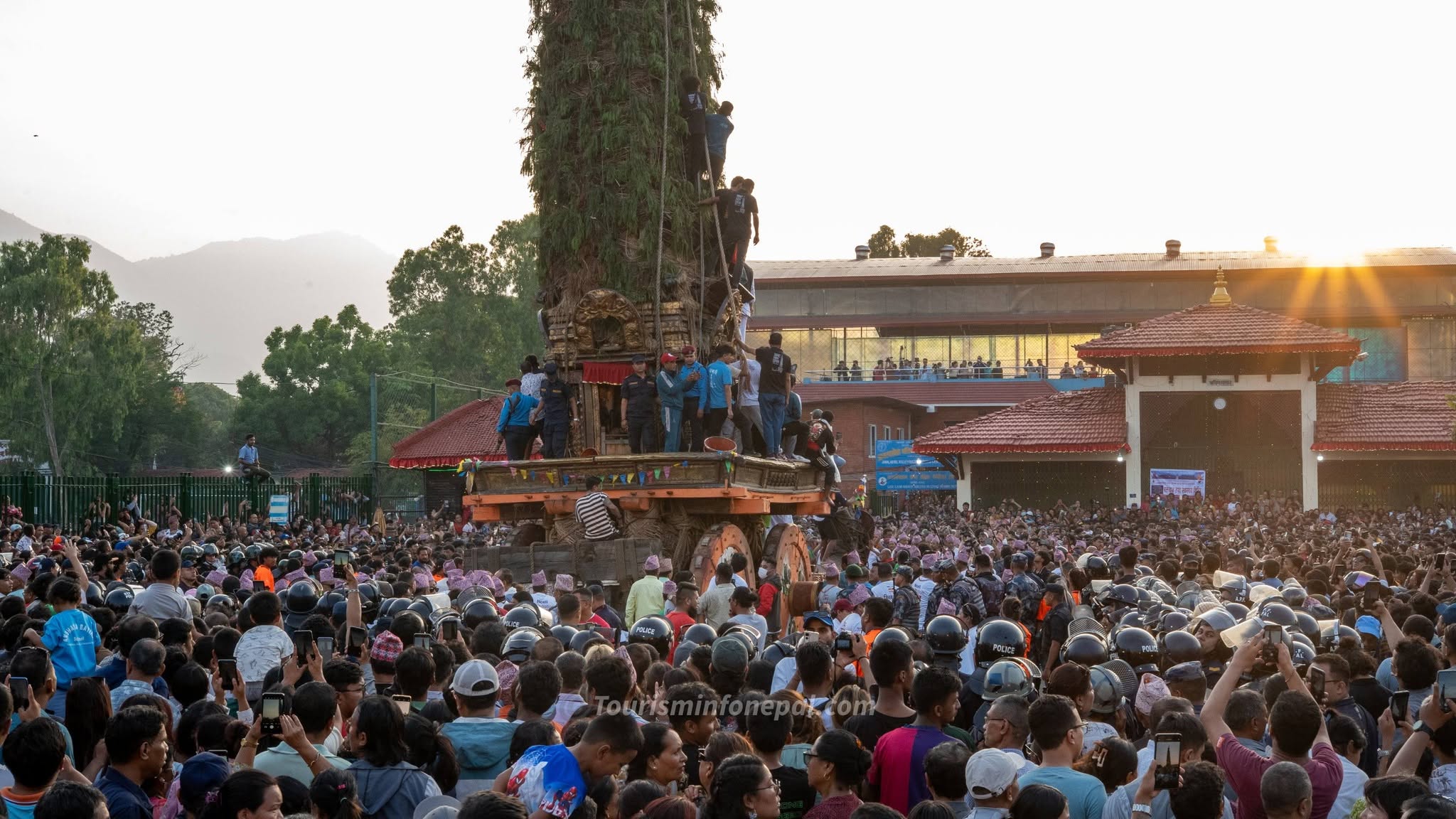
The centuries-old Rato Machhindranath Rath Yatra is set to conclude on Saturday with the ceremonial display of the Bhoto (jewel-studded vest) at Jawalakhel, marking the final and most significant ritual of Nepal’s longest-running cultural and religious festival. The concluding event, known as Bhoto Jatra, draws thousands of devotees and cultural observers who gather to witness the symbolic display.
The festival is dedicated to Rato Machhindranath, revered as the god of rain and compassion, and is believed to be more than 1,600 years old, making it one of the oldest continuing traditions in the Kathmandu Valley. The ritual not only holds deep religious importance but also represents the rich cultural heritage of the Newar community in Lalitpur.

Final Preparations Underway in Jawalakhel
According to Santosh Khadka, Ward Chairman of Lalitpur Metropolitan City–4, preparations for the Bhoto display at the Lalit Mandap in Jawalakhel have reached the final stage. Authorities and local committees are coordinating security, crowd management, and ceremonial arrangements to ensure the smooth completion of the event. The Bhoto Jatra is traditionally held four days after the chariot carrying the deity reaches Jawalakhel, drawing large crowds of devotees, locals, and visitors who gather in anticipation of the symbolic unveiling of the sacred vest.
Journey of the Sacred Chariot Across Lalitpur
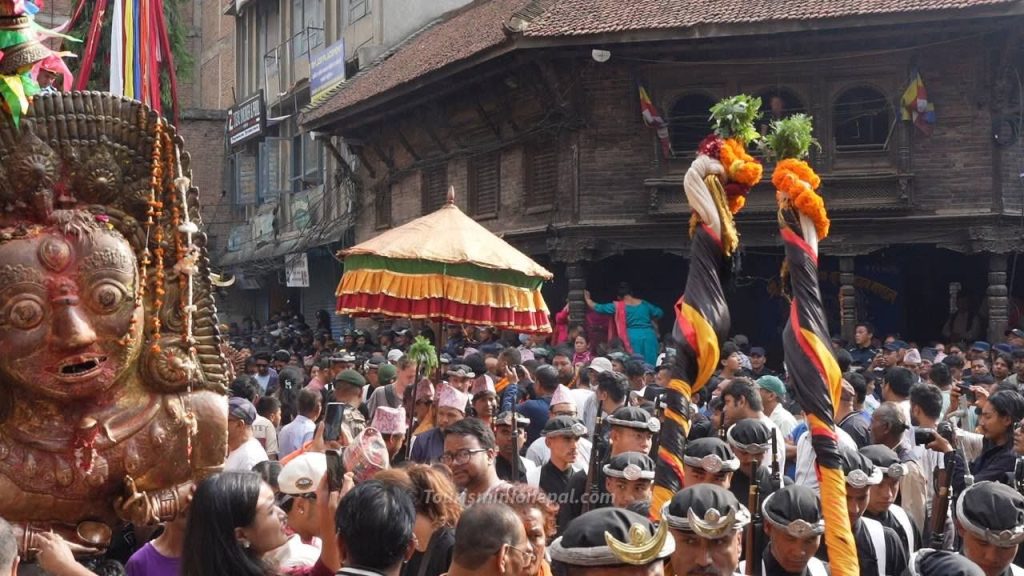
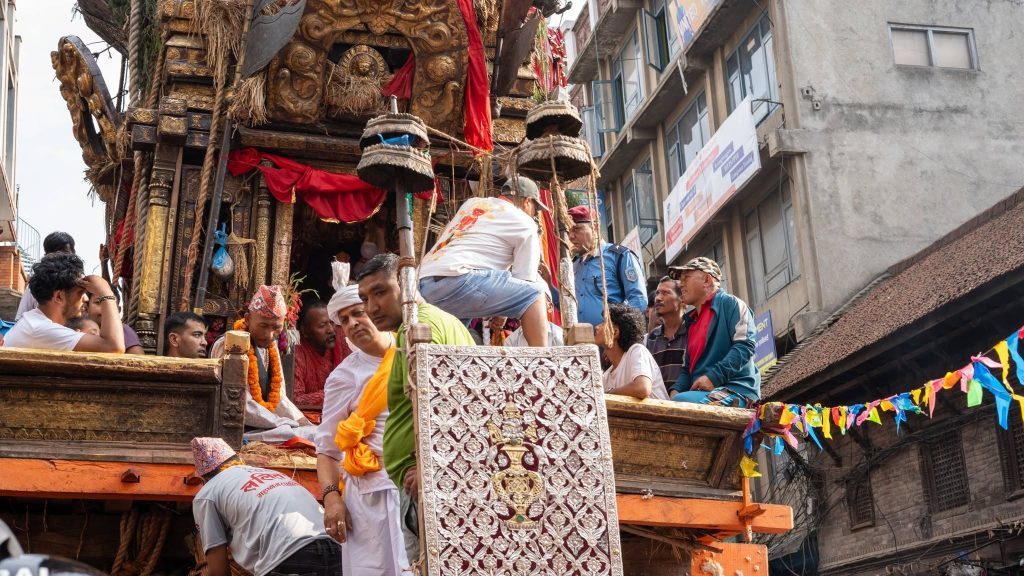
This year’s Rath Yatra began on the first day of the Baisakh lunar month, when the idol of Rato Machhindranath was placed atop a towering 32-foot chariot. The massive wooden structure was then pulled through key parts of Lalitpur, including Pulchowk, Mangalbazar, Sundhara, Lagankhel, and Kumaripati, before arriving at its final destination in Jawalakhel. The procession is considered one of Nepal’s most visually striking and spiritually significant cultural events, reflecting centuries-old traditions of community participation, devotion, and craftsmanship.
A Living Heritage of Rain, Prosperity, and Faith
The Rato Machhindranath festival is deeply rooted in the belief that the deity brings rainfall and agricultural prosperity, making it especially significant for farming communities. As a result, the festival has historically been associated with prayers for good monsoon seasons and successful harvests.

During the monarchy period, it was customary for the King to attend the Bhoto Jatra ceremony. Following Nepal’s transition to a republic, this tradition has continued with the participation of the President, symbolizing the continuity of state recognition for cultural heritage.
Traditional Conclusion and Return to Bungmati
After the Bhoto Jatra ceremony concludes, the idol of Rato Machhindranath is carefully placed in an intricately designed ancient khat (palanquin). Accompanied by traditional musical instruments and cultural performances, the deity is then taken from Jawalakhel to Machhindrabahal in Bungmati, marking the formal conclusion of the annual procession. The return journey signifies the completion of the festival cycle, but for devotees, the rituals reinforce a continuing bond between faith, community, and the cultural identity of the Kathmandu Valley.