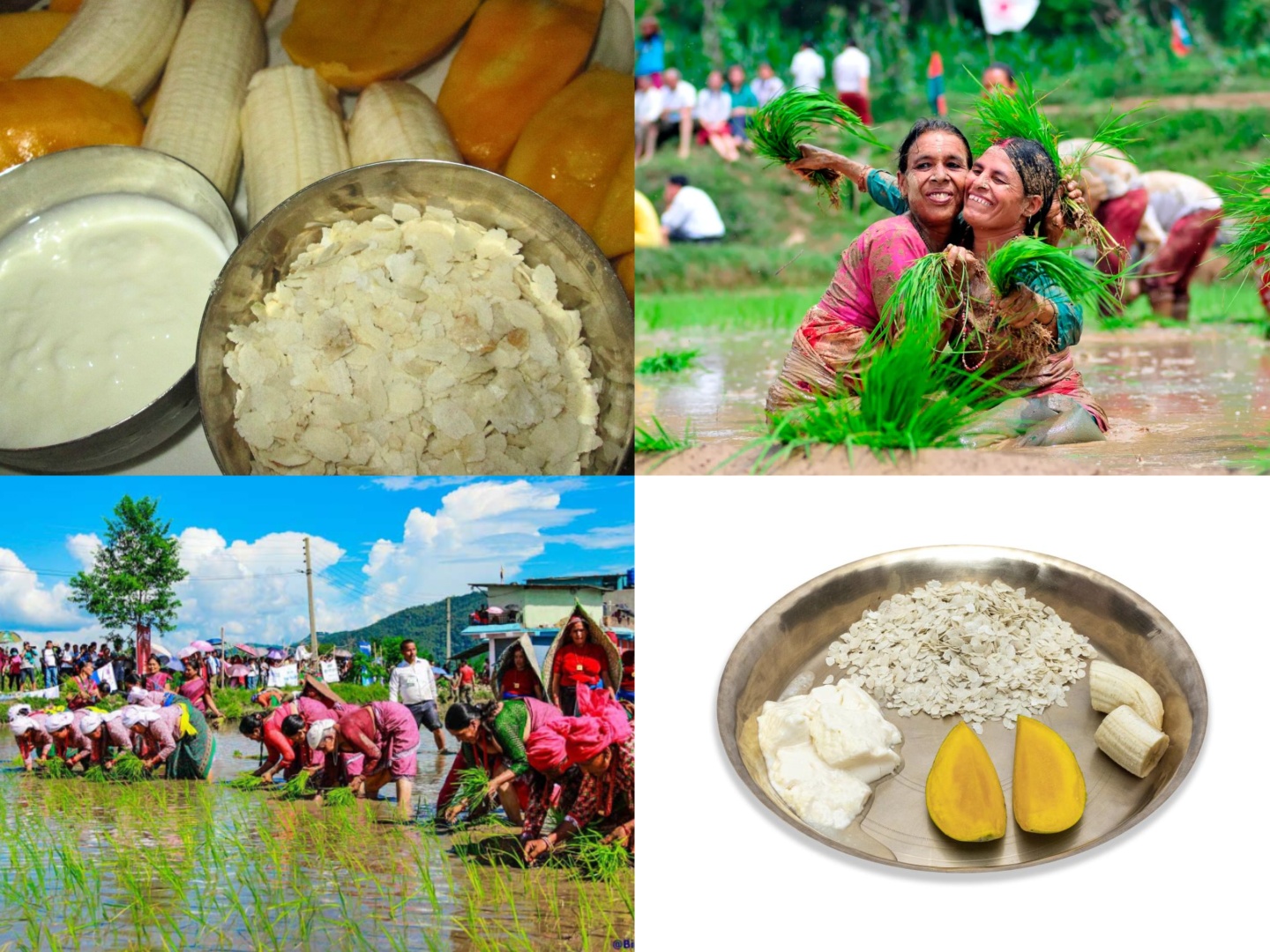
Every year, Ashadh 15 (popularly known as Asar 15 in Nepal) arrives not merely as another date on the calendar but as one of the country’s most culturally vibrant and agriculturally significant occasions. Across Nepal, from the fertile plains of the Terai to the terraced hills and valleys, farmers gather in muddy paddy fields to begin rice plantation while communities celebrate with music, laughter, and the traditional meal of Dahi Chiura. Officially recognized as National Paddy Day in Nepal, Ashadh 15 symbolizes the country’s deep connection with agriculture, which continues to remain one of the foundations of the national economy and rural livelihood.
For generations, Nepali society has depended on farming for sustenance, and rice cultivation has stood at the center of this agricultural system. The celebration of Ashadh 15 therefore goes beyond a simple farming ritual; it reflects history, culture, tradition, food security, and Nepal’s relationship with the land that sustains millions of people.
The Historical Background of Ashadh 15 in Nepal
The history of Ashadh 15 can be traced back centuries, long before it was formally recognized by the government. Nepal has traditionally been an agrarian society where the monsoon season determined the success or failure of the year’s harvest. The month of Ashadh, which falls during June and July, marks the arrival of seasonal rainfall that farmers eagerly wait for because it creates the ideal conditions for planting rice seedlings.
For generations, communities naturally developed traditions around this important agricultural period. Farmers considered this day auspicious as it marked the beginning of one of the most important farming activities of the year. Families, relatives, and neighbors worked together in the fields, helping each other plant rice while singing traditional folk songs.

Recognizing the national importance of rice production and the contribution of farmers, the Government of Nepal officially declared Ashadh 15 as National Paddy Day in 2061 BS (2004 AD). Since then, the day has been observed nationwide with awareness programs, plantation ceremonies, agricultural campaigns, and public recognition of Nepal’s farming communities.
Why Rice Cultivation Holds National Importance in Nepal
Rice remains the most important food crop in Nepal and is central to the country’s food security and economic structure. Agriculture contributes a major share to Nepal’s economy, employing a large percentage of the population either directly or indirectly. Among agricultural products, rice production carries the greatest significance because it serves as the staple food for most Nepali households.
The success of rice farming often determines overall agricultural performance for the year. Districts in the Terai region such as Jhapa, Morang, Kailali, Sunsari, Rupandehi, and Bardiya are considered major rice-producing areas, while valleys and irrigated hill regions also contribute substantially to production.

Because Nepal still relies heavily on monsoon rainfall for irrigation, Ashadh 15 marks a critical agricultural turning point. A successful plantation season generally leads to better harvests, improved rural income, and greater food stability across the country.
The Cultural Importance of Ashadh 15 in Nepali Society
While agriculture forms the practical foundation of Ashadh 15, its cultural importance is equally powerful. The day represents community spirit, collective labor, gratitude toward nature, and celebration of hard work. In rural Nepal, rice plantation has always been a social activity rather than an individual task. Entire villages often come together to help families complete plantation work, reinforcing cooperation and community bonding.
One of the most recognizable cultural traditions associated with the day is the singing of Asare Bhaka, traditional folk songs sung specifically during the rice plantation season. These songs often express themes of love, humor, daily rural struggles, hope for a successful harvest, and the emotional connection people have with village life.
The sight of farmers working joyfully in muddy fields while singing and laughing has become one of Nepal’s most iconic representations of rural culture. In many ways, Ashadh 15 reflects the resilience and optimism of farming communities that continue to feed the nation despite economic and environmental challenges.

The Tradition of Eating Dahi Chiura on Ashadh 15
No celebration of Ashadh 15 in Nepal feels complete without Dahi Chiura, a traditional meal made from curd and beaten rice. This food tradition has been practiced for generations and remains one of the defining aspects of National Paddy Day celebrations.
Historically, farmers working long hours under physically demanding conditions needed food that was simple, nutritious, cooling, and energy-rich. Dahi provides protein and helps cool the body during the humid monsoon season, while Chiura offers carbohydrates and immediate energy. Together, the meal became a natural part of plantation season rituals.
Today, the tradition extends beyond farming communities. Even people living in urban areas who may not participate in agricultural work celebrate Ashadh 15 by sharing Dahi Chiura with family members. Restaurants, hotels, and cultural organizations across Nepal also promote special Ashadh 15 celebrations centered around this traditional meal.
Growing Connection Between Ashadh 15 and Tourism in Nepal
In recent years, Ashadh 15 has gradually become an important cultural attraction within Nepal’s growing tourism industry. With increasing global interest in authentic travel experiences and rural tourism, many tourism businesses have started organizing special paddy plantation experiences for domestic and international visitors.
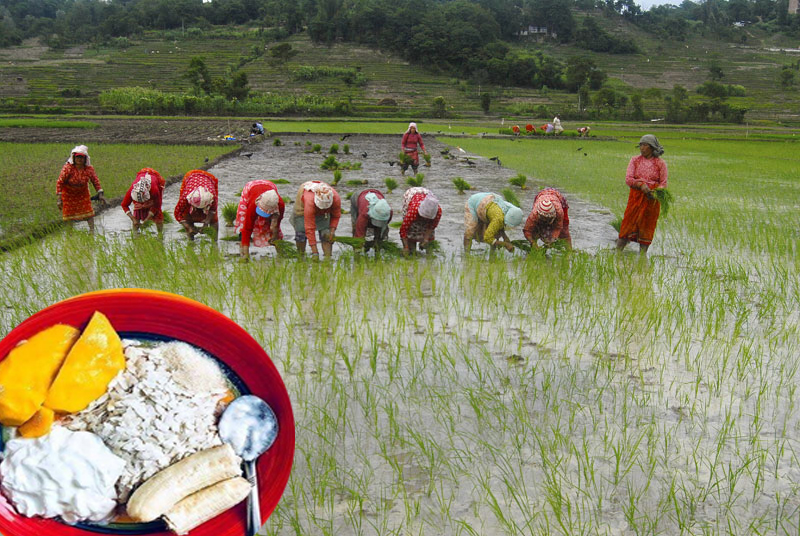
Agricultural tourism programs now allow tourists to participate directly in rice planting, experience traditional village lifestyles, enjoy local food, and learn about Nepal’s farming heritage. Resorts and tourism organizations in regions such as Pokhara, Chitwan, Kathmandu Valley, and various rural destinations organize special events where visitors can join local communities in celebrating the festival. This growing connection between tourism and agriculture in Nepal presents new economic opportunities for rural communities while helping preserve traditional practices for future generations.
Challenges Facing Nepal’s Agricultural Sector
Although Ashadh 15 celebrates farmers and agriculture, it also highlights the many challenges Nepal’s agricultural sector continues to face. One of the biggest concerns remains the country’s heavy dependence on monsoon rainfall. In many parts of Nepal, lack of proper irrigation infrastructure means delayed rainfall can directly threaten rice production.
Climate change has also created increasing uncertainty. Irregular rainfall patterns, droughts, floods, and changing temperatures have made farming more unpredictable than ever before. At the same time, large-scale migration of young people to foreign employment has created labor shortages in rural farming communities. Limited modernization, insufficient investment in agricultural technology, and inadequate access to quality seeds and fertilizers continue to affect productivity. These issues remind policymakers that supporting agriculture must remain a national priority.

Why Ashadh 15 Remains Important for Nepal’s Future
Ashadh 15 serves as an important reminder that despite rapid urbanization and economic transformation, Nepal remains deeply connected to its agricultural roots. Farmers continue to provide the food that sustains the nation, yet their contribution often receives less attention than other sectors.
The celebration emphasizes the need to modernize farming while preserving the traditions and values associated with agriculture. It also highlights the opportunity to integrate cultural tourism, sustainable agriculture, and rural development into Nepal’s broader economic strategy. Supporting farmers through better irrigation systems, modern agricultural technology, policy reform, and investment in rural communities will determine the long-term future of Nepal’s food security and economic resilience.
Ashadh 15 stands as far more than a traditional rice plantation day. It represents Nepal’s agricultural heritage, cultural identity, community spirit, and economic foundation. From muddy paddy fields filled with songs and laughter to the timeless tradition of sharing Dahi Chiura, the festival reflects values that have shaped Nepali society for generations.
As Nepal looks toward future development, the importance of agriculture remains undeniable. Ashadh 15 reminds the nation that progress does not only come from cities, industries, or technology; it also begins in the fields, through the dedication of farmers whose hard work continues to feed the country and preserve one of Nepal’s oldest and most meaningful traditions.