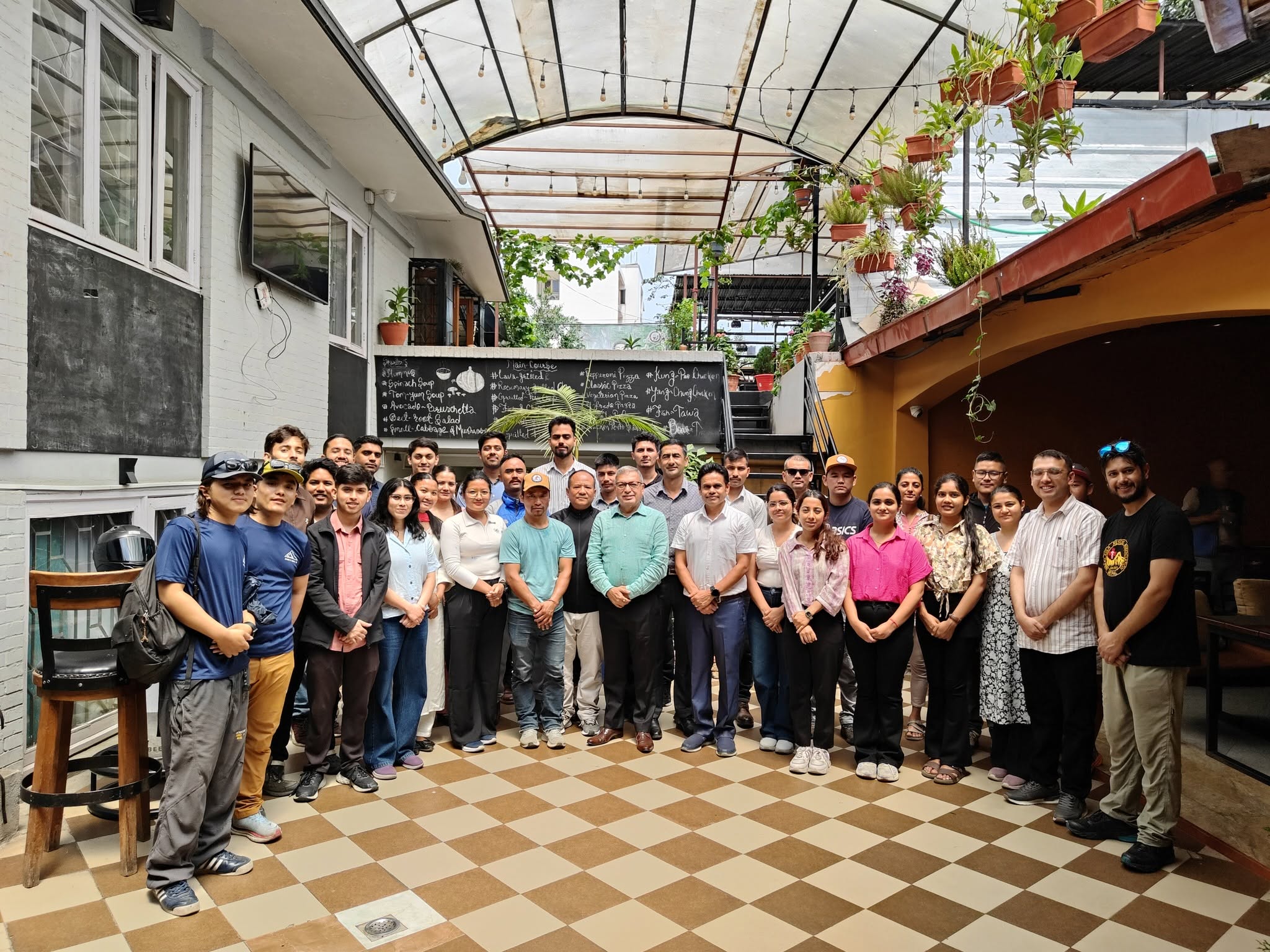
Himalayan Rescue Association (HRA) Nepal has officially launched its Mountain Rescue Training 2026, marking a major step forward in strengthening Nepal’s mountain safety system and improving the country’s disaster response capacity in high-altitude regions. The intensive eight-day specialized training program began this morning with participation from rescue professionals, mountaineers, medical experts, and disaster management personnel working across Nepal’s growing adventure tourism sector.
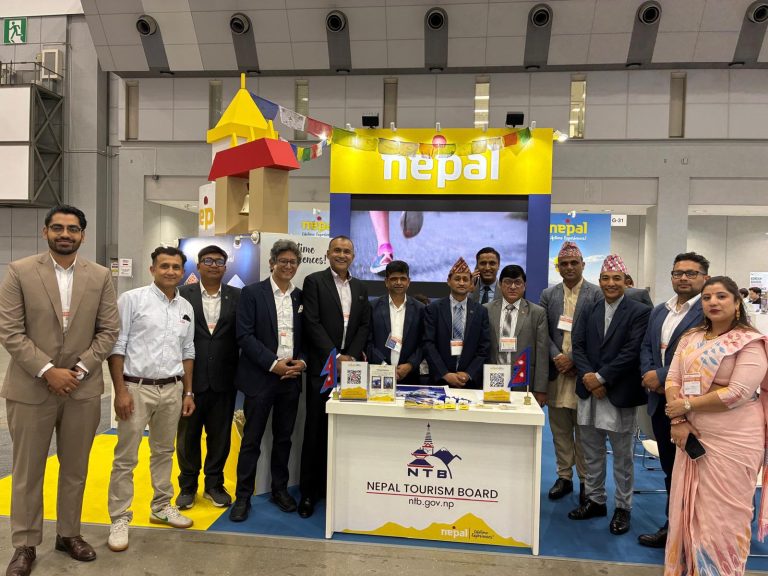
Supported by Nepal Tourism Board, the training program is being recognized as a historic initiative aimed at improving Nepal’s preparedness in handling mountain emergencies, particularly as the country continues to welcome increasing numbers of trekkers, climbers, and adventure tourists visiting the Himalayas every year. Officials say the training reflects Nepal’s growing focus on strengthening safety standards within the tourism sector, particularly in mountaineering and high-altitude adventure activities that remain central to the country’s international tourism identity.
First-of-Its-Kind Program Integrates Rescue Operations with Mountain Medicine
According to organizers, the Mountain Rescue Training 2026 stands out as the first program of its kind in Nepal, designed to uniquely combine technical mountain rescue operations with advanced high-altitude medical response training. The initiative addresses one of the most critical challenges in mountain rescue operations, the need for close coordination between technical rescue teams and medical professionals during emergencies in remote Himalayan regions.

Recognizing that successful rescue operations depend on synchronized teamwork, Himalayan Rescue Association Nepal has developed a training curriculum that integrates technical rescue expertise with specialized mountain medicine, creating a more comprehensive approach to emergency response in extreme environments. Experts involved in the program say such coordination is particularly important in Nepal, where rescue operations often take place in difficult terrain under unpredictable weather conditions and at dangerous altitudes.
Frontline Professionals Participate in Specialized Training
The eight-day program has brought together a diverse group of frontline professionals involved in Nepal’s mountain tourism and disaster response sectors. Participants include personnel from the Nepal Police Disaster Management Section, professional mountain guides, experienced mountaineers, expedition support teams, and medical doctors specializing in emergency response and high-altitude healthcare.
Organizers say the broad participation ensures that multiple sectors directly involved in mountain rescue operations can strengthen coordination and develop standardized response procedures for emergencies occurring in trekking and climbing regions across Nepal. As Nepal remains one of the world’s leading destinations for trekking and mountaineering tourism, improving rescue preparedness has become an increasingly important priority for both tourism authorities and safety organizations.
Technical Rescue Training Led by Certified Mountain Guides
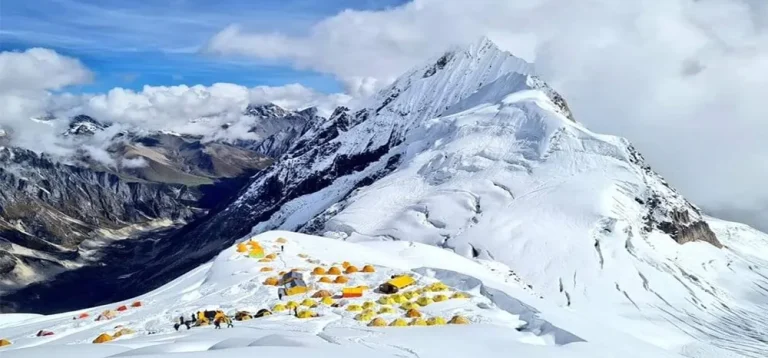
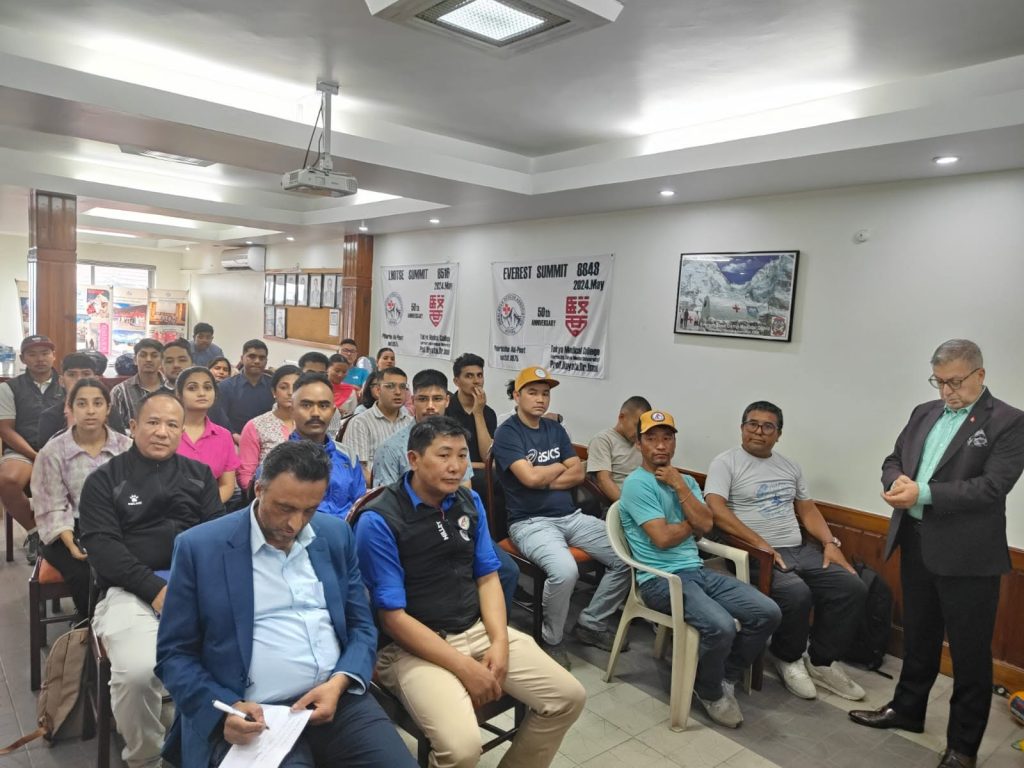
The technical rescue component of the training is being conducted by the Nepal National Mountain Guide Association, which has deployed highly experienced IFMGA-certified mountain guides to train participants in advanced rescue techniques used during high-altitude emergencies. Participants will receive practical instruction in critical rescue skills including crevasse rescue operations, steep-terrain evacuation procedures, rope rescue systems, glacier rescue techniques, and technical extraction methods required during mountaineering accidents.
These skills are considered essential in Nepal’s Himalayan environment where climbers and trekkers frequently encounter challenging terrain, glacier crossings, avalanches, and sudden weather-related emergencies. Organizers believe strengthening technical rescue expertise among frontline responders can significantly improve survival outcomes during mountain accidents.
Medical Experts Lead High-Altitude Emergency Response Training
Complementing the technical rescue component, the medical segment of the training is being led by a team of highly experienced doctors specializing in high-altitude emergency medicine. Participants are receiving advanced instruction on the recognition, treatment, and management of high-altitude illness, including Acute Mountain Sickness (AMS), High Altitude Pulmonary Edema (HAPE), High Altitude Cerebral Edema (HACE), trauma management, emergency evacuation protocols, and disaster response procedures in remote mountain environments.
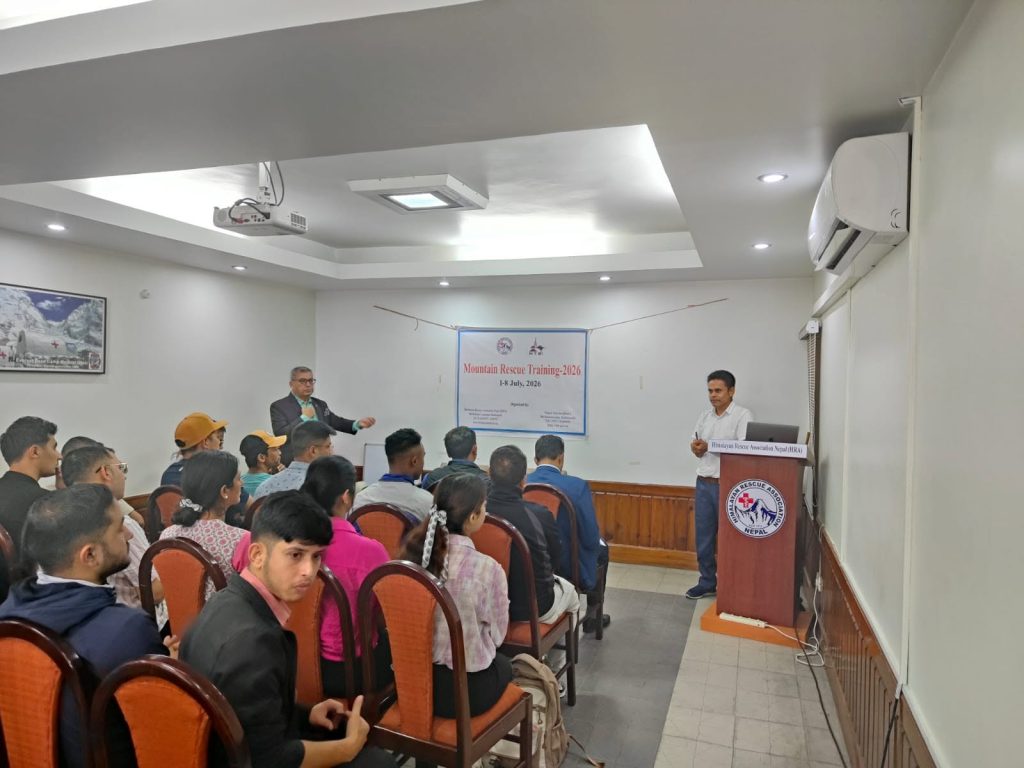
Medical professionals involved in the training say rapid diagnosis and immediate treatment of altitude-related illnesses often determine survival in mountain emergencies, making specialized medical preparedness equally important alongside technical rescue capabilities.
Strengthening Safety Standards in Nepal’s Adventure Tourism Industry
Tourism stakeholders say the training represents an important development for Nepal’s adventure tourism sector, where safety remains a critical factor influencing the country’s international reputation among trekkers and mountaineers. With thousands of climbers visiting peaks across Nepal each year, including expeditions in the Everest region and other Himalayan destinations, improving mountain rescue systems has become increasingly important for maintaining global confidence in Nepal’s mountaineering industry.
Nepal Tourism Board has been actively supporting initiatives aimed at improving tourism safety infrastructure, recognizing that stronger rescue preparedness directly contributes to sustainable tourism development and visitor confidence. Officials say professional rescue systems not only save lives but also strengthen Nepal’s reputation as a safe and responsible global adventure tourism destination.

Himalayan Rescue Association (HRA) Continues Five Decades of Service in Himalayan Safety
While announcing the program, Himalayan Rescue Association Nepal expressed gratitude to the Nepal Tourism Board for its continued support in prioritizing mountain safety and acknowledged the valuable partnership of the Nepal National Mountain Guide Association in helping execute the historic training initiative.
Established in 1973, the Himalayan Rescue Association Nepal has spent more than five decades working to reduce casualties in the Nepal Himalayas. The non-profit voluntary organization has become one of Nepal’s leading institutions dedicated to high-altitude medical care, rescue coordination, and mountain safety awareness.
Through its aid posts in Manang and Pheriche, along with the Everest ER medical camp, Himalayan Rescue Association (HRA) has provided life-saving medical services and emergency support to trekkers, climbers, and local communities operating in Nepal’s remote mountain regions. As adventure tourism continues to remain one of Nepal’s strongest tourism sectors, initiatives such as Mountain Rescue Training 2026 are expected to play a crucial role in ensuring safer mountain experiences while strengthening Nepal’s capacity to respond effectively to emergencies in some of the world’s most challenging environments.