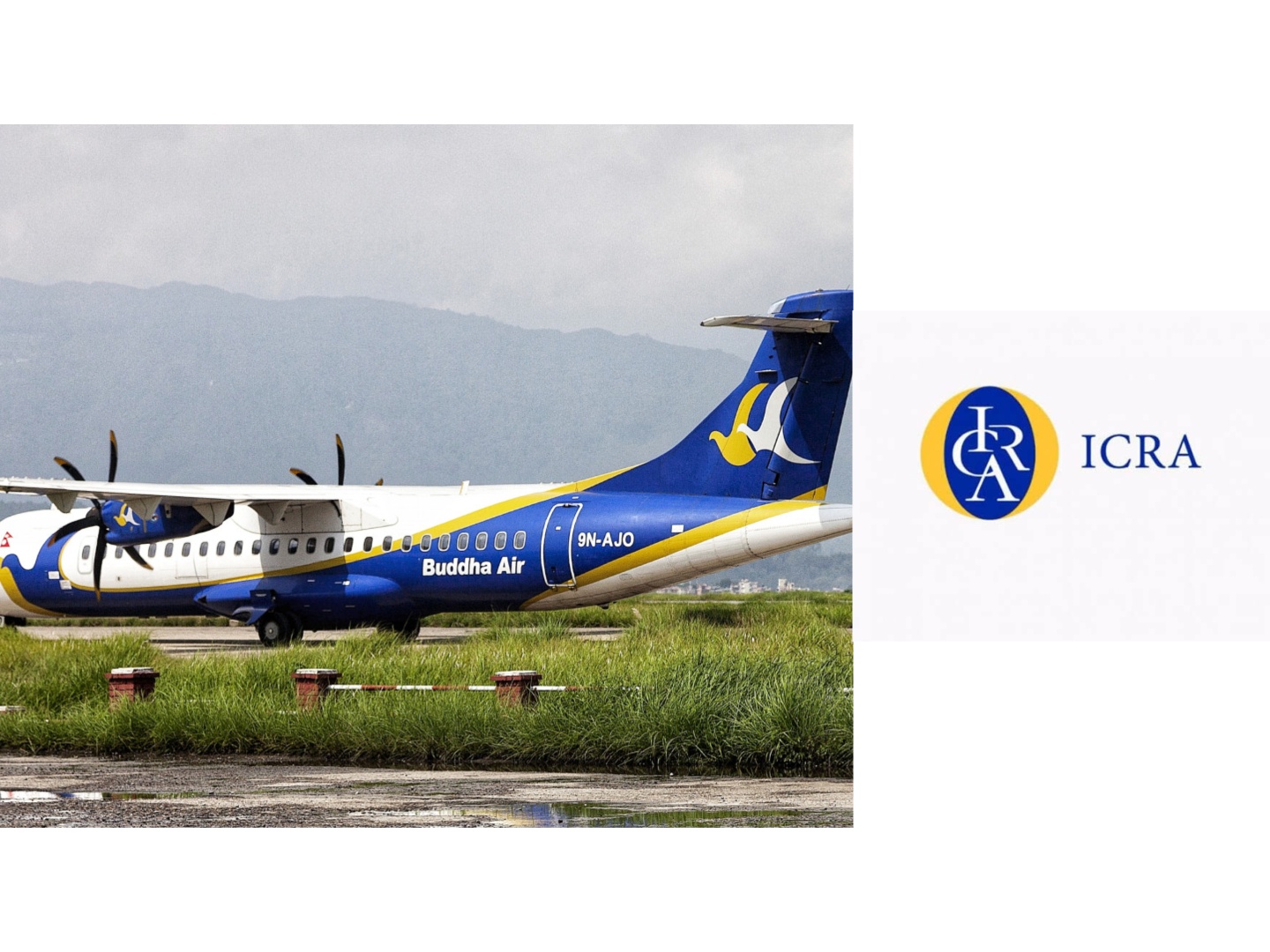
ICRA Nepal has placed the bank loan ratings of Buddha Air Private Limited on ‘Watch with Developing Implications’, citing concerns over the impact of sharply rising aviation turbine fuel (ATF) prices, weakening passenger traffic and pressure on the airline’s profitability and debt coverage indicators.
The rating action covers Buddha Air’s long-term loan rating of [ICRANP] LA& and short-term loan rating of [ICRANP] A1&. The ratings have been placed under watch primarily due to uncertainty surrounding the impact of the ongoing West Asia conflict and the resulting volatility in ATF prices on domestic and international passenger flows.
Total Rated Loan Limits Increased to NPR 3.12 Billion
Following the latest rating action, Buddha Air’s total rated loan limits have increased from NPR 3.089 billion to NPR 3.121 billion. The company’s long-term fund-based term loan limits in Nepalese rupees have been revised from NPR 1.309 billion to NPR 1.131 billion, while its US dollar-denominated term loan limits have declined from USD 18.74 million to USD 13.76 million.
The short-term fund-based loan limit has remained at NPR 870 million, while the overdraft limit has increased from NPR 829.97 million to NPR 870 million. The non-fund-based bank guarantee limit has also increased significantly from NPR 80 million to NPR 250 million.

ATF Price Surge and Passenger Decline Weigh on Performance
According to ICRA Nepal, the sharp increase in ATF prices following the escalation of the West Asia conflict has created significant uncertainty for the aviation sector. Buddha Air recorded an approximately 33 percent decline in passenger volume in April 2026 compared to April 2025, despite April traditionally being part of Nepal’s peak tourism season.
The rating agency has warned that a prolonged period of elevated ATF prices could significantly affect passenger demand, operating performance and the airline’s debt-servicing capacity. Although ATF prices have recently declined from their peak levels and the West Asia conflict has shown signs of moving towards resolution, the possibility of further geopolitical disruptions remains a concern. ICRA Nepal has stated that if fuel prices gradually correct, Buddha Air’s recovery could be faster than that of its industry peers.
Operating Profit Margin Declines Amid Higher Maintenance Costs
Buddha Air’s operating profit margin moderated sharply to approximately 8.2 percent during the first 9.5 months of FY2025/26, compared to 19.4 percent in FY2024/25 and 10 percent in FY2022/23. The decline was attributed mainly to significantly higher-than-anticipated engine maintenance and overhaul expenses, along with the impact of rising ATF prices.
The airline’s revenue per available seat kilometre (RASK) improved to approximately NPR 21.2 by April 2026, but the increase in operating expenses, employee costs and repair and maintenance expenses reduced the gap between revenue and cost per available seat kilometre. The RASK-CASK spread narrowed to approximately NPR 2.8, its lowest level in the past five to six years, compared to around NPR 8.9 in FY2018/19.
Passenger Volume Declines by 10 Percent During 9.5 Months
The rating agency reported that Buddha Air carried approximately 10 percent fewer passengers during the first 9.5 months of FY2025/26 compared to the same period of the previous fiscal year. The decline was attributed to the retirement and disposal of three aircraft, as well as the impact of higher fuel prices on passenger demand. The decline became particularly sharp after the increase in ATF prices led to higher airfares. The airline’s ability to improve passenger traffic and operating margins amid continued volatility in fuel prices will remain a key factor monitored by ICRA Nepal.
Financial Profile Remains Comfortable
Despite the recent operational challenges, ICRA Nepal continues to draw comfort from Buddha Air’s relatively comfortable financial profile. The airline’s gearing ratio stood at approximately 1.0 times as of the end of April 2026, improving from around 1.4 times in January 2025.
The company recorded a debt service coverage ratio (DSCR) of approximately 2.0 times and total debt to OPBDITA of approximately 3.8 times during the first 9.5 months of FY2025/26. However, the coverage indicators have moderated due to pressure on operating margins.
Buddha Air has also continued to prepay term loans using excess internal cash generation and has reduced its reliance on short-term borrowings. The company’s liquidity profile remains adequate, supported by a controlled working capital cycle and significant unused borrowing capacity.
Buddha Air Maintains Leadership in Domestic Aviation
ICRA Nepal continues to recognize Buddha Air’s strong position in Nepal’s domestic aviation sector. With approximately 29 years of operating experience, Buddha Air is the oldest private-sector airline currently operating in Nepal.
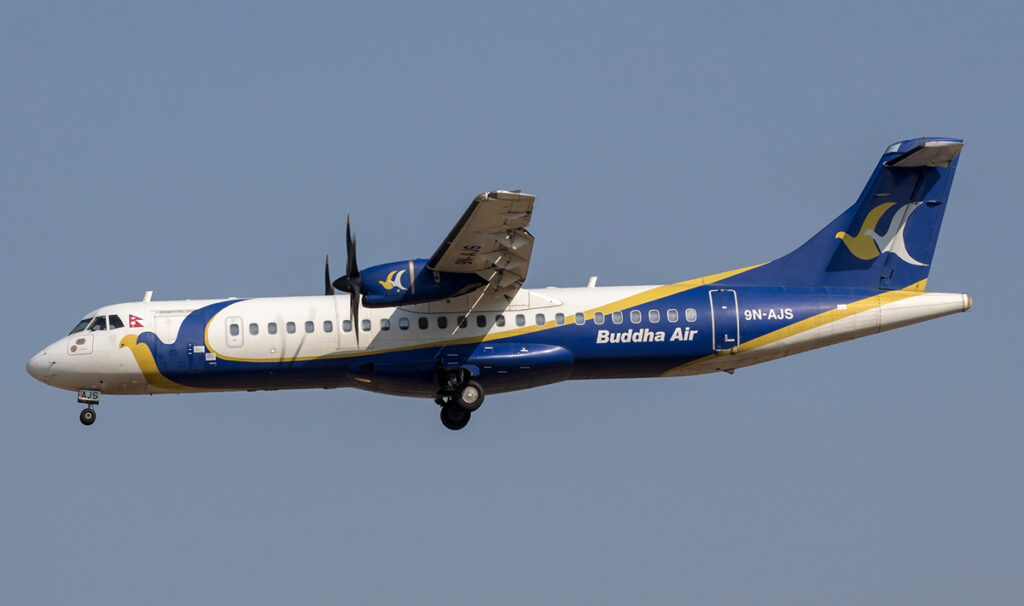
The airline maintained an estimated 57 percent market share based on passengers carried in calendar year 2025, despite a slight decline from approximately 60 percent in 2024. Buddha Air currently operates a fleet of 15 aircraft, comprising one ATR-42 and 14 ATR-72 aircraft. The company’s experienced management and long operating track record remain key strengths supporting its credit profile.
Intense Competition and Foreign Currency Exposure Remain Key Challenges
The domestic aviation sector has become increasingly competitive in recent years, with airlines adding aircraft and competing aggressively for passengers. This has contributed to pressure on ticket pricing and passenger load factors.
Buddha Air’s passenger load factor has declined to approximately 83–85 percent in recent years from more than 90 percent before the COVID-19 pandemic. Maintaining a healthy load factor will remain important, particularly as the airline plans to add additional debt-funded aircraft to replace retired and damaged aircraft.
The airline also faces significant foreign currency risk. Approximately 63 percent of its bank borrowings were denominated in US dollars as of mid-April 2026, while a significant portion of its maintenance and aircraft parts expenses are also linked to the US dollar. In contrast, US dollar-based revenue accounted for approximately 15 percent of total revenue during the first 9.5 months of FY2025/26.
The weakening of the Nepalese rupee against the US dollar has increased the company’s foreign exchange exposure, although the growing number of foreign tourists and associated foreign currency revenues provide some partial support.

Future Passenger Traffic and Profitability to Remain Key Rating Monitorables
ICRA Nepal has identified Buddha Air’s ability to recover passenger traffic and improve operating margins amid continued ATF price volatility as a key rating monitorable.
The airline’s market share trajectory, its ability to maintain comfortable financial indicators and any material deterioration in its financial profile will also influence future rating actions.
Buddha Air remains exposed to the inherent seasonality of Nepal’s tourism industry, with passenger demand generally peaking during the October–November and February–April tourism seasons. The airline is also vulnerable to external shocks such as global geopolitical events, economic slowdowns, pandemics and major aviation incidents.
About Buddha Air
Established in 1996, Buddha Air primarily operates domestic trunk routes in Nepal, with limited international operations to Varanasi and Kolkata in India from Kathmandu. The airline is Nepal’s largest and longest-operating private-sector airline. It currently operates one ATR-42 and 14 ATR-72 aircraft and is chaired by Birendra Bahadur Basnet.