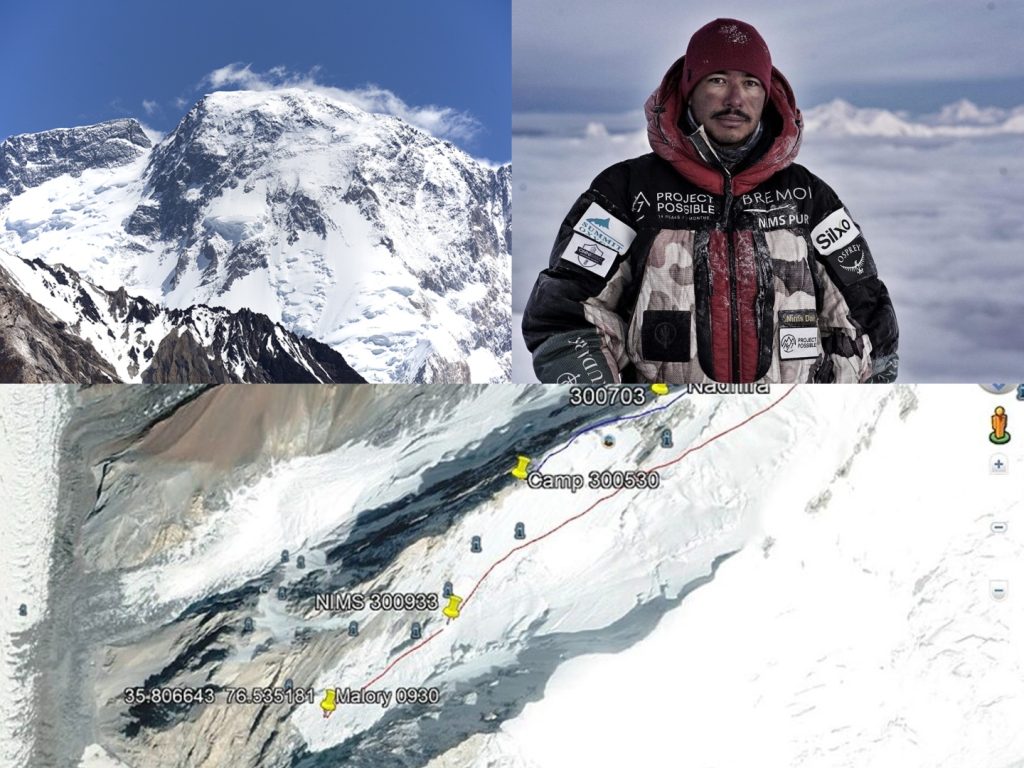
Search and rescue operations entered a critical phase on Friday after a devastating avalanche struck Pakistan’s Broad Peak (8,047m), leaving several climbers dead and at least six others, including renowned Nepali mountaineer Nirmal “Nims” Purja, still unaccounted for. While difficult weather conditions continue to hamper aerial rescue efforts, fresh GPS tracker data indicating movement has offered a cautious glimmer of hope.
Avalanche Strikes in Broad Peak During Summit Push
According to the Alpine Club of Pakistan (ACP), the avalanche hit Broad Peak around midday on Thursday as a team of international climbers was making its summit push. The expedition consisted of climbers from five countries, and communication with the group was lost immediately after the avalanche. Ground rescue teams have since recovered the bodies of four climbers from the mountain. Officials said the identities of all recovered victims are being officially verified before further announcements are made.

The expedition included renowned Nepali climbers Nirmal “Nims” Purja, Pur Bahadur Gurung, Kili Pemba Sherpa, Nima Sherpa, Gyalu Sherpa, and Nawang Thindu Sherpa, along with Pakistani climber Sohail Sakhi, Chinese mountaineer Wang Zhong, American climber Mallory Geis, and Omani climber Nadhira Al Harthy. Authorities also noted that several expedition teams, including Elite Exped, Seven Summit Treks, and Imagine Nepal, were operating on Broad Peak at the time of the avalanche.

GPS Tracker Offers Cautious Hope
Amid the ongoing rescue operation, GPS tracking data has provided one encouraging development. According to Mingma Gyabu Sherpa, business partner of Nirmal Purja and a member of Nepal’s House of Representatives, the tracking device carried by Purja has continued registering movement after the avalanche.
He explained that the initial tracker data suggested Purja had been swept downhill by the avalanche. However, subsequent location updates indicated additional movement, raising cautious optimism that he may still be alive. Despite the encouraging signal, Mingma Gyabu emphasized that tracker movement alone cannot confirm Purja’s condition or location, and rescuers must physically reach the site before concluding.
Rescue Delayed by Weather and Communication Challenges
Rescue operations faced a significant setback due to delays in reporting the avalanche. Although the avalanche reportedly occurred during the morning, rescue authorities were not fully informed until Thursday night, resulting in the loss of valuable daylight hours that could have allowed helicopters to begin immediate evacuation efforts. Since then, poor weather has prevented helicopters from flying over Broad Peak, forcing rescue teams to rely primarily on ground search operations from Base Camp while waiting for improved conditions. Officials said unstable weather, high winds, and poor visibility continue to pose major challenges to rescue crews.
Pakistan Mobilizes Air and Ground Resources
Nepal’s Ambassador to Pakistan, Rita Dhital, said Pakistani authorities have deployed ground rescue teams, drones, and military helicopters to support the operation. Although helicopters remain on standby awaiting suitable flying conditions, ground rescuers have already recovered several climbers from the mountain and continue searching for those still missing.
Major General Irfan Arshad Khan, President of the Alpine Club of Pakistan, said the organization is coordinating closely with government agencies to mobilize every available rescue resource as soon as weather permits. Mountaineering experts note that rescue operations in Pakistan’s Karakoram often take longer than those in Nepal due to the region’s remoteness, complex terrain, and limited helicopter infrastructure.
Nirmal Purja’s Extraordinary Mountaineering Legacy
Forty-three-year-old Nirmal “Nims” Purja is widely regarded as one of the world’s greatest high-altitude climbers. He achieved international fame in 2019 after climbing all 14 mountains above 8,000 metres in just over six months, setting a remarkable world record. In 2024, he became the fastest climber to complete all 14 eight-thousanders without supplemental oxygen, further cementing his reputation.
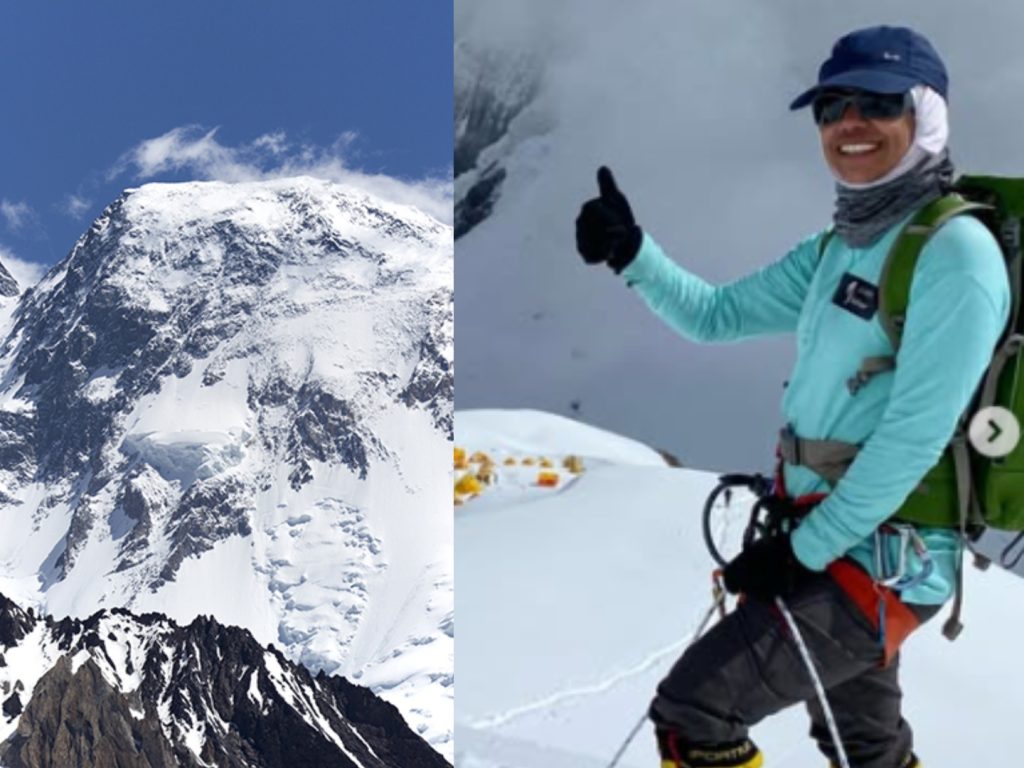
Just days before the Broad Peak avalanche, Purja successfully climbed Gasherbrum II without oxygen as part of his ambitious “Hat Trick Project,” which aims to summit all 14 of the world’s highest mountains three times while also completing the Seven Summits three times. Before becoming a professional mountaineer, Purja served in the British Army and the Royal Marines, beginning his climbing career after visiting Everest Base Camp in 2012.

Broad Peak’s Deadly Reputation
Located in Pakistan’s Karakoram Range near K2, Broad Peak is the world’s 12th-highest mountain and is known for its unpredictable weather, avalanche-prone slopes, and rapidly changing mountain conditions. Although considered less technically difficult than K2, Broad Peak has witnessed several fatal accidents over the years. In 2013, three Iranian climbers died during their descent after a successful summit, while Pakistan’s deadliest mountaineering disaster remains the 2008 K2 avalanche that claimed 11 lives.
Search Continues
As of Friday evening, the whereabouts of Nirmal Purja and the remaining missing climbers remain unknown. The Alpine Club of Pakistan said it is maintaining close coordination with government authorities, rescue agencies, and expedition operators while continuing search operations under extremely challenging conditions. Officials have urged the public to rely only on verified information, noting that details regarding recovered climbers and rescue progress may change as the operation continues.