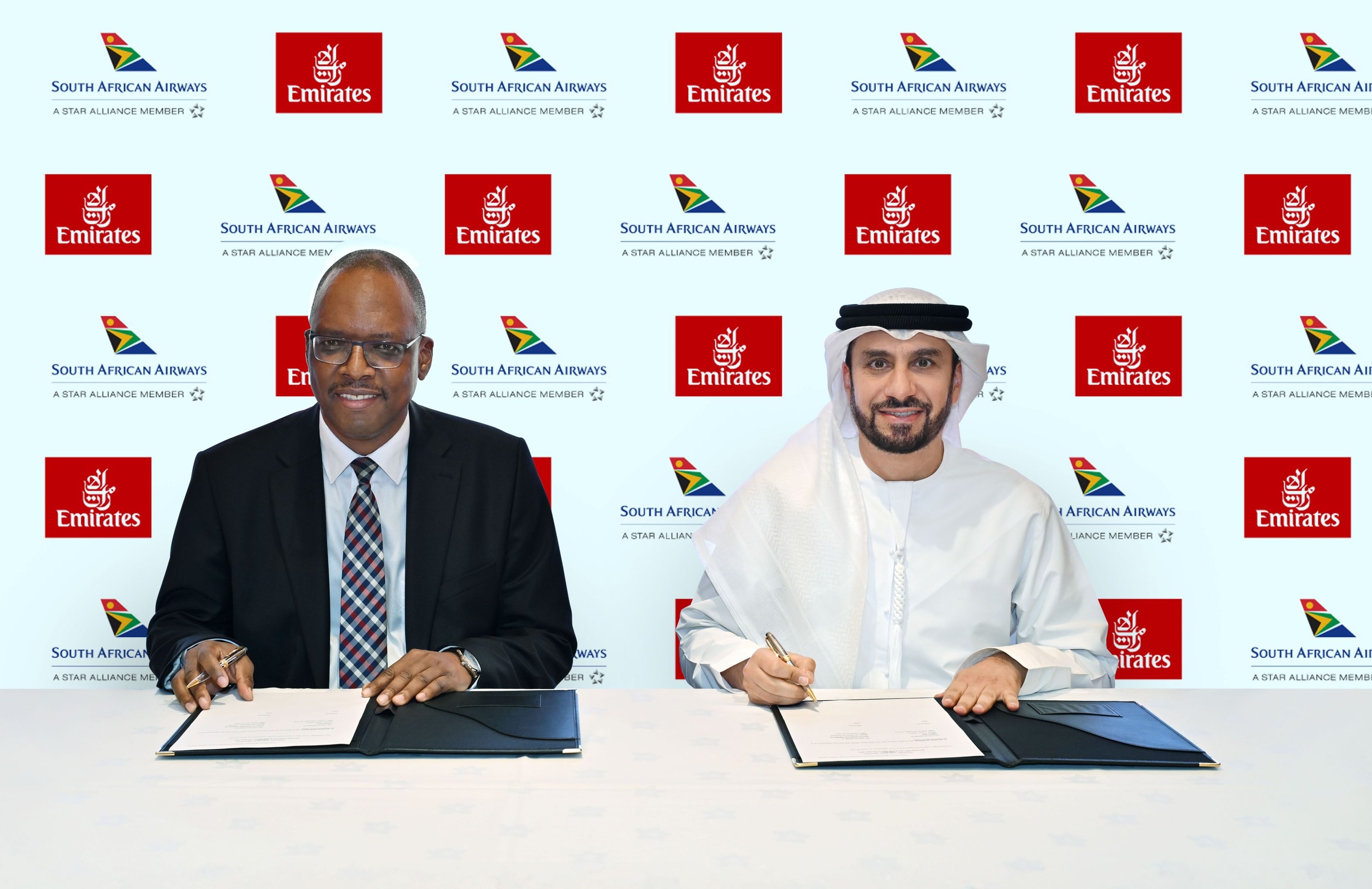
Emirates and South African Airways (SAA) have announced the expansion of their long-standing codeshare partnership, opening access to nine additional destinations and introducing a reciprocal codeshare arrangement between the two airlines. The expanded partnership is expected to improve connectivity across central and southern Africa, giving travelers greater access to destinations in South Africa and neighbouring countries through the airlines’ combined networks.
Reciprocal Codeshare Marks New Phase of Partnership
Since the launch of their codeshare agreement, the partnership has operated primarily on a unilateral basis, with SAA placing its code on Emirates-operated flights between Dubai and Johannesburg, Cape Town and Durban. SAA customers have also benefited from interline access to 68 Emirates destinations worldwide via Dubai.

Following the receipt of regulatory approvals, the expanded agreement will now allow Emirates to place its code on SAA-operated flights, extending Emirates’ reach deeper into South Africa and several regional markets. The development marks a significant expansion of the partnership and is expected to provide customers with more convenient connections between Emirates’ global network and SAA’s growing African network.
Nine New Routes Added to Emirates Network
The expanded codeshare will cover nine new routes, including three domestic routes within South Africa and six regional connections. The new domestic routes connect Johannesburg with Cape Town, Durban and Port Elizabeth, while the regional routes connect Johannesburg with major destinations in neighbouring countries.
The six regional routes are:
- Kinshasa, Democratic Republic of Congo
- Gaborone, Botswana
- Windhoek, Namibia
- Lusaka, Zambia
- Harare, Zimbabwe
- Victoria Falls, Zimbabwe
The new connections are expected to make travel between international markets and destinations across southern and central Africa more convenient.
Nearly Three Decades of Partnership
Emirates and South African Airways have maintained a partnership for nearly 30 years, making it one of the longest-standing relationships in Emirates’ partnership portfolio. Since the partnership began in 1997, millions of passengers have benefited from coordinated connections and single-ticket travel between the two airlines’ networks. The latest expansion builds on this long-standing cooperation while providing travelers from South Africa and neighbouring countries with greater access to international destinations.
Stronger Connectivity to South Africa and Africa
The expanded partnership also reinforces its long-term commitment to South Africa and the broader African market. The airline said the move responds to strong demand for travel to South Africa from international markets, particularly Europe, while also providing travelers with improved access to destinations across southern and central Africa. By combining its extensive international network with SAA’s regional connectivity, the agreement is expected to support both tourism and business travel across the continent.

Emirates Highlights Greater Choice for Travelers
Adnan Kazim, Deputy President and Chief Commercial Officer of Emirates, said the reciprocal codeshare represents a natural progression of the two airlines’ long-standing relationship. He said placing Emirates’ code on SAA’s domestic and regional services would provide travelers with seamless access to destinations across South Africa and neighbouring countries while maintaining the reliability and consistency associated with the Emirates brand. Kazim also emphasized that the expanded partnership demonstrates Emirates’ continued commitment to South Africa and the wider African region and reflects confidence in the continent’s future growth.
SAA Sees Opportunity to Strengthen African Connectivity
Matshela Seshibe, Acting Group CEO of South African Airways, said the expanded partnership represents an important milestone in SAA’s strategy to strengthen connectivity across Africa while improving access to international markets. According to Seshibe, the reciprocal codeshare will provide passengers with a more seamless travel experience and greater choice across the combined networks of the two airlines.
He said the partnership is intended not only to connect destinations but also to strengthen connections between people, businesses and opportunities across Africa and beyond. The combination of SAA’s growing African network and Emirates’ global reach is also expected to reinforce Johannesburg’s role as an important gateway for travel, trade and tourism in Africa.
Emirates Operates 56 Weekly Flights to South Africa
It began operations in South Africa in 1995, with its first flight to Johannesburg. Since then, the airline has expanded its operations by increasing frequencies and adding gateways to Cape Town and Durban. Emirates has carried more than 20 million passengers to and from South Africa since beginning operations in the market.
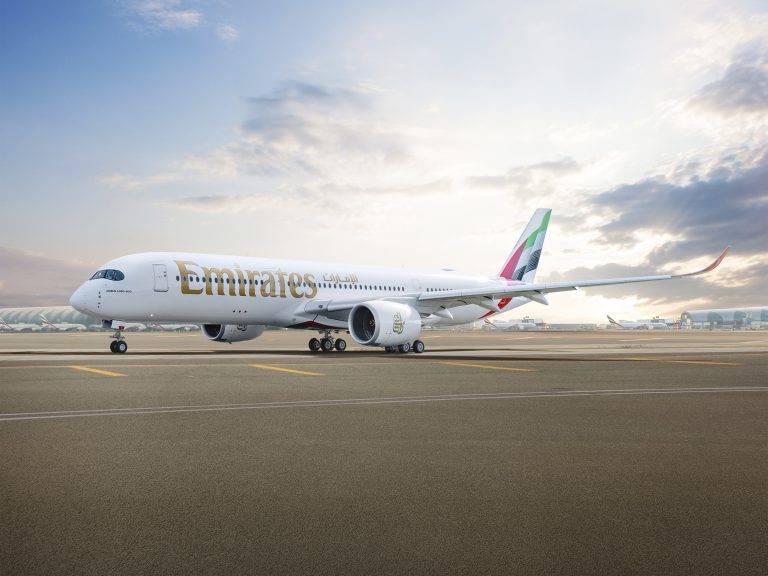
The airline currently operates 56 weekly flights across Johannesburg, Cape Town and Durban. South Africa is also the only destination on Emirates’ African network to receive services from all three of the airline’s widebody aircraft types: the Boeing 777, Airbus A380 and Airbus A350.
Premium Economy Available on Key South African Routes
As part of its focus on enhancing the passenger experience, its award-winning Premium Economy cabin is available on flights between Dubai and both Cape Town and Johannesburg. Passengers traveling on the newly added codeshare routes will benefit from single-ticket bookings, coordinated flight schedules and through-checked baggage to their final destinations. Tickets for the new codeshare services are now available through Emirates’ official website, travel agents and Emirates retail stores.

Partnership Strengthens Africa’s Global Air Connectivity
The expanded Emirates-SAA agreement comes as airlines increasingly rely on strategic partnerships to expand their networks without operating direct services to every destination. By connecting Emirates’ extensive global network with SAA’s domestic and regional operations, the new reciprocal codeshare is expected to create additional travel opportunities across Africa.
The agreement could also support the movement of tourists, business travelers and other passengers between Africa and major international markets, further strengthening Johannesburg’s position as a regional aviation hub and enhancing South Africa’s links with the wider global travel market.